












Can Polycystic Kidney Disease Be Treated Without Surgery?
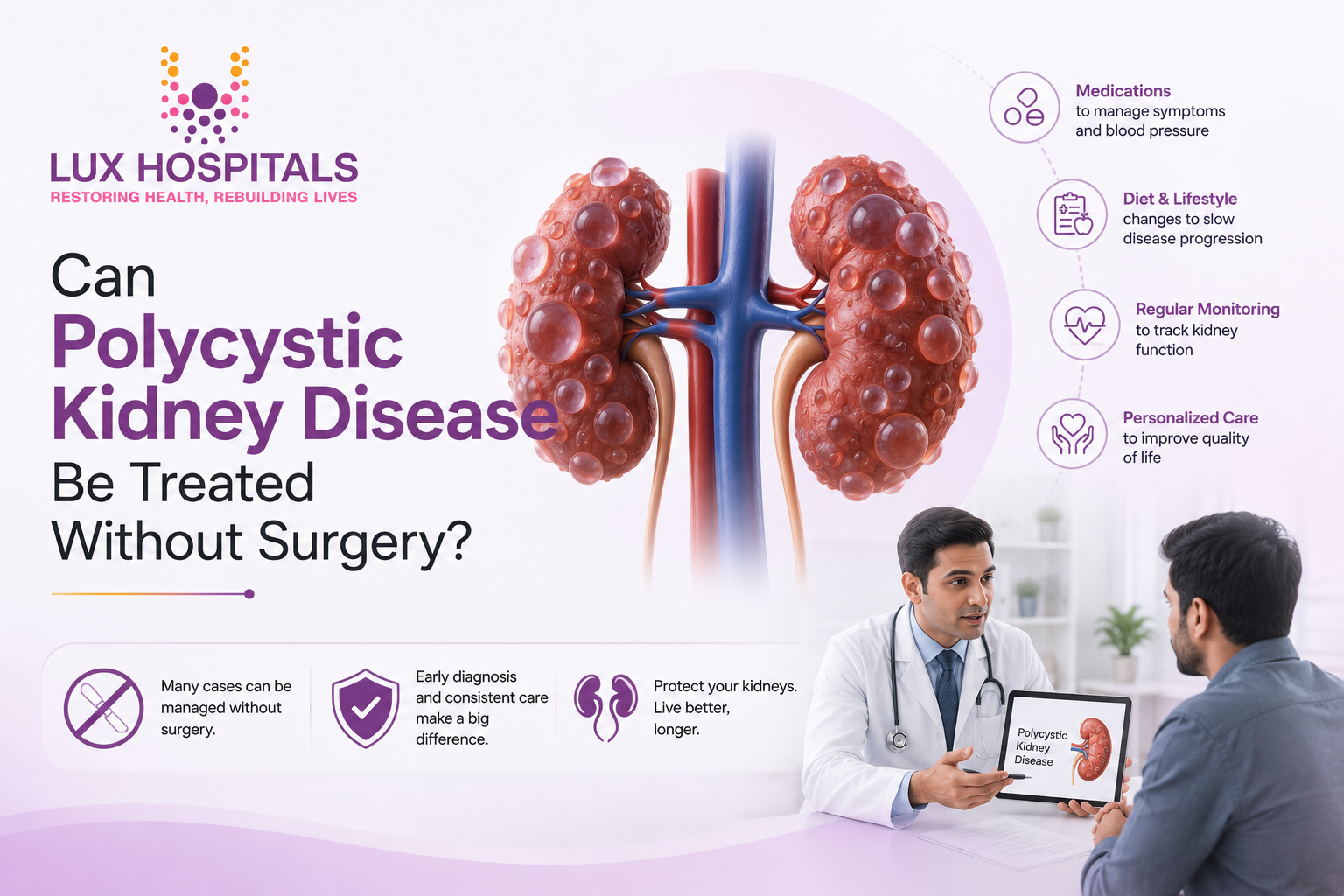
Polycystic Kidney Disease is a lifelong genetic condition that causes multiple fluid-filled cysts to develop inside the kidneys. Over time, these cysts grow larger, reduce kidney function, and may eventually lead to kidney failure if left untreated. Many people diagnosed with Polycystic Kidney Disease worry that surgery is the only treatment option. Expert nephrology treatment, lifestyle changes, routine monitoring, and modern medications can halt the progression of the condition and enhance quality of life. At Lux Hospitals, our kidney specialists provide advanced diagnosis, personalised treatment plans, and continuous monitoring to help patients manage Polycystic Kidney Disease while protecting kidney function for as long as possible.

Understanding Polycystic Kidney Disease
A genetic condition known as Polycystic Kidney Disease causes clusters of cysts in the kidneys to progressively get larger. These non-cancerous cysts occupy healthy renal tissue and hamper the kidneys’ ability to effectively filter waste.
There are two major types:
Autosomal Dominant Polycystic Kidney Disease (ADPKD)
This is the most common type and usually appears between the ages of 30 and 50. A child has a 50% chance of inheriting the condition if one parent has it.
Autosomal Recessive Polycystic Kidney Disease (ARPKD)
This rare form develops during infancy or early childhood and requires specialised medical care.
Common Symptoms
- Persistent back or side pain
- High blood pressure
- Blood in urine
- Frequent urinary tract infections
- Kidney stones
- Swollen abdomen
- Headaches
- Gradual loss of kidney function
Many people with Polycystic Kidney Disease remain symptom-free during the early stages, making routine health checkups extremely important.
Managing Polycystic Kidney Disease Without Surgery
Yes. Most patients manage Polycystic Kidney Disease without surgery. Treatment focuses on slowing cyst growth, preserving kidney function, relieving symptoms, and preventing complications.
Treatment usually depends on:
- Age
- Kidney function
- Number and size of cysts
- Blood pressure levels
- Overall health
- Presence of complications
Doctors at Lux Hospitals create customised treatment plans based on each patient’s condition.
Non-Surgical Treatment Options
Most people with Polycystic Kidney Disease can manage their condition without surgery through medications, lifestyle changes, and regular medical monitoring. These treatments aim to slow disease progression, relieve symptoms, preserve kidney function, and reduce the risk of complications.
Blood Pressure Control
High blood pressure is one of the biggest risks in Polycystic Kidney Disease.
Doctors commonly prescribe:
- ACE inhibitors
- ARBs
- Blood pressure monitoring
- Reduced salt intake
Controlling blood pressure significantly slows kidney damage.
Medications to Slow Disease Progression
Some patients may benefit from medications such as Tolvaptan, which help reduce cyst growth and delay kidney function decline.
These medicines require careful supervision by kidney specialists.
Pain Management
Pain caused by enlarged cysts is usually managed through:
- Safe pain medications
- Warm compresses
- Hydration
- Physical activity modifications
Doctors avoid medicines that may further damage kidney function.
Treating Infections Promptly
Kidney infections and urinary tract infections are common in Polycystic Kidney Disease.
Early antibiotic treatment helps prevent complications.
Regular Monitoring
Routine monitoring includes:
- Kidney function tests
- Urine examination
- Blood pressure checks
- Ultrasound scans
- CT or MRI scans when required
Early detection allows doctors to adjust treatment before serious complications develop.
Lifestyle Changes That Help Manage Polycystic Kidney Disease
Lifestyle plays a major role in slowing the progression of Polycystic Kidney Disease.
Stay Hydrated
Adequate water intake may help reduce cyst growth in some patients. Your nephrologist will recommend the right amount based on kidney function.
Follow a Kidney-Friendly Diet
A healthy diet includes:
- Less salt
- Fresh fruits
- Vegetables
- Whole grains
- Lean proteins
- Limited processed foods
Patients with advanced Polycystic Kidney Disease may also need restrictions on potassium or phosphorus.
Maintain a Healthy Weight
Obesity places extra stress on the kidneys.
Regular exercise helps:
- Improve blood pressure
- Reduce inflammation
- Improve heart health
- Support kidney function
Quit Smoking
Smoking accelerates kidney damage and increases cardiovascular risk.
Avoid Excessive Painkillers
Regular NSAID use may impair renal function. Before taking any painkillers, always speak with your doctor.
Manage Diabetes and Blood Pressure
Patients with diabetes must maintain good blood sugar control to prevent additional kidney damage.
When Does Surgery Become Necessary?
Although most patients do not need surgery, certain complications may require surgical treatment.
Surgery may be recommended when:
- Extremely large cysts cause severe pain.
- Recurrent infected cysts do not respond to antibiotics.
- Persistent bleeding inside cysts
- Kidney stones are causing obstruction.
- Very enlarged kidneys interfere with daily activities.
Surgical Procedures Include
Cyst Drainage
To ease discomfort, large, painful cysts may be evacuated.
Laparoscopic Cyst Removal
Selected patients may undergo minimally invasive cyst surgery.
Kidney Removal (Nephrectomy)
Rarely required unless the kidney is severely damaged or is causing major complications.
Dialysis and Kidney Transplant
If Polycystic Kidney Disease progresses to end-stage kidney disease, dialysis or kidney transplantation may become necessary.
Fortunately, many patients can delay or avoid these advanced treatments through proper medical care and regular follow-up.
Why Choose Lux Hospitals for Polycystic Kidney Disease?
Patients at Lux Hospitals receive complete kidney care from skilled urologists.
Our advantages include:
- Advanced kidney imaging
- Early diagnosis programs
- Personalised treatment plans
- Blood pressure management
- Kidney function monitoring
- Dialysis support
- Multidisciplinary care
- Patient education and long-term follow-up
Our goal is to preserve kidney function while improving every patient’s quality of life.
Conclusion
Surgery is not always necessary for polycystic kidney disease. Most people manage it well with medication, blood pressure control, healthy lifestyle changes, and regular monitoring. Early diagnosis is key to preventing kidney failure and slowing disease progression. See Lux Hospitals‘ renal specialists if you or a loved one has symptoms or a family history of polycystic kidney disease. You can safeguard your kidney health and live a healthy life with prompt care and professional advice.
Frequently Asked Questions
No, Polycystic Kidney Disease cannot be completely cured because it is a genetic disorder. However, medications, blood pressure control, healthy lifestyle habits, and regular monitoring can effectively slow disease progression and reduce complications.
The disease's stage and the patient's general health determine the optimal course of action. To maintain kidney health, doctors typically advise medication, blood pressure control, a balanced diet, sufficient water, and routine kidney function tests.
Yes, with appropriate medical care, many people with polycystic kidney disease lead active and productive lives. Long-term results are significantly improved by taking prescription drugs as directed, leading a kidney-friendly lifestyle, and going to routine follow-up consultations.
Lux Hospitals provides complete renal care with skilled nephrologists, cutting-edge diagnostic tools, and customised treatment regimens for each patient. To help patients achieve the best results, the hospital focuses on early diagnosis, disease monitoring, and long-term kidney preservation.
If you have a family history of polycystic kidney disease, persistent back pain, blood in your urine, high blood pressure, or frequent urinary infections, you should see Lux Hospitals. Early assessment enables medical professionals to identify the illness before serious kidney damage develops and start treatment right away.