



Dr. Samhitha Reddy
Consultant Proctologist & Laparoscopic Surgeon
MBBS, MS, FMAS, FISCP, DMAS
- 8 Yrs
- ASCRS Member
Sexual dysfunction covers persistent difficulty with desire, arousal, orgasm or pain that causes personal distress. It is common, it is rarely raised, and it is frequently treatable.
The word persistent matters, and so does distress: occasional difficulty is normal and universal. Our gynaecologists at Lux Hospitals, HITEC CITY assess it as a medical problem rather than a personal failing, and treat the hormonal, physical and psychological factors together.
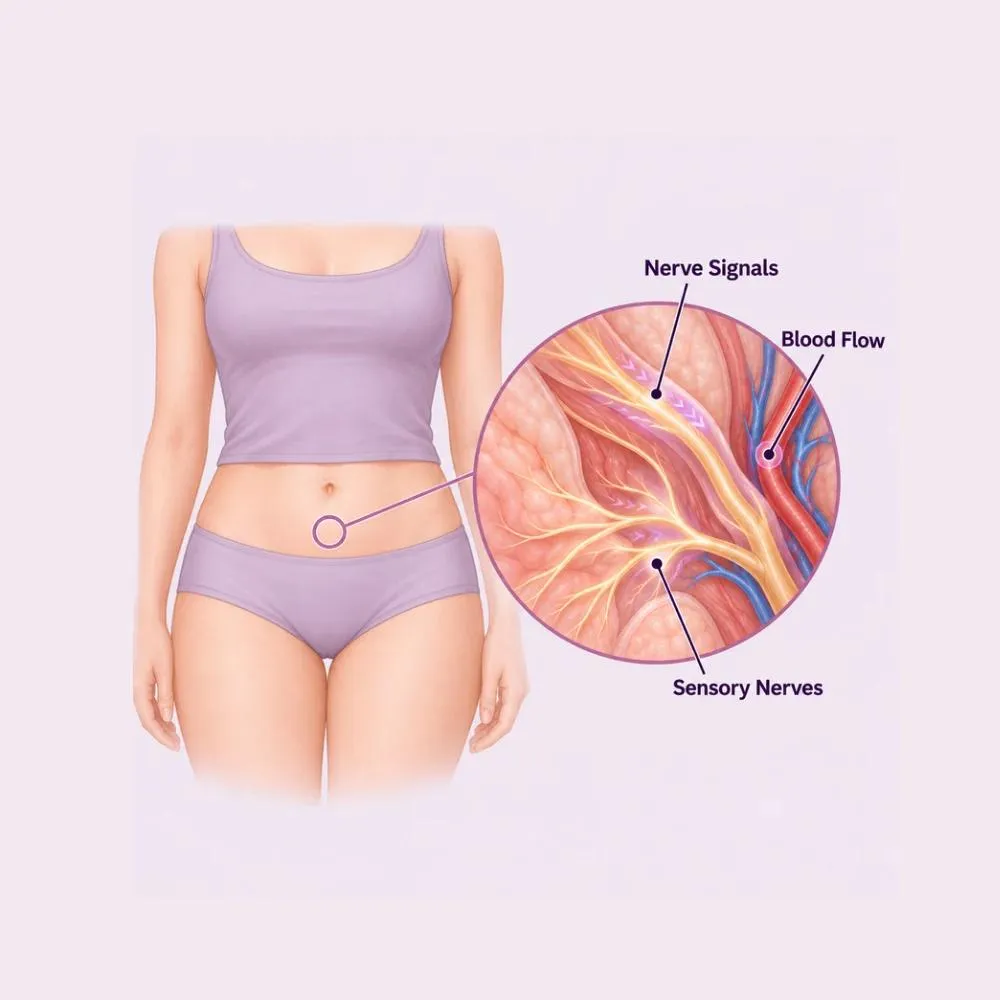
Sexual dysfunction is persistent or recurrent difficulty with any part of sexual response (desire, arousal, orgasm or comfort) that causes personal distress. That last element is part of the definition rather than an afterthought. Low desire that does not trouble you is not a disorder; the same level of desire causing you real unhappiness is.
In women it is usually grouped into four areas. Desire disorders involve persistently absent or reduced interest in sex. Arousal disorders involve difficulty becoming or staying physically aroused despite adequate stimulation. Orgasmic disorders involve marked delay, reduced intensity, or absence of orgasm. Pain disorders (dyspareunia and vaginismus) involve pain or involuntary muscle tightening that makes intercourse difficult or impossible.
These categories overlap heavily in practice, and that is the important clinical point. Pain reduces desire; low desire reduces arousal; poor arousal makes intercourse uncomfortable, which reinforces the pain. Treating one element in isolation usually disappoints, which is why the assessment looks at hormonal, medical, medication-related and psychological factors together.
Physical, hormonal, medication-related and psychological factors typically act together rather than alone.
Causes vaginal dryness and atrophy, making intercourse uncomfortable and reducing arousal. Highly treatable and frequently overlooked.
SSRI antidepressants are the commonest culprit, affecting desire and orgasm markedly. Beta blockers, some contraceptives and antipsychotics also contribute.
Diabetes, thyroid disease, cardiovascular disease and neurological conditions all affect blood flow, nerve function and energy.
Endometriosis, vulvodynia, vaginal atrophy and pelvic floor spasm cause pain that understandably suppresses desire.
Raised prolactin, thyroid dysfunction and low testosterone all reduce desire and are identified with simple blood tests.
Both the conditions themselves and their treatment affect sexual function, which makes them worth distinguishing carefully.
Conflict, poor communication, and a partner’s own sexual difficulty. Frequently central, and not something medication addresses.
Perineal trauma, exhaustion and body image after childbirth; and a history of sexual trauma, which needs specific and sensitive management.
Fatigue, stress and lack of time are genuinely among the commonest contributors, particularly for women managing work and young children. That is not a lesser explanation: it is a real and very common one.
The pattern (whether it is lifelong or acquired, and whether it occurs in every situation) is genuinely diagnostic.
Common presentations
Patterns that point to a cause
A problem that appeared after starting a new medication is one of the most commonly missed causes. SSRI antidepressants, some blood pressure drugs and hormonal contraceptives all affect desire and orgasm, and the timing usually gives it away.
The assessment separates what is hormonal, what is physical, what is medication-related and what is psychological.
Which part of sexual response is affected, whether it is lifelong or acquired, whether it occurs in all situations, and what changed around the time it began.
Going through every current drug, since SSRIs, beta blockers and hormonal contraceptives are common and correctable contributors.
Assessing for atrophy, vulval skin conditions, pelvic floor spasm and tenderness: done gently, and only where pain is part of the picture.
Thyroid function, prolactin, glucose, HbA1c and, where indicated, oestrogen and testosterone.
Screening for depression and anxiety, and discussing relationship context, often the most informative part of the consultation.
Where pain is prominent, to assess for endometriosis, fibroids or ovarian pathology.
A problem occurring in every situation, including alone, points toward a physical or hormonal cause. One that occurs only with a partner, or only with one particular partner, points elsewhere, and that single question saves a great deal of unnecessary testing.
Treatment addresses the correctable medical factors and the psychological ones together, because they rarely occur separately.
For atrophy and dryness after menopause. Inexpensive, highly effective, and often transforms comfort and arousal together.
Switching an SSRI, adjusting a beta blocker or changing contraception, in discussion with the prescribing doctor.
Correcting thyroid dysfunction or raised prolactin, both of which reduce desire and are straightforward to treat.
Hormonal suppression for endometriosis, topical steroids for vulval skin conditions, and antifungals or antibiotics for infection.
Considered in postmenopausal women with distressing low desire where other causes have been addressed, with careful monitoring.
Practical measures that remove friction and discomfort while underlying treatment takes effect.
For vaginismus and muscle spasm, using manual release and graded dilator work. Highly effective and frequently the missing piece.
Structured therapy addressing arousal, communication and technique, usually with the partner involved.
For anticipatory anxiety, avoidance and the negative beliefs that develop around repeated difficulty.
Where relationship conflict or communication is central, which medication cannot address.
Specialist psychological support where past sexual trauma is contributing, at a pace set by you.
A partner’s erectile dysfunction or premature ejaculation is frequently part of the picture and is assessed by our urology team.
Where a partner has a sexual difficulty of his own, treating only one person rarely helps. Erectile dysfunction in particular is common, treatable, and often the unspoken half of the problem.
The consultation is unhurried and private. Treatment usually combines a medical change with a therapeutic one.
Confidential assessment and combined treatment
Discussing what specifically is difficult, since desire, arousal, orgasm and pain problems are assessed and treated quite differently.
Lifelong or acquired, situational or generalised, and what changed around the time it began: new medication, childbirth, menopause or illness.
A full list of current drugs. This step alone identifies a correctable cause in a meaningful proportion of women.
Gentle pelvic examination where pain is part of the picture, with thyroid, prolactin and glucose testing.
Oestrogen for atrophy, treatment for a pain condition, thyroid correction, or a medication change agreed with the prescriber.
Pelvic floor physiotherapy for spasm, and sex therapy or CBT for arousal, anxiety and communication.
Reassessment at three months, since medical and psychological treatments both take weeks to months to show their effect.
The most productive question in this consultation is usually what changed. A problem that began within weeks of a new medication, a delivery or the menopause frequently has its answer in that timing.
This is common, distressing and rarely discussed. Here is why patients trust us:
Private consultations with women gynaecologists for whom this is an everyday conversation rather than an awkward one.
Atrophy, thyroid disease, raised prolactin and contributing medication all identified, rather than the problem being assumed psychological.
From the first consultation through to post-treatment follow-up, with one team throughout.
Our hospital is in HITEC CITY, near IKEA: easily reachable from across Hyderabad.
Correctable medical causes improve within weeks. Where therapy is involved, progress is measured over months.
Assessment completed, contributing medication reviewed, and treatment started for any physical or hormonal cause found.
Vaginal oestrogen reaches full effect; thyroid or prolactin correction begins improving desire. Therapy underway.
Therapeutic progress consolidates. Comfort, confidence and desire typically improve together rather than separately.
Further gains where relationship and psychological factors were prominent. Treatment adjusted as needed.
Maintenance of any ongoing treatment such as vaginal oestrogen, which returns to baseline if stopped.
Vaginal oestrogen takes about three months for full effect, and therapy works over months. Judging either at three weeks understates them.
If an SSRI is contributing, it is changed in discussion with the prescriber. Stopping abruptly causes withdrawal symptoms and risks relapse.
Sexual difficulty affects both people, and treating one person in isolation frequently disappoints. Partners who understand what is happening respond very differently.
Desire rarely recovers while intercourse still hurts. Addressing the pain is usually the prerequisite rather than a later step.
Products marketed for female libido have little evidence behind them and some contain undeclared ingredients. The treatable causes are worth finding instead.
Desire, arousal, orgasm and pain are interlinked. Improvement in one frequently improves the others, and treating them together works better.
The most common obstacle to treating this is that nobody raises it: women assume it is untreatable and doctors assume they would mention it. It is a medical problem with medical answers, and it is entirely reasonable to bring it up.
Book a consultation if any of the following apply.
Medical assessment and treatment are inexpensive. Therapy is the main recurring cost and often the more valuable one.
| Procedure | Estimated Cost |
|---|---|
| Consultation Private and unhurried | ₹800 – ₹1,500 |
| Blood tests Thyroid, prolactin, glucose, hormones | ₹2,000 – ₹6,000 |
| Pelvic ultrasound Where pain is prominent | ₹1,500 – ₹3,500 |
| Local vaginal oestrogen Per month | ₹400 – ₹1,500 |
| Pelvic floor physiotherapy Per session; eight to twelve sessions | ₹800 – ₹2,000 |
| Sex therapy or CBT Per session; six to sixteen sessions | ₹1,000 – ₹2,500 |
| Couples counselling Per session | ₹1,500 – ₹3,000 |
Atrophy or a contributing medication is addressed for a few hundred rupees monthly. Longstanding difficulty needs therapy over months.
Sex therapy and pelvic floor physiotherapy both run over several sessions, and together they form the bulk of the cost.
Couples work and assessment of a partner’s own difficulty add cost, but frequently produce considerably better results.
A shared ward, a twin-sharing room or a private suite: the largest single swing in most estimates.
We are empanelled with most major insurers, and our team files the pre-authorisation for you.
Every figure above is an indicative range, not a quote. After your consultation you are given a written, fixed-cost estimate, and that is the number you pay, with no additions once treatment begins.
The gynaecologists who treat sexual dysfunction at our HITEC CITY hospital.

Consultant Gynaecologist & Advanced Laparoscopic Surgeon
MBBS, MS, FMAS
16 years experience

Consultant Obstetrician, Gynecologist & Laparoscopic Surgeon
MBBS, MS (Obstetrics & Gynaecology)
11 years experience
Reviews from women treated for gynaecological conditions at Lux Hospitals, Hyderabad.
Written by Dr. Harshita Kakarla on women’s health and gynaecological care.
Dr. Harshita Kakarla

Dr. Harshita Kakarla

Dr. Harshita Kakarla
Dr. Harshita Kakarla

Dr. Harshita Kakarla
Dr. Harshita Kakarla
Common questions about sexual dysfunction, its causes and what treatment costs at Lux Hospitals.
Still have questions? Call us at 079 6908 4422
Still have questions? Message us on WhatsApp at 079 6908 4444
Sexual difficulties assessed as a medical problem, with the treatable causes found and addressed privately.
Plot No.116, Lumbini Avenue, HITEC CITY, Near IKEA, Hyderabad – 500032













