



Dr. Samhitha Reddy
Consultant Proctologist & Laparoscopic Surgeon
MBBS, MS, FMAS, FISCP, DMAS
- 8 Yrs
- ASCRS Member
The thyroid is a small gland in the neck that sets the pace of almost everything: metabolism, heart rate, temperature, mood and energy. When it runs too fast or too slow, the effects are felt everywhere, which is why thyroid disease is so often mistaken for something else entirely.
Most thyroid conditions are managed with medication and monitoring. Where a nodule, a large goitre or a suspicious lump needs surgery, our surgeons at Lux Hospitals, HITEC CITY perform thyroidectomy with meticulous attention to the nerves and parathyroid glands that sit alongside it.
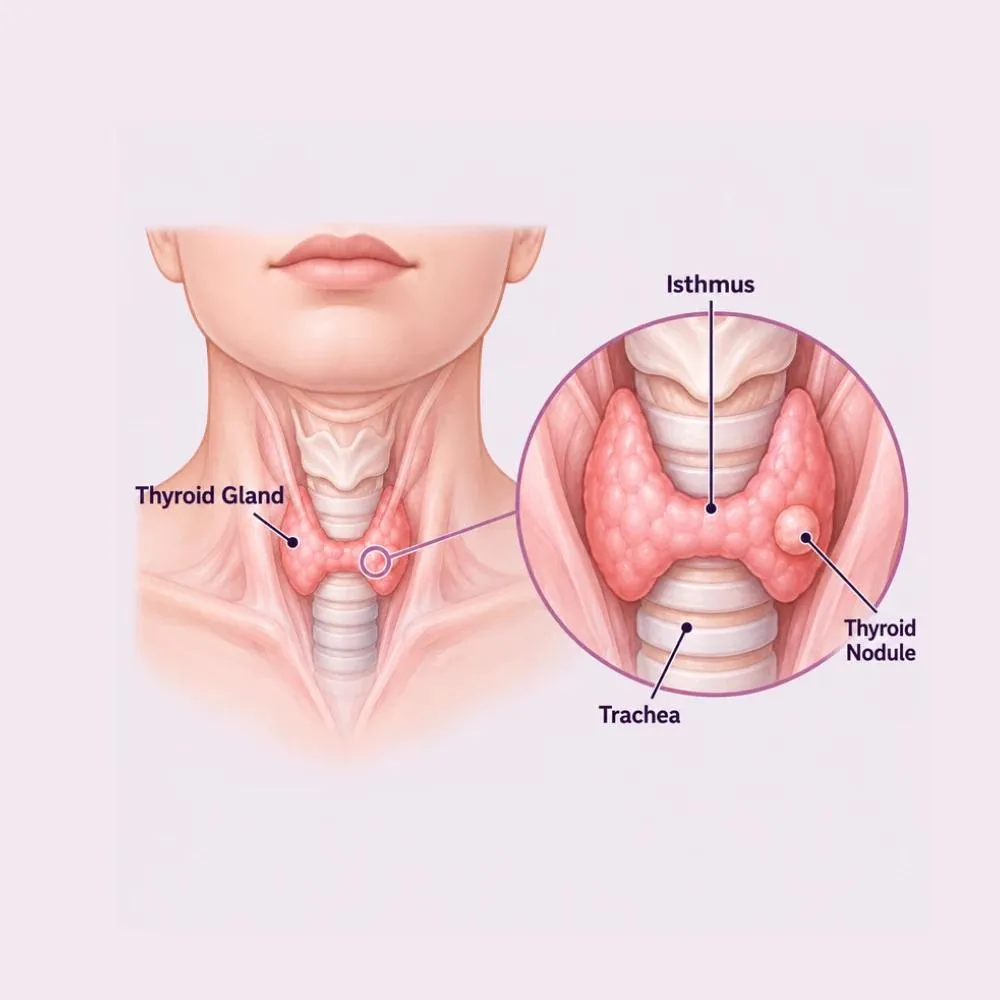
The thyroid gland sits at the base of the neck and produces the hormones T3 and T4, which regulate metabolism, energy and hormonal balance throughout the body. Thyroid disorders arise when the gland produces too much or too little hormone, or when it grows abnormally.
Hypothyroidism (an underactive gland) is the commonest, and slows everything down: fatigue, weight gain, cold intolerance, dry skin and low mood. Hyperthyroidism speeds everything up, causing weight loss, a racing heart, tremor, heat intolerance and irritability. Both are usually autoimmune in origin, from Hashimoto’s thyroiditis and Graves’ disease respectively.
Separately from hormone function, the gland can grow. A goitre is a general enlargement; nodules are discrete lumps within it. The great majority of nodules are entirely benign, but because a small proportion are not, any nodule above a certain size or with worrying features on ultrasound is sampled with a needle before anything else is decided.
Autoimmune disease accounts for most thyroid dysfunction. Iodine, medication, pregnancy and radiation account for much of the rest.
An autoimmune condition in which the immune system gradually destroys thyroid tissue. The commonest cause of hypothyroidism worldwide.
An autoimmune condition that stimulates the thyroid to overproduce hormone, and the commonest cause of hyperthyroidism. It also causes the characteristic eye changes.
Both deficiency and excess disrupt thyroid function. Iodine deficiency remains a cause of goitre in parts of India.
Nodules can be autonomously overactive, producing hormone outside normal control and causing hyperthyroidism.
Pregnancy alters thyroid demand considerably, and postpartum thyroiditis is a common and often missed cause of symptoms after delivery.
Amiodarone, lithium and interferon all disturb thyroid function, sometimes in either direction.
Previous radiotherapy to the head or neck raises the risk of both thyroid dysfunction and thyroid cancer years later.
The pituitary drives the thyroid. A pituitary problem causes thyroid dysfunction that will not respond to treating the thyroid itself.
Thyroid disease runs in families, is several times commoner in women, and often appears around pregnancy or menopause. A family history is worth mentioning, because it lowers the threshold for testing.
Symptoms depend entirely on which direction the gland has gone. Reading the two lists side by side is the quickest way to recognise the pattern.
Underactive thyroid (hypothyroidism)
Overactive thyroid (hyperthyroidism)
A visible swelling in the neck, a lump that moves when you swallow, hoarseness, or difficulty swallowing or breathing needs assessment regardless of which list you recognise: those are structural symptoms, not hormonal ones.
A blood test answers the functional question. Ultrasound and a needle biopsy answer the structural one, and the two are separate assessments.
TSH, free T4 and free T3. TSH alone detects most thyroid dysfunction, since it rises early in an underactive gland and falls early in an overactive one.
Anti-TPO and TSH receptor antibodies confirm an autoimmune cause and distinguish Hashimoto’s from Graves’ disease.
Images the gland and characterises any nodules (size, composition, margins and calcification) which determines whether a biopsy is needed.
A thin needle samples a nodule under ultrasound guidance. It is quick, done in the clinic, and is what actually distinguishes benign from malignant.
Shows which parts of the gland are functioning, identifying an autonomously overactive nodule in hyperthyroidism.
A check of vocal cord movement before any thyroid surgery, so that baseline function is documented rather than assumed.
Most thyroid nodules are benign. The purpose of ultrasound and needle biopsy is to identify the small minority that are not, without operating on the majority that need no surgery at all.
Treatment depends on whether the problem is hormonal, structural, or both. Most patients are managed with medication and periodic monitoring, and never need an operation.
For hypothyroidism. A single daily tablet replacing what the gland no longer makes, with the dose titrated on blood tests. Safe, inexpensive and effective for life.
Carbimazole, methimazole or propylthiouracil reduce hormone production in hyperthyroidism. Often given for twelve to eighteen months, after which some patients stay in remission.
Control the palpitations, tremor and anxiety of hyperthyroidism quickly, while the anti-thyroid drugs take several weeks to work.
A single oral dose taken up selectively by overactive thyroid tissue, shrinking it permanently. Highly effective for Graves’ disease and toxic nodules.
Small benign nodules and mild subclinical dysfunction are monitored with periodic bloods and ultrasound rather than treated.
Adequate iodine, selenium and zinc, regular exercise, stress management and limiting processed food: supportive of, not a substitute for, treatment.
Removal of one lobe, for a nodule confined to that side. Around eighty per cent of patients retain enough function afterwards to need no hormone replacement.
Removal of the whole gland, for thyroid cancer, large multinodular goitre, or Graves’ disease not controlled medically. Lifelong levothyroxine follows.
A portion of gland is deliberately preserved, aiming to retain function while relieving the compressive or hormonal problem.
Removal of the lymph nodes alongside the thyroid where cancer has spread to them, performed at the same operation.
Intraoperative monitoring of the recurrent laryngeal nerve, which supplies the vocal cords. It is what protects the voice during a thyroidectomy.
Surgery is indicated for confirmed or suspected cancer, a goitre pressing on the windpipe or oesophagus, hyperthyroidism that has failed medical treatment, and occasionally for cosmetic reasons where the swelling is large.
A one and a half to three hour operation through a small horizontal incision in a natural neck crease, where the scar settles almost invisibly.
Thyroidectomy
Bloods, calcium and vitamin D levels, vocal cord check, and confirmation that thyroid function is controlled: operating on an uncontrolled overactive gland is avoided.
General anaesthetic. A four to six centimetre incision is placed in a natural skin crease low in the neck, so the eventual scar hides in it.
The strap muscles are separated in the midline (divided muscle is avoided) giving access to the thyroid without cutting through anything that matters.
The recurrent laryngeal nerve is identified and traced along its length, with continuous nerve monitoring. This is the step that protects your voice.
The four tiny parathyroid glands, which control calcium, are identified and carefully preserved with their blood supply. Damaging them causes low calcium afterwards.
The lobe or whole gland is dissected free and removed. Frozen section may be sent during the operation if malignancy is suspected but unconfirmed.
The wound is closed with a fine subcuticular stitch or glue. Overnight observation with calcium monitoring, and home after one to two nights.
The two structures that make this operation demanding are the recurrent laryngeal nerve and the parathyroid glands. Everything about the technique (the magnification, the nerve monitoring, the unhurried dissection) exists to protect them.
Thyroid surgery is judged on two things: the voice afterwards, and the calcium. Here is why patients trust us:
General surgeons experienced in thyroid work, with intraoperative nerve monitoring used as standard rather than on request.
Thyroid function testing, ultrasound and ultrasound-guided FNAC in-house, so most nodules are characterised at one visit.
From the first consultation through to post-treatment follow-up, with one team throughout.
Our hospital is in HITEC CITY, near IKEA: easily reachable from across Hyderabad.
Recovery from thyroid surgery is quicker than most people expect. The neck feels stiff for a week or two, and the main monitoring is of calcium and hormone levels.
Overnight in the ward with calcium levels checked. A sore throat and neck stiffness are normal. Eating and drinking the same evening.
Home on painkillers, and on calcium and hormone replacement where indicated. Neck movements feel tight; gentle range-of-motion exercises begin.
Desk work resumes from about week two. The wound settles and the histopathology result is discussed. Thyroid bloods are rechecked.
Full activity including the gym. Hormone replacement dose is titrated on repeat blood tests until levels are stable.
The scar fades substantially and continues improving for up to a year. Ongoing monitoring of thyroid function, at intervals set by your result.
On an empty stomach, thirty to sixty minutes before breakfast, and away from calcium, iron and antacids, which block its absorption.
Tingling around the mouth or in the fingers, or muscle cramps, in the first days after total thyroidectomy. Tell us: it is easily corrected.
Slow range-of-motion movements from the first week prevent lasting stiffness and help the scar settle softly.
Keep it covered or use sunscreen for the first six months. Sun exposure on a fresh scar darkens it permanently.
Rapid swelling of the neck, difficulty breathing, persistent hoarseness, fever, or tingling and cramps suggesting low calcium.
Thyroid levels need rechecking periodically for life after total thyroidectomy, and the dose adjusted as your needs change.
Some voice hoarseness in the first weeks is common from the breathing tube and from handling of the nerve, and it nearly always resolves. Permanent voice change is uncommon and is precisely what the nerve monitoring exists to prevent.
Book a consultation if any of the following apply.
Most thyroid disease is managed medically at low ongoing cost. Surgery is a one-off expense, and these are the ranges our patients fall into.
| Procedure | Estimated Cost |
|---|---|
| Specialist consultation Per visit | ₹800 – ₹1,500 |
| Thyroid function tests TSH, free T4, free T3 | ₹800 – ₹2,500 |
| Thyroid ultrasound Out-patient | ₹1,500 – ₹3,500 |
| Fine needle aspiration (FNAC) Ultrasound-guided, including cytology | ₹3,000 – ₹6,000 |
| Medical management Per month, levothyroxine or anti-thyroid drugs | ₹200 – ₹1,500 |
| Hemithyroidectomy One to two nights’ stay | ₹90,000 – ₹1,50,000 |
| Total thyroidectomy Two nights’ stay, nerve monitoring included | ₹1,20,000 – ₹2,20,000 |
| Thyroidectomy with neck dissection Three to five nights’ stay | ₹2,00,000 – ₹3,50,000 |
Levothyroxine is a few hundred rupees a month for life. Surgery is a one-off cost reserved for structural problems and cancer.
Removing one lobe, the whole gland, or the gland with lymph nodes are three very different operations in time and complexity.
Confirmed cancer means a more extensive operation, frozen section during surgery, and follow-up that may include radioactive iodine.
A shared ward, a twin-sharing room or a private suite: the largest single swing in most estimates.
We are empanelled with most major insurers, and our team files the pre-authorisation for you.
Every figure above is an indicative range, not a quote. After your consultation you are given a written, fixed-cost estimate, and that is the number you pay, with no additions once treatment begins.
The general and endocrine surgeons who treat thyroid disorders at our HITEC CITY hospital.

Consultant General & Advanced Laparoscopic Surgeon
MBBS, MS, FMAS
17 years experience
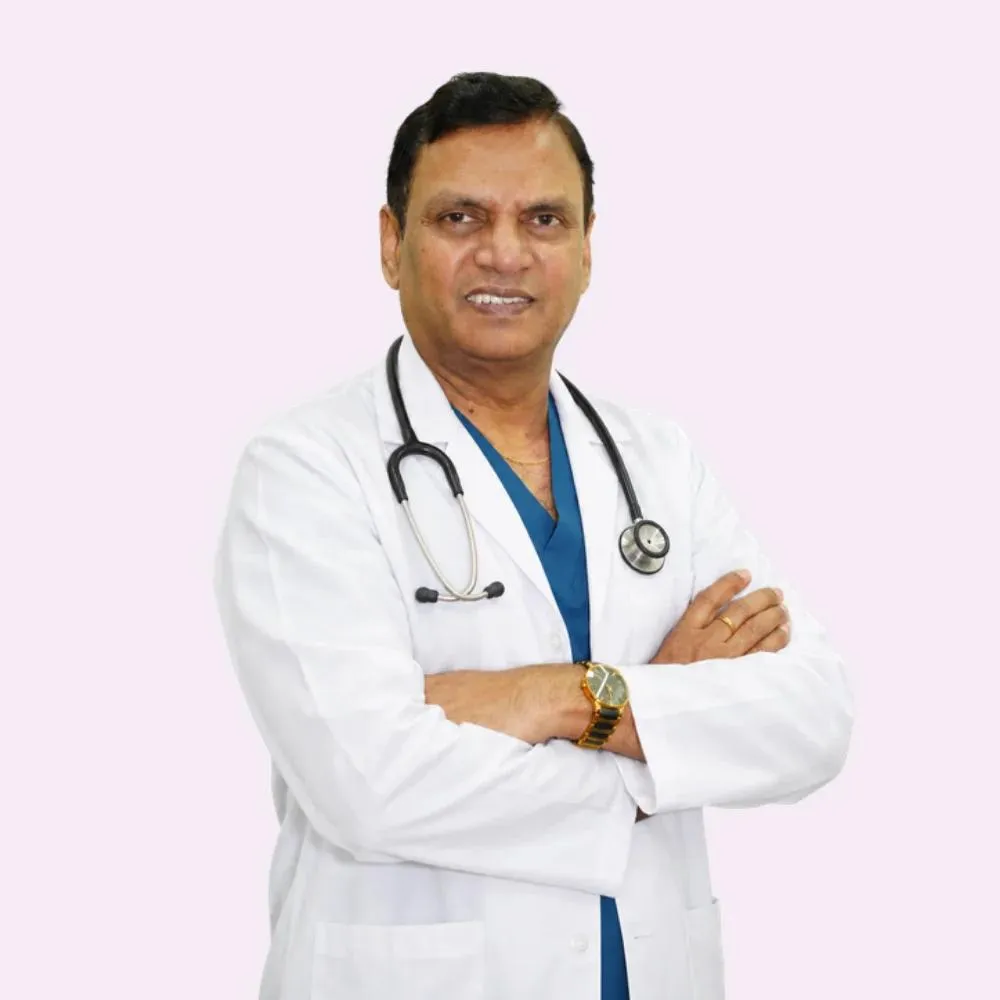
Senior Consultant: Bariatric & Gastrointestinal Surgery
MBBS, MS, FRCS (UK), DLS (France)
28 years experience

Consultant Proctologist & Laparoscopic Surgeon
MBBS, MS, FMAS, FISCP, DMAS
8 years experience
Reviews from patients treated for thyroid, hernia and general surgery at Lux Hospitals, Hyderabad.
Written by Dr. Abhishek Katha on general and endocrine surgical care.

Dr. Abhishek Katha
Dr. Abhishek Katha

Dr. Abhishek Katha

Dr. Abhishek Katha
Dr. Abhishek Katha
Dr. Abhishek Katha
Common questions about thyroid disorders, thyroid surgery, and what treatment costs at Lux Hospitals.
Still have questions? Call us at 079 6908 4422
Still have questions? Message us on WhatsApp at 079 6908 4444
Accurate thyroid diagnosis and treatment, from medication to nerve-preserving surgery, with costs shared upfront.
Plot No.116, Lumbini Avenue, HITEC CITY, Near IKEA, Hyderabad – 500032













