Dr. Samhitha Reddy
Consultant Proctologist & Laparoscopic Surgeon
MBBS, MS, FMAS, FISCP, DMAS
- 8 Yrs
- ASCRS Member
Sciatica causes pain that travels from the lower back or buttock into the leg, sometimes with tingling, numbness or weakness. It can make sitting, walking, driving and daily activities uncomfortable. However, not every patient with sciatica requires surgery. Many people improve with appropriate activity, physiotherapy and symptom management.
The best treatment depends on what is irritating the nerve and whether there is significant nerve compression. At Lux Hospitals, Hyderabad, patients can enquire about clinical evaluation for sciatic nerve pain, lumbar disc problems and other spine-related conditions.
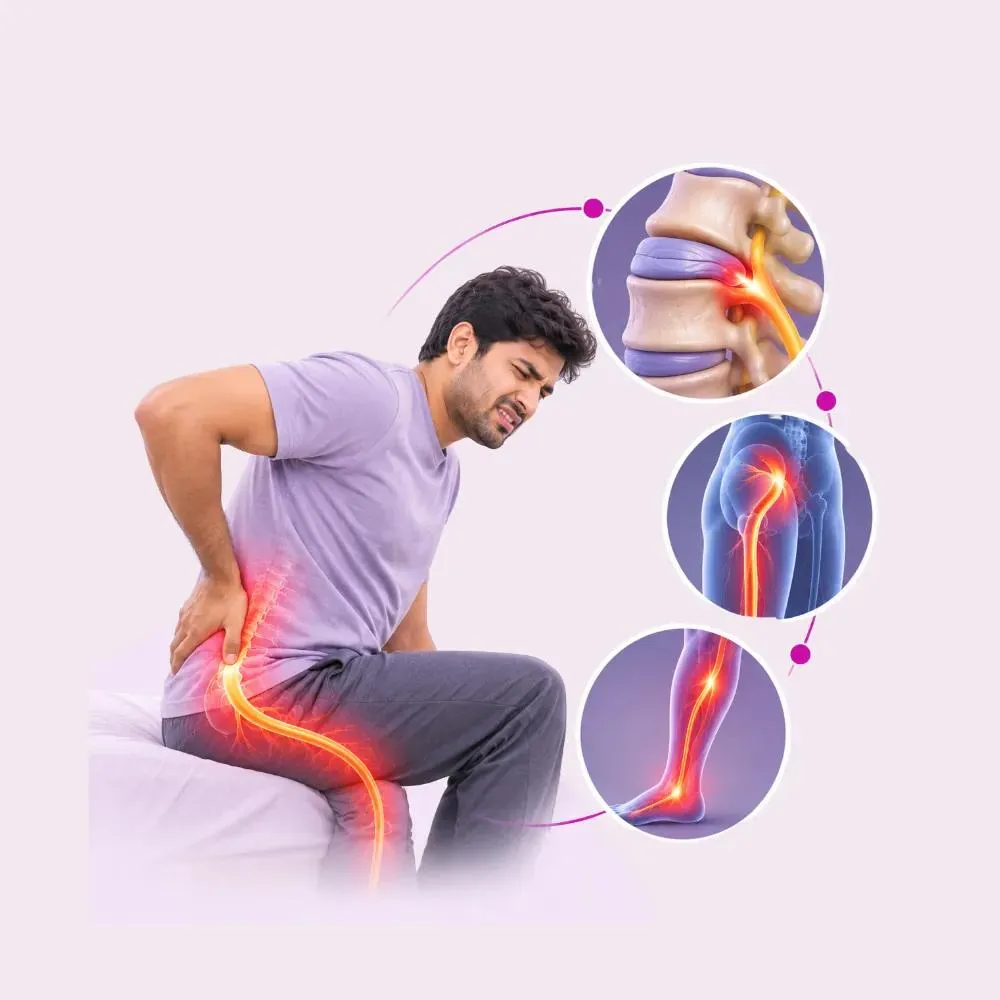
Sciatica refers to pain that develops when the sciatic nerve, or the nerve roots that contribute to it, become irritated or compressed. The sciatic nerve is the body’s largest nerve. It starts in the lower spine, passes through the buttock and travels down the back of each leg, branching into the lower leg and foot.
Sciatica commonly causes pain that starts in the lower back or buttock and radiates down one leg. Other symptoms may include burning sensations, tingling, numbness or muscle weakness.
Sciatica is a symptom of an underlying condition rather than a disease in itself. A herniated lumbar disc is a common cause, although spinal stenosis and other spinal conditions may also contribute to nerve compression.
The severity can range from mild discomfort to intense pain that affects walking, sitting or sleeping. Treatment focuses on identifying the underlying cause, relieving pain and restoring normal movement and function.
Sciatica usually develops when a nerve root in the lower spine becomes compressed or irritated.
A lumbar disc herniation occurs when soft disc material protrudes through its outer covering. The displaced material can irritate or compress a nearby nerve root, causing pain that travels into the leg.
Spinal stenosis is a narrowing of the spaces inside the spine. This narrowing may compress nerve structures and cause leg pain, numbness or weakness, especially when standing or walking.
Age-related changes in spinal discs and joints can sometimes irritate nerves or narrow the spaces they travel through.
Spondylolisthesis occurs when one vertebra slips forward over another. In some cases, this can compress nerves.
Trauma or certain injuries to the lower spine may result in nerve-related symptoms.
Sciatica can occasionally be mistaken for conditions affecting the structures around the hip or buttock. For example, deep gluteal syndrome may irritate the sciatic nerve outside the spine. Less commonly, infection, tumours or other serious conditions may produce similar symptoms.
Identifying the actual cause is important because treatment for a slipped disc may differ from treatment for spinal stenosis or another condition.
Sciatica symptoms vary depending on the affected nerve root and the severity of irritation.
Common symptoms
Emergency warning signs
Sciatica usually affects one side, although symptoms can occasionally involve both legs, and leg pain can be more severe than the associated lower back pain. The emergency signs may indicate cauda equina syndrome or another severe neurological condition: seek immediate emergency medical attention, and do not wait for a routine appointment.
Sciatica diagnosis usually begins with a medical history and physical examination. The goal is to determine whether the symptoms come from spinal nerve irritation and whether additional testing is needed.
The doctor reviews the pain location, its duration and whether it travels below the knee. Questions may include whether symptoms worsen during sitting, standing, bending or walking.
The doctor tests reflexes, sensation and muscle strength. This helps identify any notable neurological dysfunction and possible nerve-root involvement.
The straight leg raise test may be used if the doctor suspects lumbar nerve irritation. The doctor carefully lifts the patient’s leg while watching for radiating pain.
An X-ray does not directly show nerve compression or a herniated disc. However, it may be useful when the clinician suspects certain structural conditions, fractures or spinal alignment problems.
MRI provides detailed images of the spinal discs, nerves and surrounding soft tissues. It may be recommended when symptoms are severe or persistent, neurological deficits are present, or the results are likely to influence treatment. Routine MRI is not necessary for every uncomplicated episode of sciatica.
The doctor evaluates how symptoms affect walking, sitting, sleep and daily activities. Clinical findings and any relevant imaging help determine whether conservative care, further intervention or surgical evaluation is appropriate.
A disc bulge on an MRI does not automatically mean it is causing sciatica.
Most people with sciatica improve without surgery. Treatment usually begins with suitable activity, exercise-based rehabilitation and individualised symptom management.
An important part of conservative sciatica management. A personalised programme may include exercises to improve spinal movement, strengthen supporting muscles and gradually restore physical function.
Certain positions or movements may aggravate nerve pain, and temporarily avoiding them may help. Prolonged bed rest is generally avoided; patients should stay active within tolerable limits.
A clinician may consider selected anti-inflammatory medicines after weighing their limited potential benefit against gastrointestinal, kidney and cardiovascular risks, and prescribes according to individual medical needs. Gabapentin, pregabalin, oral corticosteroids and benzodiazepines are not routinely recommended for sciatica, because evidence does not support an overall benefit and these medicines can cause harm. Opioids are not recommended for chronic sciatica.
An epidural injection containing local anaesthetic and corticosteroid may be considered for selected patients with acute, severe sciatica. It aims to relieve symptoms by reducing inflammation around the affected nerve, but the improvement may be temporary and the procedure does not remove the underlying structural problem.
Progressive rehabilitation may involve walking, strengthening and individually appropriate mobility exercises. The aim is to restore activity while avoiding excessive fear of movement.
Regular physical activity, avoiding tobacco and maintaining appropriate physical conditioning may support general spinal health.
Removes the part of a herniated lumbar disc that is compressing a nerve root. It may be recommended for selected patients with persistent sciatic nerve pain caused by disc herniation.
Uses specialised instruments and a camera to remove selected disc fragments. Suitability depends on disc location, anatomy and the surgeon’s expertise.
May be recommended when nerve compression is caused by spinal stenosis or another narrowing of the spinal canal. The operation aims to create more space for the affected nerve structures.
More complex spinal conditions may occasionally require additional procedures. Spinal fusion is not routinely indicated for uncomplicated sciatica caused by a simple lumbar disc herniation.
Surgery may be considered when sciatica remains disabling despite appropriate conservative care and imaging shows a structural cause that matches the symptoms.
When a herniated lumbar disc causes sciatica, doctors may recommend microdiscectomy for suitable patients. The operation aims to relieve pressure on the affected nerve root.
Microdiscectomy
Microdiscectomy is commonly performed under general anaesthesia.
The patient is positioned to provide access to the affected spinal level.
The surgeon makes a relatively small incision over the relevant area of the lower back.
The surgeon carefully locates the compressed nerve root and the structures around it.
The portion of herniated disc material causing nerve compression is removed. The entire intervertebral disc is not routinely removed.
The surgeon checks whether the affected nerve has been adequately decompressed.
The surgeon closes the incision and the patient is monitored while recovering from anaesthesia. Walking may begin when medically appropriate.
The approach chosen for you depends on the cause of your sciatica, your anatomy and your symptoms.
The first step in sciatica management is identifying why pain travels into the leg and whether nerve involvement is significant.
Treatment planning considers the pain pattern, neurological findings and relevant investigations.
Many patients get better without surgery. Rehabilitation and activity modification are important strategies when clinically appropriate.
Persistent numbness, weakness or severe radiating pain may require additional evaluation.
Sciatica from a herniated disc may need a different approach from sciatica caused by spinal stenosis.
Lux Hospitals is located in HITEC CITY, near IKEA, with access from Gachibowli and surrounding areas of Hyderabad.
Recovery depends on the cause of sciatica, the severity of nerve irritation and the treatment approach.
During an acute episode, pain may interfere with sitting, walking or sleeping. Gentle movement, appropriate medication and avoiding prolonged inactivity may help.
Some patients notice leg pain gradually decreasing. Walking and appropriate mobility exercises may be encouraged based on symptoms.
Physiotherapy may focus on restoring movement, strengthening muscles and increasing activity tolerance. Many patients improve during this period, although recovery varies.
Persistent or worsening symptoms may need reassessment. If symptoms remain disabling, the clinician may consider further investigation or specialist intervention.
Some patients continue to recover gradually, especially when nerve irritation has been prolonged. Ongoing rehabilitation may support a return to more demanding activities.
Gentle walking and regular movement are often encouraged.
Exercises are chosen and progressed according to each person’s symptoms.
Extended inactivity can increase stiffness and reduce muscle conditioning.
Patients with physically demanding jobs may need additional recovery time or temporary adjustments.
Do not increase painkillers on your own, or stop a prescribed medicine that needs to be reduced gradually.
New bladder or bowel dysfunction, saddle numbness or rapidly worsening weakness requires immediate emergency assessment.
Patients who undergo appropriate decompression surgery may see improvement in radiating leg pain, but residual numbness or weakness can take longer to recover and may not fully resolve. Recovery after surgery depends on the operation performed and individual neurological findings.
Consider medical assessment if:
The cost of sciatica treatment depends on the underlying cause, the severity of nerve compression and whether the patient needs conservative care, injections or surgery. Many patients recover with non-surgical treatment, so surgical costs do not apply to everyone.
| Procedure | Estimated Cost |
|---|---|
| Epidural Steroid Injection May provide temporary relief from nerve pain. | ₹12,000 onward |
| Microdiscectomy Removes disc material pressing on a spinal nerve. | ₹1,00,000 onward |
| Endoscopic Spine Surgery Removes selected disc material using an endoscope. | ₹1,40,000 onward |
A herniated disc, spinal stenosis or another condition may each call for a different treatment.
The degree of nerve compression influences whether conservative care, an injection or surgery is recommended.
Physiotherapy, medication, injections and spine surgery involve different equipment and clinical requirements.
Every figure above is an indicative starting price, not a final quotation. After clinical assessment, the hospital can provide a personalised estimate based on the treatment recommended, including applicable procedure and hospital charges.

Consultant Endoscopic Spine Surgeon
MBBS, MS (Orthopaedics), Fellowship in Spine Surgery (RGUHS)
7 years experience
Common questions about sciatica, its causes, recovery and when surgery is considered.
Still have questions? Call us at 079 6908 4422
Still have questions? Message us on WhatsApp at 079 6908 4444
Spine assessment at Lux Hospitals, HITEC CITY: finding what is irritating the nerve, non-surgical options first, and surgery when it is needed.
Plot No.116, Lumbini Avenue, HITEC CITY, Near IKEA, Hyderabad – 500032