Dr. Samhitha Reddy
Consultant Proctologist & Laparoscopic Surgeon
MBBS, MS, FMAS, FISCP, DMAS
- 8 Yrs
- ASCRS Member
Painful intercourse is a symptom, not a diagnosis. It has a cause, very often a treatable one, and finding which cause is what determines whether treatment works.
Where the pain is felt is the most useful clue: pain at the entrance points somewhere quite different from deep pain on penetration. Our gynaecologists at Lux Hospitals, HITEC CITY work through that systematically rather than offering a lubricant and leaving it there.
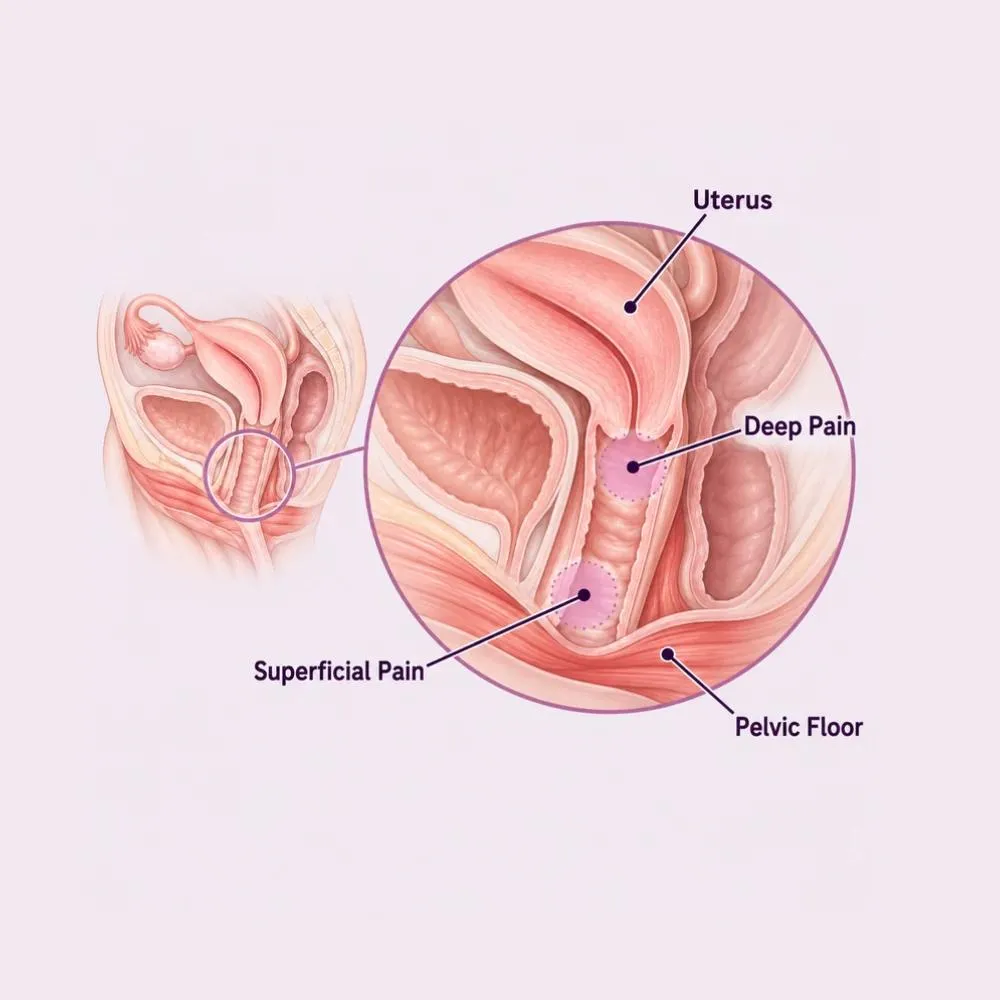
Dyspareunia is persistent or recurrent genital pain occurring before, during or after intercourse. It affects a substantial proportion of women at some point, estimates commonly run to around one in five, and it is markedly under-reported, because many women assume it is normal or feel unable to raise it.
It is classified by location, and this classification is genuinely diagnostic. Superficial or entry dyspareunia is felt at the vaginal opening on penetration, and points toward vaginal atrophy, vulvodynia, infection, skin conditions or pelvic floor muscle spasm. Deep dyspareunia is felt in the pelvis on deeper penetration, and points toward endometriosis, adenomyosis, fibroids, ovarian cysts, pelvic inflammatory disease or bowel conditions.
It is also classified by whether it has always been present or developed later. Lifelong pain from the very first attempt at intercourse suggests vaginismus, an anatomical variation, or fear and inadequate arousal. Pain that has developed in someone previously comfortable points to a new physical cause, and that distinction shapes the whole assessment.
The causes divide cleanly by whether the pain is superficial or deep.
The commonest cause of entry pain after menopause, and also seen while breastfeeding or on some hormonal contraceptives. Highly treatable.
Chronically tight muscles at the vaginal entrance, including vaginismus. Often both a cause of pain and a response to it.
Chronic nerve-related vulval pain with a normal-looking vulva, causing burning at the entrance on any contact.
The commonest causes of deep pain, typically worse around the period and often with an ache lasting afterwards.
Thrush, bacterial vaginosis, trichomoniasis and pelvic inflammatory disease all cause pain, and all are treatable once identified.
Lichen sclerosus, lichen planus and eczema cause soreness, splitting and narrowing of the entrance.
Structural causes of deep pain, particularly where positioned behind or beside the uterus.
A tender episiotomy or tear scar, or adhesions after pelvic surgery, causing pain at a specific identifiable point.
Deep pain that is worse around the period, with painful heavy periods, is endometriosis until proven otherwise. That combination is one of the most reliable pointers in gynaecology.
Where and when the pain occurs narrows the cause substantially before any test is done.
Entry pain
Deep pain
Bleeding after intercourse is never simply attributed to friction. It needs a cervical examination and a smear, because cervical abnormalities present exactly this way.
The assessment is systematic, and the history alone frequently identifies the cause.
Where the pain is, when it started, whether it is lifelong or new, its relationship to the cycle, and what makes it better or worse.
Vulval skin inspected, then gentle single-finger examination to locate the pain precisely before any speculum is used.
Light touch at defined points around the vestibule, identifying localised provoked pain characteristic of vestibulodynia.
For thrush, bacterial vaginosis, trichomonas, chlamydia and gonorrhoea, since these are readily treatable causes.
For deep pain, assessing for endometriosis, adenomyosis, fibroids and ovarian cysts.
Assessing muscle tone and trigger points, with laparoscopy where deep pain suggests endometriosis not visible on imaging.
The examination should start with a single gentle finger, not a speculum. Locating the pain precisely is the point, and a painful examination teaches the pelvic floor to brace, which is exactly the problem in many of these women.
Treatment follows the cause. Almost every cause of painful intercourse has an effective treatment.
For atrophy: highly effective, inexpensive, and the single most useful treatment for entry pain after menopause.
Manual release and dilator work for muscle spasm and vaginismus. One of the best-evidenced treatments, and not Kegels, which worsen it.
Targeted antifungal or antibiotic treatment once swabs identify the organism.
For deep pain from endometriosis or adenomyosis: continuous pills, progestogens or a hormonal IUD.
For lichen sclerosus and other vulval skin conditions, which respond well but need long-term maintenance.
Useful adjuncts for comfort, though they treat friction rather than any underlying cause.
Addressing anticipatory anxiety, avoidance and relationship strain, which perpetuate the pain regardless of its origin.
Removing endometriotic deposits and dividing adhesions, which improves deep dyspareunia substantially.
Into the pelvic floor muscles for severe vaginismus not responding to physiotherapy, breaking the spasm cycle.
Excising a tender episiotomy or tear scar, or performing a Fenton procedure to widen a narrowed entrance.
Myomectomy or ovarian cystectomy where a fibroid or cyst is causing positional deep pain.
Excision of painful vestibular tissue, a last resort for localised provoked vestibulodynia in selected women.
The pelvic floor is almost always involved by the time a woman seeks help, whatever started the problem. Treating the original cause without addressing the muscle guarding that developed around it is why pain so often persists after apparently successful treatment.
The path is the same regardless of cause: locate the pain, identify why, treat both the cause and the muscle response.
Structured assessment and cause-directed treatment
A private, unhurried consultation. Many women have never raised this before, and being asked directly is often what allows it.
Establishing whether it is superficial or deep, lifelong or acquired, and its relationship to the cycle. This alone narrows the cause considerably.
Vulval inspection, then single-finger examination to identify the painful point precisely, with a speculum only if needed.
Swabs for entry pain, ultrasound for deep pain, and pelvic floor assessment in both.
Oestrogen for atrophy, antifungals or antibiotics for infection, hormonal suppression for endometriosis, steroids for skin conditions.
Physiotherapy alongside, since muscle guarding develops around any cause of pain and persists after it is treated.
Graded reintroduction with lubricant and, where appropriate, dilators, plus sex therapy where anxiety and avoidance are entrenched.
Resuming intercourse before the pain has properly settled reinforces the anticipatory bracing, and the cycle restarts. Graded reintroduction at your own pace is part of the treatment rather than an afterthought.
This is a symptom with many possible causes, and treating it generically rarely works. Here is why patients trust us:
Superficial and deep pain assessed differently, with swabs, imaging and pelvic floor assessment directed by where the pain actually is.
Private, unhurried consultations with women gynaecologists, and a gentle examination that starts with a finger rather than a speculum.
From the first consultation through to post-treatment follow-up, with one team throughout.
Our hospital is in HITEC CITY, near IKEA: easily reachable from across Hyderabad.
Timescales differ by cause: weeks for infection or atrophy, months where the pelvic floor and confidence must be rebuilt.
Cause identified and treatment started. Infection resolves quickly; atrophy begins improving within the first month.
Pelvic floor physiotherapy underway. Atrophy treatment reaches full effect. Endometriosis suppression begins showing benefit.
Graded reintroduction of intercourse with lubricant. Confidence rebuilds, which for many women is the slower half of recovery.
Where surgery was needed, its benefit is established. Ongoing management of any chronic underlying condition.
Maintenance treatment continues for atrophy and endometriosis, both of which return if treatment stops.
Resuming before the pain has settled reinforces the bracing and restarts the cycle. Going at your own pace is part of the treatment.
Where muscle spasm is the problem (which is very common) strengthening exercises make it worse. The pelvic floor needs releasing instead.
Even once the cause is treated, adequate lubrication removes friction while tissue and confidence recover. Water or silicone-based.
Painful intercourse affects both people and generates avoidance on both sides. It is considerably easier addressed together than alone.
Atrophy and endometriosis both return if treatment stops. Continuing after symptoms settle is what keeps the pain away.
This is never simply friction. It needs a cervical examination and smear, because cervical abnormalities present exactly this way.
Painful intercourse is common, under-reported and almost always has an identifiable cause. The main reason it goes untreated for years is that nobody asks and nobody volunteers it.
Book a consultation if any of the following apply.
Cost depends entirely on the cause. Several of the commonest causes are among the least expensive to treat.
| Procedure | Estimated Cost |
|---|---|
| Consultation Private and unhurried | ₹800 – ₹1,500 |
| Swabs and infection screen For entry pain | ₹1,500 – ₹4,000 |
| Pelvic ultrasound For deep pain | ₹1,500 – ₹3,500 |
| Local vaginal oestrogen Per month; for atrophy | ₹400 – ₹1,500 |
| Pelvic floor physiotherapy Per session; eight to twelve sessions | ₹800 – ₹2,000 |
| Sex therapy or CBT Per session | ₹1,000 – ₹2,500 |
| Diagnostic laparoscopy For suspected endometriosis | ₹65,000 – ₹1,10,000 |
| Laparoscopic excision surgery For confirmed endometriosis | ₹1,30,000 – ₹2,60,000 |
Atrophy is treated for a few hundred rupees monthly. Endometriosis requiring laparoscopic excision is a different order entirely.
Pelvic floor therapy over eight to twelve sessions is a significant recurring cost, but it is what makes many treatments work.
Sex therapy or CBT adds cost but addresses the anticipatory anxiety that perpetuates pain regardless of its origin.
A shared ward, a twin-sharing room or a private suite: the largest single swing in most estimates.
We are empanelled with most major insurers, and our team files the pre-authorisation for you.
Every figure above is an indicative range, not a quote. After your consultation you are given a written, fixed-cost estimate, and that is the number you pay, with no additions once treatment begins.
The gynaecologists who treat painful intercourse at our HITEC CITY hospital.

Consultant Gynaecologist & Advanced Laparoscopic Surgeon
MBBS, MS, FMAS
16 years experience

Consultant Obstetrician, Gynecologist & Laparoscopic Surgeon
MBBS, MS (Obstetrics & Gynaecology)
11 years experience
Reviews from women treated for gynaecological conditions at Lux Hospitals, Hyderabad.
Written by Dr. Harshita Kakarla on women’s health and gynaecological care.
Dr. Harshita Kakarla
Dr. Harshita Kakarla
Dr. Harshita Kakarla
Dr. Harshita Kakarla
Dr. Harshita Kakarla
Dr. Harshita Kakarla
Common questions about painful intercourse, its causes and what treatment costs at Lux Hospitals.
Still have questions? Call us at 079 6908 4422
Still have questions? Message us on WhatsApp at 079 6908 4444
Painful intercourse assessed properly to find the cause, with treatment directed at it and costs shared upfront.
Plot No.116, Lumbini Avenue, HITEC CITY, Near IKEA, Hyderabad – 500032