Dr. Samhitha Reddy
Consultant Proctologist & Laparoscopic Surgeon
MBBS, MS, FMAS, FISCP, DMAS
- 8 Yrs
- ASCRS Member
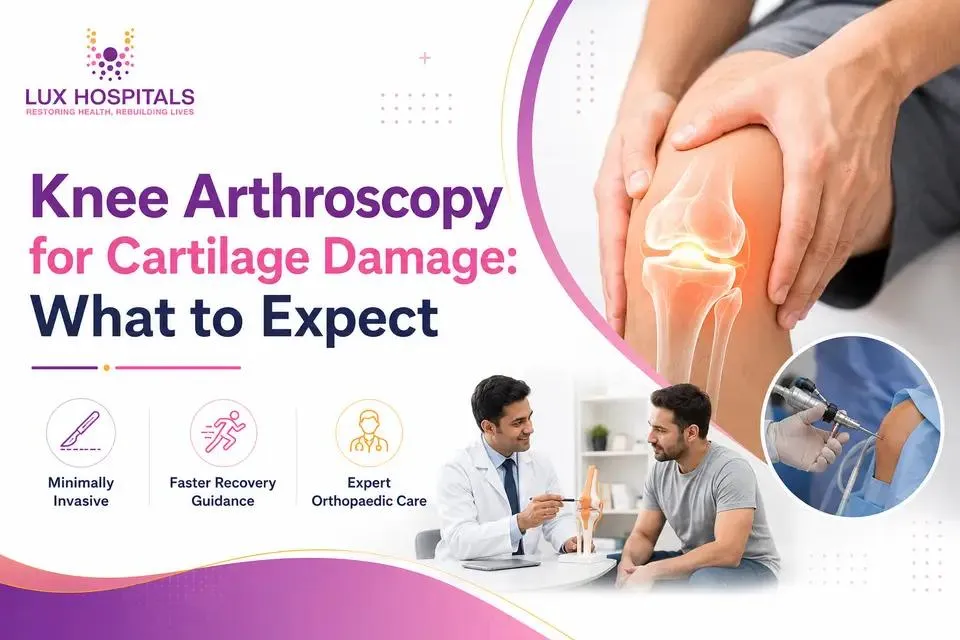
Arthroscopy is keyhole surgery inside a joint. A camera the width of a pencil is passed through a buttonhole incision, and the surgeon repairs what is found through one or two further openings of the same size.
It has transformed the treatment of sports injuries and joint problems: less pain, faster recovery and a fraction of the scarring of open surgery. Our orthopaedic surgeons at Lux Hospitals, HITEC CITY perform arthroscopy of the knee, shoulder, hip and ankle.
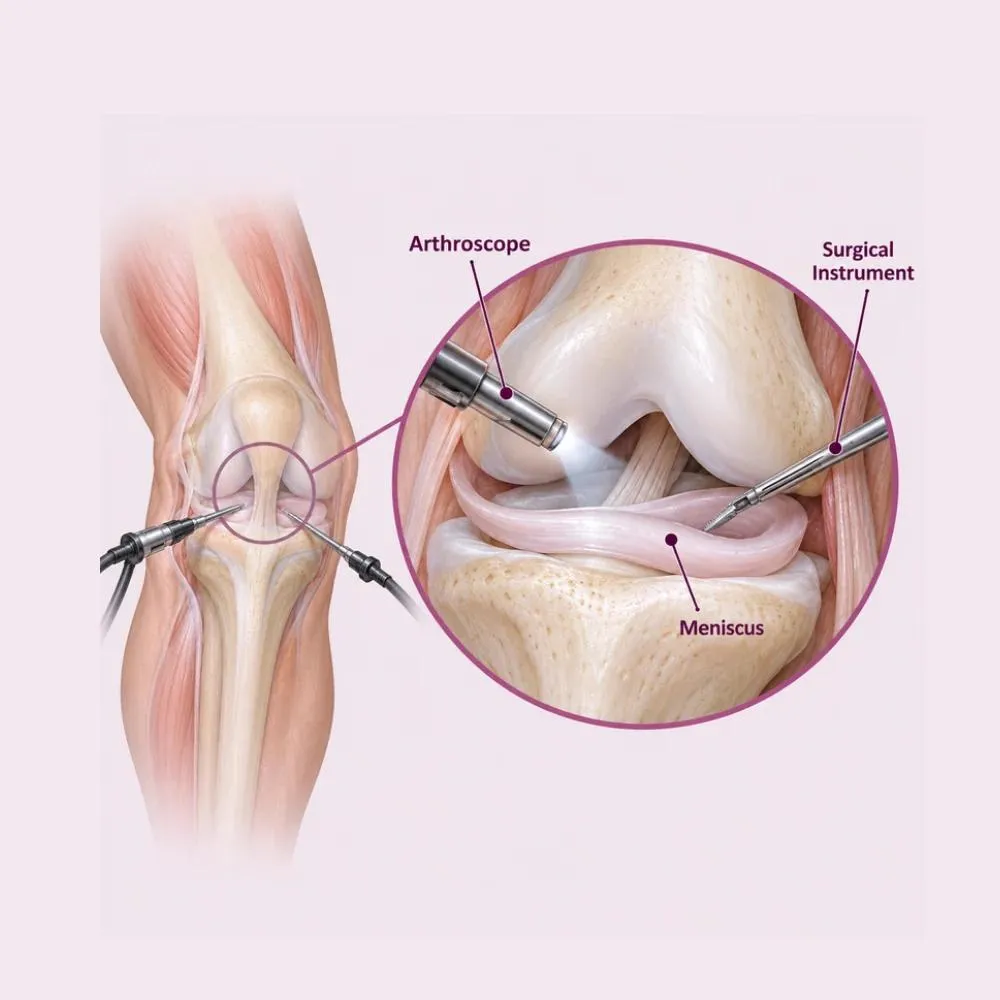
Arthroscopy is a minimally invasive technique for examining and treating the inside of a joint. A fibre-optic camera is introduced through an incision of five to ten millimetres, and the interior of the joint is displayed magnified on a screen. Instruments are passed through one or two further portals to carry out the repair.
It is used across several joints. The knee and shoulder account for the great majority, but hip arthroscopy for impingement and labral tears, and ankle arthroscopy for impingement and cartilage damage, are both well established.
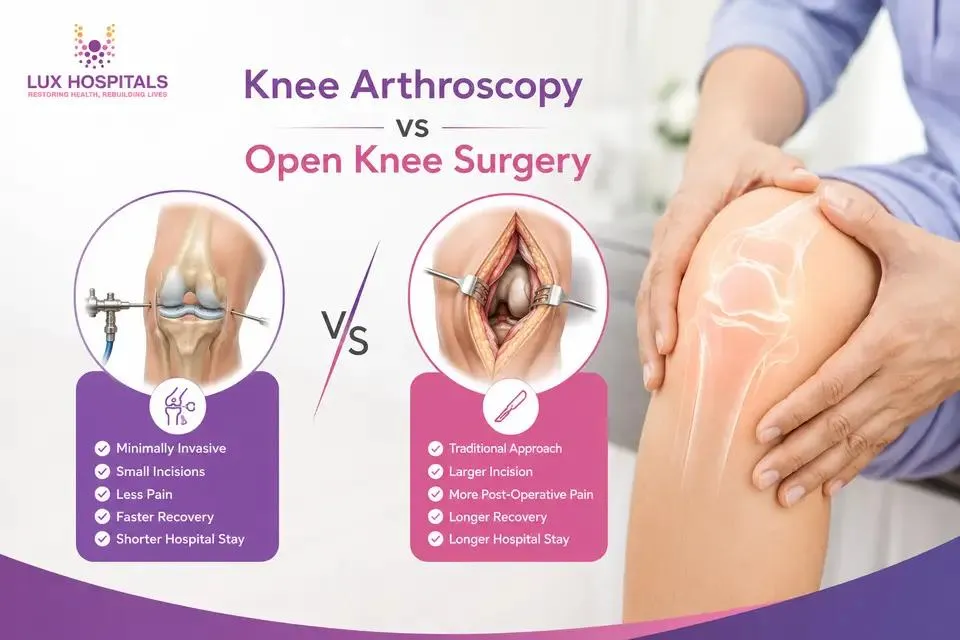
The advantages over open surgery are genuine: far less soft tissue disruption, less post-operative pain, quicker return to activity and much smaller scars. What it does not change is the biology of healing: a repaired tendon or ligament still takes months to heal regardless of how small the incisions were.
Different joints present with different problems, but the principle is the same: a structural fault inside the joint that can be reached through a keyhole.
The commonest arthroscopic indication. Torn cartilage is repaired or the damaged portion trimmed, resolving locking and catching.
ACL and PCL ruptures reconstructed arthroscopically using grafts, restoring stability in patients whose knee gives way.
Torn tendons reattached to bone with suture anchors, restoring strength and relieving night pain.
Bone spurs removed to decompress the cuff, and torn labrum reattached to stabilise a recurrently dislocating shoulder.
Abnormal bone shape reshaped and a torn labrum repaired, which can prevent early arthritis in young adults.
Bone spurs and scar tissue removed, and osteochondral defects treated, in ankles stiff or painful after injury.
Focal defects smoothed, micro-fractured or grafted, particularly worthwhile in younger patients.
Fragments causing locking removed, and inflamed joint lining excised and biopsied.
Hip arthroscopy deserves a mention. Correcting impingement in a young adult can relieve pain and may delay or prevent the arthritis that impingement otherwise causes.
Arthroscopy addresses mechanical problems inside a joint that have not settled with conservative treatment.
Symptoms suggesting a mechanical problem
Reasons to consider it further
Arthroscopy is not a treatment for arthritis. Where imaging shows established degenerative change and the symptoms are diffuse aching rather than mechanical, it does not help.
The workup establishes which structure is damaged, confirms it explains your symptoms, and prepares you for a day-case procedure.
Symptoms, mechanism of injury, previous problems and what treatment has already been tried.
Joint-specific tests assessing function, stability, range of motion and the precise site of tenderness.
Assess bone alignment, arthritis, spurs and loose fragments, and often identify who arthroscopy will not help.
Detailed assessment of ligaments, cartilage, tendons and the labrum. Interpreted alongside examination rather than in isolation.
Drawing fluid from the joint where infection or inflammatory arthritis is suspected, for urgent analysis.
Blood tests, an ECG where indicated, medication review and an anaesthetic consultation. Fasting for six hours beforehand.
Incidental findings on MRI are extremely common: degenerate tears that cause no symptoms at all. Treating the scan rather than the patient is the classic error in this field.
Conservative treatment resolves many joint problems. Arthroscopy is for structural damage that persists and matches the symptoms.
Strengthening and restoring control around the joint. The first-line treatment for almost every joint problem, and often sufficient.
Adjusting loading and technique while the joint settles, which allows many injuries to resolve over three months.
Controls pain and swelling during the settling phase, alongside rather than instead of rehabilitation.
Steroid or hyaluronic acid injections for symptom control, and diagnostic injections to confirm the source of pain.
Supporting an unstable joint or offloading a damaged area while conservative treatment takes effect.
Direct inspection where imaging has not explained persistent symptoms. Frequently therapeutic in the same sitting.
Repairing torn knee cartilage where possible, or trimming the damaged portion where repair is not feasible.
Rebuilding torn ligaments with grafts, most commonly the ACL in the knee.
Reattaching torn rotator cuff or labrum with suture anchors, restoring strength and stability.
Removing bone spurs, loose bodies, scar tissue and inflamed lining that are mechanically restricting the joint.
Microfracture, chondroplasty and cartilage grafting for focal defects, particularly in younger patients.
The most useful thing at consultation is an honest answer about whether arthroscopy will help. For a genuinely mechanical problem it works very well; for diffuse arthritic pain it does not.
A thirty minute to two hour day-case procedure depending on the joint and the repair, through two to four incisions of a few millimetres.
Arthroscopic joint surgery
General or regional anaesthesia depending on the joint and your medical history, often with a nerve block for post-operative comfort.
Positioned to give the best access to the joint, sometimes with traction applied, as in hip arthroscopy, where the joint must be distracted.
Two to four incisions of five to ten millimetres are made at defined anatomical points that avoid nerves and vessels.
The joint is filled with fluid to open it up, and every structure inspected systematically on the magnified screen view.
The identified problem is treated (tissue repaired, trimmed, reconstructed or removed) using instruments through the working portals.
The joint is inspected again to confirm the repair is sound, and irrigated to clear debris.
Portals closed with a single stitch each, dressings applied, and home the same day in the great majority of cases.
Much of what is done is decided during the operation, because the arthroscopic view is more informative than any scan. The plan is therefore discussed as a range of possibilities beforehand.
Arthroscopy rewards experience with each specific joint and honest patient selection. Here is why patients trust us:
Orthopaedic surgeons performing knee, shoulder, hip and ankle arthroscopy regularly, including complex repairs.
A protocol matched to the specific procedure, because the operation is only half of what produces the result.
From the first consultation through to post-treatment follow-up, with one team throughout.
Our hospital is in HITEC CITY, near IKEA: easily reachable from across Hyderabad.
Recovery varies enormously with what was done. A debridement takes a fortnight; a ligament reconstruction takes most of a year.
Home the same day in most cases. Some swelling and discomfort at the portals, controlled with simple painkillers and ice.
Ice and elevation to control swelling. Gentle range of motion begins according to the protocol for your specific procedure.
After a debridement, most normal activity resumes. After a repair or reconstruction, protected movement continues.
Progressive strengthening. Return to desk work, driving and most daily activities across this period.
Return to sport after major repairs and reconstructions, guided by strength and functional testing rather than by time alone.
Regular icing and elevation in the first week controls swelling, which is the main limit on regaining movement.
Rehabilitation differs enormously between procedures. What is safe after a debridement would damage a fresh repair.
Keep dressings dry for the first few days and shower rather than bathe until the incisions have sealed.
Stiffness is the commonest complication after joint surgery. Early controlled movement within your protocol prevents it.
Fever, spreading redness, portal discharge, increasing swelling and pain, or calf pain and swelling after lower limb surgery.
Returning before strength and neuromuscular control are restored is the main cause of re-injury after any joint repair.
The small incisions are misleading. They mean less pain and less scarring, but the tissue repaired inside heals at its own biological pace, which is why the rehabilitation timeline matters more than how you feel.
Book a consultation if any of the following apply.
Cost depends on the joint, the procedure and the implants used. These are the ranges our patients fall into.
| Procedure | Estimated Cost |
|---|---|
| Consultation & assessment Per visit | ₹800 – ₹1,500 |
| MRI scan Joint-specific imaging | ₹6,000 – ₹14,000 |
| Diagnostic arthroscopy Day care, same-day discharge | ₹55,000 – ₹1,00,000 |
| Knee arthroscopy with meniscal surgery Day care; higher for repair than trimming | ₹70,000 – ₹1,60,000 |
| Shoulder arthroscopy with cuff repair Day care or one night; anchors included | ₹1,40,000 – ₹2,60,000 |
| ACL reconstruction One night’s stay | ₹1,40,000 – ₹2,50,000 |
| Hip arthroscopy One night’s stay; technically demanding | ₹1,80,000 – ₹3,20,000 |
A knee washout and a hip arthroscopy for impingement differ enormously in technical demand, time and cost.
Suture anchors, meniscal repair devices and graft fixation implants are a substantial part of the total.
A debridement needs a few weeks of physiotherapy; a ligament reconstruction needs six to nine months.
A shared ward, a twin-sharing room or a private suite: the largest single swing in most estimates.
We are empanelled with most major insurers, and our team files the pre-authorisation for you.
Every figure above is an indicative range, not a quote. After your consultation you are given a written, fixed-cost estimate, and that is the number you pay, with no additions once treatment begins.
What patients treated here can expect:
Two to four incisions of a few millimetres each.
Day-case surgery with far less pain than the open equivalent.
Direct magnified inspection of the joint, and treatment in the same sitting.
The orthopaedic and sports injury surgeons who perform arthroscopy at our HITEC CITY hospital.

Consultant Orthopaedic Surgeon: Joint Replacement & Arthroscopy
MS (Ortho), FIJR, FIASM (UK), FIKS (Italy), FIRJR
8 years experience

Consultant Orthopaedic Surgeon
MBBS, MS, FIJR
6 years experience
Reviews from patients treated for joint and sports injuries at Lux Hospitals, Hyderabad.
Written by Dr. Sai Kishan Sirasala on arthroscopy, sports injuries and orthopaedic care.
Dr. Sai Kishan Sirasala
Dr. Sai Kishan Sirasala
Dr. Sai Kishan Sirasala
Dr. Sai Kishan Sirasala
Dr. Sai Kishan Sirasala
Dr. Sai Kishan Sirasala
Common questions about arthroscopy surgery, its recovery, and what it costs at Lux Hospitals.
Still have questions? Call us at 079 6908 4422
Still have questions? Message us on WhatsApp at 079 6908 4444
Keyhole joint surgery with an honest assessment of whether it will help, and a fixed-cost estimate before treatment begins.
Plot No.116, Lumbini Avenue, HITEC CITY, Near IKEA, Hyderabad – 500032