



Dr. Samhitha Reddy
Consultant Proctologist & Laparoscopic Surgeon
MBBS, MS, FMAS, FISCP, DMAS
- 8 Yrs
- ASCRS Member
Chronic kidney disease is the gradual, permanent loss of kidney function over months and years. It is quiet in its early stages: most people have no symptoms until well over half of their kidney function is already gone.
That silence is the reason it is so often found late, and the reason routine blood and urine testing matters if you have diabetes or high blood pressure. Our kidney specialists at Lux Hospitals, HITEC CITY stage the disease accurately and treat it with one aim: slowing it down.
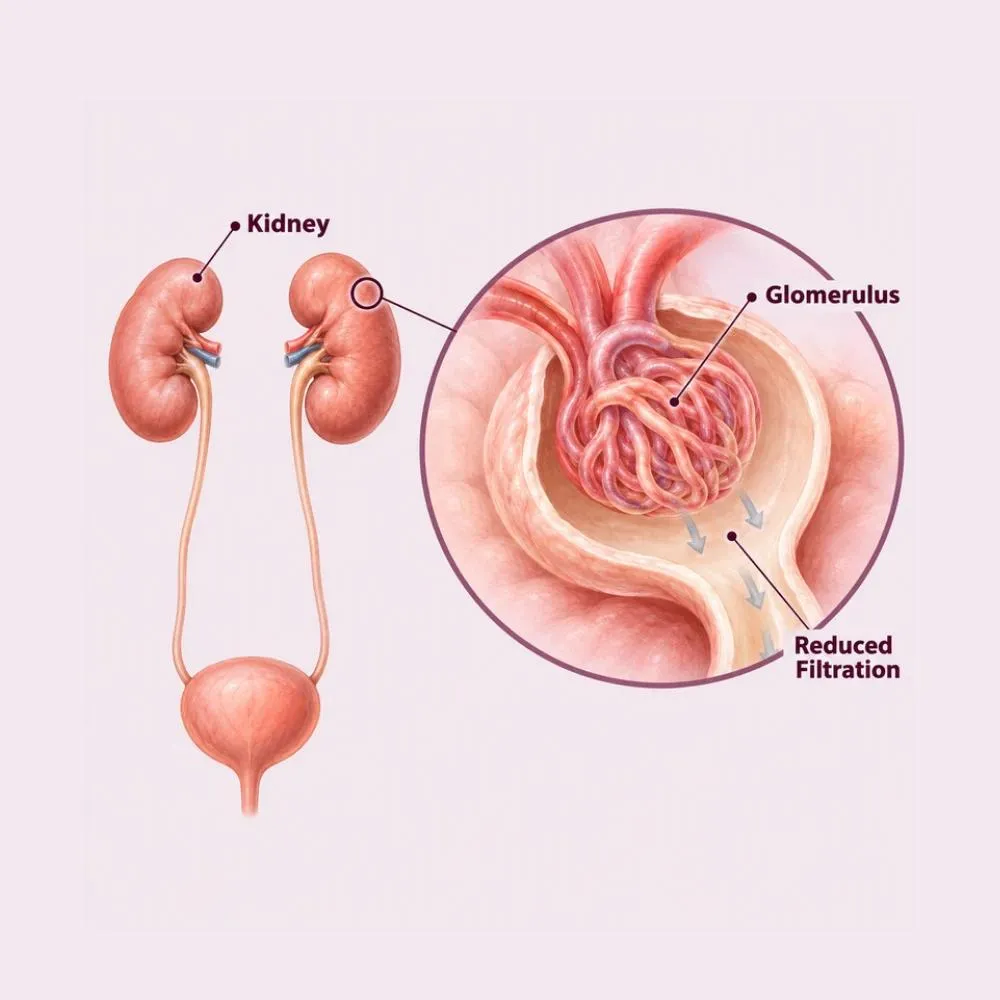
Chronic kidney disease is defined as kidney damage or a reduced filtration rate persisting for more than three months. The kidneys filter around 180 litres of blood every day, removing waste, balancing salts and water, regulating blood pressure, activating vitamin D and signalling the marrow to make red blood cells. CKD progressively degrades all of those functions.
It is staged one to five by estimated glomerular filtration rate (eGFR) which is calculated from a simple blood creatinine result. Stage one and two describe damage with preserved filtration. Stage three is a moderate reduction, and it is where most people are first diagnosed. Stage four is severe, and stage five, below 15 ml/min, is kidney failure requiring dialysis or transplantation.
The critical point is that lost function does not come back. Nephrons that have scarred are gone permanently. What treatment can do (and does very effectively) is slow the rate of loss, so that someone diagnosed at stage three in their fifties may never reach dialysis at all. That is the whole objective of CKD care.
Two conditions account for the large majority of cases in India, and both are increasingly common.
The single commonest cause. Persistently high blood sugar damages the small filtering vessels of the kidney over years. Roughly a third of people with diabetes develop kidney disease.
The second commonest. Sustained high pressure damages the renal vessels, and the damaged kidney raises blood pressure further: a cycle that accelerates both.
Inflammation of the filtering units, sometimes autoimmune and sometimes following infection. A common cause in younger patients.
An inherited condition in which cysts progressively replace working kidney tissue. The commonest genetic cause of kidney failure.
Long-standing stones, an enlarged prostate or reflux causing repeated infection and back-pressure scars the kidney over time.
Long-term use of NSAIDs, certain antibiotics and some traditional remedies containing heavy metals damages the kidney cumulatively.
Filtration declines naturally with age, and a first-degree relative with kidney disease raises your own risk substantially.
Regularly bought over-the-counter painkillers are an underappreciated cause. Occasional use is fine; daily NSAIDs for years is not, particularly alongside diabetes or hypertension.
Early CKD is essentially symptomless. Symptoms appear only once function has fallen substantially, which is why testing rather than waiting is the right approach.
Early and general symptoms
Advanced symptoms
Anyone with diabetes or hypertension should have kidney function and urine protein checked at least annually, whether or not they feel anything. That single test is what turns a late diagnosis into an early one.
Two inexpensive tests, a blood creatinine and a urine protein, establish both the diagnosis and the stage.
A blood test from which the estimated filtration rate is calculated. This single number defines the stage of the disease.
Detects protein leaking into the urine, often the earliest sign of damage: present well before creatinine rises.
Measures kidney size, shows obstruction, stones or cysts, and distinguishes chronic disease (small scarred kidneys) from acute injury.
Haemoglobin, potassium, calcium, phosphate, bicarbonate and parathyroid hormone, since CKD causes anaemia and bone disease well before failure.
Repeating the tests at three months. Damage persisting beyond that defines chronic rather than acute kidney injury.
Reserved for cases where the cause is unclear or where glomerulonephritis is suspected and would change treatment.
A single abnormal creatinine does not diagnose CKD. Dehydration, infection and medication can all raise it temporarily, so it is repeated before anyone is labelled with a chronic condition.
Treatment aims at slowing progression, managing complications, and preparing in good time for dialysis or transplant if those become necessary.
The single most effective intervention. ACE inhibitors and ARBs reduce protein loss and slow decline beyond their blood pressure effect alone.
Tight glycaemic control markedly slows diabetic kidney disease. SGLT2 inhibitors have shown substantial kidney protection independent of sugar control.
Reduced salt, moderated protein, and restriction of potassium and phosphate as the stage advances, guided by a renal dietitian.
Iron and erythropoietin-stimulating agents. The failing kidney stops signalling the marrow to make red cells, and correcting this restores considerable energy.
Phosphate binders, vitamin D analogues and calcium management, to prevent the bone disease and vascular calcification that CKD causes.
Stopping NSAIDs, adjusting drug doses to kidney function, and careful use of contrast for scans.
Blood filtered through a machine, typically three sessions of four hours weekly. Requires an arteriovenous fistula created several months in advance.
Fluid exchanged through a catheter in the abdomen, done at home daily. Offers greater independence and preserves residual kidney function longer.
The best long-term outcome for suitable candidates, from a living or deceased donor. Survival and quality of life are considerably better than on dialysis.
Symptom-focused care without dialysis, an appropriate and dignified choice for some frail or elderly patients.
Creating a fistula or placing a catheter months before dialysis is needed, which measurably improves outcomes over starting urgently through a neck line.
Preparation is what separates a smooth start on dialysis from a crisis admission. Planning access at stage four, rather than waiting for stage five, is one of the most valuable things CKD care does.
CKD is managed as an ongoing programme with regular review, not as a one-off intervention.
Structured long-term management programme
Creatinine, eGFR, urine protein and ultrasound, repeated at three months to confirm chronicity and establish the stage.
Reviewing diabetes control, blood pressure history, medications and family history, with biopsy where the cause is unclear.
Individual blood pressure, HbA1c and protein-loss targets, with the medications to reach them started and titrated.
Treating anaemia, acidosis, and calcium-phosphate disturbance, which are present long before failure and cause much of the symptom burden.
Review every three to six months depending on stage, tracking the trajectory of eGFR rather than any single value.
At stage four, discussing dialysis and transplant options, arranging vaccination, and creating dialysis access in advance.
Beginning treatment electively when symptoms or biochemistry warrant it, rather than as an emergency.
The number that matters is the trend, not the reading. A stable eGFR of 40 over three years is a far better position than one falling from 55 to 40 in a year, and the whole programme is aimed at flattening that slope.
CKD care is about the long run rather than any single visit. Here is why patients trust us:
Structured targets for blood pressure, sugar and protein loss, tracked over time rather than reviewed reactively.
Fistula creation and dialysis available in the same hospital, so access is planned in advance rather than arranged in a crisis.
From the first consultation through to post-treatment follow-up, with one team throughout.
Our hospital is in HITEC CITY, near IKEA: easily reachable from across Hyderabad.
CKD is managed rather than cured. With good control, many people live decades without ever needing dialysis.
Diagnosis confirmed and staged. Medications started, contributing drugs stopped, and dietary advice given.
Blood pressure and sugar brought to target. Repeat testing shows whether protein loss is falling: an early sign the treatment is working.
The trajectory of eGFR becomes clear. Treatment is adjusted according to whether decline has slowed.
Review every three to six months. Most people at stage three with good control remain stable through this period.
Discussion of dialysis and transplant options, vaccination, and creation of access several months in advance of need.
Usually below 130/80. Blood pressure control is the most effective single thing that slows kidney decline.
Regular NSAIDs (ibuprofen, diclofenac and similar) cause cumulative kidney damage. Ask before taking anything long term, including traditional remedies.
Low salt from the outset, with potassium and phosphate restricted as the stage advances. A renal dietitian makes this practical rather than punishing.
Regular moderate exercise improves blood pressure, sugar control and quality of life, and is safe at every stage of CKD.
The trend in eGFR over time is what guides treatment. Skipped tests mean a deteriorating trajectory is caught late.
Hepatitis B, influenza and pneumococcal vaccination matter more in CKD, particularly before dialysis or transplantation.
CKD cannot be reversed, and any claim otherwise should be treated with scepticism. What it can be is slowed, often dramatically, which for many people means the difference between needing dialysis and never needing it.
Book a consultation if any of the following apply.
Early-stage management is inexpensive and consists largely of medication and monitoring. Costs rise substantially only at the point of renal replacement therapy.
| Procedure | Estimated Cost |
|---|---|
| Consultation Per visit; every three to six months | ₹800 – ₹1,500 |
| Baseline kidney profile Creatinine, eGFR, urine ACR, electrolytes | ₹2,500 – ₹6,000 |
| Kidney ultrasound At diagnosis and periodically | ₹1,500 – ₹3,500 |
| Monthly medication Varies widely with stage and complications | ₹1,000 – ₹6,000 |
| Kidney biopsy Where the cause is unclear | ₹25,000 – ₹50,000 |
| AV fistula creation Day care, several months before dialysis | ₹45,000 – ₹85,000 |
| Haemodialysis session Per session; usually three weekly | ₹2,000 – ₹4,500 |
Stage three managed medically costs a fraction of stage five on dialysis. Early diagnosis is the largest single cost determinant.
Anaemia treatment, phosphate binders and vitamin D analogues add meaningfully to monthly medication cost as the disease advances.
Ongoing dialysis is a recurring cost for life; transplantation is a large one-off cost with lower ongoing expenses afterwards.
A shared ward, a twin-sharing room or a private suite: the largest single swing in most estimates.
We are empanelled with most major insurers, and our team files the pre-authorisation for you.
Every figure above is an indicative range, not a quote. After your consultation you are given a written, fixed-cost estimate, and that is the number you pay, with no additions once treatment begins.
The kidney specialists who manage chronic kidney disease at our HITEC CITY hospital.

Consultant Urologist & Andrologist
MBBS, MS, DrNB (Urology)
10 years experience

Consultant Urologist & Andrologist
MBBS, MS, MCh (Urology)
9 years experience
Reviews from patients treated for kidney and urological conditions at Lux Hospitals, Hyderabad.
Written by Dr. Vipin Reddy B on kidney health and urological care.

Dr. Vipin Reddy B

Dr. Vipin Reddy B

Dr. Vipin Reddy B

Dr. Vipin Reddy B

Dr. Vipin Reddy B

Dr. Vipin Reddy B
Common questions about chronic kidney disease, its stages, treatment and costs at Lux Hospitals.
Still have questions? Call us at 079 6908 4422
Still have questions? Message us on WhatsApp at 079 6908 4444
Accurate staging of kidney disease and a structured plan to slow it down, with costs shared upfront.
Plot No.116, Lumbini Avenue, HITEC CITY, Near IKEA, Hyderabad – 500032













