



Dr. Samhitha Reddy
Consultant Proctologist & Laparoscopic Surgeon
MBBS, MS, FMAS, FISCP, DMAS
- 8 Yrs
- ASCRS Member
Does sitting for long periods cause pain at the bottom of your spine? Do you feel sharp discomfort when you stand up from a chair? These symptoms may indicate coccydynia, also known as tailbone pain.
Coccydynia can develop after a fall, prolonged sitting, childbirth or repeated pressure on the tailbone. Although the pain may interfere with work, travel and daily activities, many patients improve with appropriate non-surgical treatment. At Lux Hospitals, Hyderabad, patients can enquire about medical evaluation for persistent tailbone pain, coccyx injuries and related musculoskeletal concerns.
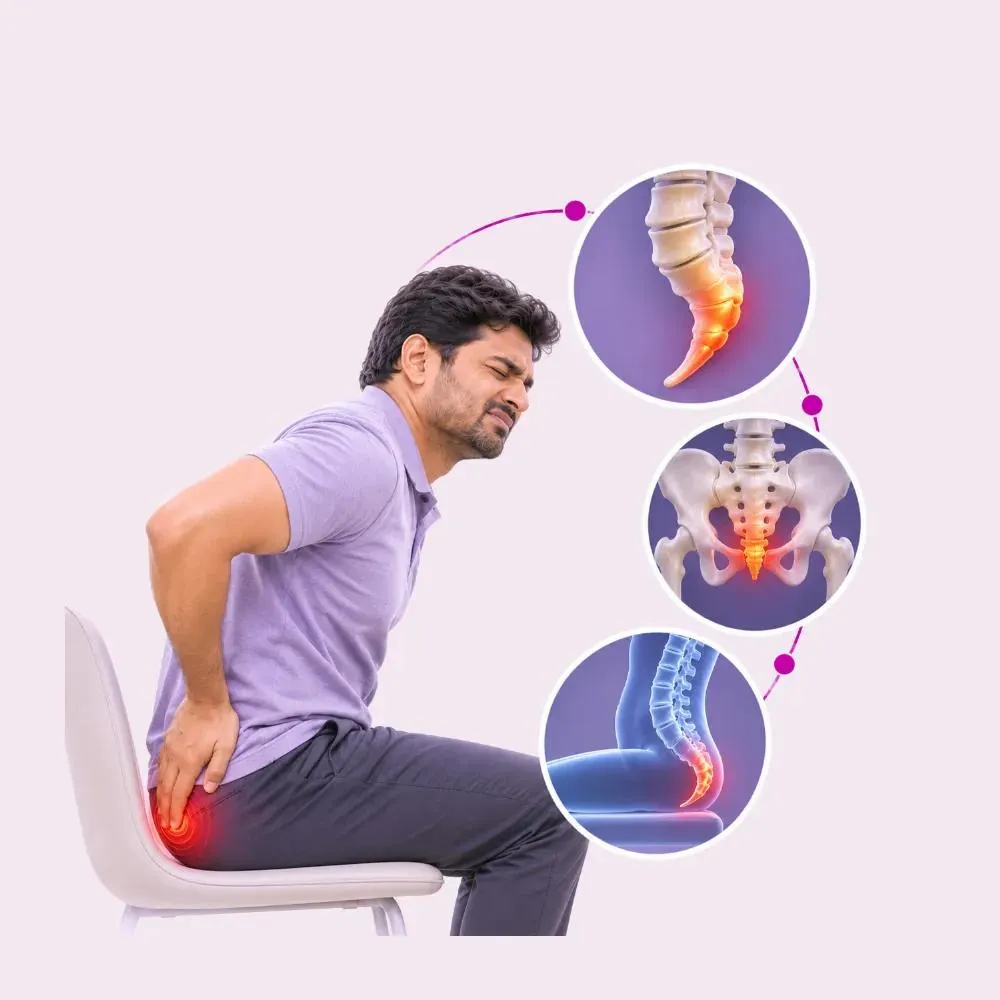
Coccydynia, also known as coccygodynia, refers to pain in the coccyx, commonly called the tailbone. The coccyx is a small, curved bone located at the bottom of the spine, below the sacrum. It provides attachment points for muscles and ligaments that support the pelvic region. Injury, irritation, excessive pressure or inflammation around the coccyx can cause pain and discomfort.
Coccydynia commonly causes pain while sitting, leaning backwards or moving from a sitting to a standing position. Some people may also experience discomfort during bowel movements. Acute coccydynia usually develops after a recent injury or fall, while chronic coccydynia refers to persistent or recurring tailbone pain that may be associated with previous injuries, abnormal coccyx movement or degenerative changes. Treatment depends on the underlying cause and severity of symptoms.
Tailbone pain can develop through several mechanisms.
Falling backwards onto a hard surface can cause bruising, ligament injury or, occasionally, a coccyx fracture.
Sitting for extended periods, especially on hard surfaces, can worsen pain by increasing pressure on the coccyx.
Pregnancy and the mechanical pressures of childbirth can injure the coccyx or cause discomfort around it.
Activities such as cycling or rowing may repeatedly press on the tailbone region.
Some patients have excessive coccyx movement or reduced mobility, which may contribute to pain when changing positions.
Age-related changes in the coccyx’s joints and surrounding structures may contribute to discomfort.
Both higher and lower body weight can influence pressure distribution around the tailbone.
Sometimes coccydynia develops without an obvious injury or structural abnormality.
Not every pain near the coccyx is coccydynia. Persistent pain should be assessed to rule out conditions that can mimic it, such as pilonidal disease, a perianal abscess, certain anorectal conditions, sacroiliac joint problems, lumbar spine disorders, pelvic floor dysfunction and rare infections or tumours. For example, a painful swelling or discharge near the upper buttock crease may suggest pilonidal disease rather than a simple coccyx injury. An accurate diagnosis matters because these conditions require different treatments.
Symptoms are usually concentrated around the lower end of the spine.
Common symptoms
Emergency warning signs
The pain may feel dull and aching or occasionally sharp. With persistent coccydynia, patients may notice reduced sitting tolerance, difficulty working at a desk, pain during long drives, recurring pain after temporary improvement, local tenderness lasting several weeks or months, and difficulty with activities that put prolonged pressure on the tailbone. Seek urgent medical attention if tailbone or lower back pain occurs with any of the emergency warning signs: they may indicate a serious condition requiring prompt assessment.
Doctors usually diagnose coccydynia through medical history and a focused physical examination. Additional tests may be ordered if symptoms persist, follow a significant injury or suggest another medical condition.
The doctor asks when the pain began, whether an accident occurred, and which positions or activities worsen the discomfort. The doctor may also ask about past falls, prolonged sitting and childbirth.
The clinician assesses tenderness around the coccyx and surrounding tissues. The examination may also help identify skin changes, swelling or other possible causes of pain.
Doctors may check the lower back, pelvis and neurological function when symptoms suggest another source of discomfort.
Clinicians may recommend X-rays when they suspect a fracture, dislocation or structural abnormality. They are not necessary for every patient with uncomplicated tailbone pain.
In selected patients with persistent mechanical pain, specialised X-rays taken while sitting and standing may help assess abnormal coccyx movement.
MRI or CT may be considered when symptoms are atypical, persistent or associated with concern for infection, tumour, significant trauma or another underlying condition.
Imaging findings are interpreted alongside the patient’s symptoms and examination.
Most patients with coccydynia are initially managed without surgery. Treatment focuses on reducing pressure on the tailbone, controlling pain and improving daily function.
A specially designed coccyx cushion with a rear cut-out may help reduce direct pressure on the tailbone. The appropriate cushion should support comfortable sitting without increasing pain.
Temporarily reducing prolonged sitting and taking frequent movement breaks may minimise discomfort. Patients may also find side-lying positions more comfortable during pain flare-ups.
A clinician may recommend paracetamol or selected anti-inflammatory medicines when appropriate. Anti-inflammatory medicines are not suitable for everyone and should be considered alongside gastrointestinal, kidney and cardiovascular risks.
Cold packs or gentle heat may help relieve discomfort. Cold packs should be wrapped in a towel to protect the skin.
May address posture, movement, pelvic mechanics and muscle-related contributors. Treatment may include appropriate mobility exercises, stretching of selected muscles, gradual strengthening, sitting posture education, functional rehabilitation and pelvic floor assessment when indicated. Not every patient requires pelvic floor treatment or manual techniques.
Constipation and straining can aggravate coccyx discomfort in some patients. Appropriate hydration, fibre intake and suitable constipation treatment may help when clinically indicated.
For selected patients, addressing pressure distribution, seating habits or weight-related factors may improve comfort.
A clinician may inject local anaesthetic and corticosteroid around the affected coccygeal joint or surrounding structures. The procedure may reduce symptoms in selected patients, but relief is not guaranteed and may be temporary.
The ganglion impar is a nerve structure located near the front of the coccyx. An image-guided ganglion impar block may be considered for selected patients with persistent coccygeal pain. It aims to interrupt pain transmission and may provide temporary or longer-lasting relief.
Radiofrequency procedures targeting the relevant pain pathways may be considered for a subset of patients with chronic pain. Evidence and availability vary, and these procedures are not routinely necessary for every patient.
The surgical removal of part or all of the coccyx. It may be considered for carefully selected patients with chronic, disabling tailbone pain that has not improved with appropriate conservative and interventional treatment. Coccygectomy involves important risks, particularly wound infection, delayed healing and persistent pain.
Injections and other procedures may be considered when symptoms persist despite appropriate conservative care, and surgery is rarely required for coccydynia. A specialist should confirm that the coccyx is the likely source of pain before recommending surgery.
A coccygectomy may be considered when appropriate non-surgical treatment has not relieved chronic tailbone pain that substantially interferes with day-to-day functioning.
Coccygectomy
The surgeon reviews symptoms, prior treatment, the physical examination and relevant imaging, and discusses the benefits and limitations of surgery.
The procedure is commonly performed under general anaesthesia.
The patient is positioned to allow access to the coccyx while protecting surrounding structures.
The surgeon makes an incision near the coccyx and carefully approaches the affected bone.
Part or all of the coccyx is removed according to the surgical plan.
The team cleans and closes the surgical area using an appropriate technique, paying special attention to wound protection because of its location.
The patient is monitored after anaesthesia and receives instructions on wound care, sitting, hygiene and physical activity.
Surgery does not guarantee complete pain relief. Potential risks include infection, delayed wound healing, bleeding, injury to nearby structures and ongoing pain.
Effective tailbone pain management begins with identifying the cause and determining whether conservative treatment is appropriate.
The doctor evaluates symptoms, injury history and examination findings before recommending treatment.
Most patients can start with pressure relief, appropriate medicines and rehabilitation.
Chronic symptoms may require additional investigation to identify abnormal coccyx movement or another underlying condition.
Tailbone injuries, pelvic floor problems and anorectal conditions require different approaches.
Lux Hospitals is located in HITEC CITY, near IKEA, with access from Gachibowli and surrounding areas of Hyderabad.
Recovery depends on the underlying cause and whether treatment is conservative, interventional or surgical.
Acute tailbone pain may make sitting uncomfortable. Pressure-relieving cushions, suitable pain medication and activity modification may help.
Some patients begin noticing gradual improvement. Avoiding long periods of direct pressure on the coccyx may help reduce symptom aggravation.
Rehabilitation may focus on posture, mobility and gradually restoring sitting tolerance. Pain from bruising or soft-tissue injury may continue to improve during this period.
Persistent discomfort may require reassessment, particularly if daily activities are still significantly restricted.
Prolonged symptoms may need further testing to rule out other conditions, persistent inflammation or abnormal coccygeal movement.
Reduce direct pressure on the painful area during sitting.
Avoid remaining seated in one position for extended periods.
Support your lower back and use seating that does not aggravate tailbone pressure.
Choose exercises based on your symptoms and functional needs.
Avoid unnecessary straining and discuss persistent bowel discomfort with a clinician.
Seek medical help if you develop fever, swelling, discharge, worsening pain or new neurological problems.
After an injection, temporary soreness around the injection site may occur, and the duration of symptom relief varies. Recovery after coccygectomy may take several weeks or longer: patients generally need specific advice on sitting, wound care and gradually returning to activities, and wound healing requires careful monitoring.
Consider an orthopaedic or spine consultation if:
The cost of coccydynia treatment depends on the underlying cause, diagnostic investigations and the treatment required. Many patients improve with conservative care, so not everyone needs injections or surgery.
| Procedure | Estimated Cost |
|---|---|
| Ganglion Impar Block Targets pain signals from nerves near the tailbone. | ₹12,000 onward (estimate) |
| Coccygectomy (Tailbone Removal) Surgically removes part or all of the tailbone to relieve persistent pain. | Approx. ₹1,34,700 onward |
Whether the pain follows an injury, abnormal coccyx movement or another condition influences the treatment recommended.
X-rays, dynamic sitting and standing X-rays, MRI or CT are advised only for selected patients.
Conservative care, injections such as a ganglion impar block and coccygectomy involve different clinical requirements.
Every figure above is an indicative starting price, not a final quotation. After clinical assessment, the hospital can provide a personalised estimate based on the treatment recommended.

Consultant Endoscopic Spine Surgeon
MBBS, MS (Orthopaedics), Fellowship in Spine Surgery (RGUHS)
7 years experience
Common questions about tailbone pain, its causes, treatment without surgery and recovery.
Still have questions? Call us at 079 6908 4422
Still have questions? Message us on WhatsApp at 079 6908 4444
Tailbone pain assessment at Lux Hospitals, HITEC CITY: a clear diagnosis, non-surgical care first, and injections or surgery only when they are needed.
Plot No.116, Lumbini Avenue, HITEC CITY, Near IKEA, Hyderabad – 500032













