



Dr. Samhitha Reddy
Consultant Proctologist & Laparoscopic Surgeon
MBBS, MS, FMAS, FISCP, DMAS
- 8 Yrs
- ASCRS Member
Irritable bowel syndrome is real, common, and frequently dismissed. It does not damage the bowel or shorten life, but it can dictate what you eat, whether you travel and how you plan a working day.
IBS is diagnosed positively, on its pattern, not by ruling out everything else indefinitely. Our specialists at Lux Hospitals, HITEC CITY confirm the diagnosis, exclude what genuinely needs excluding, and then build a plan around diet, medication and the gut-brain axis that actually controls the symptoms.
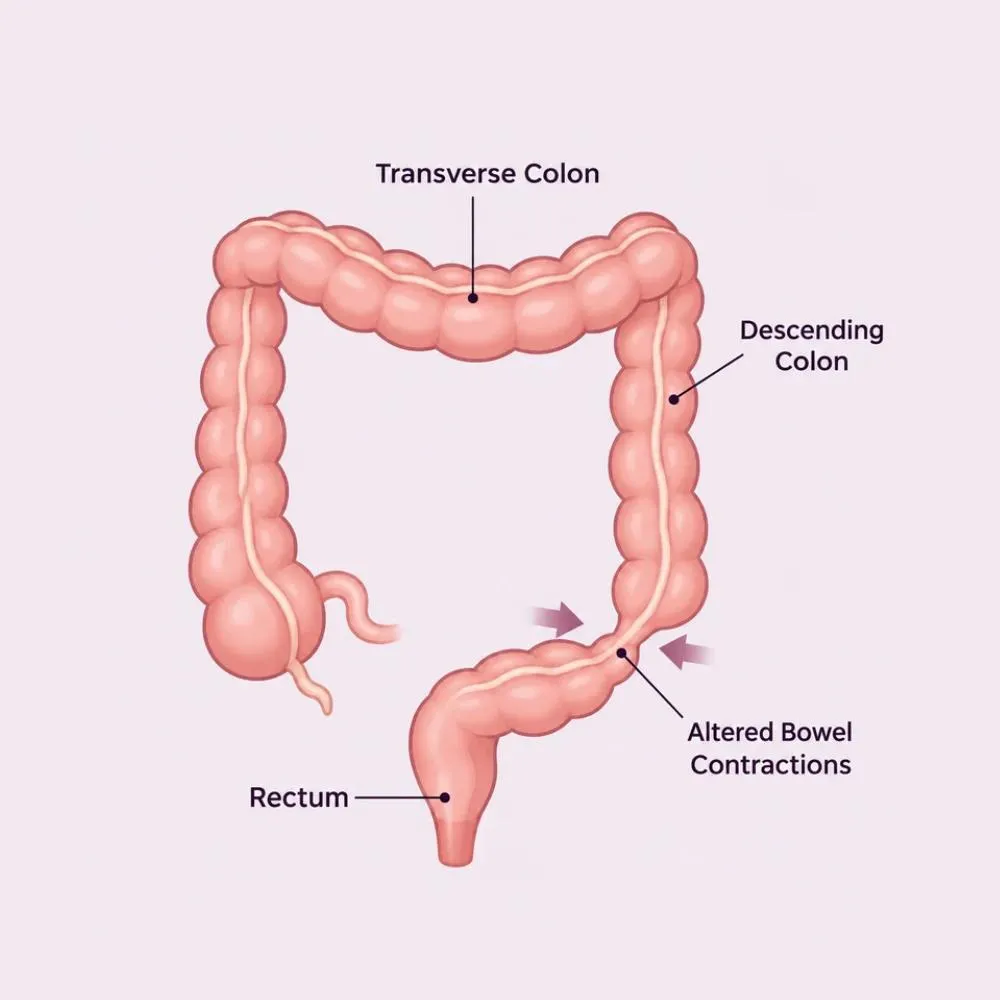
IBS is a chronic disorder of gut function. The bowel looks entirely normal when examined, but it behaves abnormally: moving contents too fast or too slowly, and signalling pain at levels of stretch a normal gut would not notice at all.
Unlike inflammatory bowel disease, IBS causes no permanent damage to the intestines, no ulceration and no increased risk of cancer. That is genuinely reassuring, and it is also why the symptoms are so often minimised. The impact on daily life can be substantial regardless.
IBS is grouped by the predominant bowel habit: IBS-D where diarrhoea leads, IBS-C where constipation does, IBS-M where the two alternate, and IBS-U where the pattern fits none of these. The subtype matters because it determines which medication helps and which will make things worse.
There is no single cause. IBS is best understood as several mechanisms that converge on the same set of symptoms, and different people arrive by different routes.
The muscular contractions that move contents along run too fast, too slowly, or in an uncoordinated way: producing diarrhoea, constipation or cramping.
The nerves of the gut signal pain at degrees of stretch that would go unnoticed in most people. This is why normal amounts of gas hurt.
The two-way signalling between gut and brain becomes dysregulated, which is why stress genuinely worsens symptoms and is not simply a matter of perception.
An altered balance of intestinal bacteria, including bacterial overgrowth in the small bowel, affects both fermentation and gut signalling.
A significant proportion of cases begin after an episode of gastroenteritis, which leaves the gut sensitised long after the infection has cleared.
Poorly absorbed fermentable carbohydrates (the FODMAPs) draw in water and ferment in the colon, producing exactly the bloating and pain IBS presents with.
Anxiety, depression and periods of high stress both trigger and amplify symptoms through the gut-brain axis.
IBS runs in families, reflecting both inherited gut sensitivity and shared environment and diet.
Understanding which mechanism dominates in your case is what makes treatment effective. A diet-driven case and a stress-driven case need very different plans.
The defining feature is abdominal pain that is related to defecation, together with a change in the frequency or the form of the stool: recurring for at least six months.
Core symptoms
Associated symptoms
What IBS does not cause is bleeding, weight loss, fever, anaemia or symptoms that wake you from sleep. Any of those means we look further: they are not part of this diagnosis.
IBS is a positive diagnosis made on symptom criteria, not a label applied after every possible test comes back clear. A limited, targeted workup is what good practice looks like.
Recurrent abdominal pain at least one day a week for three months, related to defecation or to a change in stool frequency or form.
Bleeding, weight loss, fever, anaemia, night-time symptoms, a family history of bowel cancer, or onset after fifty. Any of these redirects the workup entirely.
Full blood count, inflammatory markers, thyroid function and coeliac serology. Coeliac disease mimics IBS closely and must be excluded.
Faecal calprotectin distinguishes IBS from inflammatory bowel disease with real reliability, plus stool studies for infection and parasites where indicated.
Not routine. Reserved for alarm features, onset over fifty, or a family history of bowel cancer or IBD.
Hydrogen breath tests for lactose intolerance or small intestinal bacterial overgrowth, where the history points that way.
Repeated normal scans and endoscopies do not make anyone feel better. A clear, confidently-stated diagnosis and a plan usually do, and that is what the consultation is for.
There is no cure, but there is very effective control. Treatment is layered: diet and lifestyle first, medication aimed at your dominant symptom second, and gut-directed psychological therapy where the gut-brain axis is driving it.
The best-evidenced dietary treatment, giving significant improvement in roughly three quarters of patients. Done properly it is a structured three-phase programme, not a permanent list of banned foods.
A food and symptom diary to find your own patterns: commonly dairy, caffeine, alcohol, spicy or fatty foods, and artificial sweeteners.
Soluble fibre such as psyllium helps IBS-C. Insoluble fibre such as bran frequently makes IBS worse: the distinction is important and often gets missed.
Consistent moderate activity improves motility, bloating and mood, and is one of the few interventions that helps every subtype.
Yoga, meditation, breathing work and protected sleep. Given how the gut-brain axis operates, this is treatment rather than general advice.
Mebeverine, hyoscine or peppermint oil relax intestinal smooth muscle and are the mainstay for cramping pain.
Loperamide for urgency and loose stool, and rifaximin where bacterial overgrowth is contributing.
Osmotic laxatives such as polyethylene glycol, and secretagogues that increase intestinal fluid where standard laxatives are not enough.
Specific strains improve bloating and overall symptoms in some patients. Worth a properly timed four-week trial rather than indefinite use.
Low-dose tricyclics or SSRIs, prescribed for their effect on gut pain signalling rather than for mood. Effective for refractory pain.
Among the most effective treatments available for IBS, with benefits that persist long after the sessions end.
IBS is never treated with surgery. An operation for IBS symptoms, most often an unnecessary appendicectomy or gallbladder removal, leaves the symptoms untouched and adds a scar.
The most effective dietary treatment for IBS, and the one most often done badly. It runs in three phases with a dietitian, and the third phase is the one that matters most.
Three-phase low-FODMAP protocol
Symptom scoring, a current food diary, and a nutritional review with a dietitian to make sure elimination will not compromise your intake.
High-FODMAP foods are removed for four to six weeks. Around three quarters of patients see clear improvement within the first two to three weeks.
Symptoms are re-scored. If nothing has improved on strict elimination, FODMAPs are not your trigger, the diet is stopped, and the plan changes.
Each FODMAP group is reintroduced one at a time over several weeks, in measured amounts, to identify precisely which ones you react to and at what dose.
A long-term diet that excludes only your own triggers, at your own threshold. Most people end up able to eat far more than they expected.
Review at three and six months to confirm control is holding and that the diet remains nutritionally adequate.
Phase one is not meant to be permanent. Staying on strict elimination indefinitely restricts your diet unnecessarily and can harm the gut microbiome: the reintroduction phase is the point of the whole exercise.
IBS is frequently dismissed and frequently over-investigated. We try to do neither. Here is why patients trust us:
Led by Dr. Samhitha Reddy, one of the top proctologists in Hyderabad, with dietitian support built into the plan.
IBS confirmed on criteria with targeted tests, rather than diagnosed by exclusion after years of normal scans.
From the first consultation through to post-treatment follow-up, with one team throughout.
Our hospital is in HITEC CITY, near IKEA: easily reachable from across Hyderabad.
There is nothing to recover from: this is a condition you manage. The timeline below is how control typically builds once a proper plan is in place.
Diagnosis confirmed and the plan started. Trigger foods removed and antispasmodics begun. Symptom diary running.
Low-FODMAP elimination, where indicated. Most responders notice clear improvement in bloating and pain within this window.
Structured reintroduction identifies your specific triggers. Medication is adjusted to your dominant symptom.
A personalised long-term diet settles. Gut-directed CBT or hypnotherapy runs here where pain and stress are prominent.
Symptoms wax and wane with stress, illness and life events. Flares are expected, and having a plan for them is what stops them being alarming.
Food, stress, sleep and symptoms alongside each other. Patterns show up in writing that are invisible from memory.
Regular meals, not skipped and not rushed. Long gaps followed by a large meal reliably provokes symptoms.
Not optional advice. The gut-brain axis is a real mechanism, and treating stress treats the gut.
Regular moderate exercise improves motility, bloating and mood, and helps every IBS subtype.
Cutting out more and more foods narrows nutrition and rarely improves symptoms. Reintroduction is part of the treatment.
Bleeding, weight loss, fever or night-time symptoms are not IBS. A new symptom deserves reassessment, not an assumption.
The single most useful thing for most patients is a confident diagnosis. Knowing what this is, and what it is not, takes away the fear that drives a great deal of the distress.
Book a consultation if any of the following apply.
IBS is managed entirely as an outpatient. Cost reflects the consultations, the targeted tests and the dietitian support rather than any procedure.
| Procedure | Estimated Cost |
|---|---|
| Specialist consultation Per visit, including a management plan | ₹800 – ₹1,500 |
| Blood tests & coeliac screen Out-patient | ₹3,000 – ₹6,000 |
| Faecal calprotectin Distinguishes IBS from inflammatory bowel disease | ₹2,500 – ₹4,500 |
| Hydrogen breath test For lactose intolerance or bacterial overgrowth | ₹3,000 – ₹6,000 |
| Dietitian-led low-FODMAP programme Across all three phases | ₹8,000 – ₹18,000 |
| Colonoscopy, where indicated Day care, under sedation | ₹12,000 – ₹25,000 |
A typical young patient with no alarm features needs bloods and a calprotectin. Alarm features mean endoscopy and imaging.
A properly supervised low-FODMAP programme runs across several sessions, and is what makes the difference between it working and not.
A recurring monthly cost that varies considerably between an antispasmodic and a newer secretagogue.
A shared ward, a twin-sharing room or a private suite: the largest single swing in most estimates.
We are empanelled with most major insurers, and our team files the pre-authorisation for you.
Every figure above is an indicative range, not a quote. After your consultation you are given a written, fixed-cost estimate, and that is the number you pay, with no additions once treatment begins.
The proctologists and gut specialists who diagnose and manage IBS at our HITEC CITY hospital.

Consultant Proctologist & Laparoscopic Surgeon
MBBS, MS, FMAS, FISCP, DMAS
8 years experience

Consultant General & Advanced Laparoscopic Surgeon
MBBS, MS, FMAS
17 years experience
Reviews from patients treated for IBS, constipation and colorectal conditions at Lux Hospitals, Hyderabad.
Written by Dr. Samhitha Reddy on IBS, constipation and digestive health.

Dr. Samhitha Reddy


Dr. Samhitha Reddy

Dr. Samhitha Reddy
Dr. Samhitha Reddy
Dr. Samhitha Reddy
Common questions about IBS, its diagnosis and treatment, and what care costs at Lux Hospitals.
Still have questions? Call us at 079 6908 4422
Still have questions? Message us on WhatsApp at 079 6908 4444
A confident diagnosis and a personalised plan for IBS: diet, medication and gut-directed therapy, with costs shared upfront.
Plot No.116, Lumbini Avenue, HITEC CITY, Near IKEA, Hyderabad – 500032













