Dr. Samhitha Reddy
Consultant Proctologist & Laparoscopic Surgeon
MBBS, MS, FMAS, FISCP, DMAS
- 8 Yrs
- ASCRS Member
Do you experience persistent lower back or neck pain that worsens when you bend backwards, twist, or stand for long periods? These symptoms may indicate facet joint syndrome, a condition involving irritation or pain from the spine’s small joints. Facet-related pain can affect movement, sleep, work and everyday activities, although similar symptoms can occur with disc problems, muscle-related pain and other spinal conditions.
At Lux Hospitals, Hyderabad, patients can enquire about consultations for suspected facet joint pain, chronic back pain and neck discomfort. Many patients are helped by non-surgical treatment, such as exercise-based rehabilitation and effective pain management, and specialised therapies may be considered for selected patients with confirmed, persistent facet-mediated pain.
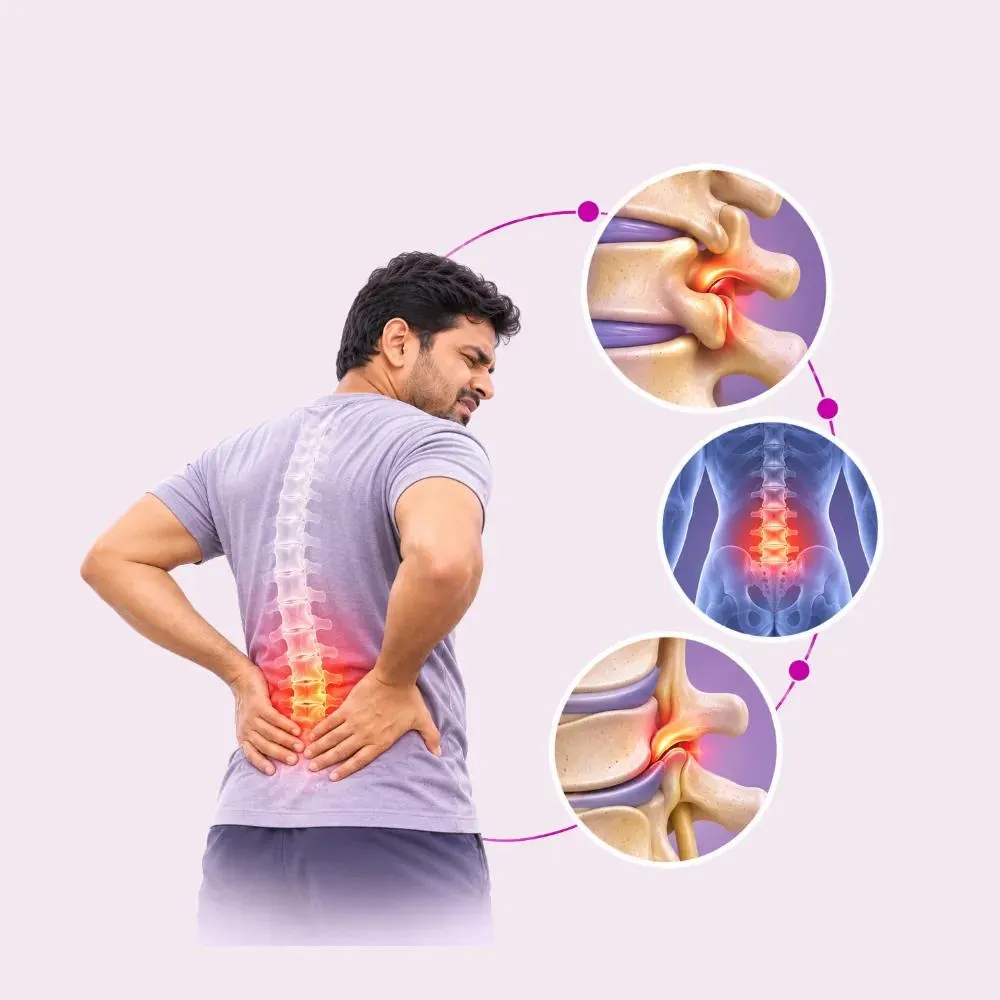
Facet joint syndrome refers to pain originating from the facet joints, also called zygapophyseal joints, which are small joints located at the back of the spine. These joints connect adjacent vertebrae, guide spinal movement and provide stability.
Age-related wear, cartilage damage or inflammation may contribute to facet joint pain, which commonly affects the lumbar (lower back) and cervical (neck) spine.
Lumbar facet joint syndrome typically causes localised lower back pain that may spread to the buttocks, hips or upper thighs. Cervical facet joint syndrome may cause neck stiffness, shoulder discomfort or pain at the back of the head. Facet-related pain can also affect the thoracic (middle back) region, although this is less common.
Symptoms may overlap with other spinal conditions, making clinical evaluation important for identifying the underlying cause and determining appropriate treatment.
Facet joint pain may develop from degenerative changes, mechanical stress or other contributing factors.
Cartilage and joint structures can change over time. These degenerative changes may contribute to facet joint arthropathy.
Osteoarthritis can affect the facet joints, leading to joint surface changes, inflammation and bony overgrowth. However, arthritis visible on imaging does not necessarily mean the joint is causing pain.
Certain repetitive movements, including extension and rotation, may aggravate symptoms in susceptible individuals.
Neck or back injuries can sometimes contribute to persistent facet-related discomfort.
Changes in disc height and spinal movement can affect how stress is distributed across the facet joints.
Conditions affecting spinal alignment may increase mechanical stress on certain joints.
Reduced physical conditioning, excess mechanical loading and prolonged uncomfortable positions may contribute to back or neck symptoms.
Facet joint syndrome is not always caused by a single identifiable event.
Symptoms vary according to the affected spinal region.
Common symptoms
Emergency warning signs
Pain may fluctuate depending on activity and posture. Lumbar facet pain may cause lower back discomfort that occasionally radiates to the buttocks or upper thighs, and it is often mechanical, meaning it varies with movement or position. Cervical facet pain may cause neck stiffness, reduced rotation and discomfort towards the shoulders or back of the head. The emergency signs need immediate medical attention and assessment for serious causes of spinal pain.
Diagnosis involves reviewing symptoms, examining the spine and ruling out other causes of pain. No single examination finding or imaging feature can reliably confirm facet joint syndrome.
The doctor asks about pain location, duration, movement-related symptoms and functional limitations, and reviews previous injuries, treatments and medical conditions.
The doctor may assess spinal movement, posture and areas of tenderness. Pain during extension or rotation can support clinical suspicion but does not confirm facet joint pain.
When nerve-related problems are suspected, the doctor may evaluate reflexes, muscle strength and sensation.
Spinal X-rays may show degenerative changes or alignment abnormalities. However, facet arthritis on X-ray does not establish the source of pain.
An MRI or CT scan may be considered if symptoms point to a different spinal condition or if imaging would change treatment. Routine imaging is not required for all uncomplicated back pain.
A small amount of local anaesthetic is injected near the nerves that carry pain signals from the facet joints. Temporary pain relief after an appropriately performed block may support facet-mediated pain and help identify patients who could benefit from radiofrequency treatment. Diagnostic criteria and the number of blocks may vary according to clinical guidelines and the treating specialist’s protocol.
A positive block does not guarantee long-term treatment success, and facet joint changes visible on MRI or X-ray do not automatically require injections or surgery.
Treatment generally begins with non-surgical measures aimed at improving movement, function and pain control. Interventional treatment is not necessary for every patient, but may be considered for selected patients with persistent symptoms despite appropriate conservative care.
May help patients improve spinal mobility, muscle conditioning and physical function. A rehabilitation programme may include trunk and core strengthening, mobility exercises, hip and back muscle conditioning, movement education, a gradual return to activity and individualised exercise progression.
Temporarily reducing movements that strongly aggravate pain may help during symptom flare-ups. Complete inactivity is generally discouraged.
Selected anti-inflammatory medicines may be considered for short-term symptom management after reviewing gastrointestinal, kidney and cardiovascular risks. Long-term opioid treatment is not recommended for routine chronic lower back pain.
Regular, appropriate exercise may reduce disability and build confidence in movement.
Selected manual therapy techniques may be considered as part of a broader exercise-based programme. Manual therapy should not replace active rehabilitation.
Appropriate physical activity, sleep, weight management when indicated and avoiding tobacco may support overall spinal health.
Helps assess whether pain signals from the facet joints contribute to the patient’s symptoms. It is primarily used for diagnosis or to predict how a patient may respond to further treatment.
Also called radiofrequency denervation, RFA uses controlled energy to interrupt pain transmission through selected medial branch nerves. It may be considered for appropriately selected patients with persistent facet-mediated pain following a positive diagnostic block. The effects are not necessarily permanent, because treated nerves can regenerate.
Intra-articular facet injections deliver medication into the joint. Evidence for sustained benefit in routine chronic lower back pain is limited, and NICE advises against routine spinal injections for nonspecific low back pain, so they are not a standard treatment for every patient.
Surgery is not routinely recommended for isolated facet joint pain. Operations such as spinal fusion or decompression may occasionally be indicated when another structural spinal problem, such as significant instability or nerve compression, is present. These procedures treat the associated structural condition, not uncomplicated facet joint syndrome alone.
Radiofrequency ablation may be considered when conservative treatment has not improved symptoms enough and diagnostic evaluation supports facet-mediated pain.
Radiofrequency Ablation
The clinician reviews the diagnosis, the response to diagnostic blocks, current medicines and relevant medical conditions.
The patient is positioned to provide access to the selected spinal region.
Fluoroscopy or another appropriate imaging method guides accurate instrument positioning.
The clinician administers local anaesthetic to reduce discomfort at the treatment site. Sedation may be considered in some situations, although it can interfere with assessment during certain diagnostic procedures.
Specialised radiofrequency needles are positioned near the targeted medial branch nerves.
Controlled radiofrequency energy creates a small thermal lesion that interrupts pain transmission.
After treatment, the patient is monitored and advised on activity, expected discomfort and warning signs.
Radiofrequency treatment does not reverse arthritis or structural deterioration of the facet joints.
Appropriate facet joint pain management begins with evaluating the source of symptoms and deciding whether a specific intervention is justified.
A clinical history and examination help assess possible facet-related pain and distinguish it from other causes of back or neck discomfort.
First-line treatments, such as exercise-based rehabilitation and other conservative measures, remain essential.
Diagnostic blocks may be considered before radiofrequency treatment in selected patients.
Treatment aims to improve comfort, mobility and everyday activity rather than relying only on short-term pain reduction.
Lux Hospitals is located in HITEC CITY, near IKEA, with access from Gachibowli and surrounding areas of Hyderabad.
Recovery depends on whether the patient receives conservative care or an interventional procedure.
Patients with a pain flare-up may focus on appropriate activity and symptom control while avoiding prolonged bed rest.
Some patients notice improvement after modifying aggravating activities and beginning rehabilitation.
Physiotherapy may focus on strengthening, movement control and returning to everyday activities.
Patients with persistent pain may need treatment reassessment. Selected patients may be evaluated for further diagnostic procedures when appropriate conservative treatment has been unsuccessful.
Temporary soreness at the injection site may occur. The duration of pain relief depends on the local anaesthetic and individual response, and patients may be asked to record their pain and activity levels while the anaesthetic is expected to work.
Some patients experience soreness or a temporary increase in discomfort after treatment. Pain relief may develop gradually over the following weeks, and the amount and duration of benefit vary.
Exercise-based rehabilitation may help maintain function.
Gentle movement and a gradual progression of activity are generally encouraged.
Patients having injections or RFA should follow specific guidance on medication, wound care and activity.
Report new neurological symptoms, severe unexpected pain or signs of infection.
Follow-up lets the clinician assess your response to treatment and plan next steps.
The aim of rehabilitation is lasting comfort and function, with follow-up guiding whether any further treatment is needed.
Consider medical evaluation if any of the following apply:
The cost depends on the affected spinal area, clinical evaluation, rehabilitation needs and whether specialists recommend a procedure. Many patients are treated conservatively, so not everyone needs interventional treatment.
| Procedure | Estimated Cost |
|---|---|
| Facet Joint Injection Delivers medication to help relieve facet joint pain. | ₹15,000 onward |
| Radiofrequency Ablation (Spine Pain) Uses heat to interrupt pain signals from targeted nerves. | ₹25,000 onward |
| Endoscopic Rhizotomy Uses an endoscope to target nerves responsible for facet joint pain. | ₹1,40,000 onward (estimate) |
Whether the neck, middle back or lower back is affected influences the assessment and treatment plan.
Consultation, imaging and any diagnostic blocks needed to confirm the source of pain affect the overall cost.
The number of physiotherapy sessions and follow-up visits varies from patient to patient.
Conservative care, injections, radiofrequency ablation and endoscopic procedures involve different equipment and clinical requirements.
Every figure above is an indicative starting price, not a final quotation. After clinical assessment, the hospital can provide a personalised estimate based on the treatment recommended.

Consultant Endoscopic Spine Surgeon
MBBS, MS (Orthopaedics), Fellowship in Spine Surgery (RGUHS)
7 years experience
Common questions about facet joint pain, diagnostic blocks, radiofrequency ablation and non-surgical care.
Still have questions? Call us at 079 6908 4422
Still have questions? Message us on WhatsApp at 079 6908 4444
Spine assessment at Lux Hospitals, HITEC CITY: a clear diagnosis, non-surgical care first, and radiofrequency treatment for selected patients.
Plot No.116, Lumbini Avenue, HITEC CITY, Near IKEA, Hyderabad – 500032