Dr. Samhitha Reddy
Consultant Proctologist & Laparoscopic Surgeon
MBBS, MS, FMAS, FISCP, DMAS
- 8 Yrs
- ASCRS Member
High cholesterol and fatty liver disease often develop without noticeable symptoms. Many people discover these conditions during routine blood tests, ultrasounds or health check-ups. Although they affect different parts of the body, both are commonly linked to metabolic risk factors, including excess abdominal fat, Type 2 diabetes, high blood pressure and insulin resistance.
At Lux Hospitals, Hyderabad, patients can enquire about medical consultations for elevated cholesterol levels, abnormal liver test results, fatty liver concerns and related metabolic health conditions. Appropriate medical evaluation can help identify underlying risk factors, determine whether treatment is necessary and support long-term health management.
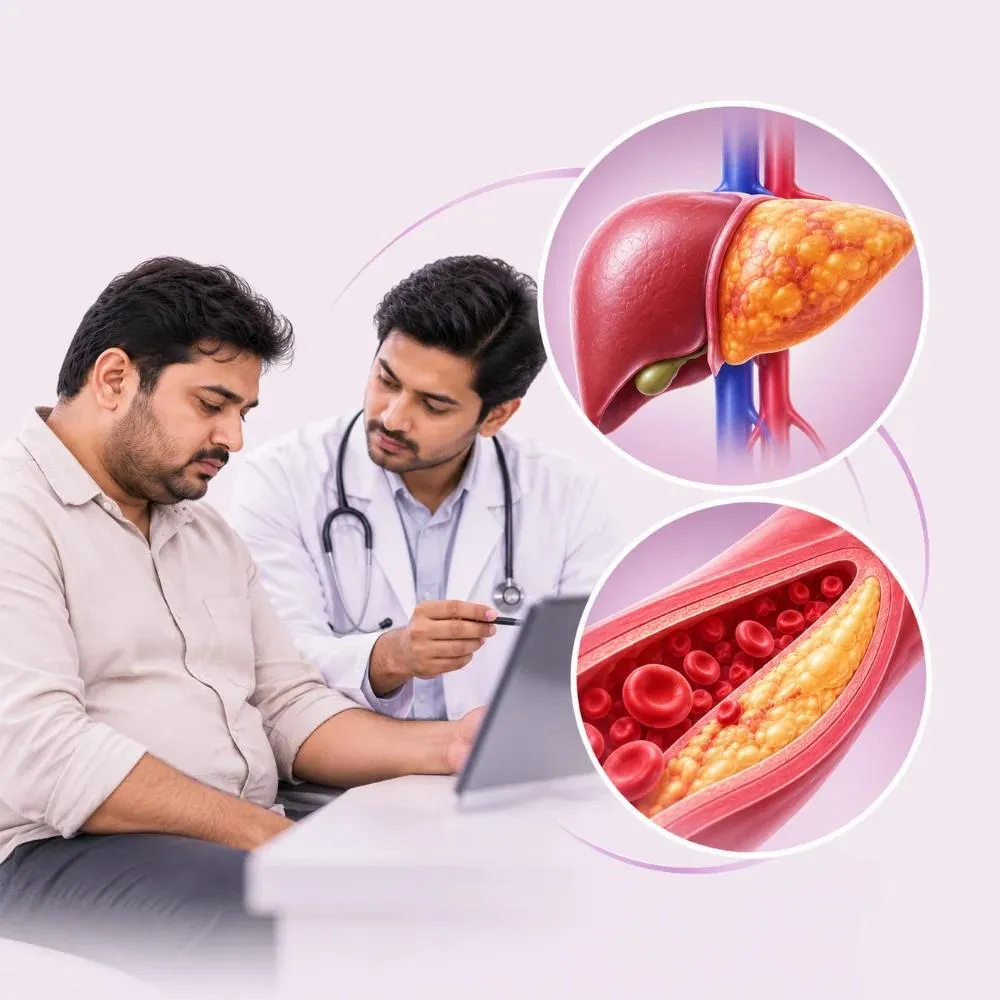
High cholesterol and fatty liver disease are different medical conditions that may occur together. High cholesterol, also called hypercholesterolemia, involves elevated blood cholesterol levels, particularly low-density lipoprotein cholesterol (LDL-C). Elevated LDL cholesterol contributes to plaque formation in arteries and increases cardiovascular risk. Fatty liver disease occurs when excess fat accumulates in liver cells. Both conditions benefit from assessment of metabolic health, nutrition, physical activity and associated medical conditions.
Cholesterol is a waxy substance the body uses to produce hormones, vitamin D and cell membranes. The liver naturally produces cholesterol, while diet can also influence blood lipid levels. LDL is commonly called bad cholesterol because elevated levels can contribute to fatty deposits in artery walls, which over time increase the risk of heart attack and stroke. High-density lipoprotein (HDL) helps transport cholesterol away from tissues. However, HDL levels alone do not determine cardiovascular health, and raising HDL is not necessarily an independent treatment goal.
Triglycerides are another type of fat circulating in the blood. Elevated triglycerides can be associated with diabetes, obesity, certain medicines and dietary patterns, and very high levels may increase the risk of acute pancreatitis. Cholesterol management considers the full lipid profile and an individual’s cardiovascular risk rather than a single lab value.
Fatty liver disease (MASLD) develops when too much fat accumulates inside liver cells. Many patients have no symptoms, especially early on. Fat may accumulate without significant inflammation or advanced scarring (simple steatosis), although medical evaluation is still important to assess the risk of progression. Metabolic dysfunction-associated steatohepatitis (MASH) is a more active form involving liver inflammation and cell injury, and some patients develop progressive liver scarring, called fibrosis.
Advanced scarring can lead to cirrhosis, which can affect liver function and raise the risk of serious complications. Not every person with fatty liver develops cirrhosis. Identifying patients at increased risk of fibrosis is an important part of care.
Several biological, lifestyle and medical factors influence cholesterol levels and liver fat accumulation. Common contributing factors include the following.
Fat carried around the abdomen is one of the metabolic risk factors commonly linked with both conditions.
Reduced responsiveness to insulin is another metabolic risk factor the two conditions share.
Type 2 diabetes is commonly linked with both raised cholesterol and fatty liver.
Low day-to-day activity is one of the lifestyle factors involved.
Eating patterns high in saturated fat or excess energy can influence blood lipids and liver fat.
Inherited factors can influence cholesterol levels and liver fat.
Some medicines can affect cholesterol levels or contribute to liver fat.
An underactive thyroid is one of the medical conditions that can contribute.
Other metabolic conditions may also play a part.
High cholesterol can also result from inherited conditions such as familial hypercholesterolemia. Fatty liver may be associated with metabolic dysfunction, alcohol consumption, medication effects or other liver diseases.
Both conditions are frequently asymptomatic. High cholesterol usually causes no obvious physical symptoms and is often identified through blood tests, and fatty liver may also be discovered incidentally.
Some patients report
Seek urgent medical attention for
The symptoms some patients report are not specific to fatty liver disease, while the urgent findings may indicate serious complications or another urgent medical condition. Consult a doctor if you have elevated cholesterol, increased triglycerides, abnormal liver test results or an ultrasound report suggesting fatty liver.
Medical history, physical examination and specific laboratory or imaging tests are all part of the diagnosis process.
Commonly measures total cholesterol, LDL cholesterol, HDL cholesterol and triglycerides. Additional tests, such as lipoprotein(a) or apolipoprotein B, may be considered to refine cardiovascular risk assessment in selected patients.
Blood investigations may include alanine aminotransferase (ALT), aspartate aminotransferase (AST) and other liver-related measurements. These tests can indicate liver injury or help assess liver function.
Ultrasound can detect changes consistent with liver fat buildup. However, ultrasound alone cannot determine the degree of liver inflammation or fibrosis.
For people with suspected MASLD, doctors may use a validated fibrosis-risk assessment such as FIB-4, based on age and specific blood results. When necessary, further evaluation using hepatic elastography (also known as FibroScan) may be advised. FIB-4 requires careful interpretation and is not equally reliable across age groups or clinical situations.
Depending on each patient’s health concerns, doctors may suggest HbA1c, blood glucose, blood pressure or other tests.
Normal liver enzyme results do not exclude significant fibrosis, which is why fibrosis-risk assessment may be advised even when liver blood tests look normal.
Treatment aims to reduce cardiovascular risk, improve metabolic health and identify patients who require additional liver-specific care.
A balanced eating pattern can support cholesterol control and fatty liver management. Recommendations may include more vegetables and fibre-rich foods, appropriate portions, legumes, whole grains and suitable protein sources, less saturated fat, fewer sugar-sweetened beverages and highly processed foods, and healthier unsaturated fats where appropriate. Individualised plans should account for dietary preferences, medical conditions and nutritional needs.
Regular physical activity can improve cardiovascular and metabolic health. A clinician may recommend gradually increasing aerobic activity and adding suitable resistance exercise. Physical activity may benefit liver health even when body weight does not change substantially.
For patients with overweight or obesity, sustained weight loss may reduce liver fat and improve other metabolic indicators. The degree of improvement depends on how much weight is lost and the underlying liver condition. Gradual, sustainable changes are generally preferable to extreme diets or unsupervised weight-loss practices.
Statins are commonly prescribed when cholesterol levels and cardiovascular risk indicate a need for treatment. They reduce cholesterol production in the liver and lower LDL cholesterol. Clinicians may consider additional medicines, such as ezetimibe or selected injectable lipid-lowering therapies, for certain patients.
MASLD care centres on liver fibrosis testing, metabolic risk reduction and lifestyle changes. Patients with more advanced disease may need specialist treatment. In some countries, certain medicines that target MASH are available to carefully selected patients, but availability and eligibility depend on local regulatory approval, and they are not a standard treatment for every patient with fatty liver.
Patients with cholesterol abnormalities and fatty liver may also need treatment for diabetes, hypertension, obesity, sleep apnoea or other cardiovascular risk factors. Addressing these conditions can support overall metabolic health.
Medication choice and LDL targets depend on cardiovascular risk, existing disease and medical history.
Knowing what happens before, during and after the consultation can help you prepare.
Cholesterol and fatty liver consultation
Bring previous lipid profiles, liver reports, ultrasound findings and prescriptions. Tell your clinician about medicines, supplements, alcohol intake and existing health conditions.
The doctor may review medical history, diet, physical activity and cardiovascular risk factors, and may recommend a physical examination and appropriate investigations. The findings can guide treatment and determine whether a specialist assessment is needed.
You may receive recommendations on prescribed medicines, diet, physical activity and follow-up testing. How often tests are repeated depends on the diagnosis, treatment response and individual risk.
Both high cholesterol and MASLD can require ongoing monitoring rather than a single visit.
At Lux Hospitals, patients can enquire about medical consultations for elevated cholesterol, suspected fatty liver and associated metabolic health concerns. Appropriate care involves interpreting test results, evaluating cardiovascular and liver-related risks, and recommending management suited to individual needs. Patients seeking cholesterol and fatty liver treatment in Hyderabad can contact the hospital to discuss available consultations and investigations.
Your symptoms, history and test results are reviewed together, so the plan fits the whole picture rather than one reading.
Blood tests, imaging and the other investigations a physician may advise are arranged at the hospital.
Where a condition needs another specialist, the referral is made within the same hospital and the same records.
Our hospital is in HITEC CITY, near IKEA: easily reachable from across Hyderabad.
Both high cholesterol and MASLD can require ongoing monitoring. Follow-up may involve reviewing the measures below, and patients should continue prescribed treatment unless their clinician advises a change.
Rechecked to see how treatment is working.
Monitored alongside your lipid and liver results.
Tracked over time as part of metabolic health.
Repeated as your clinician advises.
Reassessed when indicated.
Reviewed so treatment can be continued or adjusted safely.
A normalised cholesterol result may indicate that medication and lifestyle measures are working, not that treatment is no longer needed.
Treatment decisions are based on individual risk rather than symptoms alone. Medical evaluation may be appropriate for people with:
| Procedure | Estimated Cost |
|---|
Medical management may help in the ways below. Treatment results vary depending on baseline health, liver disease severity, adherence and individual response.
Lower elevated LDL cholesterol.
Reduce cardiovascular risk.
Improve certain metabolic indicators.
Decrease liver fat in suitable patients.
Identify advanced fibrosis earlier.
Support long-term weight management.
Manage associated diabetes or hypertension.
Guide appropriate specialist referrals.
Common questions about LDL cholesterol, fatty liver, statins and whether liver fat can be reversed.
Still have questions? Call us at 079 6908 4422
Still have questions? Message us on WhatsApp at 079 6908 4444
Physician-led lipid and liver care at Lux Hospitals, HITEC CITY: testing, treatment planning and long-term follow-up.
Plot No.116, Lumbini Avenue, HITEC CITY, Near IKEA, Hyderabad – 500032