



Dr. Samhitha Reddy
Consultant Proctologist & Laparoscopic Surgeon
MBBS, MS, FMAS, FISCP, DMAS
- 8 Yrs
- ASCRS Member
Medical Termination of Pregnancy is legal in India under the MTP Act, and it is safe when carried out properly in a registered facility by a qualified doctor.
Unsafe abortion remains a significant cause of maternal death in India, and almost all of it is avoidable. Our gynaecologists at Lux Hospitals, HITEC CITY provide termination within the law, with confidentiality protected, no judgement, and follow-up care included.
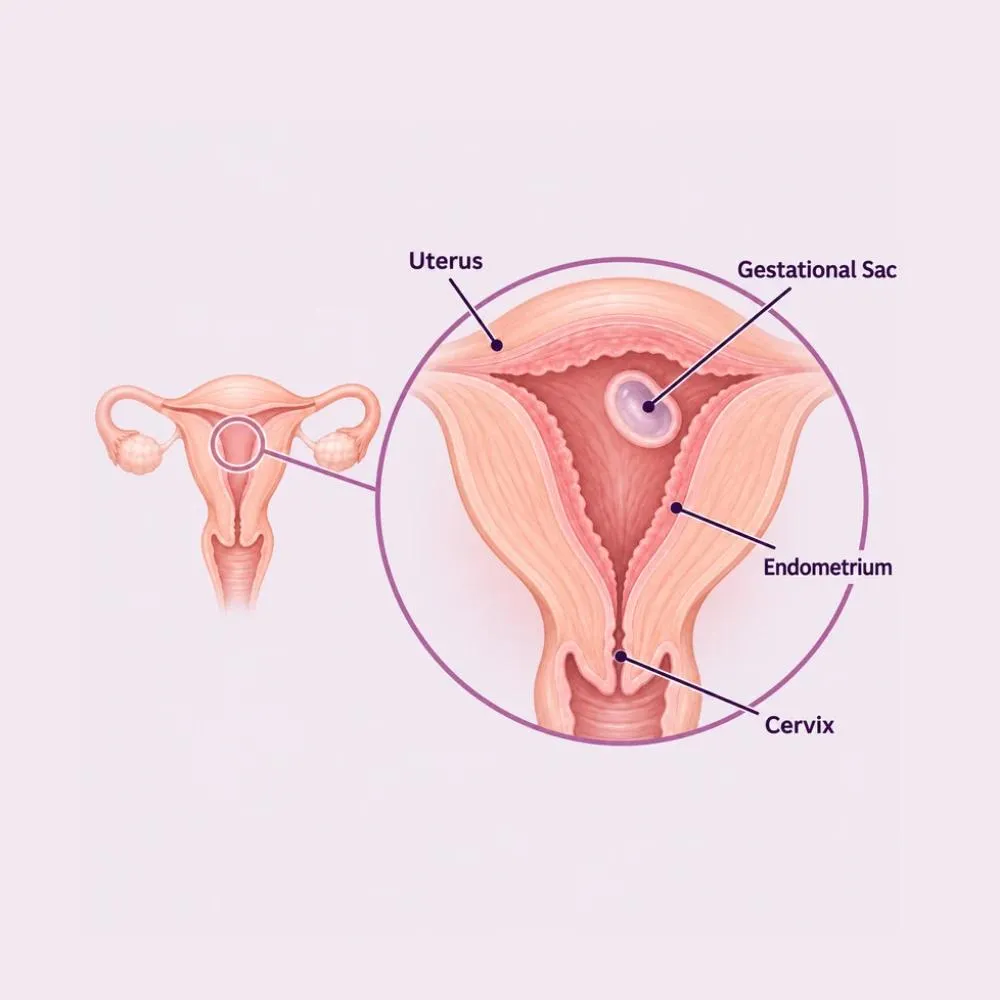
Medical Termination of Pregnancy is the ending of a pregnancy by medical or surgical means. In India it is governed by the Medical Termination of Pregnancy Act 1971, substantially amended in 2021, which sets out who may perform it, where, and up to what gestation. Understanding that framework matters, because it determines what is available to you and when.
Under the amended Act, termination is permitted up to twenty weeks on the opinion of one registered medical practitioner, and between twenty and twenty-four weeks on the opinion of two, for specified categories of women, including survivors of rape or incest, minors, women whose marital status changed during pregnancy, women with disability, and cases of fetal abnormality. Beyond twenty-four weeks it requires approval from a State-level Medical Board, and is permitted only for substantial fetal abnormality.
Two provisions are worth stating plainly because they are so widely misunderstood. Marital status is irrelevant: unmarried women have the same access as married ones. And spousal consent is not required at any gestation; the woman’s own consent is what the law requires, and for a minor, that of a guardian. Confidentiality is a statutory obligation, and disclosing a woman’s identity is itself a punishable offence.
The number of weeks determines what method is available, what it involves, and what the law permits.
Medical termination with tablets is straightforward and highly effective. The simplest option, and part of it can be completed at home.
Medical termination remains the usual approach, with slightly lower success rates and a higher chance of needing a surgical procedure afterwards.
Surgical termination by vacuum aspiration becomes the more reliable option, performed as a short day-care procedure.
Requires dilatation and evacuation, or a medically induced process. More involved, needing greater cervical preparation and usually a longer stay.
Permitted only for the specified categories of women under the amended Act, and requires the opinion of two registered medical practitioners.
Requires approval from a State-level Medical Board and is permitted only where there is substantial fetal abnormality.
Presenting early gives you more options, a simpler procedure and a lower risk of complications. If you are considering termination, an early consultation preserves choices that later close off.
The Act defines the grounds and the gestational limits. Within those, the decision is the woman’s own.
Grounds under the Act
What the law does not require
Spousal consent is not required at any stage under Indian law. Any facility insisting on a husband’s signature is imposing a condition the Act does not, and you are entitled to be seen elsewhere.
Confirming the pregnancy, its location and its gestation is essential before any method is chosen.
A urine or blood test to confirm pregnancy, alongside a history of your last menstrual period.
Essential. It confirms the pregnancy is inside the uterus, dates it accurately, and excludes ectopic pregnancy, which needs entirely different and urgent treatment.
Haemoglobin, blood group and Rh typing, and where indicated screening for infections. Rh-negative women need anti-D after the procedure.
Existing conditions, medications, allergies and previous surgery, all of which influence which method is safest for you.
A private discussion of the options, what each involves, and support if you are uncertain, without pressure in any direction.
Discussing future contraception, since fertility returns very quickly: ovulation can occur within two weeks.
The ultrasound is not a formality. Ectopic pregnancy is life-threatening and abortion pills do not treat it: a woman who takes them for an undiagnosed ectopic may believe her symptoms are expected while the situation becomes dangerous.
Two approaches, chosen mainly by gestation and by your own preference where both are available.
The standard regimen. Mifepristone blocks the hormone sustaining the pregnancy; misoprostol taken one to two days later causes the uterus to contract and expel it.
Cramping and bleeding heavier than a period, usually beginning within a few hours of the second medication and settling over the following day.
Highly effective in early pregnancy, with success rates falling as gestation advances. Around one in twenty women needs a surgical procedure to complete it.
A follow-up scan or blood test at one to two weeks, which is essential: this is not an optional step.
These medications are prescription-only for good reason. Taken without a scan, without a known gestation, or without follow-up, they carry real risk.
The contents of the uterus removed by gentle suction through the cervix. A short day-care procedure, and the usual method between about seven and twelve weeks.
Used in the second trimester, with cervical preparation beforehand. Performed under anaesthesia with a longer recovery.
For later gestations, using medication to induce labour, requiring admission and inpatient care.
Local anaesthesia with sedation for early procedures, or general anaesthesia where preferred or for later gestations.
An IUD can be inserted, or an implant placed, immediately after the procedure: the most reliable point to start contraception.
Abortion pills bought online or over a counter without a scan are the single greatest avoidable danger here. Without knowing the gestation and excluding ectopic pregnancy, what should be a very safe process becomes a genuinely risky one.
From first consultation to follow-up is usually two to three weeks, most of it waiting rather than treatment.
Confidential assessment, procedure and follow-up
A private discussion of your situation and options. Your identity is protected by law, and no explanation beyond the statutory grounds is required.
Ultrasound to confirm the pregnancy is in the uterus, establish gestation accurately, and exclude ectopic pregnancy.
Haemoglobin, blood group and Rh status. Rh-negative women are given anti-D immunoglobulin afterwards to protect future pregnancies.
Medical or surgical, according to gestation, your medical history and your own preference where both are options.
Medication taken over one to two days, or a day-care surgical procedure taking ten to twenty minutes under anaesthesia.
Observation for a few hours after a surgical procedure, then discharge the same day with clear written instructions.
Review at one to two weeks with a scan or blood test to confirm completion, and contraception started or confirmed.
The follow-up appointment is not optional. Around one in twenty medical terminations is incomplete, and an incomplete termination causes prolonged bleeding, infection and (if the pregnancy continues) a much more difficult situation later.
Safety here depends on the facility being registered and the process being done properly. Here is why patients trust us:
Termination within the MTP Act at a registered facility, with your identity protected as the law requires and no spousal consent demanded.
Private consultation with women gynaecologists, counselling if you want it, and no pressure in any direction.
From the first consultation through to post-treatment follow-up, with one team throughout.
Our hospital is in HITEC CITY, near IKEA: easily reachable from across Hyderabad.
Physical recovery is usually quick. Fertility returns almost immediately, which surprises many women.
Cramping and bleeding, heavier after medical than surgical termination. Simple painkillers and rest. Bleeding gradually reduces.
Bleeding tapers to spotting. Most women return to normal activity within a few days. Tampons and intercourse avoided for two weeks.
Follow-up scan or blood test to confirm completion. Contraception started or confirmed.
The next period usually arrives within four to six weeks. Ovulation, however, can occur as early as two weeks.
A properly performed termination does not affect future fertility or increase the risk of complications in later pregnancies.
Around one in twenty medical terminations is incomplete. Confirming completion is what prevents prolonged bleeding, infection and a far harder situation later.
Ovulation can occur within two weeks: before your next period. Contraception should begin straight away, not after the first period.
Soaking more than two pads an hour for two hours, fever above 38°C, severe pain or offensive discharge all need urgent review.
While the cervix closes and the uterine lining heals, to reduce infection risk. Use pads until bleeding stops.
Relief, sadness, or a mixture of both are all common and none is wrong. Counselling is available, and needing it is not a sign of regret.
It protects future pregnancies from Rh sensitisation. This is important and easily forgotten in the circumstances.
A properly performed termination does not cause infertility, breast cancer, or difficulty in later pregnancies. The evidence on all three is clear, and claims otherwise cause a great deal of unnecessary distress.
Book a consultation if any of the following apply.
Cost depends mainly on gestation and method. Early termination is considerably less expensive than later.
| Procedure | Estimated Cost |
|---|---|
| Consultation Private and confidential | ₹800 – ₹1,500 |
| Ultrasound and blood tests Dating scan, haemoglobin, blood group | ₹2,500 – ₹6,000 |
| Medical termination (up to 9 weeks) Includes medication and follow-up | ₹8,000 – ₹18,000 |
| Vacuum aspiration (up to 12 weeks) Day care, includes anaesthesia | ₹25,000 – ₹50,000 |
| Second trimester termination Requires admission | ₹55,000 – ₹1,20,000 |
| Anti-D immunoglobulin For Rh-negative women | ₹3,000 – ₹8,000 |
| IUD or implant insertion Placed at the same time if wanted | ₹5,000 – ₹25,000 |
Early medical termination is by far the least expensive. Second trimester procedures require admission and cost several times more.
Medication is cheaper than a surgical procedure. General anaesthesia adds anaesthetist and recovery charges over local with sedation.
Rh-negative women need anti-D. Contraception placed at the same visit adds cost but is the most reliable point to start it.
A shared ward, a twin-sharing room or a private suite: the largest single swing in most estimates.
We are empanelled with most major insurers, and our team files the pre-authorisation for you.
Every figure above is an indicative range, not a quote. After your consultation you are given a written, fixed-cost estimate, and that is the number you pay, with no additions once treatment begins.
The gynaecologists who provide MTP care at our HITEC CITY hospital.

Consultant Gynaecologist & Advanced Laparoscopic Surgeon
MBBS, MS, FMAS
16 years experience

Consultant Obstetrician, Gynecologist & Laparoscopic Surgeon
MBBS, MS (Obstetrics & Gynaecology)
11 years experience
Reviews from women treated for gynaecological conditions at Lux Hospitals, Hyderabad.
Written by Dr. Harshita Kakarla on women’s health and gynaecological care.
Dr. Harshita Kakarla

Dr. Harshita Kakarla

Dr. Harshita Kakarla

Dr. Harshita Kakarla

Dr. Harshita Kakarla
Dr. Harshita Kakarla
Common questions about MTP, the law in India, methods and costs at Lux Hospitals.
Still have questions? Call us at 079 6908 4422
Still have questions? Message us on WhatsApp at 079 6908 4444
Safe, legal and confidential termination care within the MTP Act, with counselling and follow-up included.
Plot No.116, Lumbini Avenue, HITEC CITY, Near IKEA, Hyderabad – 500032













