Dr. Samhitha Reddy
Consultant Proctologist & Laparoscopic Surgeon
MBBS, MS, FMAS, FISCP, DMAS
- 8 Yrs
- ASCRS Member
Varicose veins are not only a cosmetic matter. The aching, heaviness and swelling at the end of a long day are the visible part of a circulation problem that, left long enough, damages the skin and can ulcerate.
Treatment no longer means stripping veins out through incisions. Our surgeons at Lux Hospitals, HITEC CITY use laser and radiofrequency ablation performed through a needle puncture: walk in, walk out, and back to work the next day.
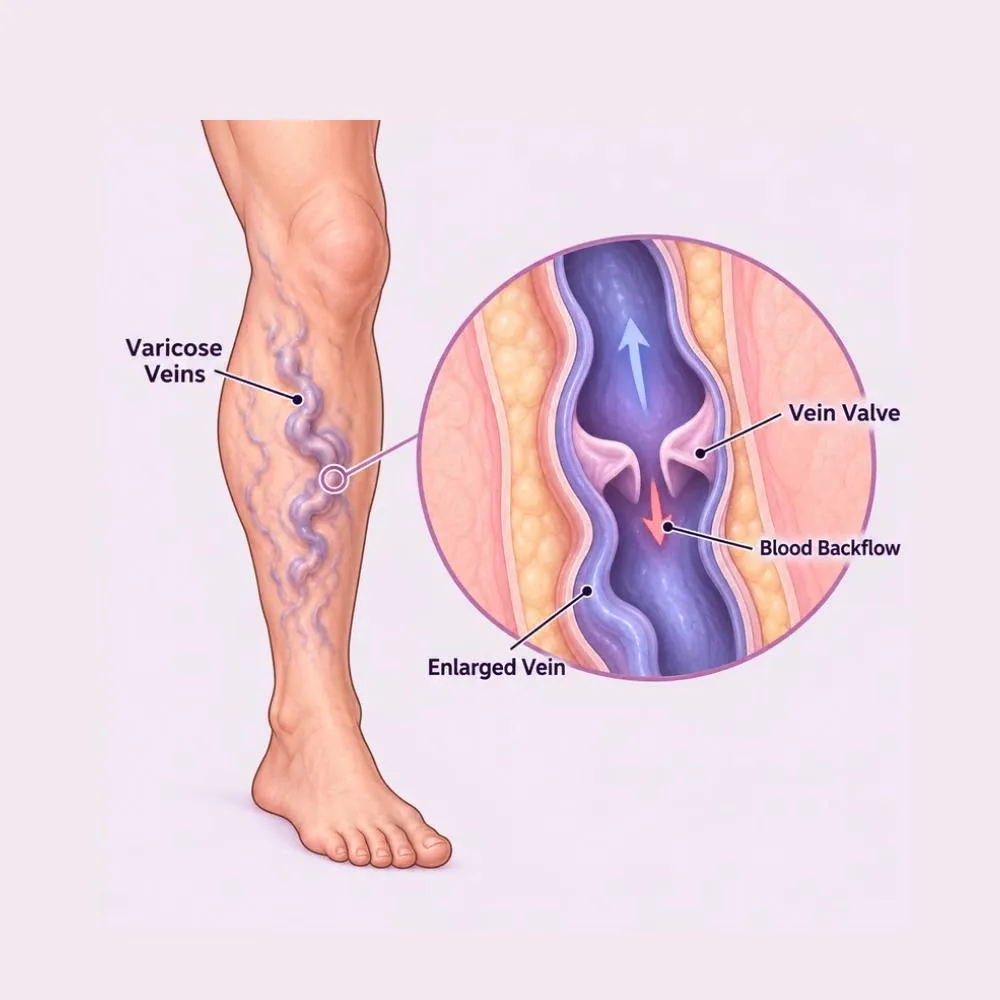
Varicose veins are swollen, enlarged veins that appear blue or dark purple and often bulge visibly under the skin. They develop when the one-way valves inside leg veins fail, allowing blood to flow backwards and pool instead of returning to the heart.
The mechanism is straightforward. Leg veins have to move blood upward against gravity, and they rely on valves to stop it falling back between muscle contractions. When those valves become incompetent, pressure builds in the veins below them, and the vein walls stretch and twist under it.
The condition progresses through recognisable stages: spider veins that are visible but symptomless; enlarged varicose veins with aching and heaviness; swelling with skin darkening around the ankle; and finally venous ulceration, where the skin breaks down and heals poorly. Treating it at the second stage is considerably easier than at the fourth.
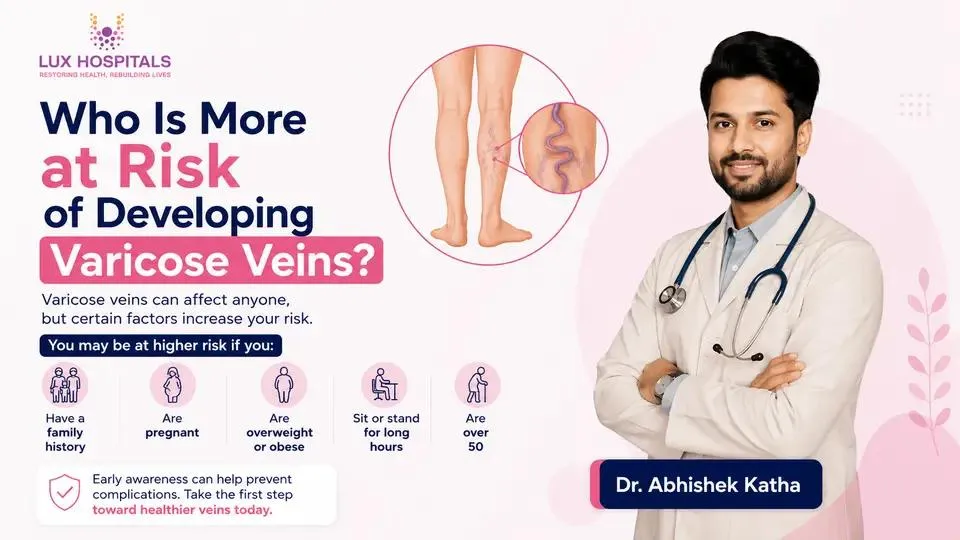
Varicose veins result from valve failure, and several factors make that more likely: some fixed, several within your control.
The strongest single factor. Having one or both parents affected substantially increases your own risk, through inherited vein wall and valve structure.
Occupations that involve long hours on your feet (teaching, surgery, retail, hospitality) keep venous pressure high all day.
Increased blood volume, hormonal relaxation of vein walls, and pressure from the growing uterus. Often improves after delivery, but not always completely.
Extra weight raises pressure in the leg veins continuously and makes both the condition and its treatment more difficult.
Vein walls and valves lose elasticity over time, which is why prevalence rises steadily with each decade.
Female hormones relax vein walls, and pregnancy adds to it: varicose veins are considerably commoner in women.
A past clot damages the deep venous valves, forcing more blood through surface veins and causing secondary varicosities.
The calf muscles are the pump that returns blood upward. A sedentary routine leaves that pump idle.
Weight, activity and breaking up long periods of standing are all worth attention. They slow progression and reduce symptoms, though they cannot repair a valve that has already failed.
The characteristic pattern is symptoms that build through the day, are worse after standing, and improve with elevation overnight.
Common symptoms
Signs of progression
Skin discolouration around the ankle is the sign worth acting on. It means the pressure has been high for a long time, and it is the stage immediately before ulceration.
Examination establishes what is visible; a duplex ultrasound establishes what is actually happening to the flow. No treatment is planned without one.
You are examined standing, since veins fill under gravity. The distribution of the veins and any skin changes are mapped.
The essential investigation. It shows which valves are leaking, in which veins, and how severely, and that map is what determines the treatment.
Measuring how long blood flows backwards when the calf is squeezed and released. Reflux beyond half a second confirms valve incompetence.
Confirming the deep system is patent. Treating surface veins when the deep veins are blocked would remove a necessary bypass route.
The severity is graded on a standard scale from spider veins through to active ulceration, which guides both treatment and prognosis.
Routine bloods and a clotting screen, plus a review of any history of thrombosis or clotting tendency.
The ultrasound map is the whole basis of modern varicose vein treatment. Treating visible veins without knowing which valve is leaking above them is why veins so often came back after older operations.
Conservative measures relieve symptoms but do not correct the underlying valve failure. The endovenous procedures on the second list are now the standard treatment, and have largely replaced open surgery.
Graduated compression supports the veins and markedly improves aching and swelling. The foundation of symptom control, and used after procedures too.
Elevating the legs above heart level, and regular walking to engage the calf muscle pump that returns blood upward.
Reducing excess weight lowers venous pressure and improves symptoms measurably, as well as making any procedure more straightforward.
A solution injected into small varicose and spider veins, causing them to collapse and be absorbed. Done in the clinic, ideal for cosmetic and residual veins.
The solution is converted to a foam so it fills the vein more completely, allowing larger veins to be treated by injection under ultrasound guidance.
A laser fibre passed into the faulty vein through a needle puncture seals it from the inside. No incision, done under local anaesthesia, and you walk out afterwards.
The same principle using radiofrequency heat rather than laser. Slightly less post-procedure bruising, with equally good long-term closure rates.
A medical-grade glue seals the vein without heat, which means no tumescent anaesthetic injections and no need for compression stockings afterwards.
Bulging surface veins are removed through pinprick punctures needing no stitches, usually at the same sitting as an ablation.
The traditional operation, removing the vein through incisions in the groin and leg. Now uncommon, and reserved for anatomy unsuitable for endovenous treatment.
Endovenous ablation has largely replaced stripping, and for good reason: it is done under local anaesthetic through a needle, has closure rates above ninety-five per cent, and you drive yourself home.
A forty-five to sixty minute day-care procedure done under local anaesthetic. No general anaesthetic, no incisions, and you walk out of the theatre yourself.
Endovenous laser ablation (EVLA)
The faulty vein is marked on the skin under ultrasound before you go in, so the operator knows exactly which segment is being treated.
A small area is numbed and a needle puncture gives access to the vein. No general anaesthetic and no incision is needed.
A fine catheter carrying the laser fibre is advanced up inside the vein under ultrasound guidance to the point where the leaking valve sits.
Dilute local anaesthetic is injected around the vein along its length. It numbs the area and, importantly, insulates the surrounding tissue from the heat.
The fibre is withdrawn slowly, delivering energy that heats and seals the vein wall behind it. The vein collapses and is gradually absorbed by the body.
Bulging surface branches are removed by phlebectomy through pinprick punctures, or injected with foam sclerotherapy at the same sitting.
A compression stocking is applied and you walk immediately. Home within an hour or two, driving the same day, back at work the next.
Sealing the vein does not affect your circulation. These are surface veins that were already failing to return blood properly: the deep system, which does the actual work, takes over completely.
Vein treatment succeeds when it is planned off a proper ultrasound map rather than off what is visible. Here is why patients trust us:
Surgeons experienced in endovenous laser and radiofrequency ablation, with duplex mapping done before every procedure.
Laser, RFA and adhesive closure available, so the technique is matched to your anatomy rather than to what is on the shelf.
From the first consultation through to post-treatment follow-up, with one team throughout.
Our hospital is in HITEC CITY, near IKEA: easily reachable from across Hyderabad.
Recovery from endovenous ablation is unusually quick: walking immediately, driving the same day, and back at work the next. The compression stockings do most of the work.
You walk out of theatre. Compression stocking on, and thirty minutes of walking before you leave. Mild tightness along the treated vein.
Back to desk work the next day. Walk regularly. Bruising and a pulling sensation along the vein are normal and expected.
Stockings worn continuously as instructed. Aching and heaviness usually already noticeably better than before the procedure.
Bruising resolves. The treated vein feels like a firm cord under the skin, which softens over the following months. Follow-up ultrasound confirms closure.
The treated vein is gradually absorbed and becomes impalpable. Skin discolouration, where present, fades slowly over this period.
Exactly as instructed, usually one to two weeks. They reduce bruising, swelling and the risk of clot, and they are not optional.
At least thirty minutes daily from day one. Walking engages the calf pump and substantially reduces the risk of a clot.
Move regularly rather than standing or sitting for hours. This is also what keeps the untreated veins healthy long term.
Legs above heart level for twenty minutes a few times a day in the first fortnight, which helps swelling settle faster.
Calf pain and swelling with warmth and redness, breathlessness or chest pain, fever, or spreading redness along the treated vein.
An ultrasound at around six weeks confirms the vein has closed properly and that no clot has formed.
Treated veins do not come back. New varicose veins can develop elsewhere over the years, though (the underlying tendency remains) which is why compression, weight and activity still matter afterwards.
Book a consultation if any of the following apply.
Cost depends on which procedure is needed, how many veins are treated, and whether one leg or both. These are the ranges our patients fall into.
| Procedure | Estimated Cost |
|---|---|
| Consultation & duplex ultrasound Includes the full venous map | ₹3,000 – ₹6,000 |
| Compression stockings Per pair, medical-grade graduated compression | ₹1,500 – ₹4,000 |
| Sclerotherapy Per session, for spider and small veins | ₹8,000 – ₹20,000 |
| Laser ablation (EVLA): one leg Day care, walk-in walk-out | ₹65,000 – ₹1,10,000 |
| Radiofrequency ablation: one leg Day care, walk-in walk-out | ₹70,000 – ₹1,20,000 |
| Bilateral ablation Both legs treated in one sitting | ₹1,10,000 – ₹1,90,000 |
| Vein stripping surgery One to two nights’ stay | ₹55,000 – ₹95,000 |
Treating both legs in one sitting costs less than two separate procedures, and is usually preferred where both are affected.
A single incompetent trunk is straightforward. Multiple refluxing segments with extensive surface varicosities take longer.
Phlebectomy or foam sclerotherapy for surface veins is often added at the same sitting and is costed with it.
A shared ward, a twin-sharing room or a private suite: the largest single swing in most estimates.
We are empanelled with most major insurers, and our team files the pre-authorisation for you.
Every figure above is an indicative range, not a quote. After your consultation you are given a written, fixed-cost estimate, and that is the number you pay, with no additions once treatment begins.
What patients treated here can expect:
Local anaesthetic, home within two hours, back at work the next day.
Access through a needle puncture, so there is no scar to speak of.
Closure rates above ninety-five per cent, with treated veins gone for good.
The vascular and general surgeons who treat varicose veins at our HITEC CITY hospital.
Consultant General & Advanced Laparoscopic Surgeon
MBBS, MS, FMAS
17 years experience
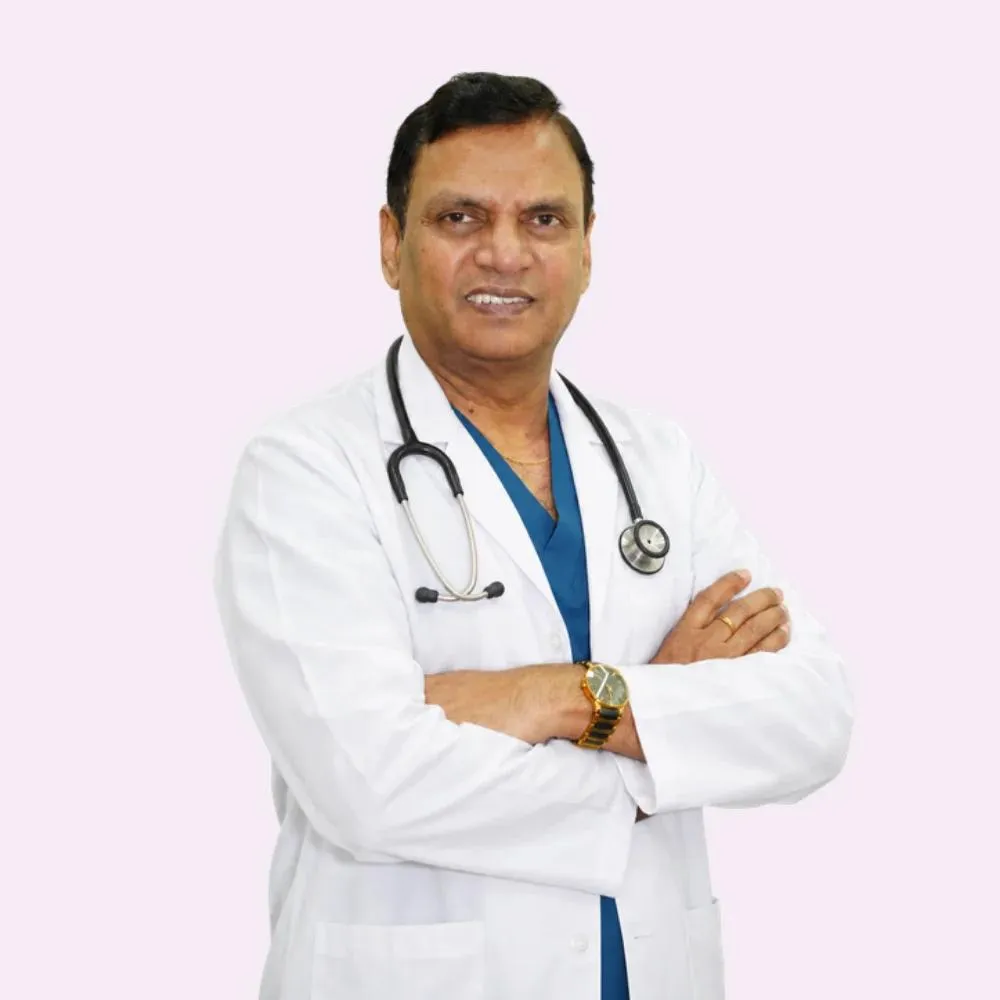
Senior Consultant: Bariatric & Gastrointestinal Surgery
MBBS, MS, FRCS (UK), DLS (France)
28 years experience

Consultant Proctologist & Laparoscopic Surgeon
MBBS, MS, FMAS, FISCP, DMAS
8 years experience
Reviews from patients treated for varicose veins, hernia and general surgery at Lux Hospitals, Hyderabad.
Written by Dr. Abhishek Katha on varicose veins, vein health and general surgery.
Dr. Abhishek Katha
Dr. Abhishek Katha
Dr. Abhishek Katha
Dr. Abhishek Katha
Dr. Abhishek Katha
Dr. Abhishek Katha
Common questions about varicose veins, laser treatment, and what it costs at Lux Hospitals.
Still have questions? Call us at 079 6908 4422
Still have questions? Message us on WhatsApp at 079 6908 4444
Walk-in, walk-out laser vein treatment planned off a full ultrasound map, with a fixed-cost estimate before treatment begins.
Plot No.116, Lumbini Avenue, HITEC CITY, Near IKEA, Hyderabad – 500032