











Recurring Foot Corns? Don’t Ignore the Warning Signs
There is more to recurrent foot corns than merely a cosmetic issue. They may result in ongoing pain, trouble walking, and recurrent discomfort that interferes with day-to-day activities. Home treatments and over-the-counter corn pads may offer short-term comfort, but they frequently don’t address the root cause. Consequently, Recurring Foot Corns continue to recur, causing discomfort during daily activities. It might be time to consider a long-term solution if you are sick of dealing with the same uncomfortable corn every time. Our skilled professionals at Lux Hospitals provide cutting-edge diagnostics and contemporary corn removal techniques to eradicate the underlying cause and drastically lower recurrence.

What Are Recurring Foot Corns?
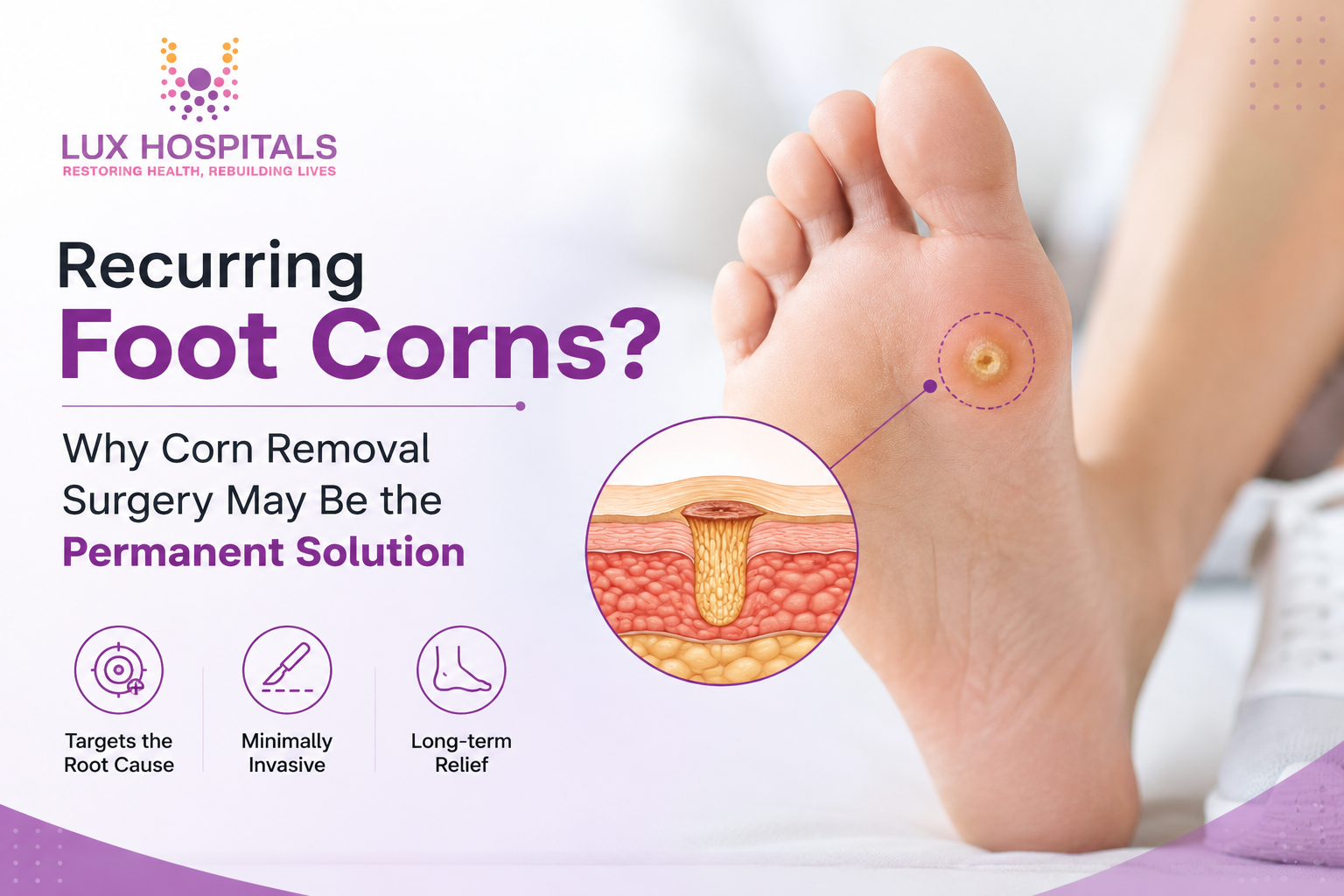
Thick, hardened skin layers known as recurring foot corns are caused by recurrent pressure or friction on particular parts of the feet. They frequently develop on the sides, soles, or toes of the feet, and if the underlying pressure persists, they may return.
Because of their hard inner core that presses into deeper tissues, corns are often smaller than calluses but cause more pain.
Common characteristics include:
- Small, raised, hardened skin patches
- Pain while standing or walking
- Tenderness around the affected area
- Dry or flaky skin
- Burning sensation during prolonged walking
Several people mistakenly believe that shaving or trimming a corn permanently solves the problem. However, Recurring Foot Corns usually indicate an ongoing mechanical issue that requires professional treatment.
Common causes include:
- Wearing tight or ill-fitting footwear
- High heels are causing excessive pressure.
- Foot deformities such as bunions or hammertoes
- Flat feet or high arches
Why Do Recurring Foot Corns Keep Coming Back?
After utilising medicated pads or at-home remedies, many patients question why their corn returns in a few weeks. Treating the symptom alone, rather than the underlying cause, is the solution.
Recurring Foot Corns develop because constant pressure continues to irritate the same area of skin. Unless this pressure is relieved, the body continues to produce thicker skin for protection.
Reasons for recurrence
Recurring Foot Corns often return because the underlying cause—such as constant pressure, friction, or a foot deformity—is not corrected. Simply removing the corn treats the symptom, while repeated stress on the same area can cause a new corn to develop over time.
Continuous Pressure
Improper footwear keeps rubbing against the same location.
Foot Deformities
Conditions like:
- Hammertoes
- Bunions
- Bone spurs
- Overlapping toes
increase friction and encourage Recurring Foot Corns.
Incorrect Walking Pattern
Uneven body weight transfer due to an irregular stride results in recurring pressure spots.
Self-Treatment
Many people cut or shave their corns at home, increasing the risk of infection while failing to remove the underlying cause.
Diabetes and Reduced Sensation
People with diabetes may not notice early pressure areas, allowing corns to worsen before treatment.
At Lux Hospitals, our specialists carefully evaluate your foot structure, walking pattern, and lifestyle before recommending the most effective treatment plan.
When is Corn Removal Surgery the Best Option?
Not every patient needs surgery. However, when conservative treatments repeatedly fail, corn removal surgery may provide long-term relief.
Your doctor may recommend surgery if Recurring Foot Corns:
- Return several times each year.
- Cause severe pain while walking
- Bleed or become infected.
- Interfere with work or sports.
- Develop due to bone deformities.
- Do not improve despite proper footwear.
Instead of repeatedly removing surface skin, surgery addresses the structural issue causing excessive pressure.
Types of Corn Removal Procedures
Depending on the cause, treatment may include:
Surgical Corn Excision
The hardened core is completely removed.
Bone Correction Surgery
Small bone prominences responsible for pressure are corrected.
Toe Deformity Correction
Procedures for hammertoes or bunions reduce the friction that can cause repeated pain.
Minimally Invasive Surgery
Modern techniques involve:
- Small incisions
- Less pain
- Faster healing
- Minimal scarring
- Early walking
At Lux Hospitals, advanced surgical techniques focus on permanent correction with quicker recovery and better patient comfort.
Benefits of surgery
- Long-lasting pain relief
- Reduced recurrence
- Improved walking comfort
- Better footwear options
- Enhanced quality of life
Recovery After Corn Removal Surgery
When patients properly follow their surgeon’s recommendations, recovery usually goes well.
Mild soreness and oedema are common immediately after surgery, but they resolve in a few days.
Recovery tips
- Wear prescribed footwear
- Keep the surgical site clean.
- Avoid excessive walking initially.
- Attend follow-up appointments
- Gradually return to daily activities.
- Follow wound care instructions.
Many patients resume light activities within a short period, although complete healing varies depending on the procedure performed.
Preventing Recurring Foot Corns After Surgery
Even after successful treatment, healthy foot care helps maintain excellent long-term results.
Prevention tips
- Wear properly fitted shoes.
- Use cushioned insoles
- Maintain a healthy body weight.
- Moisturise your feet regularly.
- Avoid prolonged pressure on one area.
- Trim toenails properly
- Seek early treatment for foot deformities.
Following these preventive measures significantly reduces the likelihood of recurring foot corns.
Why Choose Lux Hospitals?
At Lux Hospitals, patients receive comprehensive foot care from experienced surgeons using modern diagnostic tools and minimally invasive techniques.
Our patient-centred approach includes:
- Expert foot specialists
- Advanced surgical facilities
- Personalised treatment plans
- Modern minimally invasive procedures
- Comprehensive post-operative care
- Faster recovery protocols
Whether your condition is mild or severe, Lux Hospitals aims to restore pain-free mobility through effective, long-lasting treatment.
Conclusion
Living with Recurring Foot Corns can affect your mobility, confidence, and overall quality of life. While temporary treatments may reduce symptoms, they rarely eliminate the underlying cause. If Recurring Foot Corns continue to return despite proper care, advanced evaluation and surgical correction may offer the permanent solution you need. Using cutting-edge surgical methods and compassionate care, our skilled physicians at Lux Hospitals identify the underlying cause of recurrent foot corns and offer individualised treatment strategies.
Frequently Asked Questions
Yes, once the underlying cause—such as improper pressure, bone prominence, or foot deformity—is addressed, recurrent foot corns can be completely cured. While surgery deals with the cause of recurrent friction, temporary treatments remove the thickened skin. Speaking with experts at Lux Hospitals lowers the likelihood of recurrence and ensures long-term relief.
Corn removal surgery is usually performed under appropriate anaesthesia, making the procedure comfortable for the patient. Mild soreness or swelling may occur after surgery, but it is generally manageable with medications and proper aftercare.
The kind of procedure and the patient's general condition determine how long recovery takes. While full recovery may take several weeks with the right treatment, many people resume light daily activities within a few days.
If left untreated, recurrent foot corns can worsen, making it difficult to stand, walk, and exercise comfortably. They may occasionally develop ulcers, infections, or skin deterioration, particularly in those with diabetes or poor circulation. Long-term foot health is improved, and problems are avoided with early treatment.
Lux Hospitals provides thorough assessment, cutting-edge diagnostic tools, and skilled surgeons who prioritise treating the underlying cause of recurrent foot corns rather than providing only short-term relief.
Yes, Lux Hospitals provides advanced minimally invasive corn removal procedures whenever clinically appropriate for the patient's condition. These techniques involve smaller incisions, less postoperative pain, quicker recovery, and minimal scarring while effectively correcting the underlying cause of Recurring Foot Corns.