



Dr. Samhitha Reddy
Consultant Proctologist & Laparoscopic Surgeon
MBBS, MS, FMAS, FISCP, DMAS
- 8 Yrs
- ASCRS Member
Renal failure means the kidneys have stopped filtering adequately. It comes in two very different forms, and telling them apart is the first and most important thing done.
Acute kidney injury develops over hours or days and is frequently reversible if the cause is treated quickly. End-stage chronic failure develops over years and is permanent, needing dialysis or a transplant. Our kidney specialists at Lux Hospitals, HITEC CITY manage both, with dialysis available on site.
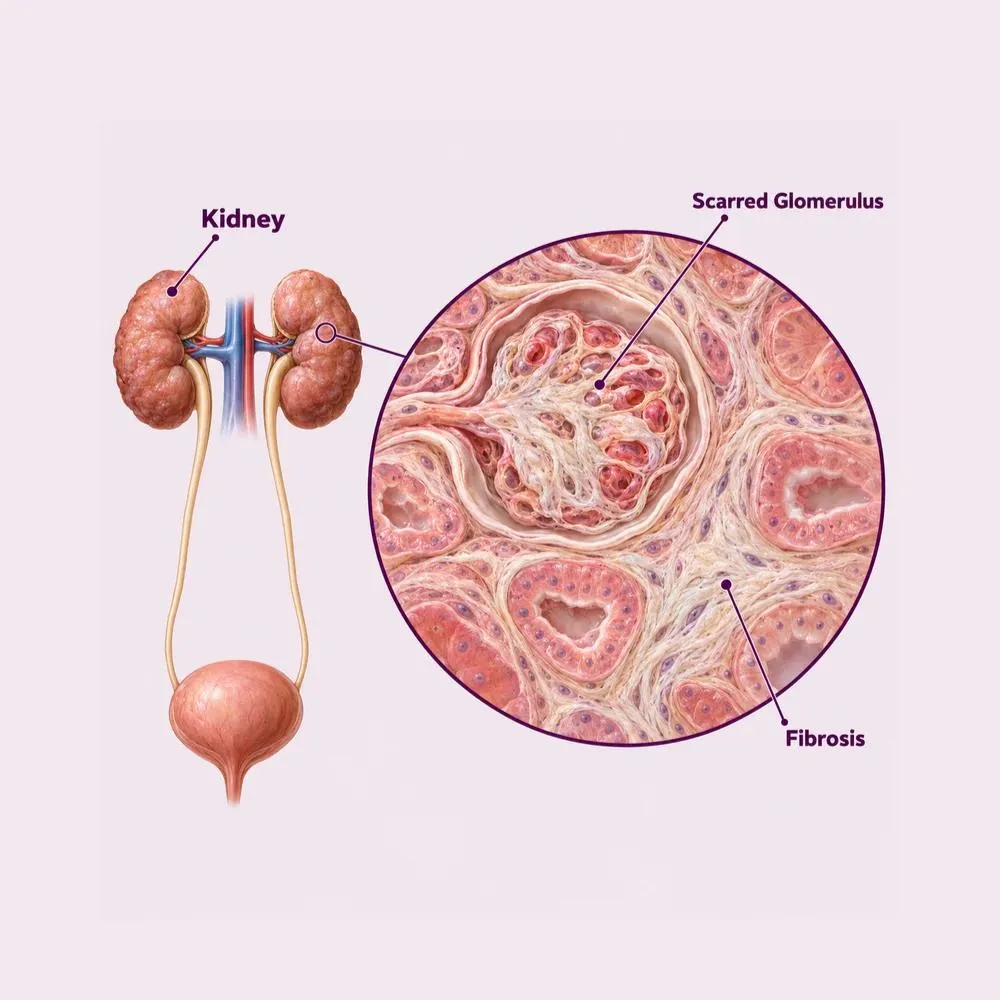
Renal failure is the point at which the kidneys can no longer clear waste products, balance salts and water, or regulate blood pressure adequately. Urea, creatinine, potassium and acid accumulate in the blood, fluid builds up in the tissues and lungs, and without treatment the consequences become life-threatening within days.
Acute kidney injury develops over hours to days, most often from severe dehydration, sepsis, obstruction, or a drug or contrast agent that has injured the kidney. It is frequently reversible: correct the cause promptly and function very often returns, sometimes completely. Dialysis in this setting may be needed only temporarily, as support while the kidney recovers.
End-stage renal disease is the endpoint of chronic kidney disease, where filtration has fallen below about 15 ml/min. This is not reversible. Treatment is renal replacement (haemodialysis, peritoneal dialysis or transplantation) and of those, a kidney transplant gives by far the best survival and quality of life for suitable candidates.
The causes are grouped by where the problem lies: before the kidney, within it, or after it.
Severe dehydration, blood loss, heart failure or sepsis. The commonest cause of acute injury, and often fully reversible once circulation is restored.
Severe infection causes both low blood pressure and direct inflammatory kidney injury. A leading cause of acute failure in hospital.
NSAIDs, certain antibiotics such as aminoglycosides, and iodinated contrast for CT scans. Particularly dangerous where kidney function is already reduced.
Stones, an enlarged prostate, or a tumour blocking urine outflow. Back-pressure damages the kidney, and relieving it promptly often restores function.
The two commonest causes of chronic failure, accounting for the majority of people reaching dialysis.
Inflammation of the filtering units, which can cause acute failure or progress slowly to end-stage disease.
Inherited cystic replacement of kidney tissue, leading to failure typically in the fifth or sixth decade.
Obstruction is the cause worth finding urgently, because relieving it can restore function completely. An ultrasound takes fifteen minutes and is done in every case of unexplained kidney failure for exactly that reason.
Acute failure announces itself; chronic failure creeps up. The symptoms overlap but the timescale differs completely.
Common symptoms
Emergency symptoms
Breathlessness lying flat, or a sudden stop in urine output, are emergencies. High potassium can cause a fatal cardiac arrhythmia with very little warning, and it is treatable within minutes of arriving at hospital.
The urgent questions are how bad it is, whether it is acute or chronic, and whether there is an obstruction to relieve.
Creatinine, urea, eGFR, potassium, sodium, bicarbonate and haemoglobin. Potassium is checked first, because dangerously high levels need treatment within minutes.
Protein, blood, cells and casts. The pattern helps distinguish injury within the kidney from problems before or after it.
Performed urgently. It excludes obstruction, which is treatable, and shows whether the kidneys are small and scarred: indicating chronic disease.
Previous creatinine values are the fastest way to tell acute from chronic. A normal result six months ago changes the whole approach.
High potassium produces characteristic ECG changes. Fluid overload and cardiac strain are assessed at the same time.
Where glomerulonephritis or another treatable intrinsic disease is suspected and the diagnosis would change management.
Small, scarred kidneys on ultrasound alongside anaemia and abnormal calcium point firmly to chronic disease. Normal-sized kidneys with a recently normal creatinine point to acute injury, and to a real chance of full recovery.
Acute failure is treated by reversing the cause. Chronic failure is treated by replacing kidney function.
Correcting dehydration and restoring circulation. Where reduced blood flow is the cause, this alone often restores function.
Prompt antibiotics and source control in sepsis, which is a leading cause of acute injury.
A urinary catheter, ureteric stent or percutaneous nephrostomy to drain a blocked system. Function frequently recovers quickly once pressure is relieved.
Withdrawing NSAIDs, ACE inhibitors, contrast agents and offending antibiotics, and adjusting all other doses to kidney function.
Urgent treatment of high potassium with insulin-dextrose, calcium and binders, since it can cause fatal arrhythmia.
Short-term support through a neck line where the kidney needs time to recover, withdrawn once function returns.
Blood filtered externally, typically three four-hour sessions weekly, through an arteriovenous fistula created several months in advance.
Fluid exchanged through an abdominal catheter, done at home each day. Greater independence and better preservation of any remaining kidney function.
From a living or deceased donor. The best option by a wide margin for suitable candidates, with better survival and far fewer restrictions than dialysis.
Cardiac, infection and immunological assessment, tissue typing and donor evaluation, arranged in parallel with starting dialysis.
Symptom control without dialysis, an appropriate and dignified choice for some frail or very elderly patients.
Dialysis replaces perhaps ten to fifteen per cent of normal kidney function: it keeps you alive and reasonably well, but it is not equivalent to a working kidney. That is why transplantation, where possible, is the goal.
The first hours are about safety. What follows depends entirely on whether the failure is acute or chronic.
Emergency stabilisation followed by definitive management
Bloods including potassium, an ECG, and assessment of fluid status and urine output. Life-threatening abnormalities are treated first.
High potassium, severe acidosis and pulmonary oedema treated urgently. These are what kill in the first twenty-four hours.
To exclude obstruction, which is immediately treatable, and to assess whether the disease looks acute or chronic.
Fluids for dehydration, antibiotics for sepsis, drainage for obstruction, and withdrawal of any drug injuring the kidney.
Started urgently through a temporary neck line where potassium, acid or fluid cannot be controlled medically.
In acute injury, daily bloods and urine output tracking. Recovery typically begins within one to three weeks where it is going to occur.
Where failure proves permanent, creating a fistula or peritoneal catheter and beginning transplant workup.
A temporary neck line is what allows dialysis to start immediately in an emergency. A fistula is far better for the long term but takes two to three months to mature, which is why it is created in advance whenever the need can be foreseen.
Kidney failure needs both emergency capability and long-term continuity. Here is why patients trust us:
Urgent assessment, catheter insertion and dialysis available on site, so treatment starts without transfer.
Urgent ultrasound and careful review of prior results, because reversible failure must not be mistaken for permanent failure.
From the first consultation through to post-treatment follow-up, with one team throughout.
Our hospital is in HITEC CITY, near IKEA: easily reachable from across Hyderabad.
Acute injury often recovers over weeks. Chronic failure is managed for life, with transplantation the goal where suitable.
Stabilisation. Potassium, acid and fluid overload corrected; the cause identified and treated.
In acute injury, urine output often begins improving. Dialysis given as support where needed rather than as a permanent commitment.
Kidney function recovers in most cases of acute injury, sometimes completely. Creatinine is tracked to see how far it returns.
Where function has not recovered, dialysis access is created and transplant workup begins in parallel.
Regular dialysis with monitoring of haemoglobin, calcium, phosphate and nutrition, alongside progress on the transplant pathway.
On dialysis, fluid restriction is usually necessary. Weight gain between sessions is the practical measure, and staying within it prevents breathlessness.
Bananas, coconut water, citrus, tomatoes and potatoes are high in potassium, which the failing kidney cannot clear. High potassium can stop the heart.
No blood pressure cuffs, blood draws, drips or tight sleeves on that arm. A damaged fistula is difficult to replace.
Hepatitis B vaccination is essential before starting dialysis, alongside influenza and pneumococcal cover.
Transplantation gives considerably better survival and quality of life than long-term dialysis. Starting the workup early matters, since it takes time.
Skipped sessions allow potassium, acid and fluid to accumulate, and are a common cause of emergency admission.
Acute kidney injury caught and treated early frequently recovers fully. That is the single strongest argument for going to hospital promptly when urine output falls rather than waiting to see whether it improves.
Go to hospital urgently if any of the following apply.
Acute care is an admission cost. Chronic failure is an ongoing cost, and that is the more significant consideration for most families.
| Procedure | Estimated Cost |
|---|---|
| Consultation Per visit | ₹800 – ₹1,500 |
| Emergency kidney workup Bloods, urine, ECG, ultrasound | ₹6,000 – ₹15,000 |
| Temporary dialysis catheter Insertion, for urgent dialysis | ₹15,000 – ₹30,000 |
| Haemodialysis session Per session; usually three weekly | ₹2,000 – ₹4,500 |
| AV fistula creation Day care; matures over two to three months | ₹45,000 – ₹85,000 |
| Peritoneal dialysis catheter Insertion; consumables recur monthly | ₹55,000 – ₹95,000 |
| Admission for acute kidney injury Varies greatly with cause and ICU need | ₹60,000 – ₹2,50,000 |
Acute injury is a single admission with a real chance of full recovery. Chronic failure is a recurring lifetime cost.
Haemodialysis carries per-session costs and travel three times weekly. Peritoneal dialysis has a higher setup cost and recurring consumables at home.
Acute failure with sepsis or multi-organ involvement needing ICU is substantially more expensive than a ward admission.
A shared ward, a twin-sharing room or a private suite: the largest single swing in most estimates.
We are empanelled with most major insurers, and our team files the pre-authorisation for you.
Every figure above is an indicative range, not a quote. After your consultation you are given a written, fixed-cost estimate, and that is the number you pay, with no additions once treatment begins.
The kidney specialists who treat renal failure at our HITEC CITY hospital.

Consultant Urologist & Andrologist
MBBS, MS, DrNB (Urology)
10 years experience

Consultant Urologist & Andrologist
MBBS, MS, MCh (Urology)
9 years experience
Reviews from patients treated for kidney and urological conditions at Lux Hospitals, Hyderabad.
Written by Dr. Vipin Reddy B on kidney health and urological care.

Dr. Vipin Reddy B

Dr. Vipin Reddy B

Dr. Vipin Reddy B
Dr. Vipin Reddy B

Dr. Vipin Reddy B

Dr. Vipin Reddy B
Common questions about kidney failure, dialysis, transplantation and costs at Lux Hospitals.
Still have questions? Call us at 079 6908 4422
Still have questions? Message us on WhatsApp at 079 6908 4444
Urgent assessment of kidney failure with on-site dialysis and transplant workup, and costs shared upfront.
Plot No.116, Lumbini Avenue, HITEC CITY, Near IKEA, Hyderabad – 500032













