Dr. Samhitha Reddy
Consultant Proctologist & Laparoscopic Surgeon
MBBS, MS, FMAS, FISCP, DMAS
- 8 Yrs
- ASCRS Member
Thyroid disorders can affect your energy levels, body weight, heart rate, mood and overall well-being. When the thyroid gland produces too much or too little hormone, it can disrupt several important body functions.
At Lux Hospitals, Hyderabad, patients can seek medical consultation for thyroid-related symptoms, abnormal thyroid test results and guidance on appropriate treatment options. Whether you have been diagnosed with hypothyroidism or hyperthyroidism, or are noticing unexplained changes in your health, timely evaluation can help identify the cause and guide treatment.
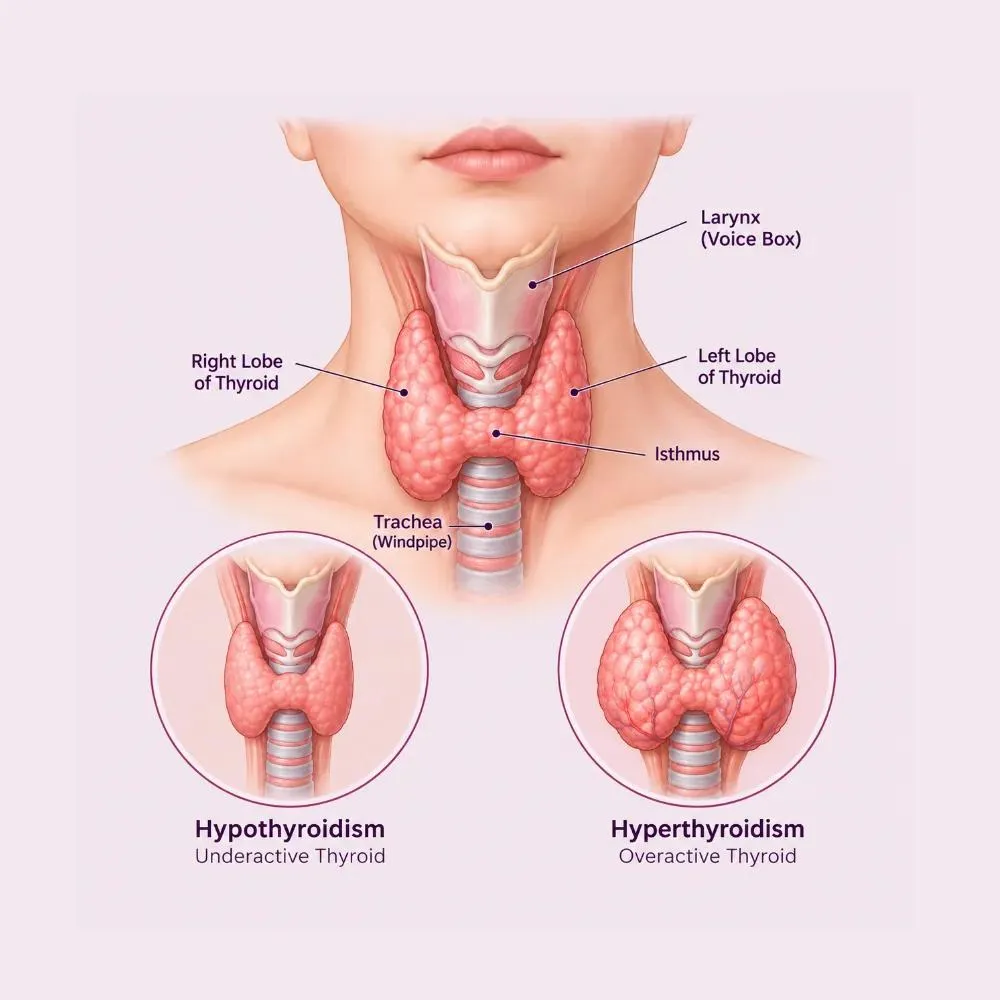
Thyroid disorders affect the structure or function of the thyroid gland, a small, butterfly-shaped gland at the front of the neck. It produces the hormones thyroxine (T4) and triiodothyronine (T3), which help regulate metabolism, body temperature, heart function and energy use. Thyroid disorders occur when hormone production becomes insufficient or excessive, and some conditions can also cause inflammation, enlargement or nodules in the gland.
The two common thyroid hormone disorders are hypothyroidism, an underactive thyroid that produces too little thyroid hormone, and hyperthyroidism, an overactive thyroid that produces too much. Both can affect daily health but need different treatment approaches. Effective management focuses on identifying the underlying cause, restoring appropriate hormone levels and monitoring long-term health.
Hypothyroidism occurs when the thyroid cannot produce enough hormone to meet the body’s needs. Because thyroid hormones help regulate metabolism, low levels can slow several bodily processes. Hashimoto’s thyroiditis, an autoimmune condition, is a common cause; others include thyroid surgery, radioactive iodine treatment, certain medicines and thyroid inflammation. Hypothyroidism is commonly managed with prescribed thyroid hormone replacement and regular blood tests.
Hyperthyroidism develops when the thyroid produces more hormone than the body needs. Excess thyroid hormone can speed up metabolism and increase activity in several organs. Graves’ disease is a common cause; others include overactive thyroid nodules and certain inflammatory thyroid conditions. Treatment depends on the underlying cause and may involve medication, radioactive iodine or surgery.
Thyroid problems can develop from autoimmune diseases, hormonal changes, inflammation, medicines or other medical conditions.
An autoimmune condition in which the immune system damages thyroid tissue, gradually reducing hormone production.
Removing or treating thyroid tissue can reduce the gland’s ability to produce hormones.
Certain medicines, including lithium and amiodarone, can interfere with thyroid function.
Too little or too much iodine may affect thyroid hormone production.
An autoimmune disorder that stimulates the thyroid gland to produce too much hormone.
One or more thyroid nodules may produce excess thyroid hormone independently.
Inflammation can sometimes cause stored thyroid hormone to leak into the bloodstream, leading to temporary symptoms of an overactive thyroid.
Determining the cause matters because not all thyroid disorders need the same treatment. Risk factors may include a family history of thyroid disease, previous thyroid problems or thyroid surgery, autoimmune conditions, certain medicines, radiation exposure involving the neck, pregnancy or the postpartum period, and increasing age. Women are more often affected by several common thyroid disorders, although men can develop them too.
Although both conditions involve the thyroid gland, their symptoms and treatment requirements differ.
Hypothyroidism (underactive thyroid)
Hyperthyroidism (overactive thyroid)
Untreated or poorly controlled thyroid disorders can affect several body systems. Untreated hypothyroidism may lead to raised cholesterol, cardiovascular problems, fertility difficulties and, rarely, severe life-threatening hypothyroidism. Untreated hyperthyroidism may cause irregular heart rhythms, bone loss and cardiovascular problems, and severe uncontrolled hyperthyroidism can occasionally lead to thyroid storm, a medical emergency.
Diagnosing thyroid disease usually involves reviewing symptoms, medical history, physical examination findings and thyroid function tests.
TSH is made by the pituitary gland and helps regulate thyroid hormone production. A high TSH commonly suggests hypothyroidism, while a low level may indicate hyperthyroidism. Certain medical conditions and medicines can affect how TSH results are interpreted.
Measure thyroid hormone levels in the blood, helping determine whether the thyroid is producing too much or too little hormone and how severe the dysfunction is.
May help show whether an autoimmune condition, such as Hashimoto’s thyroiditis or Graves’ disease, is behind the change in hormone levels.
May be recommended when examination suggests enlargement, nodules or other structural changes. It shows the gland’s size and appearance but does not replace hormone testing.
Doctors may suggest further tests to determine the underlying cause, based on clinical findings.
Results are interpreted together with your symptoms, history and any medicines you take, rather than read in isolation.
Thyroid treatment depends on the type of disorder, its underlying cause, symptom severity and the patient’s overall health. The aim is to maintain appropriate thyroid hormone levels while reducing symptoms and preventing complications.
Hypothyroidism is often treated with levothyroxine, a synthetic form of thyroid hormone that replaces what the gland can no longer produce. The right dose depends on age, body weight, lab results, other medical conditions and response to treatment, and thyroid function is usually rechecked after starting or adjusting it. Many people need long-term treatment, depending on the cause. Take it as your prescribing clinician directs.
Medicines such as carbimazole or methimazole reduce thyroid hormone production. They may be recommended for Graves’ disease or other suitable causes of hyperthyroidism.
May temporarily ease symptoms such as rapid heartbeat and tremors while other treatments take effect. They do not directly reduce thyroid hormone production.
Selected patients may receive radioactive iodine to reduce overactive thyroid tissue. It is not suitable during pregnancy or breastfeeding, and may result in hypothyroidism that needs hormone replacement.
Some people with large goitres, overactive nodules, suspected cancer or other clinical criteria may benefit from surgery.
A balanced, nutritious diet, regular physical activity, following prescribed medication schedules and getting enough sleep may support general well-being during thyroid treatment.
Dietary changes alone cannot reliably replace thyroid hormone medication or treat excess hormone production.
Understanding the consultation process can help you prepare for evaluation and treatment.
Thyroid consultation
Bring previous thyroid function reports, prescriptions and relevant medical records. Tell your doctor about current medicines, supplements and any previous thyroid treatment. Biotin supplements can interfere with some thyroid laboratory tests, so mention them before testing.
The doctor reviews your symptoms, medical history and previous results, and may examine your neck and advise thyroid function tests or other investigations. Based on the findings, they explain the likely cause and discuss treatment options.
You may receive medication instructions, monitoring recommendations and guidance on follow-up appointments. Thyroid hormone levels may take several weeks to stabilise after a treatment change, and follow-up blood tests show whether further adjustment is needed.
Patients with a known thyroid condition may also need routine reviews to check their response to treatment and adjust medicines when necessary.
At Lux Hospitals, patients can enquire about consultations for thyroid-related symptoms and abnormal thyroid test results. Managing thyroid disorders requires careful interpretation of lab results, consideration of other health conditions and regular monitoring.
Your symptoms, history and test results are reviewed together, so the plan fits the whole picture rather than one reading.
Blood tests, imaging and the other investigations a physician may advise are arranged at the hospital.
Where a condition needs another specialist, the referral is made within the same hospital and the same records.
Our hospital is in HITEC CITY, near IKEA: easily reachable from across Hyderabad.
Many thyroid conditions still need regular monitoring after symptoms settle. For people taking levothyroxine, thyroid function is often rechecked six to eight weeks after starting the medicine or changing the dose. Once hormone levels are stable, testing may be needed less often, depending on the condition and medical advice. People with hyperthyroidism may need more frequent reviews in the first phase of treatment.
Take prescribed medicines as directed, every day.
Do not change doses without medical advice.
Keep up the blood tests in your monitoring plan.
Tell your doctor about new or worsening symptoms.
Inform your doctor about pregnancy or plans to conceive.
Check new medicines or supplements with your clinician.
Consistent follow-up helps keep thyroid hormone levels in an appropriate range and identify treatment-related concerns.
Medical evaluation may be appropriate for people who have:
| Procedure | Estimated Cost |
|---|
Effective thyroid disorder management may help in the ways below. The degree and speed of improvement depend on the underlying condition, treatment response and individual medical factors.
Restore thyroid hormone levels towards an appropriate range.
Reduce fatigue and other thyroid-related symptoms.
Improve tolerance to everyday activities.
Manage heart-rate abnormalities associated with thyroid dysfunction.
Support menstrual and reproductive health.
Common questions about hypothyroidism, hyperthyroidism, TSH results, medication and follow-up testing.
Still have questions? Call us at 079 6908 4422
Still have questions? Message us on WhatsApp at 079 6908 4444
Physician-led thyroid care at Lux Hospitals, HITEC CITY: thyroid testing, treatment planning and long-term follow-up.
Plot No.116, Lumbini Avenue, HITEC CITY, Near IKEA, Hyderabad – 500032