



Dr. Samhitha Reddy
Consultant Proctologist & Laparoscopic Surgeon
MBBS, MS, FMAS, FISCP, DMAS
- 8 Yrs
- ASCRS Member
Surgical abortion ends a pregnancy through a short procedure rather than with medication. It is highly effective, completed in one visit, and does not depend on you managing bleeding at home.
Where medical termination is a process over days, this is a procedure of ten to twenty minutes with a known endpoint. Our gynaecologists at Lux Hospitals, HITEC CITY perform it under anaesthesia in a registered facility, confidentially and within the MTP Act.
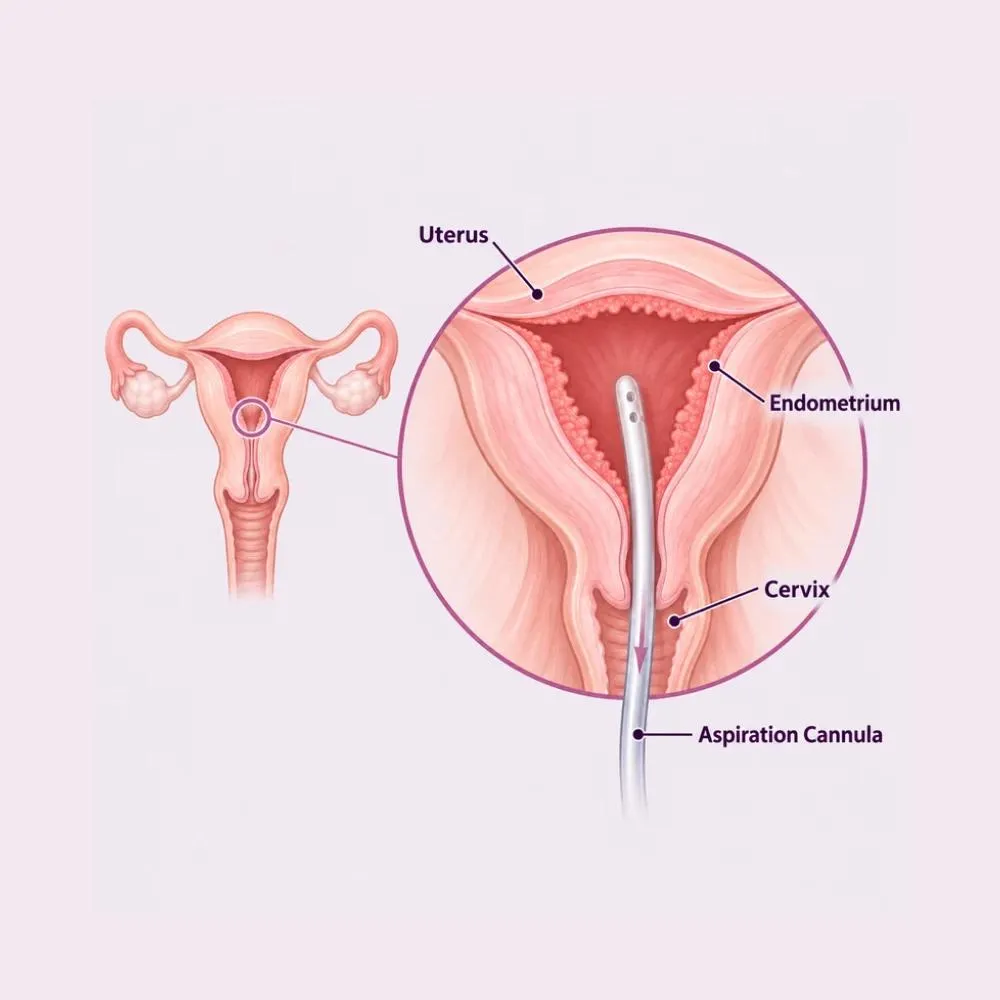
Surgical abortion empties the uterus through the cervix using suction or instruments, rather than using medication to make the uterus expel the pregnancy itself. The procedure is performed under local anaesthesia with sedation, or under general anaesthesia, and takes roughly ten to twenty minutes in early pregnancy.
Its defining advantage over medical termination is certainty and control. It is completed in a single visit under supervision, with success rates above ninety-nine per cent, and you are not managing heavy bleeding and cramping at home over one or two days. That matters particularly for women who cannot take time away privately, or who would find the medical process distressing.
The specific technique depends on gestation. Manual or electric vacuum aspiration is used up to around twelve to fourteen weeks and is a straightforward day-care procedure. Beyond that, dilatation and evacuation is required, with cervical preparation beforehand and a longer recovery. This page covers the surgical route specifically: the legal framework, eligibility and the medical alternative are set out on our Medical Termination of Pregnancy page.
The technique, the preparation and the recovery all change as pregnancy advances.
Manual vacuum aspiration with a hand-held device. Minimal cervical dilatation is needed and the procedure is very quick.
Electric vacuum aspiration, the standard first-trimester procedure. A short day-care operation taking ten to fifteen minutes.
Vacuum aspiration with more cervical preparation beforehand, typically using misoprostol or an osmotic dilator.
Dilatation and evacuation, requiring substantial cervical preparation, longer theatre time and usually a longer stay.
Permitted only within the specific categories of the amended MTP Act, requiring two practitioners’ opinions and inpatient care.
Less dilatation, shorter procedure, quicker recovery and lower complication rates. Every week earlier makes the process more straightforward.
Cervical preparation is what makes later procedures safe. Forcing dilatation without it risks cervical injury, so the wait for the preparation to work is a safety measure rather than a delay.
Surgical termination is chosen for gestational reasons, medical reasons, or simply because it suits you better.
Reasons it may be preferred
Medical reasons it may be necessary
Where both options are available, the choice between them is genuinely yours. Neither is safer than the other in early pregnancy: they differ in how the process feels and how much of it happens under supervision.
The pregnancy must be confirmed, located and accurately dated before any procedure is planned.
Confirms the pregnancy is inside the uterus, dates it accurately, and excludes ectopic pregnancy. Non-negotiable before any termination.
Haemoglobin, blood group and Rh typing. Rh-negative women receive anti-D immunoglobulin afterwards to protect future pregnancies.
Testing for chlamydia and other infections where indicated, since instrumenting an infected cervix risks pelvic inflammatory disease.
Existing conditions, medications, allergies and previous surgery, to plan anaesthesia and identify anything affecting the procedure.
A private discussion of both methods, what the procedure involves, and its risks, without pressure in any direction.
Deciding whether to have an IUD or implant fitted during the procedure, which is the most reliable moment to start it.
An undiagnosed ectopic pregnancy is the reason the scan comes first. A surgical procedure would find an empty uterus while the ectopic continued growing: potentially with a dangerous delay before it was recognised.
Two main techniques, chosen by gestation, with anaesthesia tailored to you.
A hand-held syringe device creating gentle suction. Used in very early pregnancy, quick, and needs minimal cervical dilatation.
The standard first-trimester procedure, using a suction machine through a fine cannula. Takes ten to fifteen minutes.
Misoprostol given a few hours beforehand to soften the cervix, which reduces the force needed and lowers the risk of injury.
A paracervical block with sedation, so you are comfortable and drowsy but not fully asleep. Recovery is quicker than after general anaesthesia.
Where you prefer to be fully asleep, or for later gestations. Adds anaesthetist and recovery time but is entirely routine.
Placed several hours or a day beforehand, absorbing moisture and gradually opening the cervix so instrumentation is safe.
The uterus emptied using suction and instruments under general anaesthesia, with ultrasound guidance to confirm completeness.
Used throughout later procedures to confirm the uterus is empty and to reduce the risk of perforation.
Second trimester procedures usually require an overnight stay with observation and pain management.
An IUD inserted or implant placed immediately afterwards, which is the most reliable point to begin contraception.
Having an IUD or implant fitted during the procedure is worth considering seriously. Ovulation can return within two weeks, and this is the one moment when starting contraception requires no additional appointment or decision.
The procedure itself takes ten to twenty minutes in the first trimester, and you go home the same day.
Day-care procedure under sedation or general anaesthesia
Fasting for six hours beforehand, with cervical preparation medication given a few hours before if planned.
A paracervical block with sedation, or general anaesthesia. Antibiotics are given to reduce infection risk.
A speculum is placed and the cervix visualised and cleaned. The uterus is examined to confirm its size and position.
The cervix gently dilated with graduated dilators, only as far as the cannula requires. Prior preparation makes this considerably easier.
A fine cannula passed into the uterus and gentle suction applied, rotating to empty it completely. This is the main part of the procedure.
The tissue examined to confirm the pregnancy has been fully removed, with ultrasound used at later gestations.
One to two hours in recovery, with anti-D given if you are Rh-negative and contraception fitted if chosen, then discharge the same day.
Examining the aspirated tissue at the end is a genuine safety step, not a formality. If the expected tissue is not present, that raises the possibility of an ectopic pregnancy that the scan did not show, and it is followed up immediately.
Safety here comes from a registered facility, proper assessment and an experienced operator. Here is why patients trust us:
Performed in a proper operating theatre with anaesthetic support, so the rare complication is managed on site rather than transferred.
Private consultations with women gynaecologists, your identity protected as the law requires, and no spousal consent demanded.
From the first consultation through to post-treatment follow-up, with one team throughout.
Our hospital is in HITEC CITY, near IKEA: easily reachable from across Hyderabad.
Recovery after surgical abortion is generally quicker and bleeding lighter than after medical termination.
One to two hours in recovery, then home the same day. Cramping like period pain, controlled with simple painkillers.
Cramping settles. Bleeding is usually lighter than a period. Most women return to normal activity within a day or two.
Bleeding tapers to spotting and stops. Tampons and intercourse avoided for two weeks while the cervix closes.
Follow-up review to confirm recovery, check contraception is in place, and address any concerns.
The next period usually arrives within four to six weeks, though ovulation can occur as early as two weeks.
Ovulation can return within two weeks, before your next period. If an IUD or implant was not fitted during the procedure, start something straight away.
Soaking more than two pads an hour for two consecutive hours, fever above 38°C, severe pain or offensive discharge all need urgent review.
While the cervix closes and the lining heals, to reduce infection risk. Use pads until bleeding has stopped completely.
Given to prevent infection after instrumentation. Finish the course even once you feel entirely well.
It protects future pregnancies from Rh sensitisation, and it is easily overlooked in the circumstances.
Relief, sadness or a mixture of both are all common. Counselling is available, and wanting it does not mean you made the wrong decision.
Surgical abortion performed properly does not affect future fertility, does not cause difficulty in later pregnancies, and does not increase breast cancer risk. The evidence on all three is clear and consistent.
Book a consultation if any of the following apply.
Cost depends on gestation and anaesthesia. First-trimester procedures are day care with a predictable cost.
| Procedure | Estimated Cost |
|---|---|
| Consultation Private and confidential | ₹800 – ₹1,500 |
| Ultrasound and blood tests Dating scan, haemoglobin, blood group | ₹2,500 – ₹6,000 |
| Vacuum aspiration under sedation Day care, up to 12 weeks | ₹25,000 – ₹45,000 |
| Vacuum aspiration under general anaesthesia Day care | ₹32,000 – ₹55,000 |
| Dilatation and evacuation Second trimester; usually one night | ₹55,000 – ₹1,20,000 |
| Evacuation for incomplete abortion After failed medical termination | ₹20,000 – ₹40,000 |
| Anti-D immunoglobulin For Rh-negative women | ₹3,000 – ₹8,000 |
| IUD or implant at the same time Fitted during the procedure | ₹5,000 – ₹25,000 |
First-trimester vacuum aspiration is day care. Second-trimester dilatation and evacuation needs cervical preparation, longer theatre time and a stay.
Local anaesthesia with sedation costs less than general anaesthesia, which adds anaesthetist and recovery charges.
Rh-negative women need anti-D. An IUD or implant fitted during the procedure adds cost but avoids a separate appointment.
A shared ward, a twin-sharing room or a private suite: the largest single swing in most estimates.
We are empanelled with most major insurers, and our team files the pre-authorisation for you.
Every figure above is an indicative range, not a quote. After your consultation you are given a written, fixed-cost estimate, and that is the number you pay, with no additions once treatment begins.
The gynaecologists who perform surgical abortion at our HITEC CITY hospital.

Consultant Gynaecologist & Advanced Laparoscopic Surgeon
MBBS, MS, FMAS
16 years experience

Consultant Obstetrician, Gynecologist & Laparoscopic Surgeon
MBBS, MS (Obstetrics & Gynaecology)
11 years experience
Reviews from women treated for gynaecological conditions at Lux Hospitals, Hyderabad.
Written by Dr. Harshita Kakarla on women’s health and gynaecological care.
Dr. Harshita Kakarla

Dr. Harshita Kakarla

Dr. Harshita Kakarla

Dr. Harshita Kakarla

Dr. Harshita Kakarla
Dr. Harshita Kakarla
Common questions about surgical abortion, the procedure, recovery and costs at Lux Hospitals.
Still have questions? Call us at 079 6908 4422
Still have questions? Message us on WhatsApp at 079 6908 4444
Safe surgical termination completed in a single visit, performed confidentially in a registered facility.
Plot No.116, Lumbini Avenue, HITEC CITY, Near IKEA, Hyderabad – 500032













