Dr. Samhitha Reddy
Consultant Proctologist & Laparoscopic Surgeon
MBBS, MS, FMAS, FISCP, DMAS
- 8 Yrs
- ASCRS Member
By Dr Harshita Kakarla · MBBS, MS, FMAS 26 August 2026 6 min read Updated 3 September 2026
Uterine fibroids are non-cancerous growths that can develop in or around the uterus. Many fibroids cause no symptoms, but some can lead to heavy menstrual bleeding, pelvic pressure, painful periods, frequent urination, back pain, or fertility concerns. When medicines or other treatments do not provide enough relief, surgery may become an option. The issue of […]
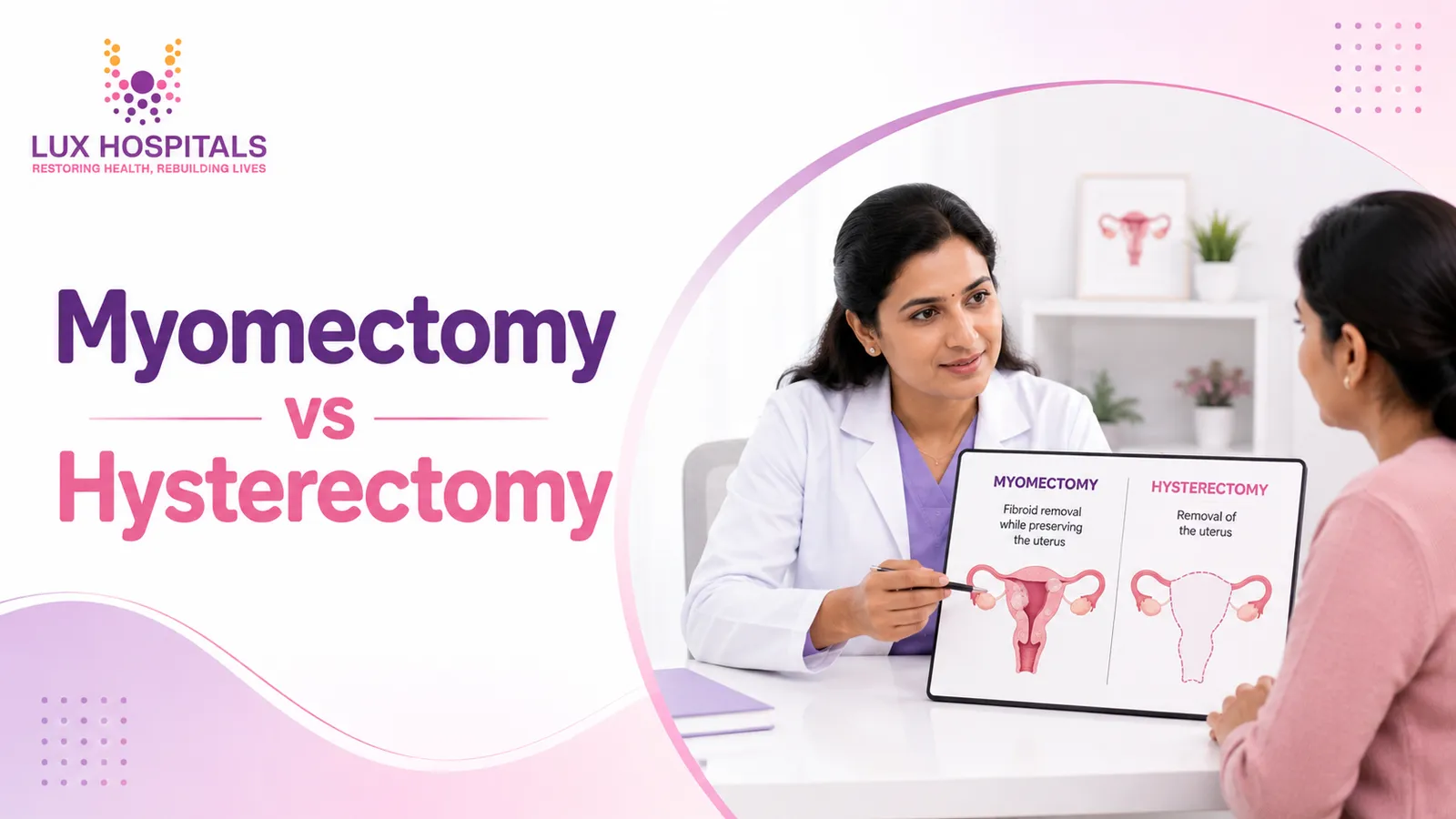
Uterine fibroids are non-cancerous growths that can develop in or around the uterus. Many fibroids cause no symptoms, but some can lead to heavy menstrual bleeding, pelvic pressure, painful periods, frequent urination, back pain, or fertility concerns. When medicines or other treatments do not provide enough relief, surgery may become an option. The issue of myomectomy vs hysterectomy becomes crucial at this point. Although both treatments can address fibroid-related issues, their goals differ. While a hysterectomy eliminates the uterus, a myomectomy removes fibroids while leaving the uterus intact. Your symptoms, age, fibroid characteristics, general health, and future pregnancy goals will all influence your decision. At Lux Hospitals, a detailed evaluation can help you choose the approach that best fits your needs.
Myomectomy is a surgical procedure that removes fibroids from the uterus while keeping the uterus intact. It can be considered for women who want to preserve their uterus, including those who may wish to become pregnant in the future. The surgical approach depends on the fibroids’ size, number, and location.
Depending on the patient’s overall health and treatment goals, as well as the size, number, and location of fibroids, many surgical procedures can be used to perform a myomectomy. The three primary methods of myomectomy are hysteroscopic, laparoscopic or robotic, and abdominal; each method has advantages for certain patients.
Abdominal myomectomy:
The surgeon removes fibroids by making an incision in the abdomen. Consider this approach when fibroids are large, numerous, or difficult to access with minimally invasive methods.
Laparoscopic or robotic myomectomy:
The surgeon uses specialised instruments and makes small belly incisions to remove the appropriate fibroids. This method may lead to less scarring and, in some cases, a faster recovery.
Hysteroscopic myomectomy:
The surgeon accesses the uterus through the vagina and cervix without making abdominal incisions. It may suit certain fibroids that project into the uterine cavity. The choice between myomectomy and hysterectomy depends on the patient’s specific condition and treatment goals.
The uterus is surgically removed during a hysterectomy. A woman who has had a hysterectomy is unable to conceive because the uterus has been removed. When fibroids produce severe symptoms, previous therapies have failed, or uterine preservation is no longer required or desired, doctors may prescribe a hysterectomy. Hysterectomy can be carried out using a variety of methods, such as abdominal, vaginal, laparoscopic, or robotic-assisted procedures, depending on the medical circumstances.
After the uterus is removed, menstrual periods stop, and pregnancy is no longer possible. Whether the ovaries are removed depends on the patient’s age, medical condition, ovarian health, and surgical plan. Removing the ovaries is a separate decision from removing the uterus. Your doctor should explain the benefits and possible effects before surgery.
Understanding these differences is essential when considering Myomectomy vs Hysterectomy.
The biggest difference is whether the uterus is preserved.
| Feature | Myomectomy | Hysterectomy |
| Fibroids removed | Yes | Yes, with the uterus |
| Uterus preserved | Yes | No |
| Future pregnancy | May remain possible | Not possible |
| Fibroid recurrence | Possible | Fibroids cannot recur in a removed uterus |
| Suitable for | Women wanting uterine preservation in appropriate cases | Women who do not need future pregnancy and require definitive treatment |
| Recovery | Depends on surgical technique | Depends on surgical approach |
This comparison shows why Myomectomy vs Hysterectomy isn’t simply a choice between two similar surgeries. They serve different long-term goals.
No single operation works best for all women. After considering symptoms, fibroid characteristics, age, reproductive plans, prior treatments, and overall health, choose between a myomectomy and a hysterectomy.
Myomectomy may be suitable when:
However, myomectomy does not guarantee pregnancy, and fibroids can develop again after treatment.
Hysterectomy may be considered when:
A detailed consultation is important before deciding.
Fertility is often one of the most important factors in choosing between myomectomy and hysterectomy.
Myomectomy preserves the uterus and may allow future pregnancy in appropriate patients. However, fertility outcomes depend on several factors, including age, ovarian function, fibroid location, number and size, and other reproductive health conditions. Hysterectomy permanently removes the uterus, so pregnancy is no longer possible afterwards. If having children in the future matters to you, discuss your reproductive goals with your gynaecologist before selecting a surgical treatment.
Recovery depends on the surgical approach, not just the name of the operation.
A minimally invasive myomectomy may have a different recovery period from an abdominal myomectomy. Similarly, laparoscopic or vaginal hysterectomy may have a different recovery experience from abdominal hysterectomy.
During recovery, your doctor may advise you to:
Your healthcare team will provide personalised instructions based on the procedure performed.
Choosing between myomectomy and hysterectomy requires more than looking at immediate symptoms. Consider your long-term health and personal priorities.
Writing down these questions before your appointment can help you have a more productive discussion with your healthcare team.
At Lux Hospitals, fibroid treatment begins with understanding the patient’s symptoms, medical history, reproductive goals, and diagnostic findings. The treatment plan should address both the current problem and the patient’s long-term health needs. When discussing myomectomy vs. hysterectomy, the specialists at Lux Hospitals can help patients understand the purpose, benefits, limitations, recovery expectations, and potential risks of each approach. The goal is not simply to recommend surgery. It is to help patients make an informed decision based on their individual circumstances.
Choosing between myomectomy and hysterectomy is a personal and medical decision. While hysterectomy offers a definitive treatment by removing the uterus, myomectomy retains the uterus and may be suitable for women who wish to maintain fertility or uterine preservation. Your fibroids, symptoms, reproductive plans, overall health, and treatment preferences will all influence the best option. Don’t base your decision just on what works for someone else. If fibroids are causing heavy bleeding, pelvic pain, pressure, or other persistent symptoms, speak with a qualified gynaecologist. Lux Hospitals can help you understand your condition and explore an appropriate treatment pathway.
A hysterectomy provides a definitive treatment by removing the uterus; however, a myomectomy may be considered when uterine preservation and possible future pregnancy are important. Because the best option relies on fibroid size, quantity, location, symptoms, age, and reproductive objectives, neither surgery is always superior. After assessing your specific situation, your gynaecologist can compare the options.
Yes, new fibroids can develop after myomectomy because the uterus remains in place. The likelihood of recurrence varies by individual and depends on factors such as age, the number of fibroids, and other personal characteristics. Regular follow-up and medical advice can help monitor symptoms and identify any future concerns.
Pregnancy may be possible after myomectomy, depending on the location and characteristics of the fibroids, the type of surgery, and other fertility factors. Your doctor may recommend waiting for an appropriate healing period before trying to conceive. If pregnancy is a future goal, discuss fertility planning with your gynaecologist before surgery.
Lux Hospitals provides evaluation and treatment planning for women experiencing symptoms associated with uterine fibroids. The medical team can assess your condition and discuss appropriate options, including surgery when needed. Patients can also discuss Myomectomy vs. hysterectomy to understand which option may better suit their medical and reproductive needs.
Lux Hospitals considers factors such as fibroid size, number, location, symptoms, age, overall health, previous treatment, and future pregnancy plans before recommending a surgical approach. The specialists can explain the potential benefits, limitations, recovery, and risks of each procedure. This personalised evaluation helps patients make a more informed decision about their fibroid treatment.
An ovarian cyst that remains on repeat scans does not automatically mean that surgery is needed. Many ovarian cysts are benign and may disappear without treatment. Your gynaecologist will consider the cyst’s size, appearance, symptoms, age, menstrual status, and whether it changes over time when deciding whether to monitor or treat. Being told that an […]
14 October 2026
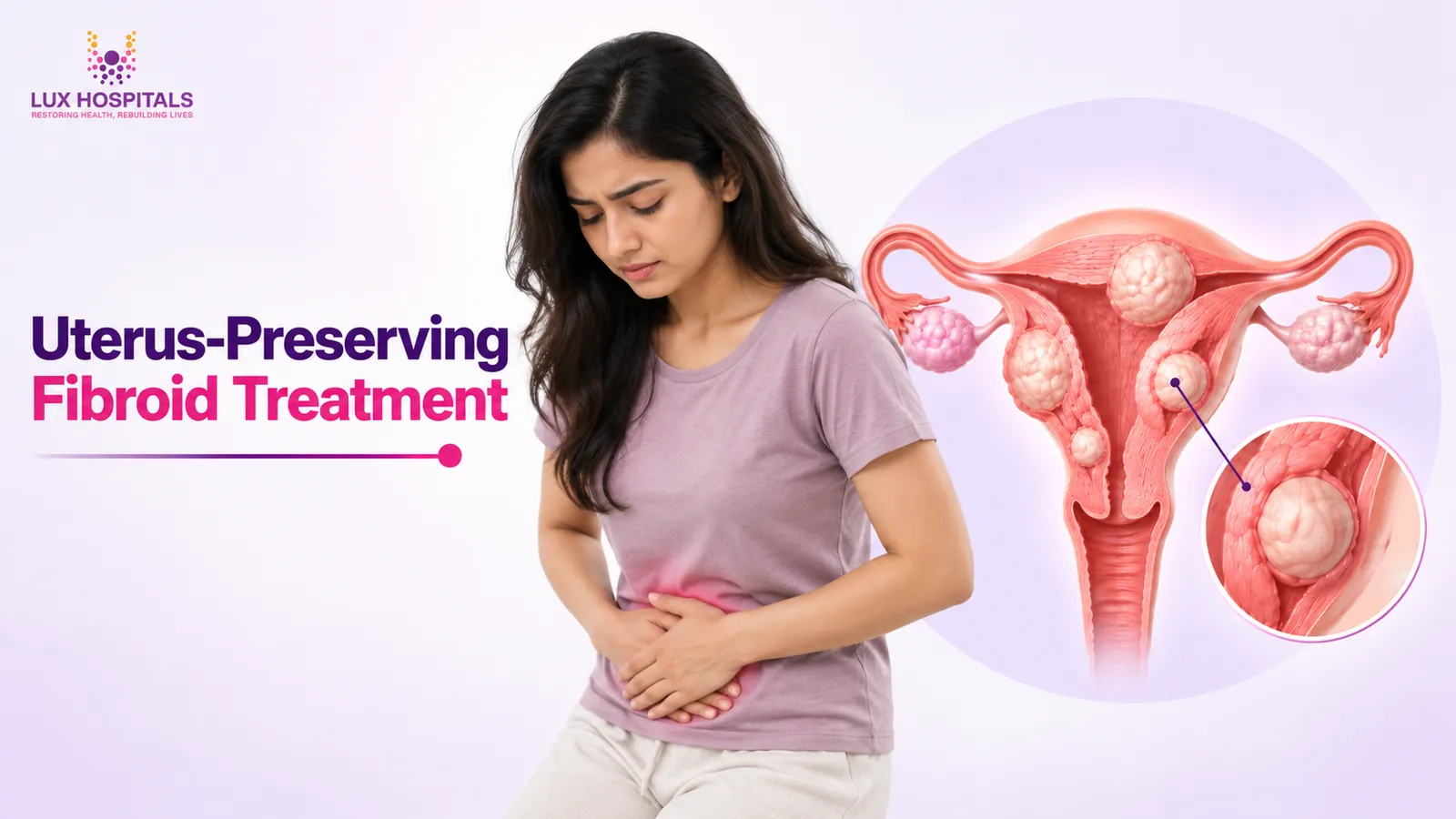
Uterus-preserving fibroid treatment may be considered when a woman wants to manage fibroids while keeping the uterus for future pregnancy. The right option depends on the fibroid’s size, number, location, symptoms, effect on the uterine cavity, age, fertility plans and overall health. Myomectomy is one uterus-preserving option. Fibroid location and whether the uterine cavity is […]
12 October 2026
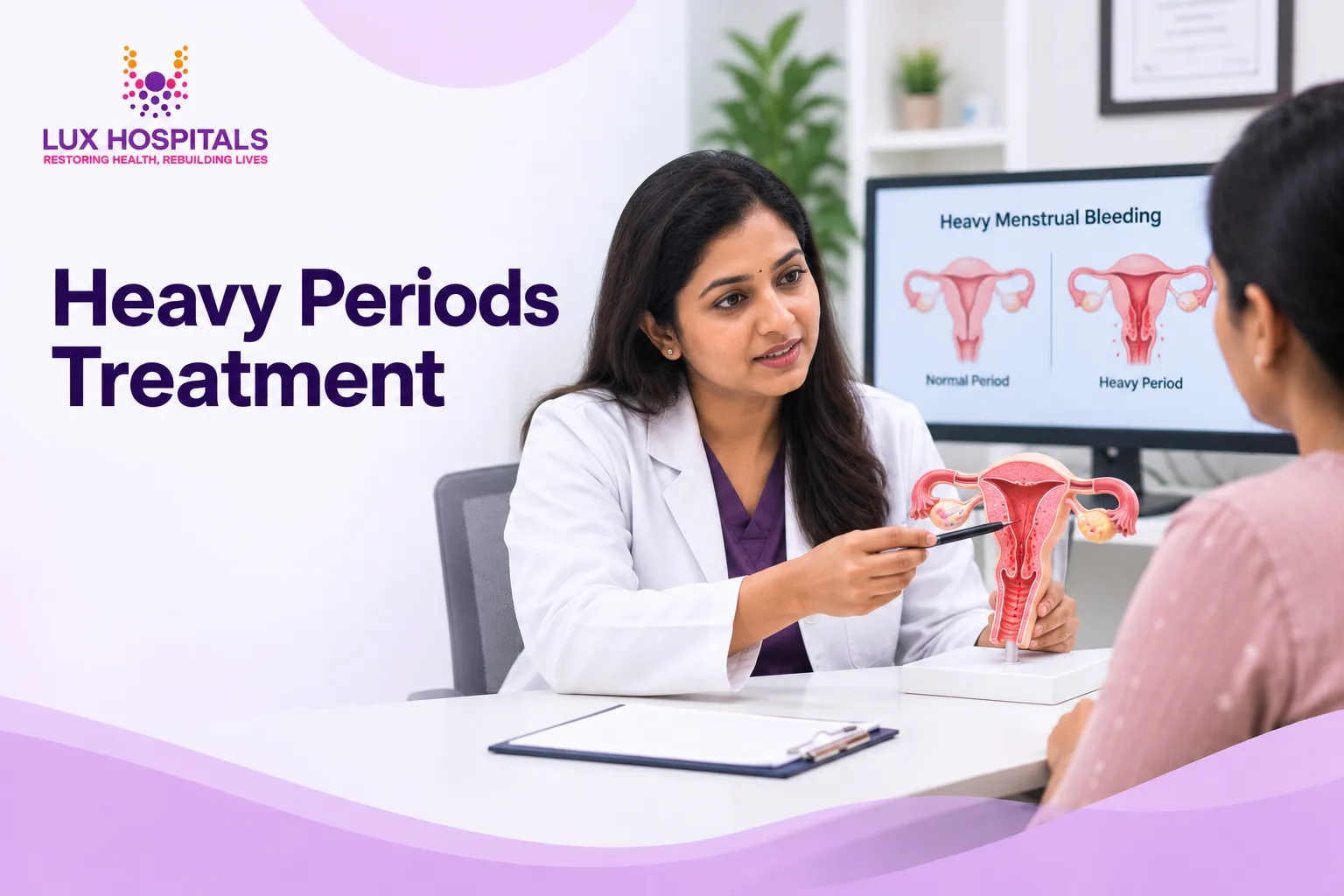
Heavy periods might influence your energy, work, sleep, emotions, and daily routine. While some women may experience less bleeding after taking medication, symptoms may occasionally persist or recur. Rather than continuing to self-medicate, persistent severe bleeding should be properly evaluated by a gynaecologist. If you are looking for heavy periods treatment in Hyderabad, your next […]
6 October 2026
Send your reports across and a senior surgeon will review them, explain the options and tell you honestly whether surgery is the right call.
Plot No.116, Lumbini Avenue, HITEC CITY, Near IKEA, Hyderabad – 500032