Dr. Samhitha Reddy
Consultant Proctologist & Laparoscopic Surgeon
MBBS, MS, FMAS, FISCP, DMAS
- 8 Yrs
- ASCRS Member
Fever is one of the most common signs that your body is responding to an infection. While many fevers improve with appropriate supportive care, some may point to illnesses such as dengue, malaria or typhoid that need specific medical evaluation and treatment.
At Lux Hospitals, Hyderabad, patients can seek medical consultation for persistent fever, suspected infections and related symptoms. Whether you have a high fever, severe body aches, chills, unusual weakness or digestive discomfort, identifying the underlying cause is an important step towards appropriate treatment.
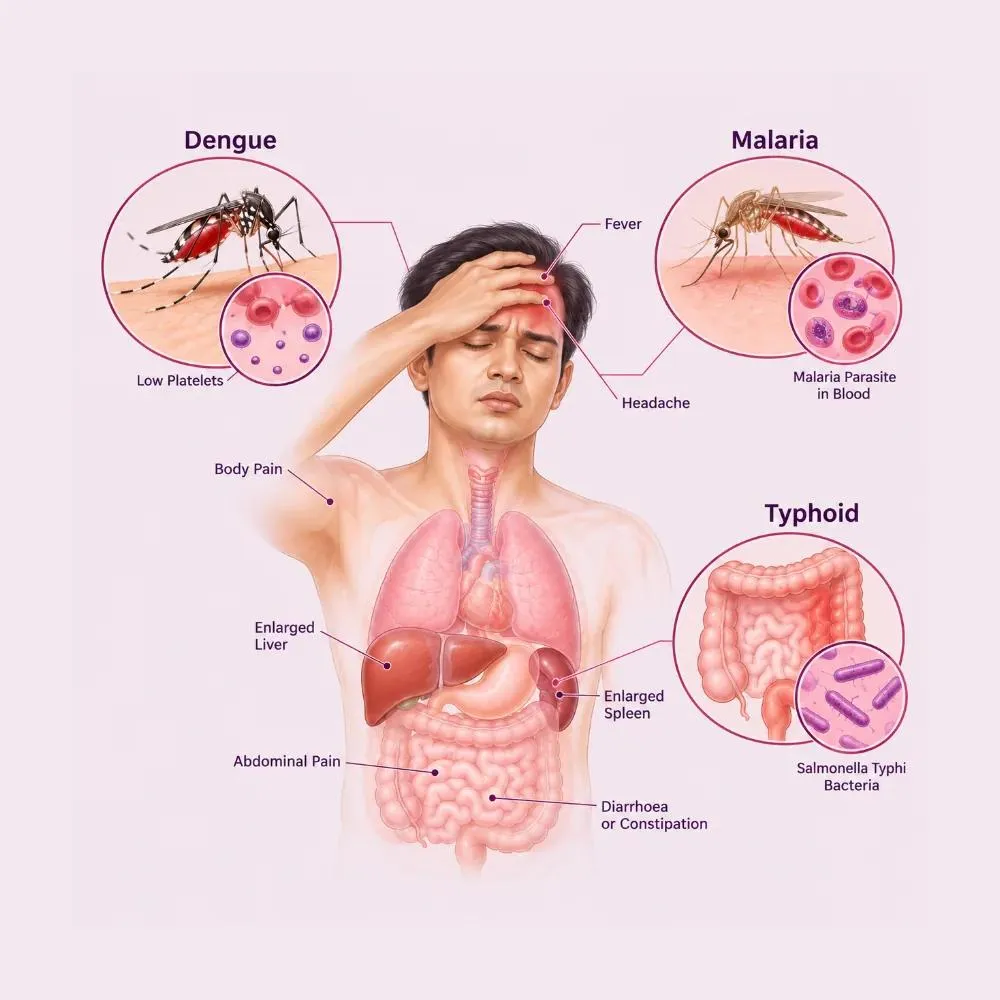
Fever and infection treatment involves identifying the cause of a raised body temperature, assessing how severe the illness is and providing appropriate medical care. A fever is generally considered a body temperature of 38°C (100.4°F) or higher, although the interpretation depends on how and where the temperature is measured. Fever may result from viral, bacterial, parasitic or other inflammatory conditions.
Common infectious causes include dengue fever, malaria, typhoid fever, seasonal viral infections, influenza and other respiratory infections, urinary tract infections and gastrointestinal infections. These illnesses can produce similar symptoms, but their treatments differ significantly. Dengue, malaria and typhoid are important causes of fever in India: although their early symptoms may overlap, they are caused by different organisms and spread by different routes.
Dengue is a viral infection spread mainly by the bites of infected Aedes mosquitoes. Symptoms generally appear several days after infection and may include a sudden high fever, severe headache, pain behind the eyes, muscle and joint pain, nausea or vomiting, a skin rash and marked tiredness. Some patients have reduced platelet counts or other changes in blood test results. Warning signs can develop as the fever begins to subside, so continued observation is important.
Malaria is a parasitic disease spread by female Anopheles mosquitoes and caused by Plasmodium parasites, such as Plasmodium falciparum and Plasmodium vivax. Common symptoms include fever with chills, sweating, headache, muscle aches, fatigue, nausea or vomiting and general weakness. Malaria fever does not always follow a predictable pattern, and early diagnosis and suitable antimalarial treatment are important.
Typhoid fever is a bacterial infection caused by Salmonella Typhi, generally spread through contaminated food or water. Symptoms may include a persistent or gradually rising fever, headache, weakness and fatigue, abdominal discomfort, loss of appetite, constipation or diarrhoea, and nausea. Untreated typhoid can occasionally cause serious intestinal or systemic complications, and unlike dengue, it needs appropriate antibiotic treatment.
These infections share several symptoms, particularly fever, headache, fatigue and body pain. As a rough guide, dengue often brings severe body aches, headache and sometimes a rash; malaria, chills, sweating, headache and weakness; and typhoid, a persistent fever with headache and digestive symptoms. Certain features may raise suspicion of a particular infection, but symptoms alone cannot reliably confirm the diagnosis.
Fever is part of the body’s immune response to infection or inflammation, and different infections have different causes.
Viruses can cause illnesses such as dengue, influenza and many cases of seasonal fever.
Bacteria can cause illnesses including typhoid fever, certain respiratory infections and urinary tract infections.
Parasites such as Plasmodium cause malaria.
Environmental conditions, mosquito exposure, food and water hygiene, travel and underlying health conditions can all affect infection risk. Identifying the cause helps clinicians choose treatment, rather than prescribing the same medicines for every fever.
Fever may come with other symptoms that help doctors identify the likely cause.
Symptoms to have checked
When fever is an emergency
Emergency signs may indicate a serious infection or complication that needs urgent assessment, so seek immediate medical attention if any appear alongside a fever. Older adults, pregnant women, young children, people who are immunocompromised and people with chronic medical conditions may be more vulnerable to complications and may need earlier assessment.
Diagnosis begins with a review of symptoms, how long the fever has lasted, possible exposures and medical history. A doctor may recommend tests based on the suspected infection.
Evaluates white blood cells, red blood cells and platelets. It cannot diagnose dengue, malaria or typhoid on its own, but it may help identify abnormalities and support monitoring.
NS1 antigen or molecular testing may help detect infection early. Depending on how many days have passed since symptoms began, dengue IgM antibody testing may also be recommended. The duration of illness affects which test is chosen and how it is read.
Malaria is often diagnosed with rapid diagnostic tests or blood smear microscopy. These tests help identify the parasite type and the intensity of infection.
Blood culture is an essential step in diagnosing typhoid fever. It identifies the organism, and susceptibility testing can guide antibiotic choice. The Widal test has limited accuracy, so it should not be used alone to confirm typhoid.
Depending on the condition, doctors may recommend liver function tests, kidney function tests, electrolytes, urine tests or other investigations.
A physician chooses tests based on symptoms, travel history, possible exposure and how long the fever has lasted. Self-diagnosing an infection from fever patterns alone can delay appropriate treatment.
Treatment depends on the cause of the fever, how severe the illness is, your medical history and the diagnostic findings.
No specific antiviral medicine routinely cures dengue, so treatment focuses on supportive care and monitoring. Depending on severity, it may include oral fluids and electrolyte replacement, rest, paracetamol when clinically appropriate, monitoring of blood counts and signs of dehydration, reassessment for warning signs and carefully monitored intravenous fluids when indicated. When dengue is suspected, aspirin and non-steroidal anti-inflammatory drugs such as ibuprofen should usually be avoided, because they raise the risk of bleeding.
Malaria needs appropriate antimalarial medicines. The choice depends on the parasite type, illness severity, pregnancy status and local treatment recommendations, and doctors may offer various medicines or combined antimalarial therapy based on the confirmed diagnosis. Some malaria infections also need treatment to prevent relapse, and certain medicines need relevant safety testing before they are prescribed. Severe malaria needs emergency care in a suitable hospital setting. Complete the prescribed course and attend follow-up as advised.
Typhoid is treated with antibiotics chosen on clinical findings and local resistance patterns, along with adequate hydration, nutritional support, monitoring of temperature and symptoms, and follow-up to check the response. Because antibiotic resistance is a major problem, a skilled physician should guide the choice of medicine.
Many uncomplicated viral infections settle on their own with supportive care: appropriate fever-relieving medicine, rest, plenty of fluids and watching how symptoms change. Antibiotics do not treat viral infections, so they should be used only when there is a definite bacterial indication.
Do not take antibiotics unnecessarily or stop a prescribed course early without a doctor’s advice.
Understanding the consultation process can help you prepare.
Fever consultation
Note when your fever began, the highest temperature measured and any other symptoms. Bring previous lab reports, prescriptions and details of medicines already taken. Tell your doctor about recent travel, mosquito exposure, food or water concerns and relevant medical conditions.
The doctor may check your temperature, pulse, blood pressure, hydration and other clinical signs, and recommend tests to investigate possible infections. They will assess whether treatment at home is appropriate or whether hospital-level monitoring is needed.
You may receive instructions on medicines, hydration, symptom monitoring and follow-up testing. Certain infections, particularly dengue, need continued observation even after the fever begins to improve.
Follow-up schedules depend on the diagnosis and your clinical condition.
At Lux Hospitals, patients can enquire about medical consultation for persistent fever, suspected dengue, malaria, typhoid and other infectious symptoms. Effective infection care depends on clinical evaluation, appropriate investigations, individualised treatment and monitoring for complications.
Your symptoms, history and test results are reviewed together, so the plan fits the whole picture rather than one reading.
Blood tests, imaging and the other investigations a physician may advise are arranged at the hospital.
Where a condition needs another specialist, the referral is made within the same hospital and the same records.
Our hospital is in HITEC CITY, near IKEA: easily reachable from across Hyderabad.
Recovery varies with the infection, its severity and your overall health. Some viral fevers improve within several days, while dengue-related fatigue may last longer. Recovery from malaria and typhoid depends on timely diagnosis, appropriate treatment and whether complications develop.
Take prescribed medicines exactly as instructed.
Maintain an appropriate fluid intake.
Eat balanced meals as you are able to tolerate them.
Allow yourself sufficient rest.
Hold back from strenuous activity during the acute illness.
Look out for new or worsening symptoms.
Keep the follow-up appointments your doctor recommends.
Return to work, school or regular activities should be based on clinical recovery and medical advice. People recovering from typhoid should follow strict hand hygiene and relevant food-handling precautions to reduce the risk of passing it on.
Medical consultation may be appropriate for people who have:
| Procedure | Estimated Cost |
|---|
Appropriate evaluation and treatment may help in the ways below. Outcomes depend on the infection, its severity, existing medical conditions and the time to appropriate care: no treatment can guarantee an uncomplicated recovery.
Identify the likely cause of fever.
Guide infection-specific treatment.
Reduce the risk of delayed management.
Recognise dehydration and other complications.
Support safe symptom relief.
Determine when hospitalisation is necessary.
Provide personalised recovery guidance.
Common questions about dengue, malaria, typhoid, platelet counts, testing and antibiotics.
Still have questions? Call us at 079 6908 4422
Still have questions? Message us on WhatsApp at 079 6908 4444
Physician-led fever and infection care at Lux Hospitals, HITEC CITY: evaluation, testing, treatment and follow-up.
Plot No.116, Lumbini Avenue, HITEC CITY, Near IKEA, Hyderabad – 500032