Dr. Samhitha Reddy
Consultant Proctologist & Laparoscopic Surgeon
MBBS, MS, FMAS, FISCP, DMAS
- 8 Yrs
- ASCRS Member
Critical illness can develop unexpectedly and may require immediate medical intervention, continuous observation and specialised treatment. Conditions affecting breathing, circulation, brain function or other vital organs can sometimes require care beyond a general hospital ward.
At Lux Hospitals, Hyderabad, patients and families can enquire about intensive care availability, admission arrangements and appropriate critical care pathways. Understanding the purpose of intensive care can help families make informed decisions during difficult medical situations.
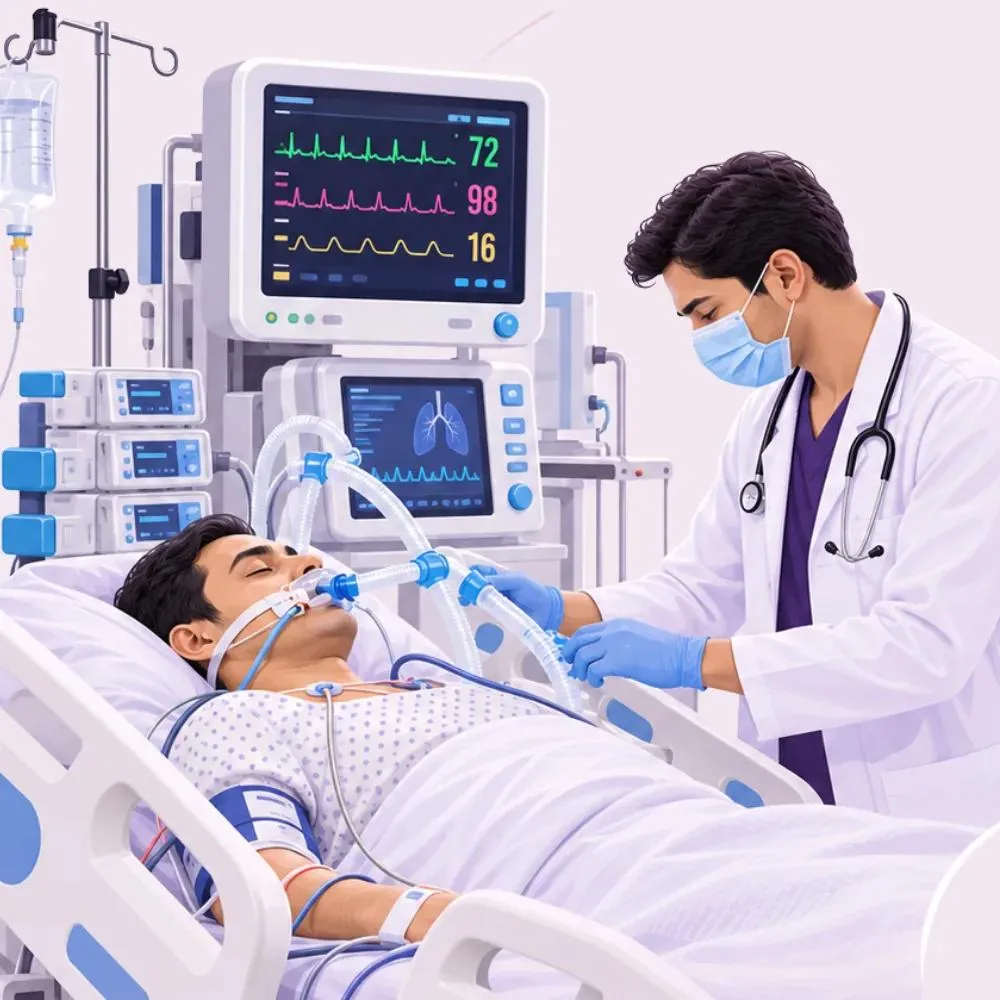
An Intensive Care Unit (ICU) is a specialised hospital area designed for patients who need close monitoring and treatment for serious or life-threatening conditions. Critical care involves assessing and supporting vital bodily functions while treating the underlying illness or injury.
ICU care commonly involves a multidisciplinary team. Depending on the hospital and the patient’s needs, professionals may include critical care physicians, nurses, respiratory therapists, pharmacists, physiotherapists and other specialists. The availability of specific professionals and services varies between hospitals.
Intensive care provides the opportunity for close monitoring and potentially life-saving interventions. However, critical care also involves potential risks, including infections, blood clots, medication side effects, delirium, muscle weakness and complications associated with invasive treatments. The clinical team should explain important benefits, limitations and risks whenever circumstances permit. ICU care does not guarantee recovery from critical illness.
Examples of conditions that may lead to ICU admission include:
Patients with respiratory failure, severe pneumonia or other conditions causing major breathing difficulties may require intensive observation and respiratory support.
Sepsis is a life-threatening condition caused by the body’s response to infection. It may affect blood circulation and multiple organs, and some patients require intravenous medications, fluids and close physiological monitoring.
Certain severe heart conditions, dangerous heart rhythm disturbances and circulatory shock may require critical care.
Serious kidney injury or failure involving several organs may require intensive monitoring and organ-support treatments.
Some patients recovering from major or complicated surgery may need temporary ICU observation.
After surgery, the decision depends on the patient’s medical condition, the type of procedure and potential complications.
Intensive care may be required when a medical condition threatens vital organ function or requires treatment that cannot be safely delivered in a regular ward.
Conditions that may need ICU care
What ICU treatment may involve
Not every seriously ill patient requires ICU admission. Doctors determine the appropriate level of care based on the severity of illness and monitoring needs.
ICU treatment is individualised according to the patient’s diagnosis and response.
The medical team evaluates breathing, circulation, consciousness and organ function. Appropriate investigations may be recommended.
Patients may require continuous or frequent monitoring of oxygen saturation, blood pressure, heart rhythm and other health indicators.
Treatment plans are reviewed as the patient’s condition changes.
Families may receive updates in accordance with hospital policy and patient consent.
Critical care supports vital functions while doctors address the cause of illness. Depending on clinical needs, intensive care settings may use the treatments and equipment below.
Depending on the condition, doctors may recommend oxygen, mechanical ventilation, intravenous medication, blood products or other interventions.
Critical care supports vital functions while doctors address the cause of illness, such as infection, bleeding or organ dysfunction.
Track vital signs such as heart rhythm, blood pressure and oxygen saturation.
Supplies additional oxygen when a patient needs it.
Support breathing when clinically indicated.
Deliver intravenous medicines and fluids.
Used if a patient’s condition deteriorates suddenly.
Help assess blood gases and other measures of how the body is functioning.
Kidney support where available and indicated.
Use of any specific equipment should be determined by the treating clinician.
Seeing a family member in intensive care can be distressing. Knowing what to expect, and what to ask, can help.
ICU admission
Families can contact Lux Hospitals to confirm ICU availability, suitable admission arrangements and the medical services relevant to the patient’s condition.
Patients may have monitoring equipment, intravenous lines or breathing-support devices. Some may need sedation or may be unable to communicate normally because of their medical condition.
Families can ask about the patient’s current condition, immediate treatment priorities, major clinical concerns, planned procedures, possible changes in treatment, and communication and visiting arrangements.
Decisions should respect the patient’s preferences, informed consent and applicable legal requirements.
When patients no longer require intensive monitoring or organ support, they may be transferred to a lower-acuity ward.
In an emergency, call the hospital or come to the emergency department immediately.
Families seeking hospital care in Hyderabad can contact Lux Hospitals to confirm ICU availability, suitable admission arrangements and the medical services relevant to the patient’s condition. The priority in critical illness is prompt assessment and access to an appropriately equipped care setting.
Your symptoms, history and test results are reviewed together, so the plan fits the whole picture rather than one reading.
Blood tests, imaging and the other investigations a physician may advise are arranged at the hospital.
Where a condition needs another specialist, the referral is made within the same hospital and the same records.
Our hospital is in HITEC CITY, near IKEA: easily reachable from across Hyderabad.
Recovery after critical illness varies considerably. Some people experience weakness, fatigue, sleep difficulties, memory problems or emotional distress following a serious illness. Rehabilitation, nutritional support and appropriate follow-up may help recovery.
Patients may move to a regular ward, a rehabilitation setting or another appropriate care facility, depending on their recovery needs.
May help with the weakness and fatigue some people experience after a serious illness.
May help recovery after critical illness.
Helps track recovery once intensive care is no longer needed.
Length of stay and outcomes cannot be predicted reliably without understanding the patient’s clinical condition.
| Procedure | Estimated Cost |
|---|
Common questions about ICU admission, ventilation, visiting, length of stay and recovery after critical care.
Still have questions? Call us at 079 6908 4422
Still have questions? Message us on WhatsApp at 079 6908 4444
Contact Lux Hospitals, HITEC CITY, to confirm ICU availability and admission arrangements. In an emergency, come to the emergency department immediately.
Plot No.116, Lumbini Avenue, HITEC CITY, Near IKEA, Hyderabad – 500032