



Dr. Samhitha Reddy
Consultant Proctologist & Laparoscopic Surgeon
MBBS, MS, FMAS, FISCP, DMAS
- 8 Yrs
- ASCRS Member
A slipped disc commonly causes lower back pain and sciatica, but an MRI finding does not automatically mean you need surgery. Many people improve with physiotherapy, appropriate medication and a gradual return to activity.
The important distinction is whether the slipped disc is compressing a nerve and causing your symptoms. At Lux Hospitals, HITEC CITY, Hyderabad, patients can seek clinical assessment to understand their spine condition and available treatment options.
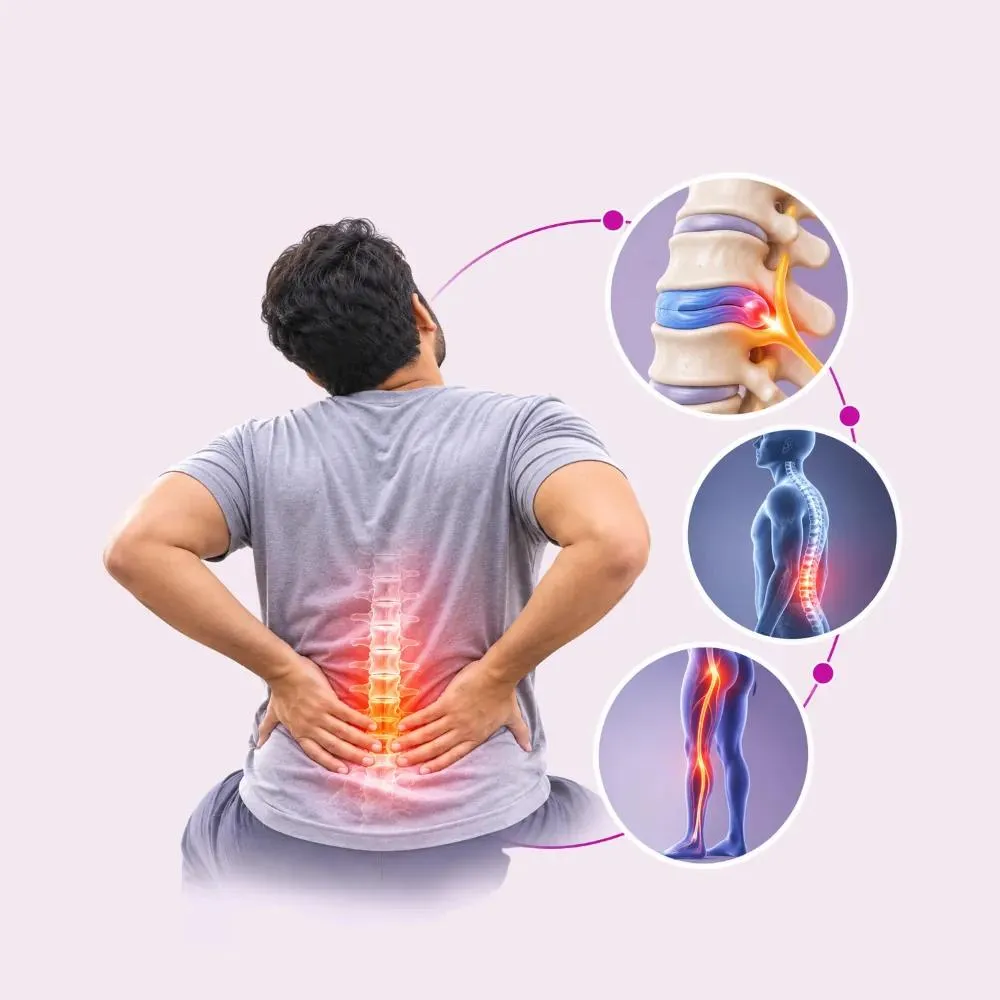
A slipped disc, medically known as a herniated or prolapsed disc, occurs when the soft inner material of an intervertebral disc pushes through a weakened or damaged area of its outer covering. This may irritate or compress nearby spinal nerves, causing pain, numbness, tingling or muscle weakness.
The spine contains discs between the vertebrae that act as shock absorbers, cushioning the bones and allowing movement. Despite its name, a disc does not actually slip out of position; instead, its inner material protrudes beyond its normal boundary.
Disc herniation commonly affects the lumbar spine (lower back) and cervical spine (neck). A lumbar slipped disc may cause pain radiating into the buttock and leg, commonly known as sciatica. A cervical slipped disc may cause neck pain spreading to the shoulder, arm or hand.
The location of the herniated disc, severity of nerve compression and neurological symptoms help determine the appropriate treatment. Some disc herniations may not cause noticeable symptoms.
A slipped disc may develop gradually due to age-related changes or after physical strain. Several factors can contribute.
Spinal discs gradually lose water content and flexibility with age. This makes the outer disc more susceptible to damage and herniation.
Lifting heavy objects, especially when you bend and twist at the same time, can put extra mechanical stress on the lower back.
Repeated bending, lifting and physically demanding movements may contribute to cumulative spinal loading.
Falls, accidents and certain sports-related injuries can occasionally cause disc damage.
Some people inherit traits that increase the risk of degenerative disc changes.
Smoking is associated with accelerated disc degeneration and poorer spinal tissue health.
Additional body weight may increase mechanical loading on the lumbar spine and contribute to some forms of back pain.
Long periods of sitting can aggravate existing symptoms, while reduced muscle conditioning may make everyday movements more difficult.
Many people develop disc herniation without a specific injury. These risk factors do not necessarily mean you will develop a slipped disc.
Symptoms depend mainly on the herniated disc’s location and whether it irritates a spinal nerve.
Common symptoms
Emergency warning signs
A lumbar disc herniation affecting a nerve root commonly causes sciatica, while cervical nerve compression can produce pain and neurological symptoms in the arm. The emergency signs may indicate cauda equina syndrome or spinal cord compression and require immediate emergency medical assessment.
Diagnosis requires a combination of medical history, physical examination and appropriately selected imaging.
The doctor assesses the pain location, how it travels into the limbs, and which movements aggravate it. The examination also helps identify other possible causes of back or leg pain.
The doctor examines muscle strength, sensation and reflexes to identify possible nerve-root involvement. Tests such as the straight-leg raise may help evaluate irritation of the lumbar nerves.
X-rays do not directly show disc herniation but may help identify fractures, alignment problems or degenerative changes when clinically indicated.
MRI provides detailed images of spinal discs, nerve roots and surrounding soft tissues. It may be recommended when neurological symptoms are concerning, symptoms persist despite appropriate treatment or imaging is needed to plan an intervention.
The clinician compares MRI findings with symptoms and neurological examination results. The level of disc herniation must correspond with the suspected affected nerve.
The doctor evaluates how symptoms affect walking, work, sleep and daily activities. This helps determine whether physiotherapy, medication, additional intervention or surgical assessment is appropriate.
An L4–L5 disc bulge on MRI does not automatically require surgery, particularly when symptoms are mild or unrelated to that finding.
Most patients with a slipped disc improve without surgery. Clinicians generally start with non-surgical treatment unless there is significant or progressive neurological impairment or an emergency indication.
Aims to improve movement, reduce disability and restore physical function. Treatment may include progressive strengthening, mobility exercises, movement education and a gradual return to everyday activities.
Temporarily reducing movements that aggravate symptoms may help during an acute episode. Prolonged bed rest is generally discouraged; patients are usually encouraged to remain active within tolerable limits.
Selected pain-relieving or anti-inflammatory medicines may be prescribed for short-term symptom management. Medication choice depends on medical history, kidney function, gastrointestinal risk and other factors.
For selected patients with acute, severe sciatica, an epidural steroid injection may provide temporary relief of nerve-related pain. It does not remove the herniated disc and is not appropriate for every patient.
Progressive strengthening and return-to-activity programmes may help patients regain confidence and reduce functional limitations.
Removes the portion of herniated disc compressing a spinal nerve. It is commonly considered for selected patients with lumbar disc herniation and persistent sciatica.
A minimally invasive procedure using specialised instruments and a camera to remove selected herniated disc fragments. Suitability depends on disc location, anatomy and surgical expertise.
In selected cases, surgeons may remove additional tissue or bone to relieve pressure on nerves, particularly when other spinal narrowing is present.
Selected cervical disc herniations may require surgical decompression when there is significant nerve or spinal cord compression. Depending on the condition, the operation may involve fusion or another appropriate technique.
Surgery may be considered when persistent nerve-related symptoms have not improved with appropriate non-surgical care or when neurological deterioration requires intervention. The best surgical approach depends on clinical findings and treatment goals.
Microdiscectomy is one proven treatment option for lumbar disc herniation when surgery is advised. Its main goal is to relieve pressure on the affected nerve.
Microdiscectomy
The procedure is commonly performed under general anaesthesia. The anaesthesia team monitors vital functions throughout the operation.
The patient is positioned to allow appropriate access to the damaged spinal level.
The surgeon makes a relatively small incision over the affected area of the spine and carefully approaches the disc while protecting surrounding structures.
The surgeon identifies the compressed nerve root and the disc fragment causing irritation or pressure.
The surgeon removes the portion of the herniated disc that is compressing the nerve. The entire disc is not routinely removed during a standard lumbar microdiscectomy.
Before finishing the procedure, the surgeon checks that the nerve has been sufficiently decompressed.
The surgeon closes the wound and the patient is observed while recovering from anaesthesia. Walking may start as soon as it is medically appropriate, with discharge and rehabilitation guidance based on the patient’s health.
The approach chosen for you depends on where the disc herniation lies, your anatomy and your symptoms.
The most important decision in slip disc care is whether the patient needs rehabilitation, further investigation or surgical decompression.
Treatment decisions consider symptoms, examination findings and relevant imaging, not an MRI report alone.
Conservative treatment improves many slipped discs. When clinically appropriate, physiotherapy and proper activity management may be considered before surgery.
Significant neurological problems are carefully evaluated to decide whether further investigation or specialised treatment is needed.
Lux Hospitals is located in HITEC CITY, near IKEA, with access from Gachibowli and surrounding areas of Hyderabad.
Patients undergoing spinal surgery and those receiving non-surgical treatment recover in different ways.
Acute pain may limit movement. Appropriate medication and gentle activity can help patients remain comfortable while avoiding prolonged bed rest.
Some patients begin experiencing symptom improvement. Gradual walking and suitable mobility exercises are encouraged, based on pain tolerance.
Rehabilitation may focus on improving movement, strength and tolerance for everyday activities. Many patients experience meaningful improvement during this period, although symptoms may continue longer.
Patients with persistent symptoms may need reassessment or an adjusted treatment plan. Those recovering from surgery may progress toward more demanding activities, following the surgeon’s instructions.
Continued strengthening and a gradual return to work, exercise or sports may be appropriate. Longstanding nerve-related numbness or weakness can take longer to recover and may not fully resolve.
Progress exercises based on individual symptoms and recovery.
Move slowly and gently to avoid needless stiffness and deconditioning.
Heavy lifting and repeated bending may need temporary modification, especially after surgery.
Progressive conditioning of the trunk, hips and supporting muscles may improve physical function.
Patients recovering from surgery should follow the treating team’s wound-care and activity recommendations.
New or worsening weakness, bladder or bowel dysfunction and numbness around the groin require emergency assessment.
Rehabilitation aims not simply to reduce pain, but to restore confidence, movement and the ability to manage normal activities.
Book a consultation if any of the following apply:
The cost of slip disc treatment depends on the severity of disc herniation, nerve compression and the treatment required. Many patients improve with physiotherapy and medication, while others may need injections or surgical intervention.
| Procedure | Estimated Cost |
|---|---|
| Laser Disc Decompression (PLDD) Laser treatment for selected contained disc herniations. | ₹50,000 onward |
| Microdiscectomy Removes disc material pressing on a spinal nerve. | ₹1,00,000 onward |
| Endoscopic Spine Surgery Removes selected disc material using an endoscope. | ₹1,40,000 onward |
The disc location, extent of herniation and degree of nerve compression influence the recommended treatment.
Physiotherapy, medication, injections, laser decompression and spine surgery involve different equipment and clinical requirements.
Treatment involving more than one spinal level may require additional assessment or a more complex procedure.
Coverage depends on the insurance policy, medical necessity, waiting periods, exclusions and pre-authorisation requirements.
Every figure above is an indicative starting price, not a final quotation. After clinical assessment, the hospital can provide a personalised estimate based on the treatment recommended, including applicable procedure and hospital charges.

Consultant Endoscopic Spine Surgeon
MBBS, MS (Orthopaedics), Fellowship in Spine Surgery (RGUHS)
7 years experience
Common questions about slipped discs, sciatica, recovery and when surgery is considered.
Still have questions? Call us at 079 6908 4422
Still have questions? Message us on WhatsApp at 079 6908 4444
Spine assessment at Lux Hospitals, HITEC CITY: a clear diagnosis, non-surgical options first, and surgery, including endoscopic techniques, when it is needed.
Plot No.116, Lumbini Avenue, HITEC CITY, Near IKEA, Hyderabad – 500032













