



Dr. Samhitha Reddy
Consultant Proctologist & Laparoscopic Surgeon
MBBS, MS, FMAS, FISCP, DMAS
- 8 Yrs
- ASCRS Member
Premenstrual dysphoric disorder is the severe end of premenstrual illness. For one to two weeks of every month, mood, anger, anxiety and hopelessness become genuinely disabling, and then lift entirely when the period arrives.
It is not PMS with worse symptoms; it is a formally recognised disorder with defined criteria and specific treatment. Our gynaecologists at Lux Hospitals, HITEC CITY diagnose it properly and treat it alongside psychological support, because it responds well when taken seriously.
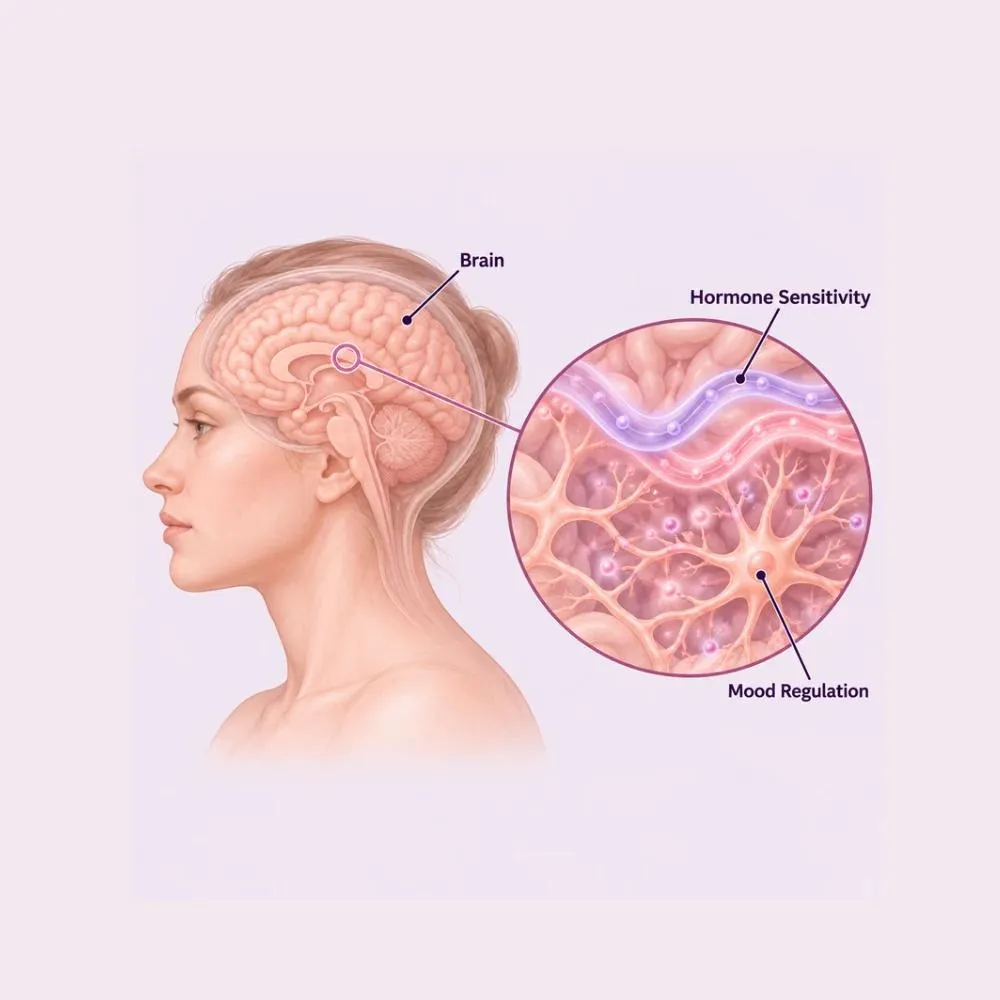
Premenstrual dysphoric disorder affects roughly three to eight per cent of menstruating women. Like PMS it occurs in the luteal phase and resolves with menstruation, but the resemblance largely ends there. In PMDD the emotional symptoms dominate and are severe enough to seriously impair work, study and relationships, and in a significant proportion they include thoughts of self-harm.
It is classified as a depressive disorder in the DSM-5, which reflects both its severity and how it is best treated. Diagnosis requires at least five specified symptoms in the final week before menstruation, including at least one core mood symptom (marked lability, irritability, depressed mood or anxiety) confirmed prospectively over two cycles.
The underlying mechanism appears to be an abnormal brain response to the normal fall in progesterone after ovulation, mediated through the metabolite allopregnanolone and its effect on serotonin. Hormone levels themselves are normal. This explains the two things that most define PMDD in practice: it responds rapidly to SSRIs, and it disappears entirely when ovulation is suppressed.
PMDD reflects an abnormal brain response to ordinary hormonal change, not an abnormal hormone level.
This progesterone metabolite acts on GABA receptors in the brain. Women with PMDD respond abnormally to it, which is the current leading explanation.
Luteal-phase hormonal shifts alter serotonin function. This is why SSRIs work here within days rather than the weeks they take in depression.
PMDD clusters in families, and differences in the genes governing hormone receptor sensitivity have been identified in affected women.
PMDD occurs only in ovulatory cycles. Suppressing ovulation abolishes it entirely, which is both a treatment and a confirmation of mechanism.
A history of trauma or significant stress is more common in women with PMDD and appears to influence severity rather than cause the disorder.
Depression and anxiety frequently coexist, and distinguishing PMDD from a mood disorder worsening premenstrually is central to treating it correctly.
PMDD is not a character flaw, a failure of self-control, or something to be talked out of. It is a recognised disorder with a biological mechanism, and framing it otherwise is one reason women delay seeking help.
The emotional symptoms are what set PMDD apart, and their severity rather than their nature is the distinguishing feature.
Core emotional symptoms
Additional symptoms
Thoughts of self-harm occur in a significant proportion of women with PMDD and are a reason to seek help urgently rather than to wait for the period to arrive. This is not something to manage alone.
Diagnosis is made against formal criteria and requires prospective confirmation across two cycles.
Symptoms recorded daily for two consecutive cycles using a validated instrument. Retrospective recall is not sufficient for this diagnosis.
At least five symptoms in the final week before menstruation, including one core mood symptom, with clear improvement after bleeding begins.
A genuinely clear window in the follicular phase. Without it, this is a mood disorder with premenstrual exacerbation, which is treated differently.
Thyroid function, haemoglobin, ferritin and vitamin D, since each can produce fatigue and low mood that mimic parts of the picture.
Screening for depression, anxiety and bipolar disorder, and specifically asking about thoughts of self-harm.
How far symptoms affect work, study and relationships. Impairment is part of the diagnostic threshold, not an incidental detail.
The distinction between PMDD and a mood disorder that worsens premenstrually genuinely matters. The first responds to luteal-phase SSRIs and ovulation suppression; the second needs continuous treatment of the underlying condition.
PMDD responds well to treatment. SSRIs are first-line, with ovulation suppression and psychological therapy alongside.
The most effective treatment, helping around sixty to seventy per cent of women. They act within one to two days here, so luteal-phase-only dosing is possible.
Taking the SSRI only from ovulation until the period begins. Equally effective as continuous use for many women, with fewer side effects overall.
Effective for the emotional symptoms, and its benefit persists after the course ends. Often combined with medication rather than used alone.
Continuous regimens suppressing ovulation. Drospirenone-containing pills have the best evidence specifically for PMDD.
Regular exercise, consistent sleep, reduced caffeine and alcohol, and calcium supplementation: supportive rather than sufficient alone in PMDD.
Abolish the cycle entirely by inducing a temporary menopausal state. Highly effective, and used with add-back hormone therapy to protect bone.
Low-dose oestrogen and progestogen alongside a GnRH analogue, which also serves as a trial of how you would respond to surgical menopause.
Joint management with a psychiatrist where PMDD coexists with depression, anxiety or bipolar disorder.
A definitive last resort for severe refractory PMDD, only after a successful GnRH trial has demonstrated the response. It causes permanent surgical menopause.
Surgery for PMDD is genuinely a last resort, and never undertaken without a GnRH analogue trial first. That trial shows whether abolishing the cycle actually helps you, which is the question surgery would otherwise answer irreversibly.
The path from first consultation to effective treatment is usually three to four months, most of it spent confirming the diagnosis.
Structured diagnosis and stepped treatment
A full history of symptoms, their timing, their effect on your life, and direct questions about mood and self-harm.
Prospective symptom recording using a validated tool. This is required for the diagnosis and cannot be shortcut.
Thyroid, anaemia and vitamin D checked, and screening for an underlying mood disorder that worsens premenstrually.
Charts reviewed against the DSM-5 criteria, and the pattern explained to you, which many women find clarifying in itself.
An SSRI, either luteal-phase or continuous, often alongside referral for cognitive behavioural therapy.
Continued charting to measure response objectively rather than relying on how the last month felt.
Adjusting dose, switching agent, adding a continuous contraceptive, or moving to a GnRH analogue trial for refractory symptoms.
Two cycles of charting before treatment feels like a long wait when you are struggling. Where symptoms are severe, treatment is started straight away and the charting continues alongside it rather than delaying help.
PMDD is under-diagnosed and frequently dismissed as ordinary PMS. Here is why patients trust us:
Prospective charting over two cycles assessed against the DSM-5 criteria, so PMDD is distinguished from PMS and from mood disorders that worsen premenstrually.
Medication alongside cognitive behavioural therapy, with psychiatric input where a mood disorder coexists.
From the first consultation through to post-treatment follow-up, with one team throughout.
Our hospital is in HITEC CITY, near IKEA: easily reachable from across Hyderabad.
SSRIs work unusually quickly in PMDD. Many women notice a difference within the first treated cycle.
Charting to confirm the diagnosis. Where symptoms are severe, treatment starts immediately alongside rather than waiting.
SSRIs often produce noticeable improvement within days of starting in the luteal phase: considerably faster than in depression.
Response assessed against the earlier charts. Dose adjusted or agent switched where improvement is partial.
CBT benefits consolidate. A stable, workable combination is usually established by this point.
Ongoing management with periodic review. PMDD often intensifies in perimenopause and resolves completely at menopause.
These occur in a significant proportion of women with PMDD. They are a reason to be seen the same day, not to wait for the period to arrive.
The chart is how response is measured. Memory of the last month is unreliable, particularly for a condition that alters mood.
Start the SSRI at the same point each cycle: typically around ovulation. Inconsistent timing is the commonest reason it appears not to work.
PMDD strains relationships considerably. Partners and family who understand that this is cyclical and treatable respond very differently.
If taking it continuously, stopping suddenly causes discontinuation symptoms. Any change should be planned rather than improvised.
PMDD is a recognised disorder with a biological basis. Being told to manage stress better is not treatment, and it is reasonable to expect more.
PMDD is highly treatable, and the majority of women improve substantially on first-line treatment. The single biggest obstacle is how long it takes to be believed and diagnosed.
Book a consultation if any of the following apply.
Medication is inexpensive. Psychological therapy is the larger recurring cost, and often the more durable investment.
| Procedure | Estimated Cost |
|---|---|
| Consultation Per visit | ₹800 – ₹1,500 |
| Blood tests to exclude other causes Thyroid, haemoglobin, ferritin, vitamin D | ₹1,500 – ₹4,000 |
| SSRI medication Per month; less with luteal-phase dosing | ₹200 – ₹1,500 |
| Combined oral contraceptive Per month; drospirenone-containing | ₹300 – ₹1,200 |
| Cognitive behavioural therapy Per session; eight to sixteen sessions | ₹1,000 – ₹2,500 |
| GnRH analogue with add-back Per month; for refractory cases | ₹8,000 – ₹18,000 |
| Psychiatric consultation Where a mood disorder coexists | ₹1,000 – ₹2,500 |
Around sixty to seventy per cent of women respond to an SSRI at a few hundred rupees monthly. Refractory cases cost considerably more.
CBT is the largest recurring cost but its benefit persists after the course ends, unlike medication which works only while taken.
Taking an SSRI only in the two weeks before your period roughly halves the medication cost with equal effect for many women.
A shared ward, a twin-sharing room or a private suite: the largest single swing in most estimates.
We are empanelled with most major insurers, and our team files the pre-authorisation for you.
Every figure above is an indicative range, not a quote. After your consultation you are given a written, fixed-cost estimate, and that is the number you pay, with no additions once treatment begins.
The gynaecologists who treat premenstrual dysphoric disorder at our HITEC CITY hospital.

Consultant Gynaecologist & Advanced Laparoscopic Surgeon
MBBS, MS, FMAS
16 years experience

Consultant Obstetrician, Gynecologist & Laparoscopic Surgeon
MBBS, MS (Obstetrics & Gynaecology)
11 years experience
Reviews from women treated for gynaecological conditions at Lux Hospitals, Hyderabad.
Written by Dr. Harshita Kakarla on women’s health and gynaecological care.

Dr. Harshita Kakarla

Dr. Harshita Kakarla

Dr. Harshita Kakarla

Dr. Harshita Kakarla

Dr. Harshita Kakarla

Dr. Harshita Kakarla
Common questions about PMDD, how it differs from PMS, and what treatment costs at Lux Hospitals.
Still have questions? Call us at 079 6908 4422
Still have questions? Message us on WhatsApp at 079 6908 4444
Formal diagnosis of premenstrual dysphoric disorder with medical and psychological treatment, and costs shared upfront.
Plot No.116, Lumbini Avenue, HITEC CITY, Near IKEA, Hyderabad – 500032













