











Signs and Symptoms of Adenomyosis You Shouldn’t Ignore
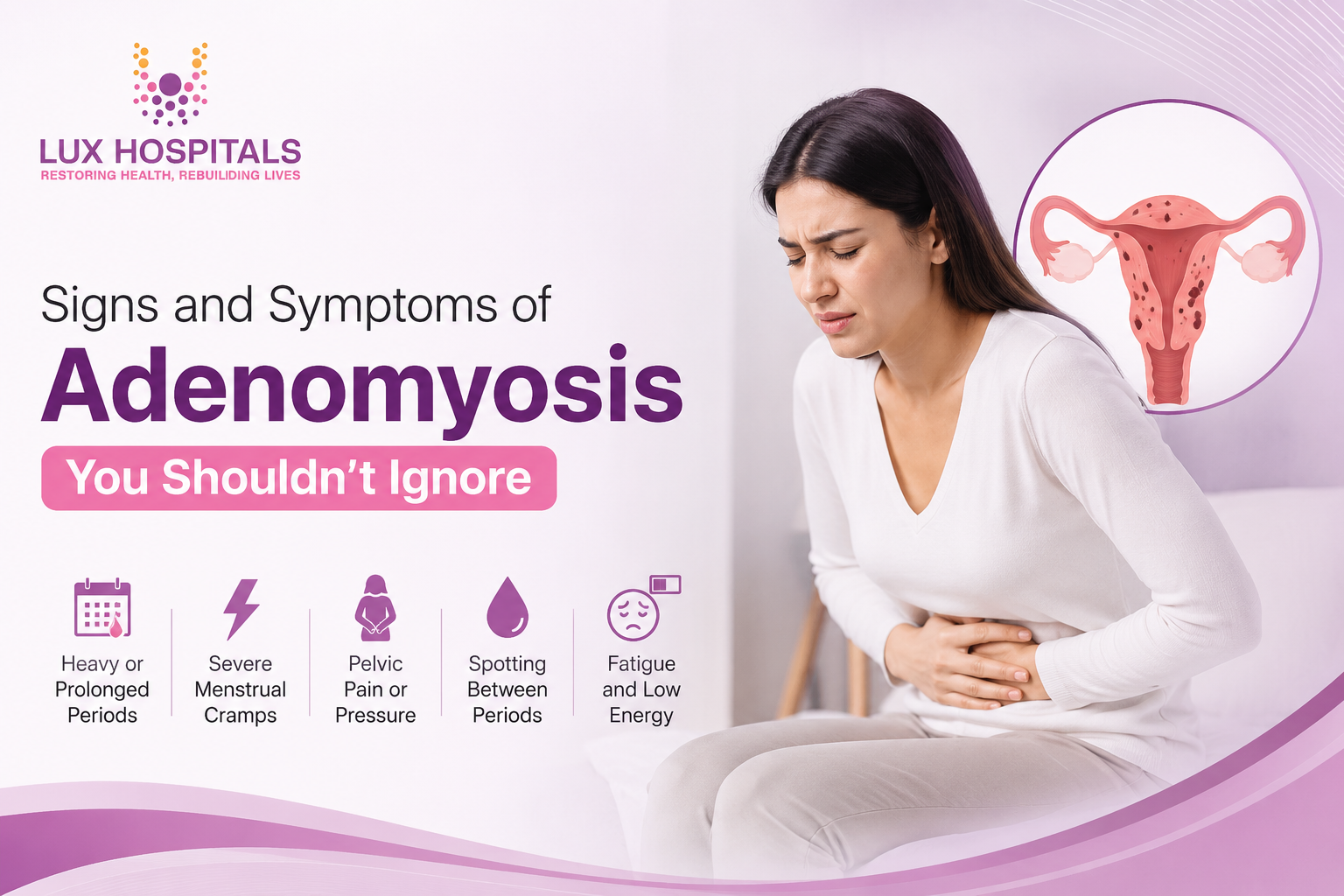
Signs and Symptoms of Adenomyosis may develop slowly and may be mistaken for typical menstrual discomfort. Many women disregard severe cramps, persistent pelvic discomfort, and heavy periods because they think these symptoms are just a part of their monthly cycle. Persistent symptoms, however, can point to adenomyosis, a uterine disorder that has a major negative influence on a woman’s quality of life. Advanced diagnostic examination and individualised therapy for adenomyosis are provided by skilled gynaecologists at Lux Hospitals. Seeking professional care can help reduce discomfort, improve menstrual health, and enhance your overall well-being if you experience chronic signs and symptoms of adenomyosis.

What is Adenomyosis?
Adenomyosis is a benign gynaecological condition in which the endometrial tissue grows into the muscular layer of the uterus. During every menstrual cycle, this tissue thickens, breaks down, and bleeds, leading to pain, swelling, and heavy menstrual bleeding. Women between the ages of 35 and 50 are more commonly affected, although younger women can also develop the condition. The Signs and Symptoms of Adenomyosis may vary from mild discomfort to severe pain that interferes with daily activities.
Who is at Higher Risk?
- Women aged 35–50 years
- Previous childbirth
- Prior uterine surgery
- Hormonal changes
- History of uterine inflammation
Early recognition of the Signs and Symptoms of Adenomyosis allows doctors to recommend effective treatment before symptoms worsen.
Common Signs and Symptoms of Adenomyosis
The Signs and Symptoms of Adenomyosis can differ from one woman to another. Some women have mild symptoms, while others experience severe menstrual pain and heavy bleeding.
Most Common Symptoms
- Heavy menstrual bleeding
- Severe menstrual cramps
- Chronic pelvic pain
- Pain during sexual intercourse
- Painful bowel movements during menstruation
- Enlarged uterus
- Lower abdominal pressure
Many women ignore these Signs and Symptoms of Adenomyosis until they begin affecting work, family life, and emotional health.
When Should You See a Doctor?
Seek medical attention if you experience:
- Extremely painful periods
- Monthly heavy bleeding
- Bleeding in between periods
- Severe pain in the pelvis
- Persistent soreness in the lower abdomen
- Pain during sexual activity
- Having trouble carrying out everyday tasks
- Persistent Adenomyosis Symptoms and Signs
- Diagnose adenomyosis before complications develop.
What Causes Adenomyosis?
The exact cause of adenomyosis is still being researched, but several factors may increase the likelihood of developing the condition.
Possible Causes
- Hormonal imbalance
- Previous uterine surgery
- Childbirth
- Chronic uterine inflammation
- Age-related changes
- Invasive growth of endometrial tissue
- Genetic factors
Although the exact cause remains uncertain, recognising the Signs and Symptoms of Adenomyosis early helps doctors begin appropriate treatment before symptoms become severe.
How is Adenomyosis Diagnosed?
At Lux Hospitals, gynaecologists perform a detailed assessment to identify adenomyosis and rule out similar conditions such as fibroids or endometriosis.
Diagnostic Tests
- Detailed medical history
- Pelvic examination
- Ultrasound scan
- MRI scan when required
- Blood tests
- Assessment of menstrual history
Modern imaging techniques help specialists accurately identify the Signs and Symptoms of Adenomyosis and recommend the most suitable treatment.
Treatment Options for Adenomyosis
Treatment depends on the patient’s age, symptom severity, reproductive plans, and overall health.
Non-Surgical Treatment
Doctors may recommend:
- Pain-relieving medications
- Hormonal therapy
- Birth control pills
- Hormonal intrauterine devices (IUDs)
- Anti-inflammatory medicines
Surgical Treatment
For women with severe symptoms that do not improve with medications, surgery may be considered.
Possible procedures include:
- Adenomyosis-focused conservative surgery
- Endometrial ablation in selected cases
- Hysterectomy for severe, completed-family cases
The appropriate treatment helps reduce the Signs and Symptoms of Adenomyosis, improve quality of life, and restore normal daily activities.
Can Adenomyosis Be Managed Naturally?
While medical treatment remains essential, healthy lifestyle habits can support symptom management.
Healthy Lifestyle Tips
- Maintain a healthy body weight.
- Exercise regularly.
- Eat an iron-rich diet.
- Stay hydrated.
- Manage stress effectively.
- Get adequate sleep.
These healthy habits may help reduce discomfort associated with the Signs and Symptoms of Adenomyosis when combined with medical treatment.
Why Choose Lux Hospitals for Adenomyosis Treatment?
At Lux Hospitals, women receive compassionate, comprehensive gynaecological care using advanced diagnostic technology and evidence-based treatment.
Our Expertise Includes
- Skilled gynaecologists
- State-of-the-art MRI and ultrasound facilities
- Tailored treatment regimens
- Options for minimally invasive surgery
- Contemporary operating rooms
- All-inclusive healthcare for women
- Fertility-preserving treatment when appropriate
- Dedicated follow-up care
Our experts focus on early detection of adenomyosis signs and symptoms and on therapies that enhance comfort, reproductive health, and overall quality of life.
Conclusion
Never disregard the signs and symptoms of adenomyosis, particularly if they involve severe cramps, heavy menstrual flow, persistent pelvic pain, or protracted discomfort. Long-term problems can be avoided, and symptoms can be greatly reduced with early diagnosis and adequate treatment. The skilled gynaecologists at Lux Hospitals can provide you with a precise diagnosis, individualised therapy, and compassionate care to help you reclaim a healthier and more pleasant life if you have been dealing with chronic signs and symptoms of adenomyosis.