



Dr. Samhitha Reddy
Consultant Proctologist & Laparoscopic Surgeon
MBBS, MS, FMAS, FISCP, DMAS
- 8 Yrs
- ASCRS Member
Polycystic ovary syndrome affects roughly one woman in five in India, and it is far more than irregular periods. It is a metabolic and hormonal condition that touches weight, skin, hair, fertility and long-term risk of diabetes.
It is also the commonest cause of difficulty conceiving, and one of the most treatable. Our gynaecologists at Lux Hospitals, HITEC CITY treat the underlying insulin resistance rather than only the symptoms, which is what changes the long-term picture.
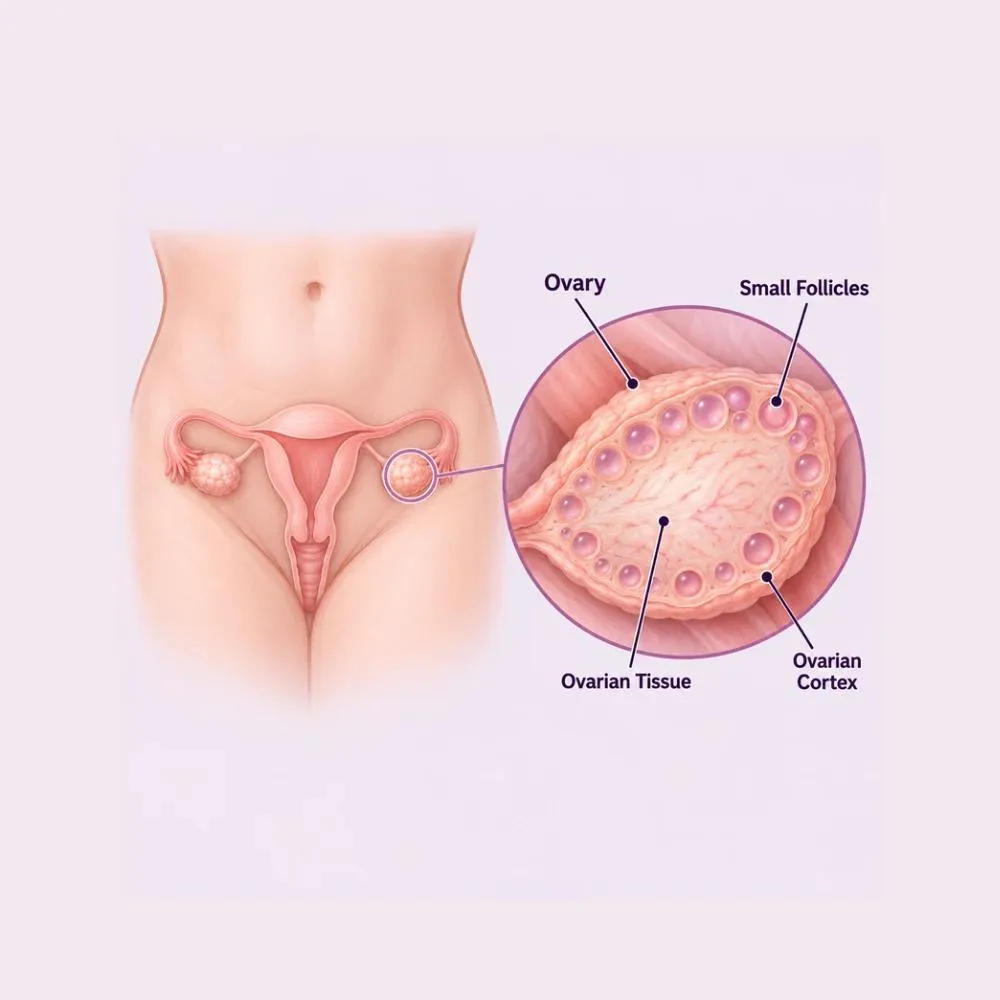
PCOS is a hormonal and metabolic disorder in which the ovaries produce excess androgens, male hormones that every woman makes in small amounts, and ovulation becomes irregular or stops. The follicles that would normally mature and release an egg each month instead stall part-way and accumulate, which is what produces the string-of-pearls appearance on ultrasound that gives the condition its name.
The name is somewhat misleading. The cysts are not true cysts and they are not the problem: they are a consequence of ovulation failing, not a cause of it. A woman can have PCOS with entirely normal-looking ovaries, and many women have polycystic-looking ovaries with no PCOS at all. Diagnosis therefore rests on the whole picture rather than on a scan alone.
Underlying most cases is insulin resistance. When cells respond poorly to insulin, the pancreas produces more of it, and high insulin drives the ovaries to make more androgens while making weight loss considerably harder. This is why PCOS carries a raised lifetime risk of type 2 diabetes, high cholesterol and cardiovascular disease, and why treating the insulin resistance is more useful than treating each symptom separately.
PCOS arises from an interaction between genetics, insulin and hormones rather than from any single cause.
Present in a majority of women with PCOS. High circulating insulin drives ovarian androgen production and makes weight loss disproportionately difficult.
The ovaries produce raised levels of testosterone and related hormones, which disrupts follicle maturation and causes the hair, skin and cycle changes.
PCOS runs strongly in families. A mother or sister with PCOS substantially raises your own likelihood of having it.
An altered ratio of the two pituitary hormones that govern the cycle, so follicles are stimulated to grow but never receive the signal to release.
Chronic inflammatory markers are raised in PCOS and appear to contribute to both androgen production and insulin resistance.
Excess weight worsens insulin resistance and therefore worsens PCOS. It is an aggravating factor rather than the original cause: lean women get PCOS too.
PCOS is not caused by anything you did. It is a genetic and metabolic condition, and lean women develop it as well, though weight, where it is a factor, is one of the few levers that genuinely moves the whole condition.
PCOS presents differently in different women, which is part of why it is so often diagnosed late.
Menstrual and hormonal
Metabolic and skin
The dark velvety skin patches (acanthosis nigricans) are a visible sign of insulin resistance rather than a skin complaint. They are worth pointing out at a consultation, because they change what gets tested.
Diagnosis requires two of three criteria, and equally importantly the exclusion of conditions that mimic it.
Two of three: irregular or absent ovulation, clinical or biochemical signs of excess androgen, and polycystic ovaries on ultrasound. Two are enough: all three are not required.
Testosterone, LH, FSH, prolactin, thyroid function and AMH, taken at a specific point in the cycle so the results can be interpreted properly.
Counts the follicles and measures ovarian volume. Not required for diagnosis where the other two criteria are clearly met.
Fasting glucose, HbA1c, an insulin level and a lipid profile. This is the part most often skipped, and the part that matters most for long-term health.
Thyroid disease, raised prolactin, congenital adrenal hyperplasia and Cushing syndrome all mimic PCOS and are ruled out before the label is applied.
Where periods have been absent for long stretches, checking the endometrium: prolonged unopposed oestrogen raises the risk of hyperplasia.
A scan showing polycystic ovaries is not by itself a diagnosis. Around a fifth of women have that appearance with entirely normal cycles and hormones, and treating them for PCOS would be a mistake.
Treatment is directed at what is troubling you most (cycles, skin and hair, fertility, or metabolic risk) and often at several at once.
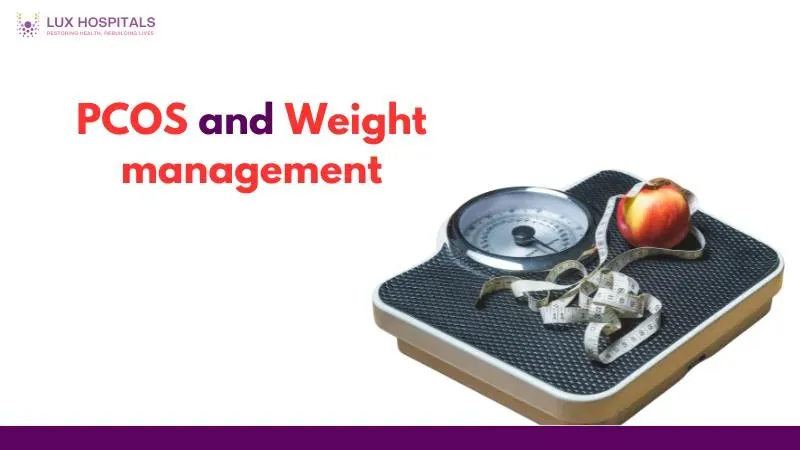
Losing even five to ten per cent of body weight can restore ovulation. A lower-glycaemic diet targets the insulin resistance directly rather than simply cutting calories.
Improves insulin sensitivity independently of weight loss. Resistance training alongside cardiovascular exercise is more effective than either alone.
Improves insulin sensitivity, often restores regular cycles, and reduces the long-term progression to type 2 diabetes.
Regulate cycles, reduce androgens, improve acne and hair growth, and protect the endometrium. The mainstay where fertility is not currently the goal.
Spironolactone and similar drugs for hirsutism and acne that have not responded adequately, always with reliable contraception alongside.
Letrozole (now preferred over clomiphene) to trigger ovulation where pregnancy is the goal, with cycle monitoring by ultrasound.
IUI or IVF where ovulation induction alone has not achieved pregnancy, or where other fertility factors coexist.
Keyhole surgery making small punctures in the ovarian surface to reduce androgen production and restore ovulation. Considered where medication has failed.
Where bleeding has been prolonged or irregular, to assess and treat endometrial thickening from unopposed oestrogen.
For severe obesity with PCOS. Substantial weight loss frequently restores ovulation and resolves much of the hormonal picture.
Laser hair reduction and electrolysis alongside medical treatment, since hair already present responds slowly to hormonal therapy alone.
Letrozole has replaced clomiphene as the first choice for ovulation induction in PCOS: it achieves higher live birth rates, and that change is well established rather than experimental.
PCOS is managed over years rather than treated once, and the plan changes as your priorities change.
Individualised long-term management programme
Cycle history, examination for androgen effects, hormone profile, ultrasound and (importantly) metabolic screening.
Thyroid, prolactin and adrenal causes ruled out before the diagnosis is confirmed, since each is treated quite differently.
Regular cycles, skin and hair, conceiving now, or long-term metabolic protection. Treatment differs substantially depending on which comes first.
A realistic dietary and exercise plan targeting insulin resistance, with dietitian input where that helps.
Metformin, a combined pill, an anti-androgen or ovulation induction, chosen according to the agreed priority.
Review at three to six months with repeat cycle assessment and metabolic bloods. Ovulation induction is monitored cycle by cycle.
Annual glucose and lipid screening for life, since diabetes risk persists whether or not symptoms are currently controlled.
The single question that most changes the treatment plan is whether you are trying to conceive now. The combined pill and ovulation induction pull in opposite directions, so the plan follows the priority rather than the diagnosis.
PCOS is frequently treated as a period problem when it is a metabolic one. Here is why patients trust us:
Insulin, glucose and lipids screened and managed alongside the cycle, because that is what determines long-term health.
Ovulation induction with cycle monitoring, and onward assisted reproduction where needed, without starting again elsewhere.
From the first consultation through to post-treatment follow-up, with one team throughout.
Our hospital is in HITEC CITY, near IKEA: easily reachable from across Hyderabad.
PCOS is managed rather than cured, and improvement is measured in months. The gains, however, are real and cumulative.
Diagnosis confirmed, medication started, and dietary and exercise changes established. Acne and mood often improve first.
Cycles frequently become more regular. Insulin resistance measurably improves with consistent lifestyle change.
Hair growth changes become visible: this is the slowest symptom to respond, because existing hair must complete its cycle.
Where conception is the goal, ovulation induction is pursued alongside continued metabolic management.
Annual glucose and lipid screening for life. PCOS symptoms often ease after menopause, but the metabolic risk does not.
Lower-glycaemic eating and resistance exercise improve PCOS more than calorie restriction alone, because they act on the underlying mechanism.
Hirsutism responds over six to twelve months because existing hair must complete its growth cycle. Judging treatment at three months understates it.
Prolonged absence of periods leaves the endometrium under unopposed oestrogen, which raises the risk of hyperplasia. Four or more periods a year is the usual minimum target.
The raised risk of type 2 diabetes persists regardless of whether your cycles are currently regular. Annual glucose and lipids are not optional.
Anxiety and depression are genuinely commoner in PCOS, and not simply a reaction to the symptoms. They deserve treating in their own right.
No supplement, tea or detox cures PCOS. Inositol has some supporting evidence for insulin sensitivity; most of what is marketed does not.
Weight loss of five to ten per cent restores ovulation in a substantial proportion of women. That is a modest target with disproportionate effect, and it is the single most useful thing most women with PCOS can act on.
Book a consultation if any of the following apply.
Diagnosis and medical management are inexpensive. Fertility treatment is where costs rise, and not everyone needs it.
| Procedure | Estimated Cost |
|---|---|
| Consultation Per visit | ₹800 – ₹1,500 |
| Hormone profile Testosterone, LH, FSH, prolactin, thyroid, AMH | ₹3,000 – ₹8,000 |
| Metabolic screening Glucose, HbA1c, insulin, lipids | ₹1,500 – ₹4,000 |
| Pelvic ultrasound Follicle count and ovarian volume | ₹1,200 – ₹3,000 |
| Monthly medication Metformin, oral contraceptive or anti-androgen | ₹400 – ₹2,500 |
| Ovulation induction cycle Includes medication and follicular monitoring | ₹8,000 – ₹20,000 |
| Laparoscopic ovarian drilling Day care or one night | ₹85,000 – ₹1,50,000 |
Cycle regulation costs a few hundred rupees monthly. Fertility treatment with monitored cycles is a different order of expense.
Ovulation induction is costed per cycle, and several may be needed before conception. This is discussed upfront rather than cycle by cycle.
Where diabetes or high cholesterol has already developed, treating those adds to the ongoing cost.
A shared ward, a twin-sharing room or a private suite: the largest single swing in most estimates.
We are empanelled with most major insurers, and our team files the pre-authorisation for you.
Every figure above is an indicative range, not a quote. After your consultation you are given a written, fixed-cost estimate, and that is the number you pay, with no additions once treatment begins.
The gynaecologists who treat PCOS at our HITEC CITY hospital.

Consultant Gynaecologist & Advanced Laparoscopic Surgeon
MBBS, MS, FMAS
16 years experience
Consultant Obstetrician, Gynecologist & Laparoscopic Surgeon
MBBS, MS (Obstetrics & Gynaecology)
11 years experience
Reviews from women treated for gynaecological conditions at Lux Hospitals, Hyderabad.
Written by Dr. Harshita Kakarla on women’s health and gynaecological care.
Dr. Harshita Kakarla

Dr. Harshita Kakarla
Dr. Harshita Kakarla
Dr. Harshita Kakarla
Dr. Harshita Kakarla
Dr. Harshita Kakarla
Common questions about PCOS, fertility, and what treatment costs at Lux Hospitals.
Still have questions? Call us at 079 6908 4422
Still have questions? Message us on WhatsApp at 079 6908 4444
Hormonal and metabolic assessment with a treatment plan built around your priority, and costs shared upfront.
Plot No.116, Lumbini Avenue, HITEC CITY, Near IKEA, Hyderabad – 500032













