











Pelvic Floor Dysfunction Treatment in Hyderabad
Pelvic floor dysfunction is a problem with the strength, relaxation, or coordination of the muscles that support the bladder, bowel, and other pelvic organs. Constipation, pelvic pain, urine incontinence, and trouble emptying the bladder are all possible side effects. Pelvic floor dysfunction treatment in Hyderabad begins with identifying whether these muscles are weak, overly tight, or not working together properly.
Treatment may include pelvic floor physiotherapy, biofeedback, relaxation techniques, or supervised strengthening exercises. At Lux Hospitals, patients can seek specialist assessment for bowel, bladder, and pelvic symptoms. The symptoms are dependent on the assessment of the findings of the findings of the treatment.
What Is Pelvic Floor Dysfunction?
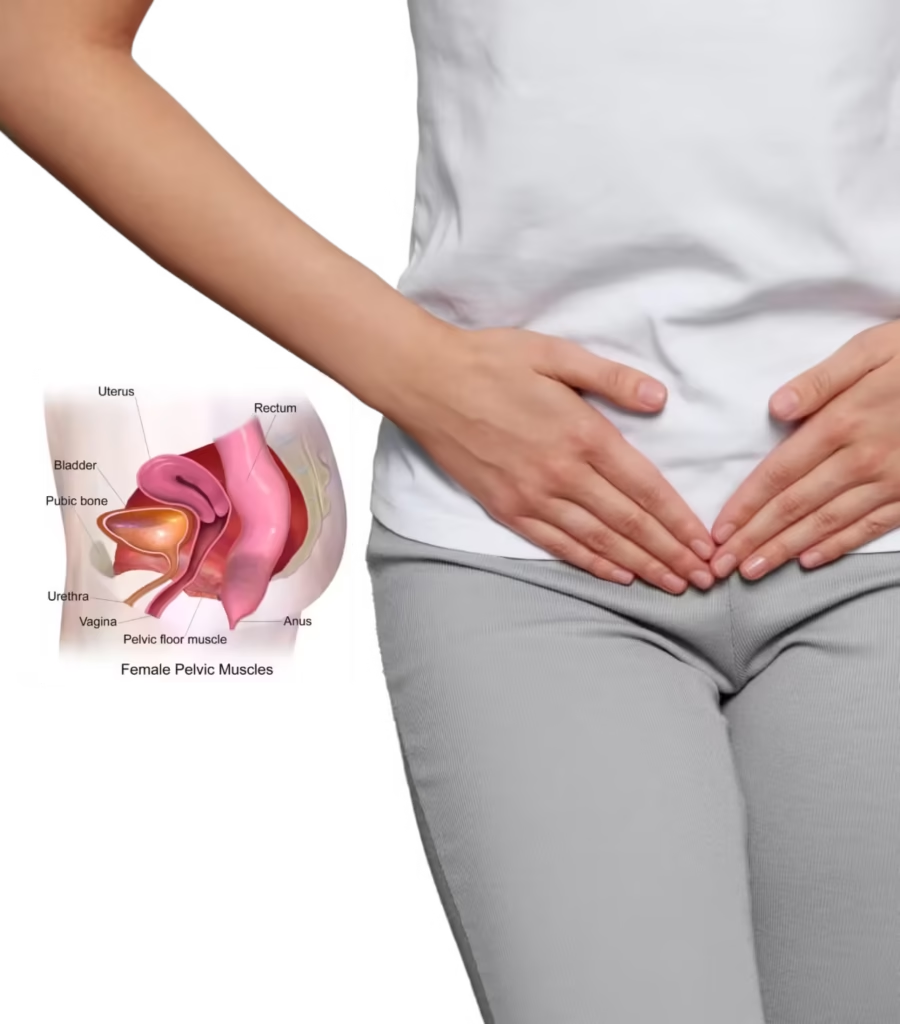
The pelvic floor is a group of muscles and connective tissues at the base of the pelvis. These structures support pelvic organs and help control urination and bowel movements.
Pelvic floor dysfunction occurs when these muscles do not function properly. They may struggle to contract, relax, or coordinate during everyday activities.
The condition can affect both men and women. It is not always a problem of muscle weakness: tight or overactive muscles can also cause symptoms.
What Causes Pelvic Floor Dysfunction?
Several factors may contribute to pelvic floor dysfunction or increase the risk of developing it:
- Pregnancy and childbirth: Changes during pregnancy and delivery can affect pelvic muscles, nerves, and supporting tissues.
- Chronic constipation and straining: Repeated straining places pressure on the pelvic floor. Poor muscle coordination can also contribute to constipation.
- Pelvic surgery or injury: Surgery or trauma may affect muscle function, nerves, or tissue support.
- Excess body weight: Additional weight can increase pressure on pelvic structures.
- Aging: Changes in muscle strength and supporting tissues may affect pelvic function.
- Repetitive heavy lifting: Frequent lifting with straining may increase pressure on the pelvic floor.
- Neurological conditions: Disorders affecting the nervous system can interfere with bladder, bowel, and muscle control.
There may be more than one contributing factor. An assessment helps determine which factors are relevant to your symptoms.
Pelvic Floor Dysfunction Symptoms
Common pelvic floor dysfunction symptoms include:
- Constipation or difficulty passing stool
- Excessive straining during bowel movements
- A feeling that the bowel has not emptied completely
- Urinary incontinence or urine leakage
- Urinary urgency or frequent urination
- Difficulty starting urination or emptying the bladder
- Pelvic pain, pressure, or discomfort
- Pain during intercourse, also called dyspareunia
These symptoms do not confirm pelvic floor dysfunction by themselves. Urinary infections, bowel disorders, and other conditions may cause similar problems.
Types of Pelvic Floor Muscle Problems
Understanding the muscle problem helps guide pelvic muscle dysfunction treatment.
Weak Pelvic Floor Muscles
Weak muscles may provide insufficient support or control. Symptoms can include urine leakage, particularly with coughing, sneezing, or physical activity.
Supervised strengthening exercises may be appropriate after assessment.
Tight or Overactive Pelvic Floor Muscles
Overactive muscles may remain tense and have difficulty relaxing. This can contribute to pelvic pain, painful intercourse, or difficulty passing urine or stool.
Treatment often focuses on relaxation, breathing, and improving muscle flexibility rather than strengthening alone.
Poorly Coordinated Pelvic Floor Muscles
The muscles may fail to relax appropriately during a bowel movement. This is sometimes called dyssynergic defecation.
It can cause straining, difficulty passing stool, and incomplete emptying. Biofeedback may help retrain the coordination needed for bowel movements.
These problems can overlap, so treatment should be based on an individual assessment.
How Is Pelvic Floor Dysfunction Diagnosed?
Diagnosis usually begins with a discussion of your symptoms and medical history, followed by an appropriate examination. Additional tests are recommended only when needed.
Symptom and Medical History Review
The clinician may ask about:
- When your symptoms started
- Bowel frequency, stool consistency, and straining
- Urinary leakage, urgency, and difficulty emptying the bladder
- Pelvic pain and activities that make it worse
- Pregnancy, childbirth, previous surgery, and injuries
- Medicines and existing medical conditions
A bowel or bladder diary may help show patterns in your symptoms.
Physical Examination
An assessment may include checking posture, breathing, movement, and pelvic muscle function.
An internal vaginal or rectal examination may be suggested when clinically appropriate. The clinician should explain why it is recommended and obtain your consent before proceeding. You can discuss your comfort and request a chaperone.
Tests When Needed
Depending on your symptoms, investigations may include:
- Urine tests: To check for infection or other urinary concerns.
- Anorectal manometry: To assess pressures and muscle coordination involved in bowel movements.
- Balloon expulsion testing: To assess the ability to expel a small rectal balloon.
- Defecography: Imaging used in selected cases to assess bowel emptying and structural problems.
- Bladder-function tests: When further assessment of urinary symptoms is necessary.
Not every patient needs these tests. The specialist selects investigations according to the suspected cause.
Pelvic Floor Dysfunction Treatment Options
Pelvic floor dysfunction treatment is personalised. The aim is to improve muscle function, reduce symptoms, and support comfortable bladder and bowel emptying.
Pelvic Floor Physiotherapy
Pelvic floor physiotherapy, also called pelvic floor physical therapy, helps improve muscle strength, relaxation, and coordination.
A personalised programme may include:
- Breathing and muscle-relaxation techniques
- Supervised pelvic floor exercises
- Coordination training
- Posture and movement guidance
- Manual techniques when appropriate
- A home exercise programme with follow-up
Pelvic floor therapy should address the muscle problem identified during assessment.
Biofeedback Therapy
Biofeedback uses sensors and visual or other feedback to show how the muscles are working.
It can help patients learn when to contract or relax the pelvic floor. It is particularly useful for selected patients whose constipation is related to poor coordination during bowel movements.
Pelvic Floor Exercises and Kegel Exercises
Pelvic floor exercises may involve strengthening, relaxation, or coordination training.
Kegel exercises strengthen the pelvic floor and may help when muscles are weak. However, they are not suitable for every patient.
If the muscles are already overly tight, repeated strengthening may increase discomfort. A trained physiotherapist can explain which exercises are appropriate.
Treatment for Tight or Painful Muscles
For patients with muscle tension or pelvic pain, treatment may include:
- Relaxation and breathing exercises
- Gentle stretching
- Myofascial release or other manual techniques
- Selected trigger point treatments
- Changes to activities that aggravate symptoms
These approaches are chosen according to the assessment and your comfort.
Bowel and Bladder Training
Treatment may also address habits that affect pelvic function.
Guidance may include:
- Avoiding excessive straining
- Improving toilet posture
- Managing constipation with appropriate dietary and medical advice
- Following an individualised bladder-training programme
- Adjusting fluid intake according to medical needs
Dietary changes alone may not resolve constipation caused by poor pelvic muscle coordination.
Pelvic Floor Rehabilitation
Pelvic floor rehabilitation combines suitable therapies into a structured programme.
Progress is reviewed over time, and exercises may be adjusted as symptoms and muscle function change. Regular participation and following the prescribed home programme can support treatment.
Additional Specialist Treatments
If symptoms persist, the specialist may review the diagnosis and consider other treatments for the specific condition.
Nerve stimulation may be considered for selected bladder or bowel-control problems. Injections may be considered for certain persistent muscle-related conditions.
Surgery may be appropriate for an associated structural problem, such as pelvic organ prolapse. It does not usually treat muscle tightness or poor coordination alone.
Availability and suitability of these treatments should be discussed during consultation.
What Happens During a Pelvic Floor Consultation?
At your first consultation, the clinician will usually discuss your symptoms, how they affect daily life, and any previous treatment.
You may then have an examination, with your consent, and receive advice on whether further tests or physiotherapy are appropriate.
To prepare, bring:
- Previous medical reports and test results
- A list of current medicines
- Details of previous pelvic surgery or childbirth
- Notes about bowel, bladder, or pain symptoms
- Questions about examination, treatment, and follow-up
You can discuss privacy, examination preferences, and any concerns before the assessment begins.
When Should You See a Pelvic Floor Specialist?
Consider a consultation if you have:
- Ongoing constipation or repeated straining
- Urinary leakage that affects daily activities
- Persistent pelvic pain
- Difficulty emptying the bowel or bladder
- Pain during intercourse
- Symptoms that continue despite previous treatment
Recurrent urinary tract infections also require assessment, particularly if you have difficulty emptying your bladder.
Seek urgent medical care for an inability to pass urine, severe or rapidly worsening pain, or new loss of bladder or bowel control with leg weakness or numbness around the groin.
Pelvic Floor Dysfunction Treatment in Hyderabad at Lux Hospitals
Patients seeking pelvic muscle dysfunction treatment in Hyderabad can contact Lux Hospitals for assessment and guidance on the appropriate specialist.
Care depends on the main symptoms:
- Bowel symptoms: A proctologist may assess constipation, straining, and incomplete emptying.
- Urinary symptoms: A urologist may assess leakage, urgency, and bladder-emptying problems.
- Gynaecological concerns: A gynaecologist may assess childbirth-related concerns or associated pelvic organ conditions.
- Muscle rehabilitation: A physiotherapist trained in pelvic floor care may provide a personalised therapy programme.
Why Choose Lux Hospitals for Pelvic Floor Treatment in Hyderabad?
When seeking care for pelvic floor disorders in Hyderabad, an accurate assessment and a clear treatment plan are important.
Patients can discuss:
- Their symptoms and how they affect daily activities
- Which specialist is appropriate for their concerns
- Whether investigations or pelvic floor physiotherapy are needed
- Suitable treatment options and their limitations
- Examination preferences, privacy, and consent
- Follow-up and home-care guidance
For bowel-related concerns, patients can consult the proctology team, including Dr. Samhitha Reddy, for evaluation and treatment guidance.
Testimonials
"laser treatment for my dad’s piles"
Dr. Samhitha Reddy’s laser treatment for my dad’s piles worked wonders. He’s pain-free now and really grateful for her care!

Mithilesh Sah
"smooth and painless"
Dr. Samhitha Reddy’s laser treatment for my fissure wassmooth and painless. She was super kind, which made the whole process much easier.

Rohit Kumar
"Colorectal Diseases"
Lux hospital is one of best hospital in Hyderabad for colorectal diseases. Dr. Samhita Mam is one the finest surgeon, very polite and explain everything in detail and the hospital staff is soo caring..Thank you so much..

Arti Shettiwar
"Admitted for my fistula surgery"
I was admitted for my fistula surgery, Dr Samhita has been very helpful in detecting the issue and explained the causes and prevention . Surgery was seamless and without pain.Also the support staff have been extremely helpful and were available every time. Keep up doing the great work.

Sanat Jayasingh
"Fistula Surgery"
We were admitted for fistula surgery and had to be under supervision for 24 hours. I could say that the staff including from the doctors and the Nurse and the house keeping staff, everyone was so polite and helpful and attending the patient within no time. Hospitalisation here was so smooth and Special thanks to Ashok(patient relationship manager) who is super polite and answering the questions related to insurance

Sujith V

Latest Health Articles by Lux
Gynecomastia Surgery Scars: Questions About Incisions, Healing and Follow-Up
October 14, 2026
Dr. M. Ram Prabhu
A Piles Lump Comes Out During Every Bowel Movement: Which Treatment May Help?
October 14, 2026
Dr Samhitha Reddy
An Ovarian Cyst Remains on Repeat Scans: What Should You Ask Your Gynaecologist?
October 14, 2026
Dr Harshita Kakarla
Weight Loss Medication vs Bariatric Surgery: How to Choose Your Next Step
October 13, 2026
Dr. Tagore Grandhi
Frequently Asked Questions
The best treatment depends on whether the muscles are weak, tight, or poorly coordinated. Pelvic floor physiotherapy may include strengthening, relaxation, or biofeedback. A specialist assessment helps determine the appropriate approach.
Yes. If the pelvic floor muscles do not relax properly during bowel movements, passing stool can become difficult. This may cause straining or incomplete emptying. Biofeedback may help retrain muscle coordination in suitable patients.
Yes. Problems with pelvic muscle strength or coordination may contribute to urinary incontinence. However, leakage can have other causes, so assessment is needed before choosing treatment.
Kegel exercises may help when the pelvic floor muscles are weak. They may be unsuitable when muscles are overly tight or painful. A physiotherapist can assess whether you need strengthening, relaxation, or coordination exercises.
Pelvic floor physiotherapy and pelvic floor physical therapy generally mean the same thing. Both assess and treat pelvic muscle problems using individualised exercises, education, and other suitable techniques.
Yes. Men can experience pelvic pain, constipation, urinary leakage, and difficulty emptying the bladder because of pelvic floor muscle problems. Treatment is based on the symptoms and assessment findings.
No. An internal examination is not required in every case. It may be recommended when it would help assess muscle function. The clinician should explain the examination, obtain consent, and discuss alternatives or limitations if you decline.
A proctologist may assess bowel symptoms, a urologist may assess urinary symptoms, and a gynaecologist may assess related pelvic organ concerns. A physiotherapist trained in pelvic floor care may provide rehabilitation.
Many muscle-related pelvic floor problems are managed without surgery through physiotherapy, biofeedback, and bowel or bladder training. Surgery may be considered for a separate structural condition, depending on specialist assessment.
The cost depends on the consultation, investigations, therapy sessions, and any additional treatment required. Contact Lux Hospitals for an estimate after the recommended treatment plan is established.
Contact Lux Hospitals and explain whether your main concern is bowel difficulty, urinary symptoms, or pelvic pain. The team can guide you to an appropriate consultation and explain the available services.