











Frequent Stomach Discomfort? Signs You May Have IBS
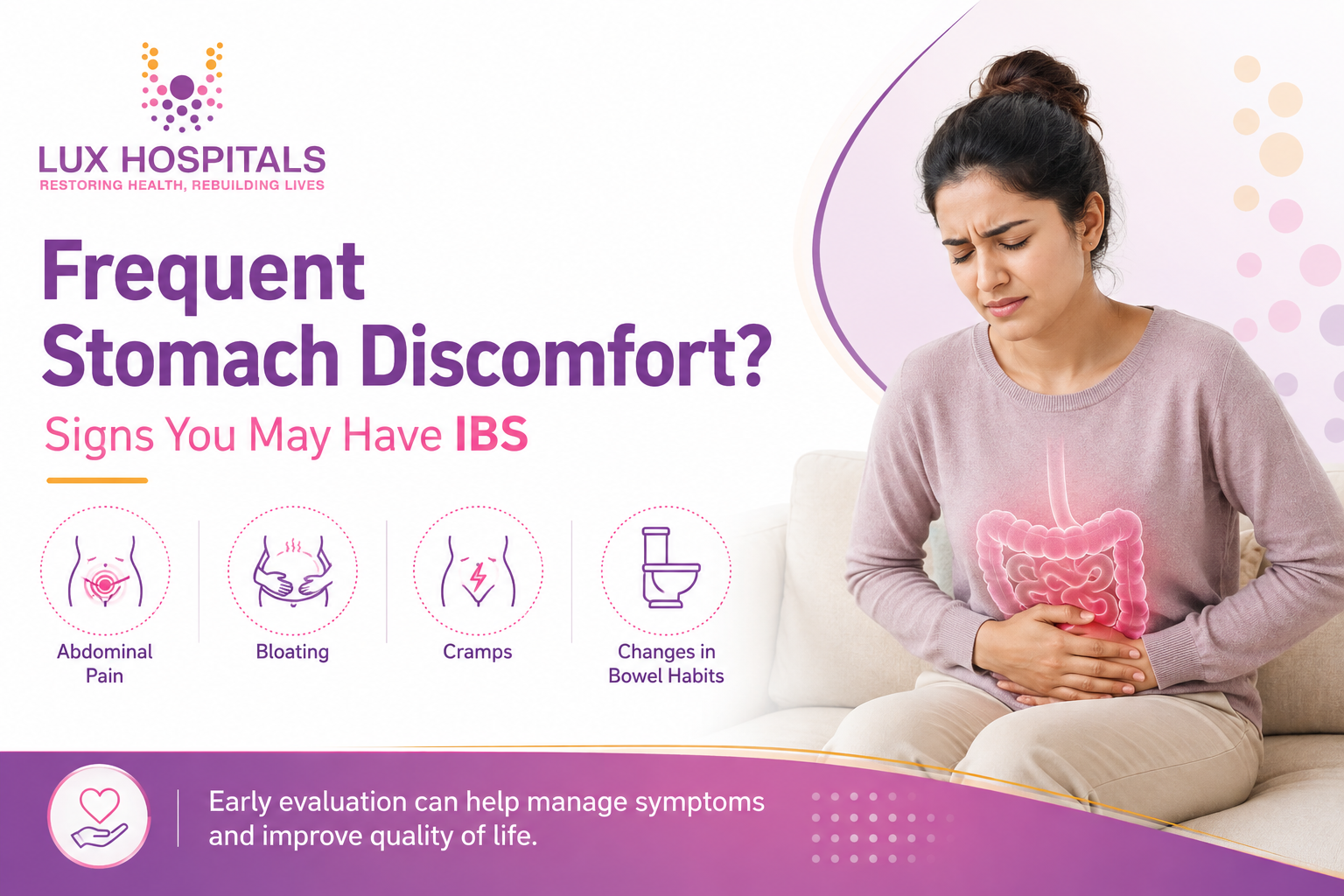
Frequent Stomach Discomfort is more than an occasional digestive issue. If you regularly experience abdominal pain, bloating, constipation, diarrhoea, or changes in bowel habits, it could be a sign of Irritable Bowel Syndrome (IBS). Many people ignore Frequent Stomach Discomfort, assuming it is caused by unhealthy eating or temporary indigestion. Persistent symptoms, however, might make it difficult to travel, work, sleep, and generally enjoy life. The large intestine is impacted by IBS, a chronic digestive condition that does not permanently harm the colon. Experienced Proctologists at Lux Hospitals offer thorough assessments, precise diagnoses, and individualised IBS treatment regimens. Professional medical care can help restore digestive health and enhance your quality of life if frequent stomach discomfort has become a regular part of your life.

What is Irritable Bowel Syndrome (IBS)?
Irritable bowel syndrome is a functional gastrointestinal condition. impairs intestinal function. IBS does not harm the digestive tract like inflammatory bowel illnesses do, but it may generate recurrent symptoms that can be challenging to treat if left untreated. Because the muscles and nerves in the intestines become extremely sensitive, people with IBS frequently experience frequent stomach discomfort. Certain foods, stress, hormonal fluctuations, or infections may trigger symptoms.
Types of IBS
- IBS with constipation (IBS-C)
- IBS with diarrhoea (IBS-D)
- Mixed IBS (IBS-M)
- Unclassified IBS (IBS-U)
Early diagnosis helps reduce Frequent Stomach Discomfort and improves long-term symptom control.
Common Signs You May Have IBS
Recognising IBS symptoms early allows treatment before they affect daily activities.
Common Symptoms
- Abdominal pain or cramping
- Bloating
- Excessive gas
- Constipation
- Diarrhea
- Alternating constipation and diarrhoea
- Mucus in stool
If these symptoms occur repeatedly along with Frequent Stomach Discomfort, they may indicate IBS rather than occasional indigestion.
When Should You See a Doctor?
Seek medical attention if you experience:
- Persistent abdominal pain
- Blood in stool
- Unexplained weight loss
- Night-time diarrhea
- Severe constipation
- Continuous bloating
What Causes Frequent Stomach Discomfort in IBS?
Although the precise aetiology of IBS remains unknown, researchers believe several factors contribute to it.
Common Causes
- Abnormal intestinal muscle contractions
- Increased nerve sensitivity
- Gut-brain communication problems
- Previous intestinal infections
- Changes in gut bacteria
These factors can trigger repeated episodes of Frequent Stomach Discomfort, especially after eating certain foods or during stressful situations.
Common IBS Triggers
- Spicy foods
- Fatty meals
- Dairy products
- Caffeine
- Alcohol
- Carbonated drinks
Understanding personal triggers helps reduce episodes of Frequent Stomach Discomfort and improves digestive comfort.
How is IBS Diagnosed?
At Lux Hospitals, Proctologists carefully evaluate your symptoms before confirming an IBS diagnosis.
Diagnostic Process
- Detailed medical history
- Physical examination
- Blood tests
- Stool examination
- Colonoscopy when required
- Imaging studies in selected cases
- Food and symptom assessment
Since no single test confirms IBS, doctors rule out other digestive conditions before making a diagnosis.
Treatment Options for IBS
Although IBS has no permanent cure, proper treatment successfully controls symptoms and improves daily life.
Medical Treatment
Depending on symptoms, doctors may recommend:
- Medications for constipation
- Anti-diarrheal medicines
- Antispasmodic medications
- Probiotics
- Fiber supplements
- Pain-relieving medications
Lifestyle Changes
Patients can reduce Frequent Stomach Discomfort by following healthy lifestyle habits.
Healthy Habits
- Eat smaller meals.
- Increase fibre gradually.
- Stay well hydrated.
- Exercise regularly.
- Sleep adequately.
- Reduce stress through yoga or meditation.
- Avoid trigger foods.
- Maintain a food diary.
Combining medications with lifestyle modifications offers the best long-term control of Frequent Stomach Discomfort.
Can IBS Be Prevented?
While IBS cannot always be prevented, healthy digestive habits reduce symptom flare-ups.
Prevention Tips
- Consume meals promptly.
- Make sure you get adequate water.
- Eat fewer processed foods.
- Work out every day.
- Steer clear of too much coffee.
- Give up smoking.
- Effectively handle stress.
Regularly heed medical advice.
Consistent healthy habits help minimise episodes of Frequent Stomach Discomfort and improve bowel function.
Why Choose Lux Hospitals for IBS Treatment?
At Lux Hospitals, patients receive comprehensive digestive care using advanced diagnostic techniques and individualised treatment plans.
Our Expertise Includes
- Skilled Proctologists
- Sophisticated diagnostic tools
- Individualised dietary advice
- A thorough digestive assessment
- Contemporary laboratory services
- Patient-centred treatment
- Long-term treatment of symptoms
- Caring aftercare
Our objective is to determine the underlying cause of frequent stomach discomfort and to offer a successful treatment that enhances quality of life and digestive health.
Conclusion
It is never appropriate to accept frequent stomach discomfort as a normal aspect of life. Constipation, bloating, diarrhoea, or persistent abdominal pain may be signs of irritable bowel syndrome and should be evaluated by a specialist. It is possible to effectively manage symptoms and prevent recurrent flare-ups through early diagnosis, dietary adjustments, lifestyle changes, and appropriate medications. Consult Lux Hospitals’ skilled Proctologists if you’ve been having frequent stomach discomfort for a precise diagnosis, individualised care, and compassionate digestive care that can enable you to live comfortably once more.
Frequently Asked Questions
Abdominal pain, bloating, changes in bowel habits, gas, and frequent stomach discomfort that goes away after passing stool are typically the first signs of IBS. These sensations can worsen after eating or during stressful times, and they frequently come and go.
Yes, stress can interfere with communication between the brain and the digestive system, worsening IBS symptoms. Digestive flare-ups can be significantly reduced and general gut health enhanced by practising relaxation techniques, exercising, and getting enough sleep.
Despite being a persistent digestive illness, IBS does not cause intestinal damage or raise the risk of colorectal cancer. However, long-term symptom management requires early diagnosis and appropriate therapy, as persistent symptoms can have a substantial impact on day-to-day functioning.
Many patients benefit from limiting spicy foods, fatty meals, caffeine, carbonated beverages, alcohol, and foods that personally trigger symptoms. A gastroenterologist or dietitian can help create an individualised meal plan based on your digestive needs.
Lux Hospitals offers skilled gastroenterologists, cutting-edge diagnostic services, personalised dietary recommendations, contemporary treatment choices, and considerate follow-up care. Each treatment strategy is designed to promote long-term digestive health and lessen frequent stomach discomfort.
Yes, Lux Hospitals offers comprehensive consultations, laboratory investigations, imaging studies, colonoscopy when needed, and personalised treatment plans. Our specialists work to identify the exact cause of Frequent Stomach Discomfort and recommend the most effective treatment for lasting relief.