











Anal Fissure Treatment: When Pain Persists After Ointment
Anal fissure treatment should be discussed with a doctor when pain continues despite prescribed ointment, especially if pain lasts after bowel movements, bleeding keeps returning, or symptoms interfere with daily life. Persistent symptoms may mean the fissure has not healed, is recurring, or needs a different treatment approach.Pain after passing stool is a common reason people with an anal fissure seek medical help. The discomfort may continue for minutes or even several hours after a bowel movement. If an ointment doesn’t provide lasting relief, the next step isn’t automatically surgery. Discomfort may last minutes or even several hours after a bowel movement. Anal fissure treatment this guide explains why pain may continue, when to see a fissure specialist in Hyderabad, how doctors diagnose the problem and which treatment options may be considered.

What Is an Anal Fissure?
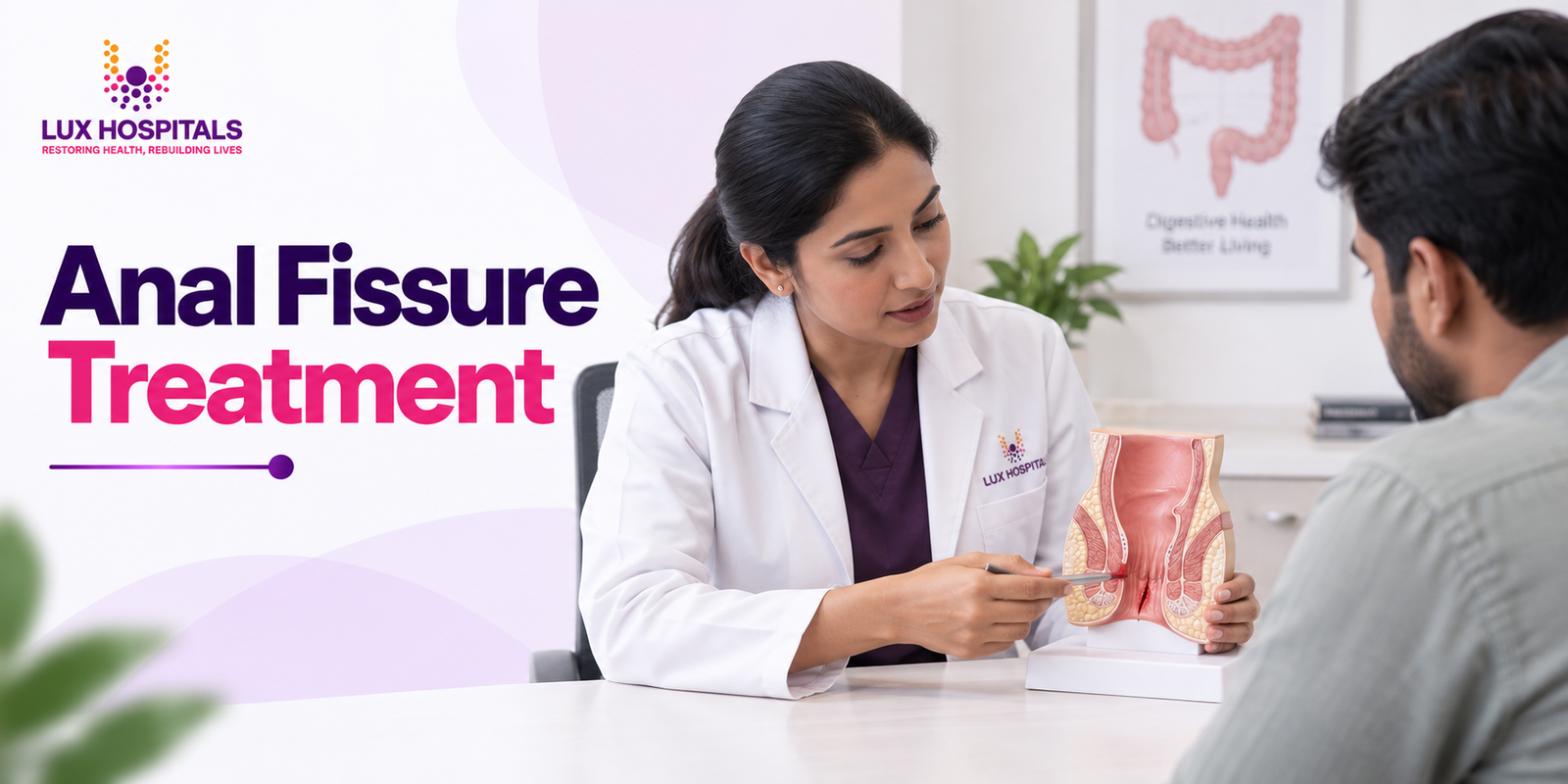
An anal fissure is a small tear in the thin lining of the anal canal. It commonly develops after passing a hard or large stool, constipation or repeated straining. The tear can expose sensitive tissue and trigger tightening of the internal anal sphincter, the ring-shaped muscle that helps control bowel movements. This muscle spasm can increase pain and may make healing more difficult. A typical fissure may cause sharp pain during bowel movements, followed by burning or throbbing discomfort afterwards. Bright-red blood on toilet paper or the outside of the stool may also occur.
Why Can Pain Continue After Passing Stool?
Pain may continue because the fissure remains irritated or the anal sphincter stays in spasm after a bowel movement. Passing another hard stool before the tear heals can also reopen the injury. Using an ointment does not always address every factor affecting healing. Your doctor may need to assess stool consistency, bowel habits, symptom duration, and whether the diagnosis is actually a fissure.
What Causes an Anal Fissure?
Constipation and hard stools commonly trigger fissures, but several factors can cause them. These include:
- Passing large or hard stools
- Straining during bowel movements
- Recurrent diarrhoea
- Frequent loose stools
- Pregnancy or childbirth
- Local injury or trauma
- Inflammatory bowel diseases such as Crohn’s disease
Some less common causes require medical evaluation, especially if a fissure appears in an unusual location or doesn’t behave like a typical fissure.
What Symptoms Should You Watch For?
The most characteristic symptom is sharp pain while passing stool followed by burning pain afterwards. Bright-red bleeding can occur, but it’s usually small.
Other symptoms can include:
- Pain lasting several hours after bowel movements
- Burning or throbbing discomfort
- A visible crack or tear
- Irritation or itching
- A small skin tag near a longstanding fissure
- Fear of passing stool because of anticipated pain
A fissure is not always the source of pain or bleeding. Persistent symptoms should be evaluated because piles, infections, inflammatory bowel disorders, and other colorectal issues may be the cause.
When Should You Discuss Anal Fissure Treatment With a Doctor?
You should discuss anal fissure treatment when symptoms are not improving with appropriate initial care or keep returning.
Consider seeing a doctor if:
- Pain continues after completing or using prescribed ointment as directed.
- Pain repeatedly occurs after bowel movements.
- Bright-red bleeding keeps returning.
- You are avoiding bowel movements because of pain.
- Constipation or hard stools continue despite dietary changes.
- Symptoms have lasted for several weeks.
- The problem repeatedly comes back after temporary improvement.
The NHS advises seeking medical review if symptoms worsen or don’t improve after self-care.
What Are the Red Flags?
Seek prompt medical attention for severe or rapidly worsening pain, fever, chills, significant swelling, pus-like discharge, heavy or persistent bleeding, black or dark-red stools, dizziness or weakness. Heavy bleeding or severe pain with fever can indicate a condition requiring urgent assessment rather than routine fissure care.
How Is an Anal Fissure Diagnosed at a Hospital?
An anal fissure is usually diagnosed through a medical history and gentle examination of the affected area. In many patients, the tear can be seen during inspection.
At Lux Hospitals, the proctology team can assess:
- How long symptoms have been present
- Whether pain occurs during or after bowel movements
- Stool consistency and constipation
- Bleeding pattern
- Previous ointments or medicines used
- Whether the fissure appears acute or chronic
- Whether another condition could explain the symptoms
A digital examination or anoscopy may be considered when appropriate. Further investigations such as sigmoidoscopy or colonoscopy may be recommended in selected patients when symptoms or medical history suggest another underlying problem.
What Are the Anal Fissure Treatment Options?
Anal fissure treatment usually begins with measures that reduce trauma, soften stools and support healing. Consider procedures when symptoms persist, or the fissure becomes chronic.
1. Fibre, Fluids and Bowel-Habit Changes
When stools stay hard, the healing rip is stressed. Doctors usually recommend drinking plenty of water, avoiding unnecessary straining, and gradually increasing dietary fibre. The Mayo Clinic states that although individual needs vary, adults may benefit from 25–35 grams of fibre per day. High-fibre foods in Indian diets include fruits, vegetables, whole grains, legumes, and appropriate seeds. A doctor can suggest a stool-softening medication or a fibre supplement if constipation persists.
2. Warm Sitz Baths
A warm-water sitz bath can ease discomfort and relax the sphincter. Soak in warm water for 10 to 20 minutes at 10 °C to 20 °C, especially after bowel movements. Prescription Ointments and Medicines: Depending on the diagnosis, a doctor may prescribe medicines that help relax the sphincter and promote healing. Options can include topical nitroglycerin or calcium-channel blocker medicines such as diltiazem or nifedipine. Local anaesthetic medicines may help with short-term pain relief. A doctor should decide the correct medicine and duration. Do not keep applying an ointment indefinitely without reassessment.
4. Botox Injection
Botulinum toxin, commonly called Botox, can temporarily relax the internal sphincter. Consider it when conservative treatment has not produced adequate healing.
5. Surgery for Persistent or Chronic Fissures
Surgery may be discussed when a chronic fissure does not respond adequately to medical treatment or symptoms remain significant. One established procedure is lateral internal sphincterotomy (LIS). It involves dividing a small portion of the internal sphincter to reduce excessive muscle tension and allow the fissure to heal. Surgery is effective for selected chronic fissures, but it also has potential risks, including changes in bowel control, so patient selection is important. Lux Hospitals also lists laser-based fissure procedures among its proctology treatment options. Clinicians should choose the appropriate technique after an examination, not based solely on whether it is described as minimally invasive.
How Long Does Recovery Take?
Whether medication improves the fissure or a procedure is required affects recovery time. With the right conservative care, acute fissures can heal in a few weeks, while persistent fissures may take longer. A fissure is usually regarded as chronic if it lasts more than eight weeks.
| Initial care | Stool-softening measures, fluids, fibre and prescribed medicines |
| Early improvement | Less pain and easier bowel movements |
| Persistent symptoms | Specialist reassessment and possible treatment adjustment |
| Procedure required | Recovery varies according to the procedure and individual healing |
| Follow-up | Monitoring bowel habits and preventing constipation help reduce recurrence |
Do not judge recovery only by how quickly the pain disappears. The underlying tear also needs time to heal.
What Is the Approximate Cost of Anal Fissure Treatment in Hyderabad?
The cost depends on whether treatment involves consultation and medicines, injections, or surgery. Published Hyderabad estimates for fissure surgery vary widely; some current sources report approximate costs, but individual procedures may fall outside this range. These figures are indicative market estimates, not a Lux Hospitals quotation. The final amount may depend on the procedure selected, surgeon and anaesthesia charges, investigations, room category, medicines, insurance coverage and the complexity of the condition. Patients should request an individual estimate after examination rather than choosing treatment based on cost alone.
Frequently Asked Questions
Yes. Many acute fissures improve with fibre, adequate fluids, softer stools, warm baths and appropriate medicines. Surgery is generally considered when a fissure becomes persistent or doesn't respond well to medical treatment.
Persistent pain can mean the fissure has not healed or the sphincter muscle remains in spasm. Continued constipation, hard stools or repeated straining can also delay healing, so a doctor may need to reassess the treatment plan.
Seek medical advice if symptoms worsen or don't improve with initial self-care. Recurrent pain, bleeding or symptoms lasting several weeks are good reasons to arrange a specialist assessment rather than continuing self-treatment indefinitely.
No. Some chronic fissures respond to prescription medicines or other non-surgical options, while surgery may be considered when appropriate medical treatment fails, or symptoms remain significant.
Choose foods that help keep stools soft and regular. Fruits, vegetables, whole grains, legumes and adequate fluids can support bowel regularity, while your doctor may recommend a fibre supplement if dietary fibre is insufficient.
Yes. Recurrence can occur, particularly when constipation, hard stools or straining return. Maintaining soft stools, adequate hydration and healthy bowel habits can help reduce the risk of another fissure.