












Bleeding Piles Treatment: Why Does Bleeding Keep Coming Back?
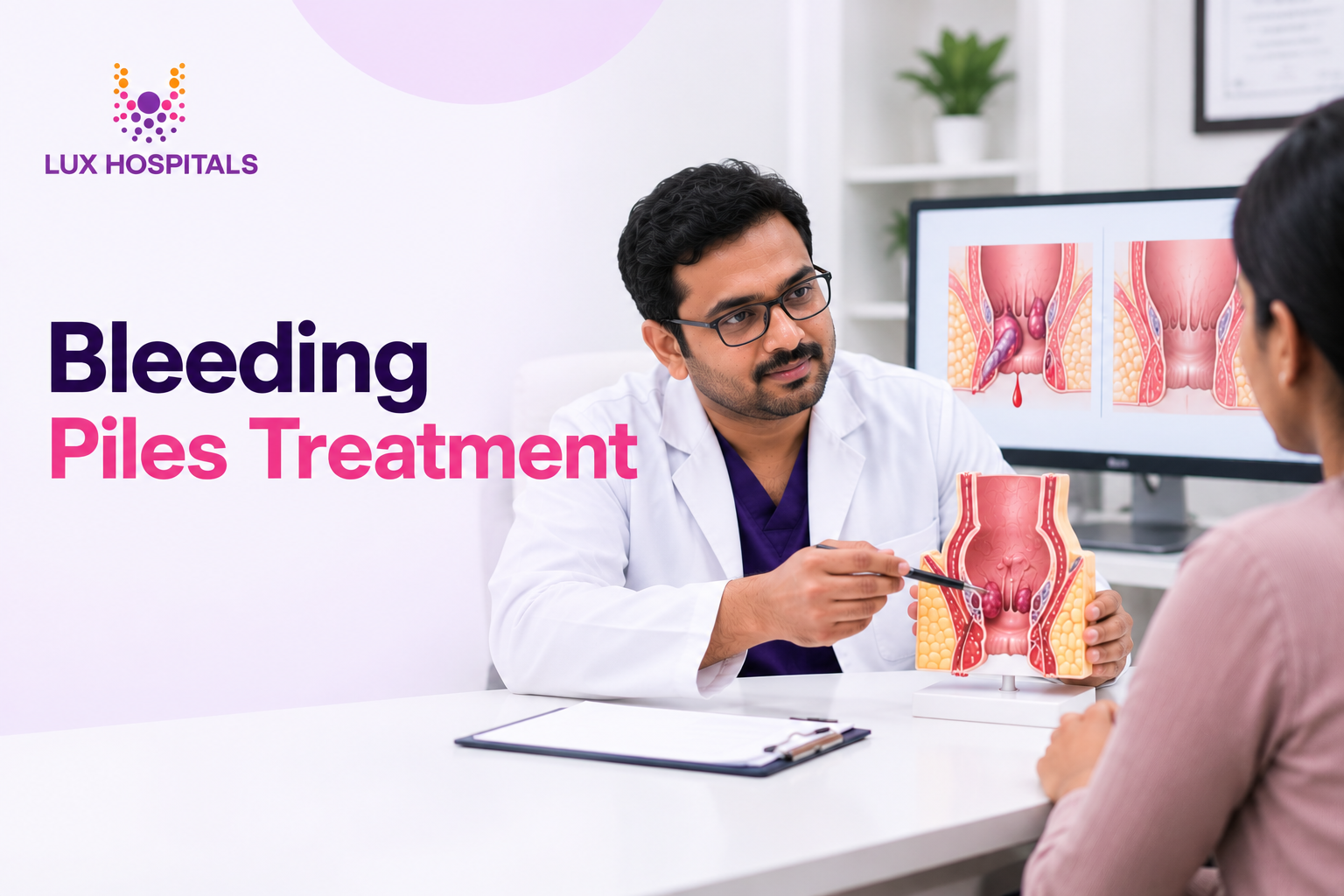
Bleeding during bowel movements is one of the common symptoms of piles, but when it keeps returning despite medicines, it should not simply be ignored. Temporary relief from creams, tablets, or other medicines does not always address the reason behind recurrent bleeding. The severity and type of haemorrhoids, bowel habits, constipation, straining, and other possible causes all need to be considered. Choosing the right Bleeding piles treatment starts with finding out why the bleeding keeps coming back. Some people improve with dietary and lifestyle changes, while others may need an office-based procedure or surgery when symptoms persist. At Lux Hospitals, a specialist can evaluate your symptoms and recommend a treatment approach based on your condition rather than relying only on repeated medicines.
Why Does Piles Bleeding Keep Coming Back?
Piles form in the lower area. Symptoms can be made worse by constipation, prolonged toilet sitting, frequent straining, and unpredictable bowel habits. If medicines provide relief but the bleeding returns, the underlying haemorrhoid may still be present. In such cases, repeating the same treatment without reassessment may not provide lasting relief.
Common reasons for recurring bleeding include:
- Persistent constipation or hard stools
- Repeated straining during bowel movements
- Spending too much time on the toilet
- Inadequate dietary fibre
- Internal haemorrhoids that continue to bleed
- Haemorrhoids that have progressed in severity
- Incomplete response to previous treatment
The right treatment for bleeding piles depends on identifying the cause and severity of the problem.

What Are the Common Symptoms of Piles?
Piles can cause different symptoms depending on their type and severity. Recognising these signs early can help you seek appropriate Bleeding piles treatment before symptoms become persistent.
1. Start With a Proper Evaluation
When bleeding keeps recurring, the first step isn’t necessarily surgery. A physician should evaluate your symptoms to see whether piles are causing the bleeding. A specialist may ask about your bleeding frequency, bowel movements, constipation, pain, swelling, tissue coming out during bowel movements, past treatments, and current medications.
Why Diagnosis Matters
Although bleeding can be caused by haemorrhoids, similar Other gastrointestinal disorders may potentially be the source of symptoms. Because of this, don’t make snap judgments; testing can help determine whether you have external or internal haemorrhoids or another problem that needs care. This forms the basis for the verdict.
2. Improve Bowel Habits and Daily Lifestyle
Improving bowel habits is often the first step in treatment for many individuals. While lifestyle modifications can help lower the pressure that causes recurring haemorrhoid symptoms, medications may only briefly alleviate symptoms.
Important Changes to Make
- Increase fibre through vegetables, fruits, whole grains, and other fibre-rich foods.
- Consider a fibre supplement if your healthcare professional recommends it.
- Drink adequate fluids throughout the day.
- Avoid excessive straining during bowel movements.
- Avoid sitting on the toilet for long periods.
- Stay physically active.
- Address constipation instead of repeatedly delaying bowel movements.
Even if you need surgery, these adjustments matter because good bowel habits can support healing and reduce symptom triggers.
3. Consider Office-Based Treatment When Medicines Aren’t Enough
If bleeding continues despite appropriate conservative treatment, your doctor may recommend an office-based procedure. The decision is based on the haemorrhoids’ location, size, grade, and symptoms.
Rubber Band Ligation
Rubber band ligation is commonly used for suitable internal haemorrhoids. A small band is placed around the base of the haemorrhoidal tissue, reducing its blood supply so the tissue gradually shrinks and falls away. Other options may include sclerotherapy or coagulation techniques in selected cases. Your doctor will determine the appropriate bleeding piles treatment after an examination.
4. Know When Surgery May Be Recommended
Surgery is not always necessary for patients with bleeding piles. However, if medications or office procedures don’t relieve persistent or severe symptoms, a more definitive approach may be needed. Surgery may be considered for some patients with large haemorrhoids, significant prolapse, combined internal and external disease, or symptoms that continue despite other treatments.
Hemorrhoidectomy
A haemorrhoidectomy involves removing problematic haemorrhoidal tissue. It is generally considered for selected patients with more advanced or recurring haemorrhoids. The appropriate treatment for bleeding piles should always be based on an individual assessment. Your surgeon can explain the expected benefits, recovery, possible risks, and alternatives before recommending surgery.
Can Piles Bleeding Be Prevented From Returning?
No single method guarantees piles will never return, but you can reduce contributing factors by maintaining healthy bowel habits.
Focus on:
- Eating enough fibre every day
- Drinking adequate water
- Avoiding straining
- Limiting toilet time
- Treating constipation early
- Following your doctor’s treatment plan
- Attending follow-up appointments when advised
Even after successful Bleeding piles treatment, maintaining these habits can help support long-term bowel health.
When Should You See a Doctor for Bleeding?
You should not repeatedly self-treat bleeding without medical evaluation, especially when it keeps returning.
Consult Surgeon if:
- Bleeding is frequent or increasing.
- Bleeding occurs despite treatment.
- You notice a change in bowel habits.
- You have significant pain or swelling.
- Tissue repeatedly protrudes during bowel movements.
- You feel weak, dizzy, or unusually tired.
- You notice unexplained weight loss or other concerning symptoms.
How Lux Hospitals Can Help With Recurrent Piles
Repeated bleeding can be frustrating, particularly when medicines only provide temporary relief. At Lux Hospitals, patients can discuss recurring symptoms with specialists and undergo an appropriate evaluation before deciding on treatment. Depending on the condition, the Bleeding piles treatment plan may involve lifestyle management, medication, an office-based procedure, or surgery. The goal isn’t just to temporarily stop the bleeding. The main priorities should be understanding the cause, treating the underlying haemorrhoid issue, and helping you control bowel habits that could lead to recurrences.
Conclusion
When piles bleeding keeps returning despite medicines, repeatedly taking the same treatment may not address the underlying problem. A proper assessment can determine whether constipation, bowel habits, persistent internal haemorrhoids, or another condition is contributing to the recurring symptoms. Effective Bleeding piles treatment can range from dietary and lifestyle changes to office-based procedures and, when necessary, surgery. If recurring bleeding is affecting your comfort or daily routine, consult the specialists at Lux Hospitals to understand your treatment options and take the next step toward better bowel health.
Frequently Asked Questions
The best treatment for bleeding piles depends on the grade of haemorrhoids, severity of bleeding, symptoms, and response to previous treatment, so no single option suits everyone. Mild cases may improve with fibre, fluids, bowel-habit changes and medicines, while persistent internal haemorrhoids may require procedures such as rubber band ligation. More advanced or recurring cases may require surgery, which should be recommended only after a proper examination and discussion of alternatives.
Medicines may alleviate symptoms briefly, but they may not eliminate the underlying hemorrhoidal tissue or the bowel habits causing to recurring irritation and bleeding. Constipation, hard stools, straining, prolonged toilet sitting, and persistent internal haemorrhoids can continue to trigger symptoms even after medicines provide temporary relief.
Yes, a lot of folks can be treated without surgery, especially if they have moderate symptoms or internal haemorrhoids that can be treated in an office. Depending on the disease, treatment may involve dietary and lifestyle adjustments, fiber therapy, rubber band ligation, sclerotherapy, or coagulation procedures.
Rubber band ligation is a commonly used treatment for suitable internal haemorrhoids and works by cutting off the blood supply to the targeted haemorrhoidal tissue. It is particularly used for grade I and II internal haemorrhoids and selected grade III cases, and current ASCRS guidance identifies banding as the most effective office-based treatment. Your doctor can determine whether banding is suitable based on the location, grade, bleeding pattern, and overall condition of your haemorrhoids.
You should consult a healthcare professional when bleeding keeps returning, does not improve with treatment, becomes heavier, or occurs with significant pain or other unusual symptoms. Although piles can cause bleeding, other conditions can produce similar symptoms, so persistent bleeding should not automatically be assumed to be caused by haemorrhoids. A proper evaluation can help identify the cause and guide the most suitable Bleeding piles treatment.
Lux Hospitals provides specialist evaluation and treatment options for patients experiencing recurring piles symptoms, including bleeding that does not settle with medicines. The specialist can assess the severity of the condition and discuss suitable options, which may include conservative care, office-based procedures, or surgery when clinically appropriate. A consultation can help you understand which bleeding piles treatment approach suits your individual symptoms.
The right treatment depends on your symptoms, haemorrhoid grade, bowel habits, previous treatment response, and overall health rather than simply how often you experience bleeding. At Lux Hospitals, a specialist evaluation can help determine whether you need continued conservative care, an office-based procedure, or surgery. Discussing your complete treatment history can also help your doctor understand why previous Bleeding piles treatment has provided only temporary relief.