Dr. Samhitha Reddy
Consultant Proctologist & Laparoscopic Surgeon
MBBS, MS, FMAS, FISCP, DMAS
- 8 Yrs
- ASCRS Member
By LuxHospitals 11 November 2026 4 min read
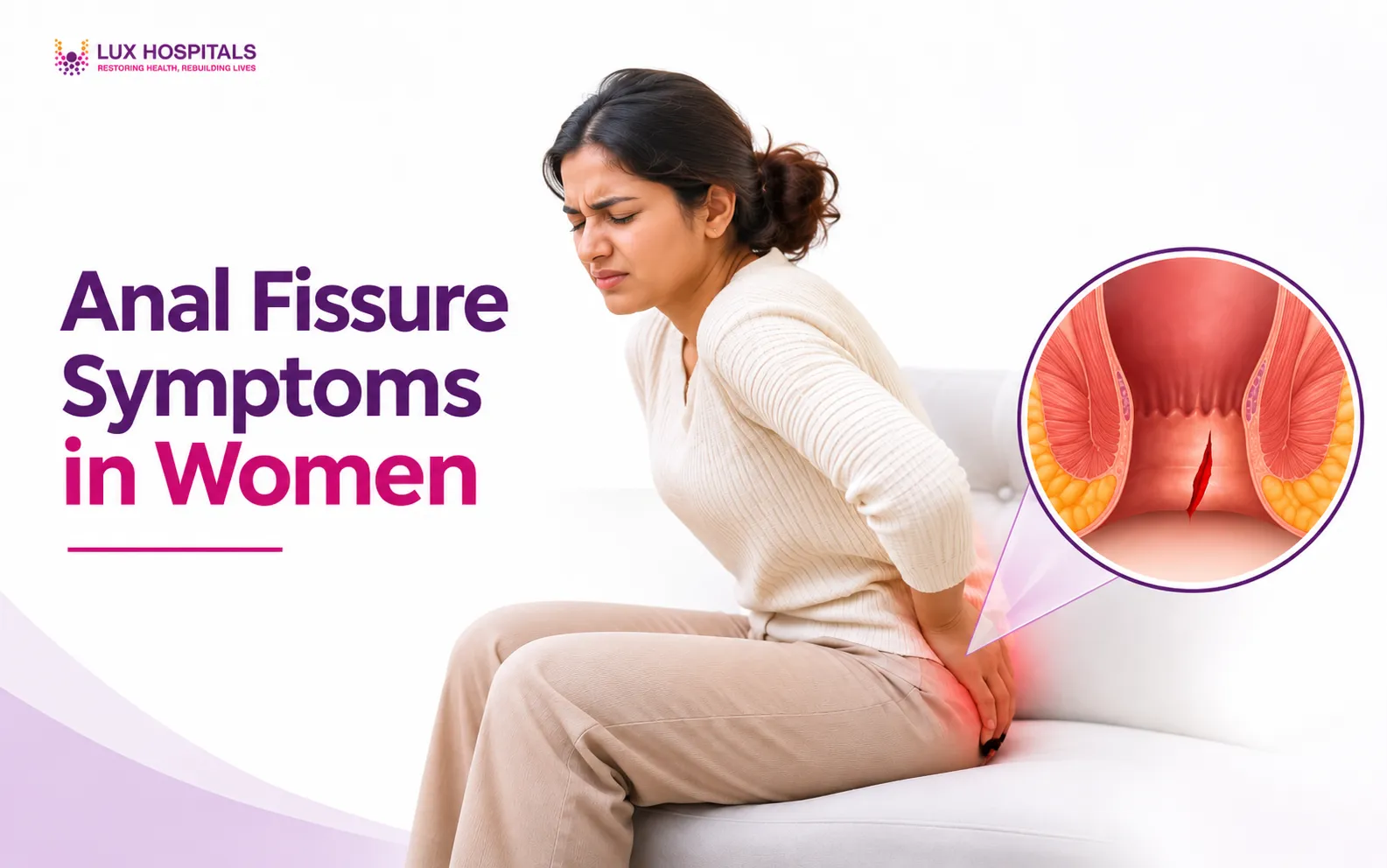
What Is an Anal Fissure? An anal fissure is a small tear in the lining of the anal canal. It can cause sharp or burning pain during bowel movements and may produce a small amount of bright-red bleeding. The existing Lux article highlights constipation, childbirth and changes in bowel habits as factors that may contribute to anal fissures in women. Although anal fissures can occur in anyone, women may experience additional considerations related to pregnancy, childbirth and changes in bowel habits.
Anal fissures in women are commonly caused by constipation, passing hard stools, excessive straining during bowel movements, or frequent diarrhoea. Pregnancy and childbirth can also increase pressure on the anal area, leading to small tears in the anal lining. Below are a few reasons that may cause anal fissures
The delicate lining may stretch and be damaged by passing large or hard stools, resulting in a fissure.
Repeated straining can increase pressure and may contribute to a tear.
Bowel habits may be impacted by hormonal changes during pregnancy, and constipation and discomfort may be exacerbated by increased pelvic pressure.
Women may experience colorectal or pelvic-floor symptoms after childbirth. If pain or bleeding develops after delivery, it should not automatically be assumed to be a normal part of recovery.
Frequent loose stools can also irritate the area and contribute to a fissure.
Common anal fissure symptoms in women include sharp pain during bowel movements, burning sensations, itching, and bright red blood in the stool or on toilet paper. Below are a few common symptoms
Pain while passing stool is one of the most characteristic symptoms.
The pain may feel:
Pain may continue after the bowel movement rather than stopping immediately.
A small amount of fresh blood may appear on toilet paper or on the outside of the stool.
However, not every episode of bleeding is caused by an anal fissure.
The surrounding skin may feel irritated or itchy, particularly after bowel movements.
Some people may put off bowel movements out of fear of pain. Constipation may get worse as a result, leading to a cycle of tougher stools and more discomfort.
Pain may cause the internal anal sphincter to constrict, which can exacerbate discomfort and hinder healing.
Repeated pain or bleeding may indicate the fissure hasn't healed or has become chronic.
Postpartum women may experience changes in bowel habits, constipation or pelvic-floor symptoms.
Seek medical advice if you experience:
Women should not feel embarrassed about discussing these symptoms. Early evaluation can help distinguish a fissure from piles or other conditions.
Pregnant women should not self-medicate for pain or constipation without medical advice. A doctor can recommend measures that are appropriate for the stage of pregnancy and the individual's medical history.
No. An anal fissure is a rip in the lining, while piles are swollen blood vessels. Although examination results and discomfort patterns may differ, both can cause bleeding. Because many illnesses can cause similar symptoms, persistent bleeding or discomfort should be evaluated.
Treatment depends on whether the fissure is acute or chronic and on the patient's symptoms.
Treatment may include:
Lux Hospitals provides specialist anal fissure care through its Proctology department.
Seek medical attention if you have:
Helpful bowel-health measures may include:
Anal fissure symptoms in women can be uncomfortable, painful and difficult to discuss, but they should not be ignored when they persist. Sharp pain during bowel movements, burning afterwards, and bright-red bleeding are common features, while constipation and repeated straining can contribute to the problem. Pregnancy and the postpartum period can cause further pelvic-floor and intestinal changes, so it's important to receive the proper medical advice rather than assuming that pain or bleeding is a normal part of healing. While many fissures can be treated conservatively, chronic or persistent situations may need expert care. A proctology consultation can confirm the diagnosis and determine the next steps if pain, bleeding, or trouble passing stool persist.
Dietary changes, food intolerance, infections and digestive or absorption problems can affect stool odour. Occasional changes are common, but persistent changes with other symptoms should be evaluated.
Yes. Certain foods can temporarily change your stool's smell. If the change persists despite returning to your usual diet, discuss it with a healthcare professional.
They can occur with gastrointestinal infections, especially when accompanied by diarrhoea, abdominal cramps or fever. Testing may be required to identify the cause.
The odour itself is usually less important than persistent changes accompanied by blood, black stools, diarrhoea, weight loss, severe pain or other symptoms.
Yes. Lux Hospitals' Proctology department can evaluate bowel-related symptoms and, when needed, refer patients to the appropriate specialist.
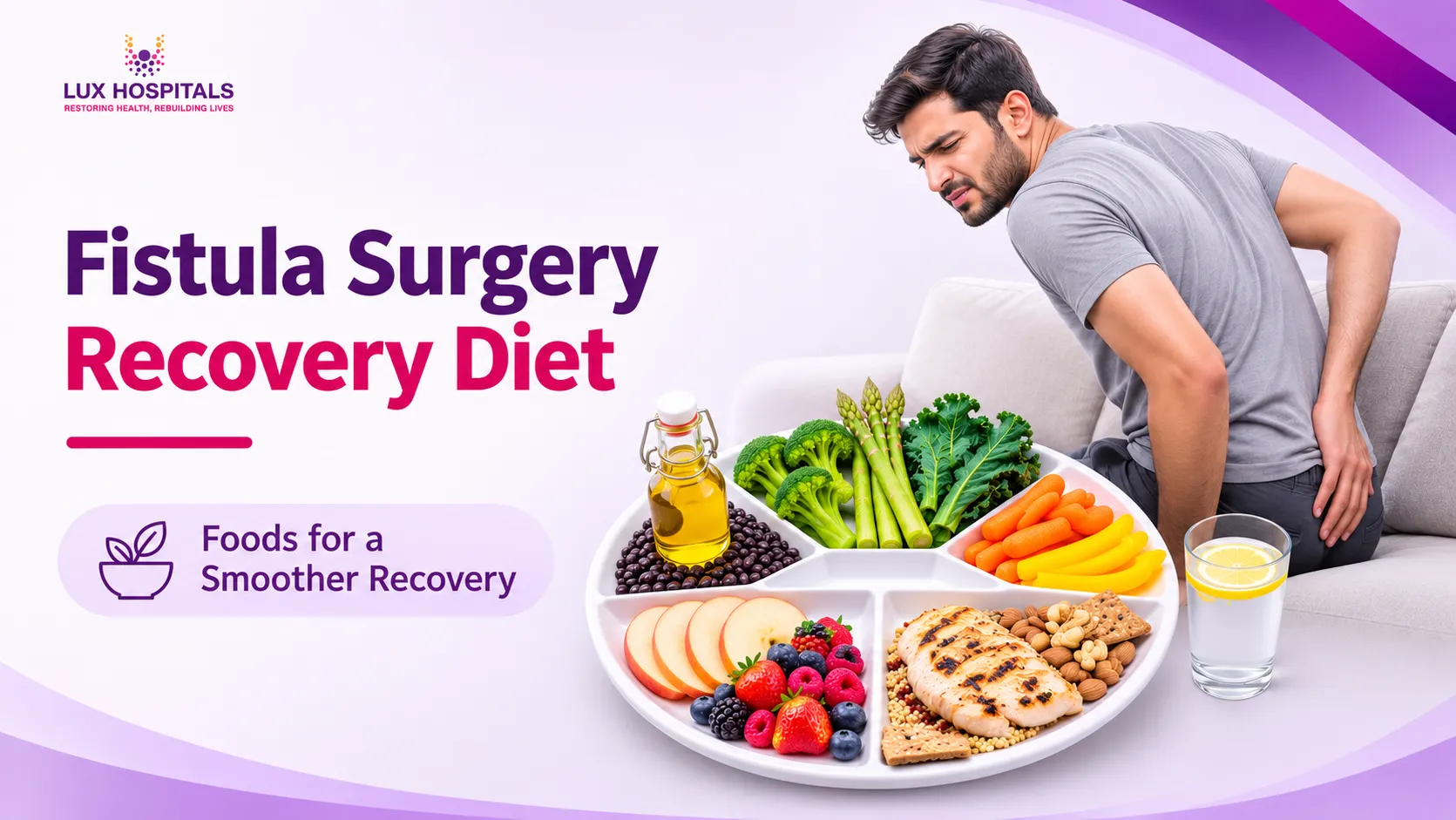
After fistula surgery, your body needs nutrients to support wound healing. At the same time, avoiding constipation and excessive straining can help make bowel movements more comfortable. A suitable fistula surgery diet should provide fibre, fluids, protein, and other nutrients, adjusted according to your doctor's instructions.
9 November 2026
If a piles lump comes out with every bowel movement, it may indicate prolapsing haemorrhoids. The right prolapsed piles treatment depends on the severity of the prolapse, bleeding, pain, bowel habits and whether the lump goes back on its own. A specialist examination can help identify the right treatment.
14 October 2026
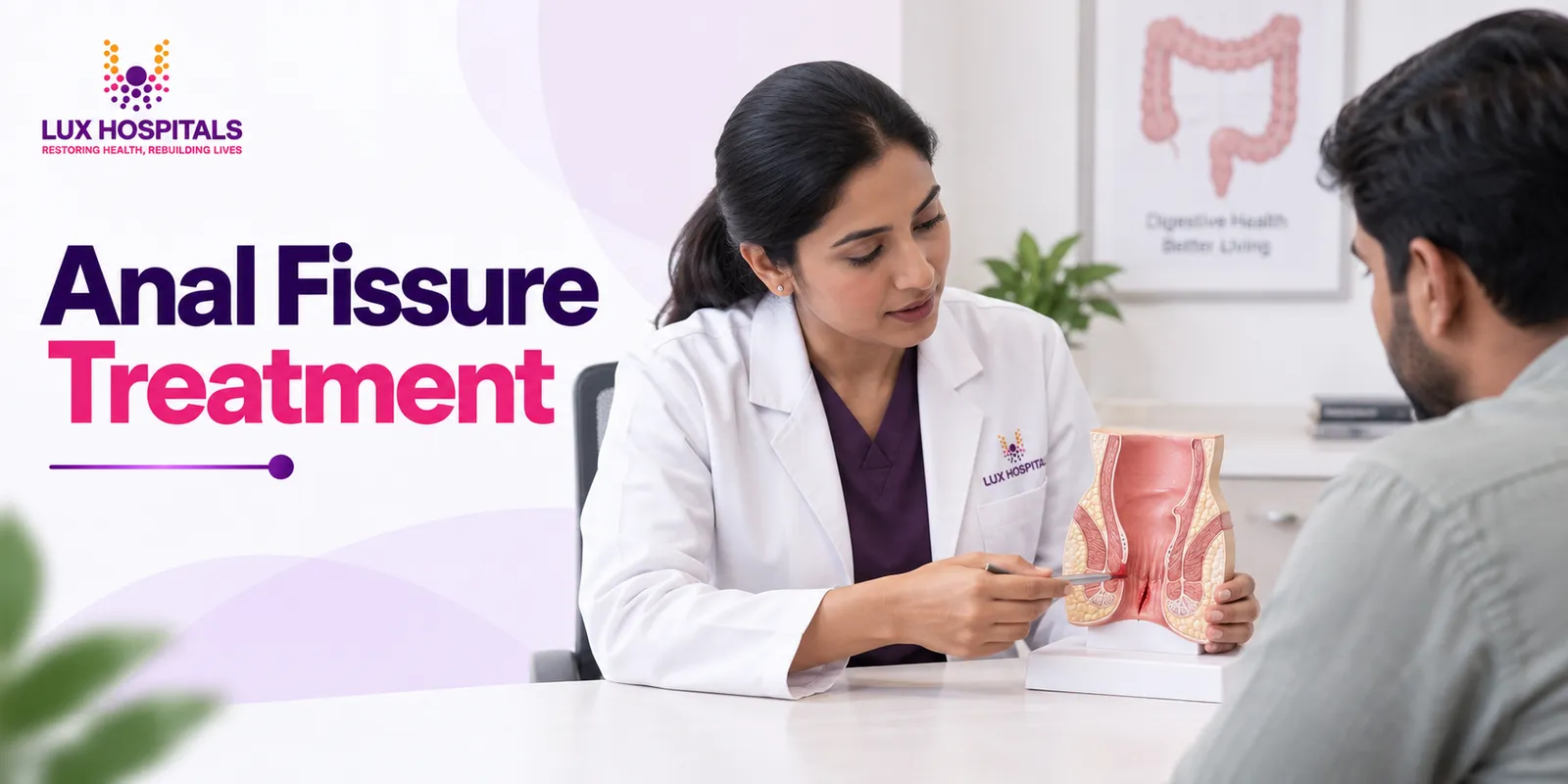
Anal fissure treatment should be discussed with a doctor when pain continues despite prescribed ointment, especially if pain lasts after bowel movements, bleeding keeps returning, or symptoms interfere with daily life.
8 October 2026
Send your reports across and a senior surgeon will review them, explain the options and tell you honestly whether surgery is the right call.
Plot No.116, Lumbini Avenue, HITEC CITY, Near IKEA, Hyderabad – 500032