
Dr. Samhitha Reddy
Consultant Proctologist & Laparoscopic Surgeon
MBBS, MS, FMAS, FISCP, DMAS
- 8 Yrs
- ASCRS Member
Obstructive Defecation Syndrome is constipation of a very particular kind: the urge is there, the stool is there, and nothing comes out. Patients strain for long periods, and many end up pressing on the perineum or using a finger to help.
It is frequently treated as ordinary constipation, which is why so many people arrive here having taken laxatives for years without benefit. Our specialists at Lux Hospitals, HITEC CITY investigate the mechanism properly and treat the obstruction itself, with retraining where the pelvic floor is uncoordinated, and with surgery where there is a structural cause.
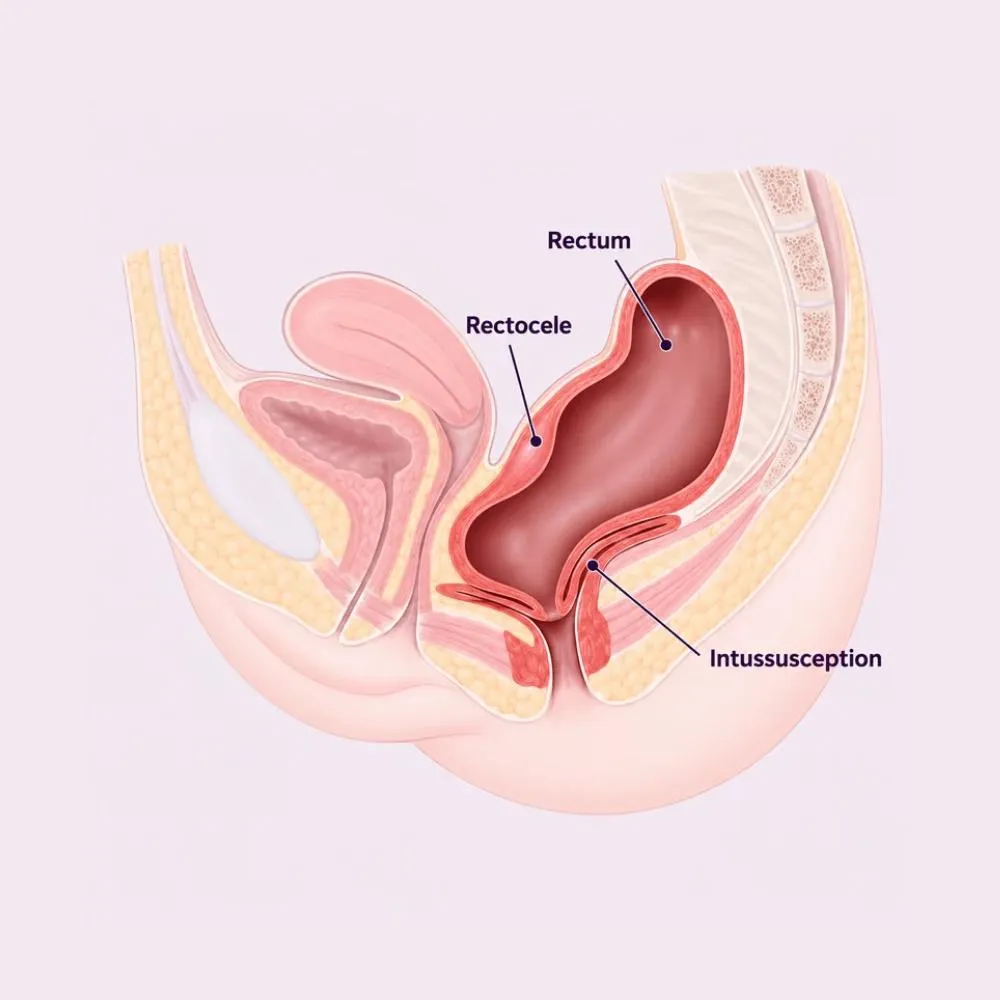
Obstructive Defecation Syndrome is a form of chronic constipation in which patients have difficulty passing stool despite feeling the urge to go. The colon is delivering stool to the rectum perfectly well: the problem is entirely at the outlet.
There are two broad mechanisms, and telling them apart decides the treatment. Functional ODS, also called dyssynergic defecation, is a coordination failure: the pelvic floor and anal sphincter contract when they should relax, so pushing harder only closes the exit more tightly. Structural ODS is a mechanical problem: a rectocele, an internal rectal prolapse or an intussusception physically obstructing the passage.
This is why ODS responds so poorly to ordinary constipation treatment. Laxatives soften stool and speed transit, neither of which helps when the stool is already soft, already in the rectum, and simply cannot get out.
ODS results from either a coordination failure or a structural obstruction, and in a good number of patients, from both at once.
The commonest cause. The pelvic floor and sphincter contract instead of relaxing during a push, so straining harder actively closes the outlet.
A bulge of the rectal wall into the vagina that traps stool in a pocket, which is why pressing on the perineum or vagina helps empty it.
The rectum telescopes into itself during straining, forming a plug that physically blocks the outlet.
The rectum slips from its normal position, obstructing passage and stretching the anal canal open.
Small bowel descending into the pelvis compresses the rectum from outside during a push.
Nerve damage from diabetes, multiple sclerosis, spinal injury or Parkinson’s disrupts the coordination that emptying depends on.
Anxiety causes pelvic muscle tension, and in some patients, including those with obsessive-compulsive traits, bowel habits themselves become part of the problem.
Both can weaken pelvic support and damage the nerves that coordinate the pelvic floor, producing either mechanism.
Chronic straining is both cause and consequence here. It creates the rectocele and the intussusception that then obstruct further, which is why breaking the cycle early matters.
The hallmark is effort without result. Someone with ODS is not going infrequently because they lack the urge: they are going often and achieving very little.
Core symptoms
Associated symptoms
Needing to use a finger to help stool out is the single most telling symptom, and the one people are least likely to volunteer. It points almost directly to ODS rather than ordinary constipation, so please do mention it.
ODS cannot be diagnosed on history alone, because functional and structural causes present identically. Imaging the act of defecation is what separates them.
A structured ODS score covering straining time, incomplete evacuation, manual assistance and enema use, giving a baseline to measure treatment against.
Rectal examination assessing whether the pelvic floor relaxes or paradoxically tightens on bearing down, and feeling for a rectocele.
Measures pressures objectively during rest, squeeze and push. It is the test that confirms dyssynergia: the pattern of pushing against a closing sphincter.
X-ray or MRI imaging taken while you actually empty the bowel. The single most useful investigation, showing rectocele, intussusception and enterocele in action.
Distinguishes pure outlet obstruction from slow transit constipation, or identifies where both are present and both need treating.
To exclude a stricture, tumour or inflammatory cause, particularly in new symptoms after fifty or where there is bleeding.
The proctogram is what changes management most often. It regularly reveals a rectocele or an internal prolapse in someone who has been treated for years as though they simply needed more fibre.
Treatment is directed at the mechanism the tests identified. Behavioural and physiotherapy approaches come first for nearly everyone, and surgery is considered only where there is a structural cause that conservative treatment cannot address.
The first-line treatment for functional ODS. Real-time feedback teaches you to coordinate abdominal push with pelvic floor relaxation, with success rates around seventy per cent.
Supervised retraining of the pelvic muscles, including relaxation techniques for muscles that are overactive rather than weak.
A consistent daily time, correct posture with a footstool, limited toilet time, and no phone: small changes with a genuinely large effect.
Adequate fibre and fluid to keep stool soft and formed. Necessary groundwork, though rarely sufficient alone in ODS.
Rectal irrigation or suppositories to achieve predictable emptying while retraining takes effect, and as long-term management for some patients.
CBT and relaxation techniques where anxiety or compulsive bowel habits are contributing, which is more common than generally acknowledged.
Stapled Transanal Rectal Resection removes the redundant rectal tissue causing intussusception and rectocele, through the anus with no abdominal incision.
Keyhole repair lifting and fixing the rectum with mesh. Corrects internal prolapse and rectocele together, with a low risk of worsening constipation.
Direct repair of the weakened wall between rectum and vagina, for an isolated rectocele without other pathology.
Botulinum toxin relaxes an overactive puborectalis or sphincter for around three months, and can break the spasm cycle while retraining takes hold.
Surgery is considered only where non-surgical treatment has genuinely failed and imaging shows a structural cause. Operating on functional dyssynergia does not help, and can make matters worse, which is precisely why the investigation comes first.
The main operation for structural ODS caused by internal prolapse and rectocele. Done entirely through the anus, with no abdominal incision and no external wound.
Stapled Transanal Rectal Resection
A defecating proctogram confirming the structural cause, manometry, routine bloods, and bowel preparation the evening before.
Spinal or general anaesthetic, in the lithotomy position. A circular anal dilator is placed to hold the canal open.
The redundant rectal tissue is identified and the extent of the intussusception and rectocele confirmed under anaesthesia.
A circular stapler removes the excess tissue from the front wall of the rectum, the part forming the rectocele, and staples the edges together in one action.
The procedure is repeated on the back wall to remove the remaining redundancy, restoring a normal rectal calibre.
The full circumference is inspected and any bleeding points secured. A sound staple line is what prevents the main early complication.
One to two nights in hospital, eating and mobilising the next morning, then home with painkillers, stool softeners and a follow-up date.
Urgency and a frequent need to go are common in the first few weeks, because the rectum is temporarily smaller and more sensitive. It settles over one to three months as the rectum adapts.
ODS is routinely mistaken for ordinary constipation, and the difference is the investigation. Here is why patients trust us:
Proctologists, colorectal surgeons and pelvic floor physiotherapists working together on one plan.
Manometry and defecating proctogram, so treatment addresses the actual mechanism rather than the label.
From the first consultation through to post-treatment follow-up, with one team throughout.
Our hospital is in HITEC CITY, near IKEA: easily reachable from across Hyderabad.
For biofeedback there is nothing to recover from: improvement builds over the course. The timeline below is for the STARR procedure.
Overnight in hospital. Some rectal discomfort and an urge to go, controlled with painkillers. Eating and walking by the next morning.
Home with stool softeners. Urgency and frequent small bowel movements are expected at this stage and are not a complication.
Urgency settles progressively. Desk work resumes from about week two. Straining is avoided completely.
Bowel pattern normalises and the sense of incomplete evacuation improves markedly. Normal activity and exercise resume.
The rectum has adapted fully. Review with repeat symptom scoring to measure the improvement objectively against your baseline.
Straining created the prolapse and the rectocele originally, and it will recreate them after surgery just as effectively.
Five minutes, feet on a low stool, no phone. If nothing happens, get up and come back later.
Keep stool soft and formed for the long term. Take the softeners for as long as advised, not just until you feel better.
Surgery corrects the structure; the coordination still has to be retrained and maintained afterwards.
Fever, significant bleeding, severe rectal pain, or inability to pass urine after the procedure.
Reviews at six weeks and three months. ODS is scored objectively, so improvement is measured rather than guessed at.
Results are best in patients who combine the treatment with lasting changes to bowel habit. The straining is the disease process: stopping it is what makes any treatment hold.
Book a consultation if any of the following apply.
Most patients are treated without surgery, so the cost is dominated by investigation and therapy. These are the ranges our patients fall into.
| Procedure | Estimated Cost |
|---|---|
| Specialist consultation Per visit | ₹800 – ₹1,500 |
| Anorectal manometry Out-patient | ₹6,000 – ₹12,000 |
| Defecating proctogram X-ray or MRI, out-patient | ₹8,000 – ₹18,000 |
| Biofeedback therapy course Four to six out-patient sessions | ₹15,000 – ₹30,000 |
| Botox injection Day care, effect lasts around three months | ₹20,000 – ₹38,000 |
| STARR procedure One to two nights’ stay, stapler included | ₹1,10,000 – ₹1,80,000 |
| Laparoscopic ventral rectopexy Two nights’ stay, mesh included | ₹1,20,000 – ₹1,90,000 |
Dyssynergia is treated with a biofeedback course. A rectocele with intussusception may need an operation. The investigation decides which.
A proctogram plus manometry is standard for ODS, and is what distinguishes it from ordinary constipation.
STARR uses one or two circular staplers and rectopexy uses mesh: both are a significant part of the operative estimate.
A shared ward, a twin-sharing room or a private suite: the largest single swing in most estimates.
We are empanelled with most major insurers, and our team files the pre-authorisation for you.
Every figure above is an indicative range, not a quote. After your consultation you are given a written, fixed-cost estimate, and that is the number you pay, with no additions once treatment begins.
The proctologists and pelvic floor specialists who treat ODS at our HITEC CITY hospital.

Consultant Proctologist & Laparoscopic Surgeon
MBBS, MS, FMAS, FISCP, DMAS
8 years experience

Consultant General & Advanced Laparoscopic Surgeon
MBBS, MS, FMAS
17 years experience
Reviews from patients treated for constipation, ODS and colorectal conditions at Lux Hospitals, Hyderabad.
Written by Dr. Samhitha Reddy on constipation, pelvic floor health and colorectal care.

Dr. Samhitha Reddy


Dr. Samhitha Reddy

Dr. Samhitha Reddy

Dr. Samhitha Reddy

Dr. Samhitha Reddy
Common questions about Obstructive Defecation Syndrome, its treatment, and what care costs at Lux Hospitals.
Still have questions? Call us at 079 6908 4422
Still have questions? Message us on WhatsApp at 079 6908 4444
Proper investigation and mechanism-led treatment for obstructed defecation, with a written estimate before treatment begins.
Plot No.116, Lumbini Avenue, HITEC CITY, Near IKEA, Hyderabad – 500032