



Dr. Samhitha Reddy
Consultant Proctologist & Laparoscopic Surgeon
MBBS, MS, FMAS, FISCP, DMAS
- 8 Yrs
- ASCRS Member
Gallstones are extremely common, and most cause no trouble at all. The ones that do announce themselves unmistakably: a severe, gripping pain under the right ribs that builds after a fatty meal and can last for hours.
Once gallstones start causing symptoms they tend to keep doing so, and each attack carries a risk of something worse. Our laparoscopic surgeons at Lux Hospitals, HITEC CITY remove the gallbladder through four keyhole incisions, with most patients home the same day.
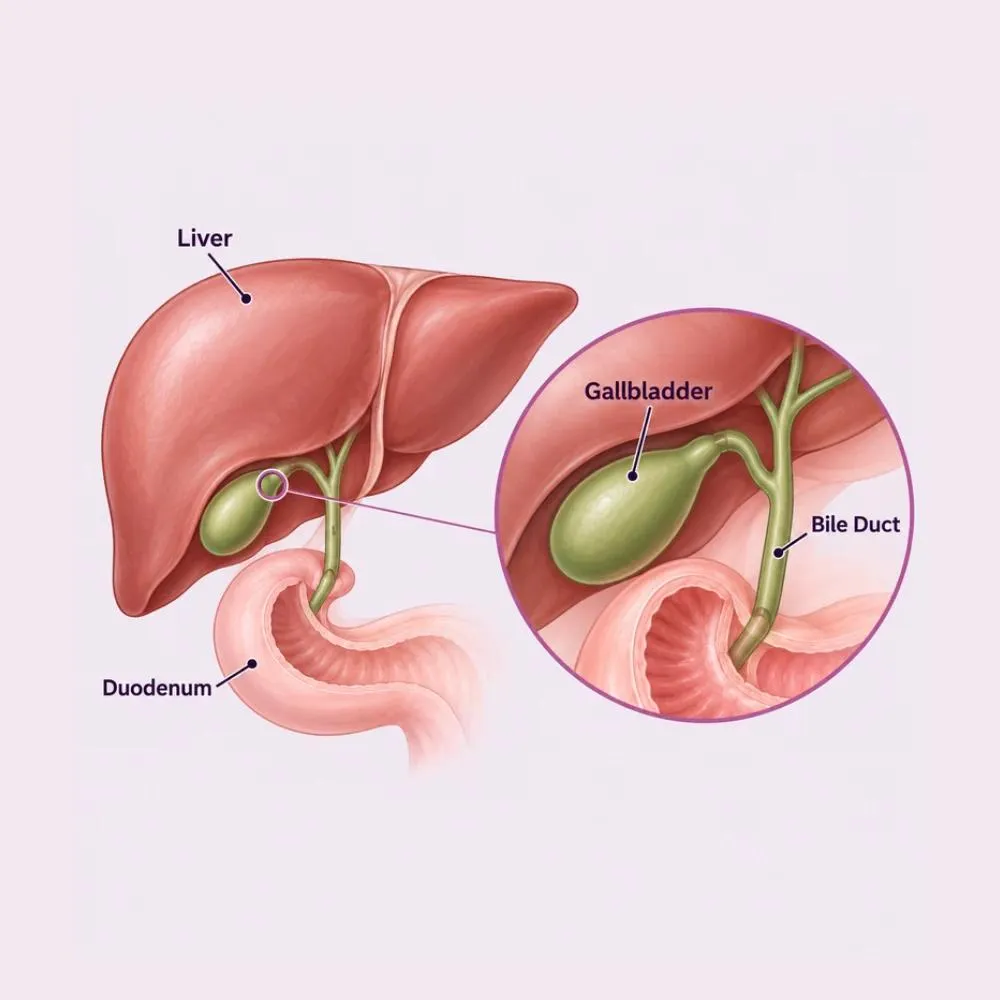
The gallbladder is a small pouch tucked under the liver. It stores bile, the fluid the liver makes to digest fat, and squeezes it into the small intestine when you eat. Gallstones form when the chemicals in that bile fall out of balance and crystallise, usually into cholesterol stones.
Stones sitting quietly in the gallbladder cause nothing at all, and are often found incidentally on a scan done for something else. Trouble starts when a stone blocks the outlet: the gallbladder contracts against the obstruction and produces biliary colic, the characteristic severe pain under the right ribs.
The complications are what make symptomatic gallstones worth treating. A stone that stays lodged causes cholecystitis: an inflamed, infected gallbladder. One that escapes into the bile duct causes jaundice, or pancreatitis if it blocks the pancreatic outlet. Pancreatitis in particular is a serious illness, and it is the reason we do not simply wait and see once symptoms have started.
Gallstones form when bile becomes supersaturated with cholesterol or when the gallbladder empties poorly. Several factors make that more likely.
Oestrogen increases cholesterol in bile and slows gallbladder emptying, which is why gallstones are two to three times commoner in women.
Hormonal changes and reduced gallbladder motility during pregnancy substantially raise the risk of stone formation.
Excess body weight increases cholesterol secretion into bile and is one of the strongest modifiable risk factors.
Crash dieting or weight-loss surgery mobilises cholesterol quickly and leaves the gallbladder underused: a well-recognised trigger.
Diets rich in saturated fat and refined carbohydrate and low in fibre are consistently linked with gallstone formation.
The risk rises steadily after forty, as the composition of bile changes with age.
Gallstones run in families, reflecting inherited differences in how cholesterol is handled and secreted.
Diabetes, high triglycerides and haemolytic disorders all increase the likelihood of stones forming.
Age, sex and genetics cannot be changed. Weight, diet and avoiding crash dieting can, and they are worth attention, particularly if you already have stones being watched.
Biliary colic has a recognisable pattern: severe, episodic, often at night, and frequently after a rich or fatty meal.
Typical symptoms
Signs of a complication
Any of that second list needs assessment the same day. Jaundice means a stone has moved into the bile duct, and that changes the treatment plan significantly.
Ultrasound answers the question in most cases. The rest of the workup is about finding out whether a stone has moved beyond the gallbladder.
The first and usually the only imaging needed. It detects gallstones with over ninety-five per cent accuracy and shows gallbladder wall thickening if it is inflamed.
Tenderness under the right ribs, and Murphy’s sign, a catch in the breath on pressing there, which points to an inflamed gallbladder.
Liver function tests, amylase and inflammatory markers. Raised bilirubin suggests a stone in the bile duct; raised amylase suggests pancreatitis.
A specialised MRI of the bile ducts, used where blood tests or ultrasound suggest a stone has passed into the common bile duct.
A highly sensitive way to detect small duct stones and sludge that MRCP may miss, done under sedation.
Used where complications are suspected (perforation, an abscess, or severe pancreatitis) rather than for the stones themselves.
Finding a stone in the bile duct changes the plan: it usually needs clearing by ERCP before or during the gallbladder operation, and that is worth knowing in advance rather than discovering in theatre.
Stones causing no symptoms are generally left alone. Once symptoms start, removing the gallbladder is the definitive treatment, and dissolving stones while leaving the gallbladder in place simply invites them back.
Stones found incidentally that have never caused symptoms are usually monitored rather than operated on, since most stay silent for life.
Reducing fatty and fried food lessens the frequency of attacks while surgery is arranged. It controls symptoms; it does not remove stones.
Analgesia and antispasmodics for an acute attack, with antibiotics where the gallbladder is infected.
Ursodeoxycholic acid can slowly dissolve small cholesterol stones, but it takes months to years, works in a minority, and stones return once it stops. Reserved for patients unfit for surgery.
An endoscopic procedure that clears stones from the bile duct. It deals with the duct: the gallbladder still needs removing afterwards.
The gold standard. The gallbladder is removed through four small incisions, with faster recovery, minimal scarring, a shorter stay and fewer complications than open surgery.
Performed through one incision hidden in the navel, leaving virtually no visible scar. Suitable for selected straightforward cases.
Keyhole removal with robotic instrumentation, offering enhanced precision in a difficult or scarred gallbladder bed.
Through a single larger incision. Now uncommon, and reserved for severe inflammation, extensive adhesions, or where keyhole surgery cannot be completed safely.
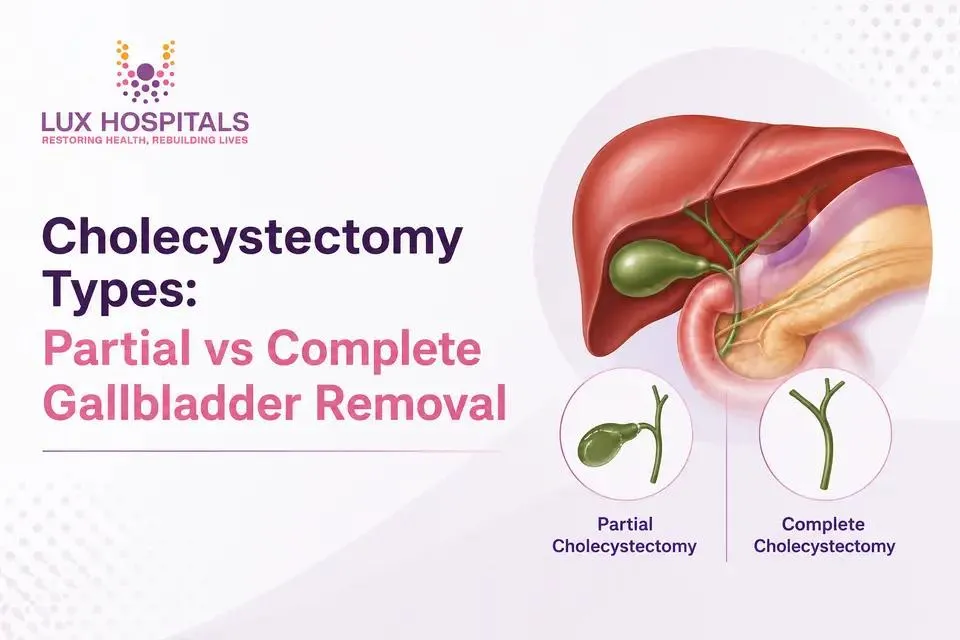
Part of the gallbladder is left in place where severe inflammation makes complete removal hazardous: a deliberate choice that protects the bile duct.
For patients with recurring symptoms and repeated attacks, removing the gallbladder is the most effective long-term solution, and the recurrence rate is nil, because the organ that forms the stones is gone.
The operation the great majority of our gallstone patients have. Around forty-five minutes to an hour, four small incisions, and home the same day in most cases.
Laparoscopic cholecystectomy
Bloods including liver function, an ECG where indicated, an anaesthetic review, and a six-hour fasting window before your slot.
General anaesthetic. The abdomen is inflated with carbon dioxide and four ports of five to ten millimetres are placed: one at the navel, three across the upper abdomen.
The gallbladder is retracted upward to open out the triangle where the cystic duct and artery run. Identifying these two structures with certainty is the single most important step of the operation.
The surgeon dissects until only two structures are seen entering the gallbladder, and nothing is clipped until that view is confirmed. This is what protects the main bile duct.
The cystic duct and artery are secured with clips and divided. An on-table cholangiogram may be performed here if a duct stone is suspected.
The gallbladder is separated from the liver bed with diathermy, placed in a retrieval bag, and drawn out through the navel port.
Four to six hours in day care, a light meal, then home the same evening with painkillers and dietary advice for the first fortnight.
You can live perfectly well without a gallbladder. The liver continues making bile, which then drains straight into the intestine rather than being stored: most people notice no difference beyond a few weeks of adjustment.
Gallbladder surgery is common, and its safety rests almost entirely on the care taken identifying the bile duct. Here is why patients trust us:
Consultants who perform this operation routinely, with high success rates and a low rate of conversion to open surgery.
Laparoscopic and single-incision techniques, with on-table cholangiography available where the duct needs checking.
From the first consultation through to post-treatment follow-up, with one team throughout.
Our hospital is in HITEC CITY, near IKEA: easily reachable from across Hyderabad.
Recovery from keyhole gallbladder surgery is quick. Most patients are back to desk work within a week, with a gradual return to fatty foods over the first month.
Home the same evening in most cases. Some soreness at the port sites and shoulder-tip pain from the gas, which settles within a day or two.
Light diet, low in fat. Walking encouraged from the outset. Most patients are off strong painkillers by day two.
Desk work resumes for most people. Driving from about day five. Dressings come off and the small wounds are checked.
Normal diet reintroduced gradually, fat first in small amounts. Light exercise resumes. First follow-up review.
Full activity including the gym and heavy lifting. Digestion settles into its new pattern and most people eat entirely normally.
Low fat for the first two weeks, then build back slowly. Bile now drips continuously rather than arriving in a bolus, and the gut takes a few weeks to adjust.
Easier to digest than large ones in the early weeks, and it reduces the loose stools some people notice at first.
Nothing above five kilos for the first month, to let the port sites heal without strain.
Showers rather than baths for the first week, and pat the small incisions dry rather than rubbing them.
Fever, yellowing of the eyes or skin, severe or worsening abdominal pain, persistent vomiting, or discharge from a wound.
A review at two to three weeks confirms the wounds have healed and that digestion is settling as expected.
A minority of people notice looser stools or urgency after fatty meals for a few months. It usually settles on its own, and where it does not there is straightforward medication that helps.
Surgery is advised if any of the following apply.
Cost depends on how inflamed the gallbladder is, the approach used, and the room you choose. These are the ranges our patients fall into.
| Procedure | Estimated Cost |
|---|---|
| Laparoscopic cholecystectomy (elective) Day care or one night’s stay | ₹65,000 – ₹1,10,000 |
| Single-incision cholecystectomy Day care, near-scarless | ₹85,000 – ₹1,35,000 |
| Emergency surgery for acute cholecystitis Two to four nights’ stay | ₹1,00,000 – ₹1,75,000 |
| ERCP for bile duct stones Separate procedure, usually before surgery | ₹45,000 – ₹80,000 |
| Open cholecystectomy Three to five nights’ stay | ₹80,000 – ₹1,40,000 |
A planned operation on a quiet gallbladder is straightforward. An acutely inflamed one is a longer, harder operation with a longer stay.
A stone in the duct means an ERCP in addition to the surgery, and that is costed as a separate procedure.
Repeated previous attacks scar the area, lengthening the operation and occasionally requiring conversion to open surgery.
A shared ward, a twin-sharing room or a private suite: the largest single swing in most estimates.
We are empanelled with most major insurers, and our team files the pre-authorisation for you.
Every figure above is an indicative range, not a quote. After your consultation you are given a written, fixed-cost estimate, and that is the number you pay, with no additions once treatment begins.
What patients treated here can expect:
Same-day discharge for most, and desk work within a week.
Four small incisions, or one hidden in the navel.
No gallbladder means no further gallstones: the attacks stop for good.
The general and laparoscopic surgeons who perform gallbladder surgery at our HITEC CITY hospital.

Consultant General & Advanced Laparoscopic Surgeon
MBBS, MS, FMAS
17 years experience

Senior Consultant: Bariatric & Gastrointestinal Surgery
MBBS, MS, FRCS (UK), DLS (France)
28 years experience

Consultant Proctologist & Laparoscopic Surgeon
MBBS, MS, FMAS, FISCP, DMAS
8 years experience
Reviews from patients treated for gallstones, hernia and general surgery at Lux Hospitals, Hyderabad.
Written by Dr. Abhishek Katha on gallbladder, hernia and general surgical care.
Dr. Abhishek Katha
Dr. Abhishek Katha

Dr. Abhishek Katha

Dr. Abhishek Katha

Dr. Abhishek Katha

Dr. Abhishek Katha
Common questions about gallstones, gallbladder removal, and what surgery costs at Lux Hospitals.
Still have questions? Call us at 079 6908 4422
Still have questions? Message us on WhatsApp at 079 6908 4444
Keyhole gallbladder surgery with same-day discharge, and a fixed-cost estimate shared before treatment begins.
Plot No.116, Lumbini Avenue, HITEC CITY, Near IKEA, Hyderabad – 500032













