









Fistula treatment in Hyderabad at Lux Hospitals

Fistula Treatment in Hyderabad: Surgery, Laser Treatment & Recovery

An anal fistula is an abnormal tunnel that develops between the anal canal and the skin around the anus, often after an anal abscess. It may cause persistent pain, irritation, swelling, or discharge from an opening near the anus. Anal fistulas usually do not heal on their own, so timely evaluation by a qualified specialist is important.
At Lux Hospitals, fistula treatment in Hyderabad is planned according to the location, depth, complexity, and relationship of the fistula to the anal sphincter muscles. Treatment may include fistulotomy, seton placement, LIFT, advancement flap procedures, or minimally invasive techniques such as laser treatment in selected patients. The most suitable treatment cannot be decided by symptoms alone. A proctologist needs to assess the fistula before recommending a procedure.

Book Appointment Book Appointment

What Is an Anal Fistula?

An anal fistula is a small abnormal passage connecting the inside of the anal canal with the skin around the anus.
It commonly develops after an anal abscess. When an abscess drains but the underlying tract does not heal completely, a fistula may remain.

Common symptoms may include:

  • A small opening or lump near the anus
  • Persistent or recurring pain
  • Swelling or irritation
  • Discharge from the opening
  • Symptoms that become worse while sitting or during bowel movements
  • Repeated abscesses in the same area
  • Fever when an active infection or abscess is present

If you have persistent symptoms, a medical evaluation is important because other conditions can cause similar symptoms.

What Causes an Anal Fistula?

An anal fistula most commonly develops following an anal abscess or infection near the anal glands.

Other possible causes include:

  • Crohn’s disease
  • Tuberculosis or certain infections
  • Hidradenitis suppurativa
  • Diverticular disease
  • Previous surgery or injury in the area
  • Other inflammatory or medical conditions

The underlying cause is important because it can influence both diagnosis and treatment.

Types of Anal Fistula

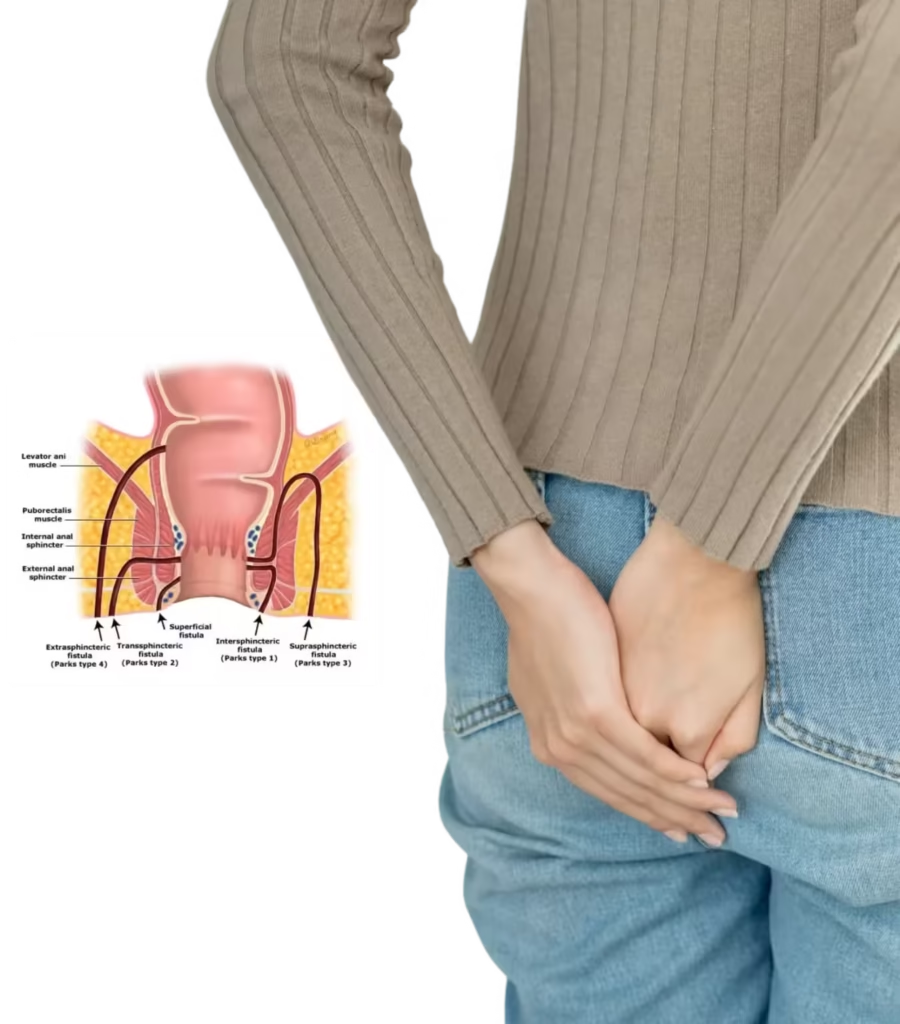
Fistulas can be classified according to their relationship with the anal sphincter muscles.
Common types include:

1. Intersphincteric fistula
The tract passes between the internal and external sphincter muscles.

2. Transsphincteric fistula
The tract passes through the sphincter muscles and may require a treatment approach that protects sphincter function.

3. Suprasphincteric fistula
The tract extends above the external sphincter before reaching the skin.

4. Extrasphincteric fistula
The tract follows a pathway outside the sphincter complex and is less common.

The classification and complexity of the fistula help the surgeon determine which treatment is appropriate.

How Is an Anal Fistula Diagnosed?

A specialist usually begins with a detailed medical history and physical examination. Depending on the symptoms and suspected complexity of the fistula, additional investigations may be recommended.

These may include:

  • Clinical examination
  • Proctoscopy or anoscopy when appropriate
  • MRI of the pelvis for selected complex fistulas
  • Endoanal ultrasound in selected cases
  • Other investigations based on the patient’s medical history

Imaging is particularly useful when the fistula has multiple branches, is recurrent, or has a complex relationship with the sphincter muscles.

An accurate diagnosis helps the surgeon choose a treatment approach while considering preservation of bowel-control function.

Fistula Treatment Options

Fistula treatment is not the same for every patient. The treatment depends on the fistula’s location, complexity, number of tracts, underlying cause, and involvement of the sphincter muscles.

Fistulotomy
Fistulotomy involves opening the fistula tract so that it can heal gradually.
It is commonly used for selected simple fistulas where opening the tract is considered appropriate, and the risk to sphincter function is acceptable.

Seton Treatment
A seton is a surgical thread placed through the fistula tract. It may be used when the fistula involves the sphincter muscles. A seton can help maintain drainage and may form part of a staged treatment plan.

LIFT Procedure
LIFT stands for ligation of the intersphincteric fistula tract. It is a sphincter-preserving approach that may be considered for selected fistulas involving the sphincter muscles.

Advancement Flap
An advancement flap may be considered for certain complex fistulas when a fistulotomy could pose a higher risk to sphincter function.

Laser Fistula Treatment
Laser treatment uses a laser fibre to treat the fistula tract to preserve surrounding tissue and sphincter function.
Laser treatment for fistula may be suitable for selected patients after specialist assessment. However, it should not be presented as universally superior to other procedures because treatment choice depends on individual anatomy and fistula complexity.

Other Treatment Approaches
Depending on the case, other techniques may include fibrin glue, fistula plugs, or endoscopic approaches. The surgeon will discuss the potential benefits, limitations, risks, and expected recovery of the recommended procedure before treatment.

What Happens During Fistula Surgery?

The exact steps depend on the procedure selected.

  • In general, the surgeon identifies the fistula tract and its internal and external openings. The tract is then treated using the chosen technique.
  • For some patients, the procedure may involve opening the tract. In other cases, the surgeon may use a sphincter-preserving technique such as a seton, LIFT, advancement flap, or another procedure.
  • The key consideration is treating the fistula while protecting the anal sphincter muscles whenever possible.
  • Because fistula anatomy varies significantly between patients, the surgeon should explain the planned procedure before surgery.

Fistula Surgery Recovery

Recovery after fistula treatment varies depending on the procedure performed and the complexity of the fistula.

After surgery, patients may experience some discomfort around the treated area. Wound care, prescribed medicines, bowel habits, diet, and follow-up instructions should be followed carefully.

General recovery guidance may include:

  • Keep the treated area clean as advised by your doctor.
  • Follow the prescribed medication schedule.
  • Drink adequate fluids unless your doctor has advised otherwise.
  • Follow the recommended diet and bowel-care instructions.
  • Avoid strenuous activity until your surgeon advises that it is safe.
  • Attend scheduled follow-up appointments.

Recovery can be different for every patient, particularly when the fistula is complex or when staged treatment is required.

Diet After Fistula Surgery

Your doctor may recommend dietary changes after surgery depending on your procedure and bowel habits. Generally, the goal is to support comfortable bowel movements and avoid excessive straining.

Your post-surgery diet may include:

  • Adequate fluids
  • Fibre-rich foods when appropriate
  • Fruits and vegetables
  • Whole grains
  • Foods recommended by your treating doctor

If certain foods cause constipation, diarrhoea, bloating, or discomfort, discuss them with your healthcare professional rather than following a restrictive diet without medical advice.

For more information, see our detailed guide on [diet after fistula surgery].

When Should You See a Fistula Specialist?

You should consider a specialist consultation if you have:

  • A recurring lump near the anus
  • Persistent pain or irritation
  • Repeated discharge from the same opening
  • A previous anal abscess that has not completely healed
  • Repeated abscesses in the same area
  • Symptoms that keep returning despite previous treatment

Persistent symptoms should not be self-diagnosed as a fistula because other anorectal conditions can produce similar symptoms. Early assessment can help determine the cause and whether further testing or treatment is required.

Fistula Treatment in Hyderabad at Lux Hospitals

Lux Hospitals provides proctology care for patients seeking fistula treatment in Hyderabad.

Treatment planning is based on the patient’s symptoms, examination findings, fistula anatomy, and overall medical condition. Depending on the case, treatment options may include conventional surgery, sphincter-preserving procedures, or minimally invasive techniques.

Patients can consult Dr. Samhitha Reddy, Proctologist, for evaluation and discussion of suitable treatment options.

Best Proctologist and Colorectal Surgeon in Hyderabad

Dr. Samhitha Reddy

MBBS, MS, FISCP, FMAS, DMAS

Member - American Society of Colon & Rectal Surgeons (ASCRS)
Speciality : Consultant Proctologist & Laparoscopic Surgeon

Experience : 8 years

Best General and Laparoscopic Surgeon in Hyderabad

Dr. Abhishek Katha

MBBS, MS, FMAS

Speciality : Consultant General & Advanced Laparoscopic Surgeon

Experience : 17 years

Dr. Tejasree Vengala

Dr. Tejasree Vengala

MBBS, MS (General Surgery) Fellowship in Laparoscopic Surgery

Consultant Breast Surgeon, Thyroid & General Surgeon

Experience : 7+ years

Why Choose Lux Hospitals for Fistula Treatment in Hyderabad?

  • Specialist proctology consultation
  • Individualised treatment planning
  • Evaluation of simple and complex fistulas
  • Multiple treatment approaches
  • Focus on preserving sphincter function where clinically appropriate
  • Pre-operative and post-operative guidance
  • Follow-up care

The recommended treatment depends on the individual patient’s condition. A consultation at Lux Hospitals in Hyderabad is necessary before deciding whether surgery, laser treatment, or another procedure is appropriate.

Best Proctologist and Colorectal Surgeon in Hyderabad

Dr. Samhitha Reddy

MBBS, MS, FISCP, FMAS, DMAS

Member - American Society of Colon & Rectal Surgeons (ASCRS)
Speciality : Consultant Proctologist & Laparoscopic Surgeon

Experience : 8 years

Best General and Laparoscopic Surgeon in Hyderabad

Dr. Abhishek Katha

MBBS, MS, FMAS

Speciality : Consultant General & Advanced Laparoscopic Surgeon

Experience : 17 years

Dr. Tejasree Vengala

Dr. Tejasree Vengala

MBBS, MS (General Surgery) Fellowship in Laparoscopic Surgery

Consultant Breast Surgeon, Thyroid & General Surgeon

Experience : 7+ years

Testimonials

"laser treatment for my dad’s piles"

Dr. Samhitha Reddy’s laser treatment for my dad’s piles worked wonders. He’s pain-free now and really grateful for her care!

Patient Image

Mithilesh Sah

★ ★ ★ ★ ★

"smooth and painless"

Dr. Samhitha Reddy’s laser treatment for my fissure wassmooth and painless. She was super kind, which made the whole process much easier.

Patient Image

Rohit Kumar

★ ★ ★ ★ ★

"Colorectal Diseases"

Lux hospital is one of best hospital in Hyderabad for colorectal diseases. Dr. Samhita Mam is one the finest surgeon, very polite and explain everything in detail and the hospital staff is soo caring..Thank you so much..

Patient Image

Arti Shettiwar

★ ★ ★ ★ ★

"Admitted for my fistula surgery"

I was admitted for my fistula surgery, Dr Samhita has been very helpful in detecting the issue and explained the causes and prevention . Surgery was seamless and without pain.Also the support staff have been extremely helpful and were available every time. Keep up doing the great work.

Patient Image

Sanat Jayasingh

★ ★ ★ ★ ★

"Fistula Surgery"

We were admitted for fistula surgery and had to be under supervision for 24 hours. I could say that the staff including from the doctors and the Nurse and the house keeping staff, everyone was so polite and helpful and attending the patient within no time. Hospitalisation here was so smooth and Special thanks to Ashok(patient relationship manager) who is super polite and answering the questions related to insurance

Patient Image

Sujith V

★ ★ ★ ★ ★

Latest Health Articles by Lux

Frequently Asked Questions

What is the best treatment for a fistula?

There is no single treatment that is best for every fistula. The appropriate treatment depends on the fistula's location, complexity, sphincter involvement, underlying cause, and previous treatment. A proctologist can recommend the most appropriate option after evaluation.

Can an anal fistula heal without surgery?

Most persistent anal fistulas do not heal on their own and commonly require a procedure. Medical treatment may be required for associated conditions, but patients should not assume that medicines alone will cure an established fistula.

Is laser treatment good for fistula?

Laser treatment can be considered for selected anal fistulas. However, it is not automatically the best choice for every patient. The surgeon should assess the fistula anatomy and explain the expected benefits, limitations, and alternatives.

How long does fistula surgery recovery take?

Recovery varies according to the procedure, fistula complexity, wound healing, and the patient's general health. Your surgeon can provide a more personalised recovery timeline after evaluating your condition.

Is Laser Treatment Suitable for Every Fistula?

No, laser treatment is not suitable for every fistula. At Lux Hospitals, the treatment is selected based on the fistula’s type, location, and complexity. A specialist evaluation helps determine whether laser treatment is appropriate.

What Is the Difference Between Fistula Treatment and Fistula Surgery?

At Lux Hospitals, fistula treatment is planned based on the type and complexity of the fistula. Fistula surgery involves procedures such as fistulotomy, LIFT, seton placement, or laser treatment. The right approach is chosen after a specialist evaluation.

Can a fistula come back after surgery?

Yes. Recurrence is possible after fistula treatment. The risk depends on factors such as fistula complexity, anatomy, underlying disease, and the procedure performed. Regular follow-up can help identify persistent or recurrent disease.

When should I consult a fistula specialist?

Consult a specialist if you have recurring pain, swelling, discharge, a lump, or an opening near the anus, particularly if symptoms keep returning after an abscess or previous treatment.

How Can I Book an Appointment for Fistula Treatment in Hyderabad at Lux Hospitals?

You can book an appointment for fistula treatment in Hyderabad with a fistula specialist at Lux Hospitals for evaluation and treatment. Contact the hospital or use the online appointment option to choose a convenient date and time. The specialist will recommend the right treatment based on your condition.

×
⭮

Chat on WhatsApp...

WhatsApp Icon Open In WhatsApp

If it doesn’t open automatically, click here.

Chat ↗