











Which Treatment is Best for Piles?
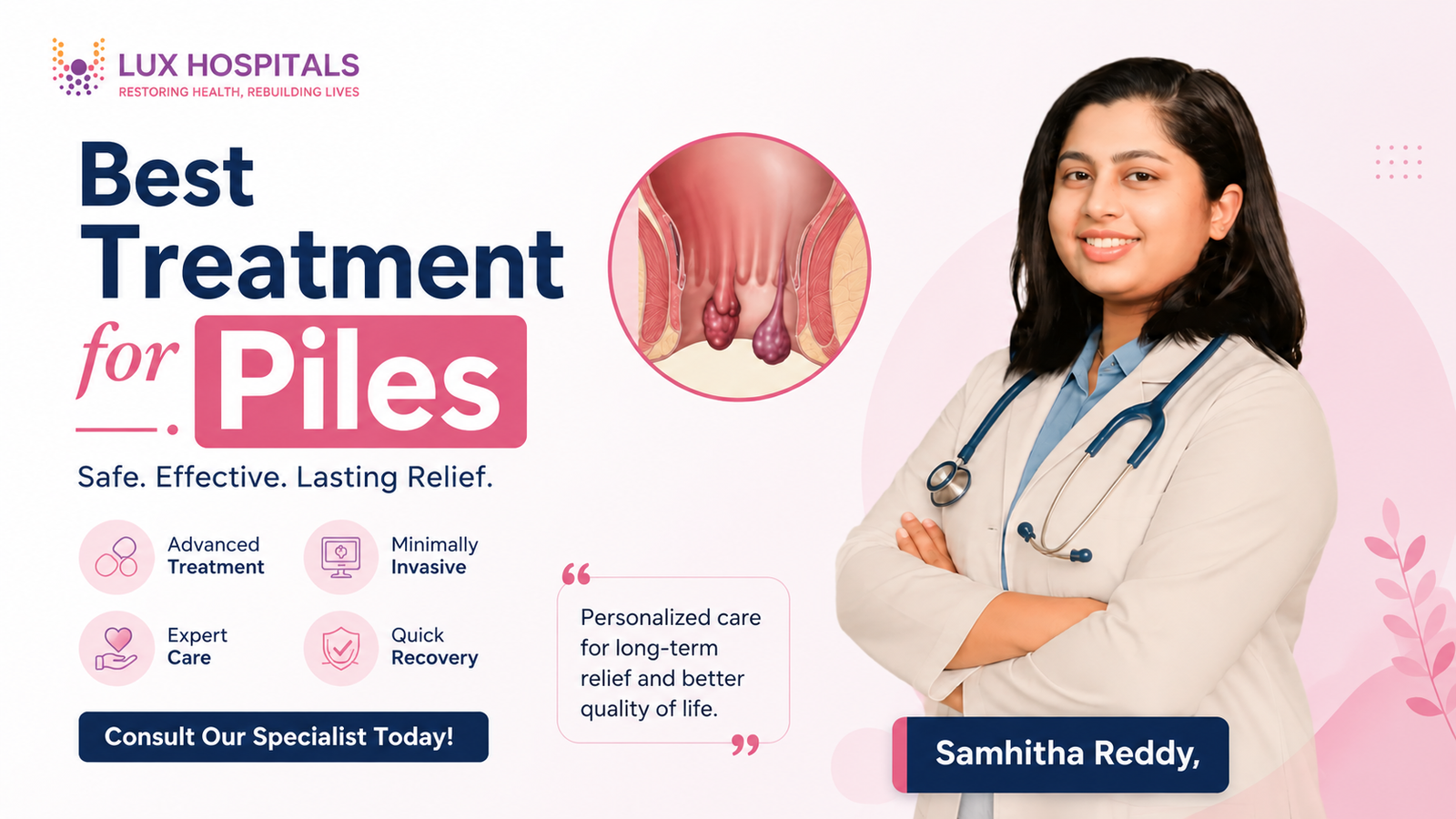
Piles, also known as hemorrhoids, are a common condition that affects millions of people worldwide. They occur when veins around the rectum or anus become swollen, leading to symptoms such as pain, bleeding, itching, discomfort, and difficulty during bowel movements. While piles are not usually dangerous, untreated symptoms can significantly affect daily life and overall well-being.
Many people often ask, which treatment is best for piles? The answer depends on the severity of the condition, the type of hemorrhoids, and the symptoms experienced by the patient. At Lux Hospitals, Dr. Samhitha Reddy, an experienced Consultant Proctologist and Laparoscopic Surgeon, provides evidence-based and personalized care to help patients find the best treatment for piles and achieve lasting relief.

Understanding the Best Treatment for Piles
There is no single solution that works for everyone. The best treatment for piles varies based on the grade of hemorrhoids and the patient’s overall health. Mild cases may respond well to conservative treatment, while advanced cases may require minimally invasive procedures.
Dr. Samhitha Reddy believes in a patient-centered approach that focuses on accurate diagnosis and individualized treatment plans. Her expertise in proctology and minimally invasive surgery allows patients to receive effective care with faster recovery and minimal discomfort.
Symptoms That Should Not Be Ignored
Common symptoms of piles include:
- Bright red bleeding during bowel movements
- Pain or discomfort around the anus
- Persistent itching or irritation
- Swelling near the anal region
- A lump that protrudes during bowel movements
- Difficulty sitting comfortably
Seeking medical attention early can prevent complications and help determine the best treatment for piles before symptoms worsen.
Non-Surgical Treatment for Early Piles
Patients with Grade 1 and Grade 2 hemorrhoids often benefit from conservative management. These approaches aim to reduce symptoms and prevent the condition from progressing.
Non-surgical treatments may include:
- Increasing dietary fiber intake
- Drinking adequate amounts of water
- Using stool softeners when necessary
- Taking prescribed medications
- Warm sitz baths for symptom relief
- Regular physical activity and lifestyle modifications
These measures are effective for many patients looking for piles treatment without surgery. Maintaining healthy bowel habits can also reduce the risk of recurrence.
Laser Treatment for Piles: A Modern Approach
For patients with persistent symptoms, laser treatment for piles has emerged as one of the most advanced and effective options. This minimally invasive procedure offers several advantages over conventional surgery.
At Lux Hospitals, Dr. Samhitha Reddy performs advanced laser procedures designed to provide maximum comfort and quicker recovery. Benefits of laser treatment include:
- Minimal pain and bleeding
- Short procedure duration
- Same-day discharge in most cases
- Faster healing
- Lower risk of complications
- Early return to work and daily activities
For many patients with Grade 2 and Grade 3 hemorrhoids, laser surgery provides the best treatment for piles because it combines effectiveness with a smoother recovery process.
When is Surgery Necessary?
Although conservative treatment works well for early stages, some patients may require surgical intervention. Grade 3 and Grade 4 hemorrhoids often cause significant discomfort and may not respond adequately to medications or lifestyle changes.
Surgery may be recommended when:
- Bleeding becomes frequent or severe
- Hemorrhoids prolapse and remain outside the anus
- Pain interferes with daily activities
- Recurrent symptoms affect quality of life
- Previous treatments fail to provide relief
Dr. Samhitha Reddy uses advanced minimally invasive techniques to ensure better outcomes and faster healing. Her experience helps patients receive the best treatment for piles based on their individual needs.
How is the Best Treatment for Piles Determined?
Choosing the best treatment for piles depends on several important factors, including:
- Grade and severity of hemorrhoids
- Frequency of bleeding
- Presence of prolapse
- Overall health and medical history
- Previous response to treatment
- Lifestyle and bowel habits
A detailed evaluation by an experienced proctologist is essential for selecting the most suitable treatment. Self-medication and delaying treatment can often worsen symptoms and prolong recovery.
Why Choose Dr. Samhitha Reddy at Lux Hospitals?
Finding the best treatment for piles requires expert care and advanced technology. Dr. Samhitha Reddy has extensive experience in treating anorectal conditions using minimally invasive techniques. She focuses on delivering personalized treatment plans that prioritize patient comfort and long-term results.
Patients at Lux Hospitals benefit from:
- Comprehensive diagnosis and evaluation
- Expertise in laser and minimally invasive procedures
- Individualized treatment plans
- Modern surgical technology
- Faster recovery and reduced hospital stay
- Dedicated post-treatment follow-up care
Her commitment to patient safety, evidence-based treatment, and compassionate care has made Lux Hospitals a trusted destination for advanced hemorrhoid care in Hyderabad.
Tips to Prevent Piles from Recurring
Even after successful treatment, adopting healthy habits can help prevent recurrence.
Simple lifestyle measures include:
- Eating a fiber-rich diet
- Staying well hydrated
- Avoiding prolonged straining during bowel movements
- Exercising regularly
- Maintaining a healthy body weight
- Avoiding sitting for long periods
These changes not only improve digestive health but also support long-term recovery after receiving the best treatment for piles.
Conclusion
If you are wondering which treatment is best for piles, the answer depends on your symptoms and the severity of the condition. While mild hemorrhoids can often be managed with lifestyle changes and medications, advanced cases may require laser procedures or minimally invasive surgery.
Consulting an experienced specialist is the key to receiving the best treatment for piles. At Lux Hospitals, Dr. Samhitha Reddy combines expertise, advanced technology, and personalized care to help patients achieve lasting relief and return to a comfortable, healthy life.
Frequently Asked Questions
The best treatment for piles depends on the severity of symptoms. Mild cases can often be managed with dietary changes, medications, and lifestyle improvements, while advanced cases may require laser or surgical procedures for effective relief.
Yes, laser treatment for piles is considered a highly effective and minimally invasive option. It usually involves less pain, minimal bleeding, faster recovery, and a quicker return to daily activities compared to traditional surgery.
Yes, in many cases, piles can be treated without surgery, especially in early stages. Non-surgical methods include high-fiber diets, medications, stool softeners, and lifestyle changes to reduce strain during bowel movements.
The most effective treatment for piles varies from patient to patient. For early stages, non-surgical care works well, while laser treatment is often highly effective for moderate cases. Severe cases may require surgical intervention.
The best surgery for piles depends on the grade of hemorrhoids. Minimally invasive procedures like laser hemorrhoid surgery are commonly preferred due to less pain, quicker healing, and reduced risk of complications.
A permanent treatment for piles without surgery is possible in early stages if lifestyle changes are strictly followed. However, in moderate to severe cases, non-surgical methods may only control symptoms, while procedures like laser treatment provide more long-term relief.