











Knee Arthroscopy for Cartilage Damage: What to Expect
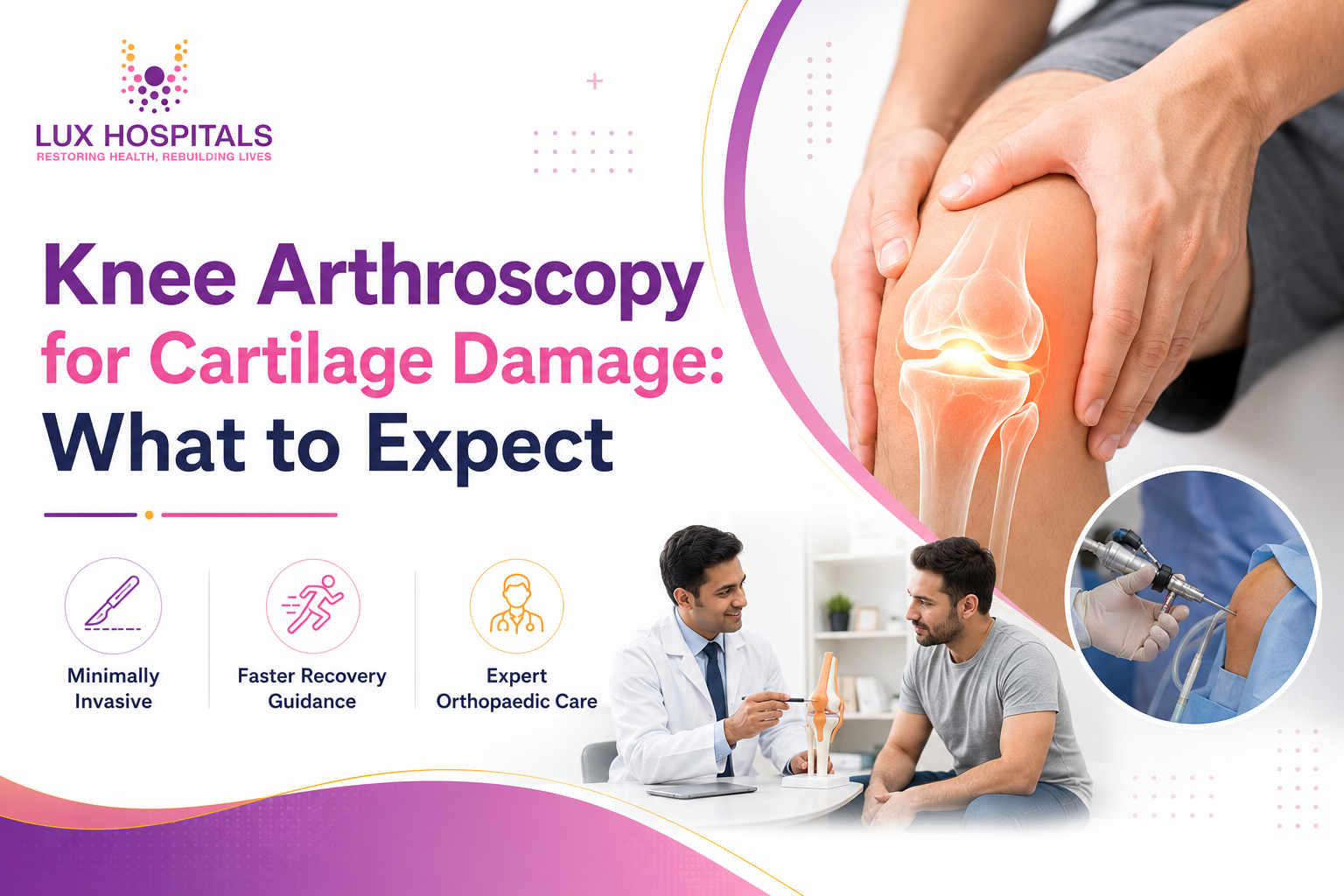
Knee pain caused by cartilage damage can affect every part of your daily life. Walking, climbing stairs, exercising, or even standing for long periods may become painful. If medications, physiotherapy, and lifestyle changes do not provide enough relief, Knee Arthroscopy for Cartilage Damage may be the ideal treatment option. In addition to reducing discomfort and improving knee function, this minimally invasive procedure helps diagnose and treat damaged cartilage. Our skilled orthopaedic experts at Lux Hospitals employ cutting-edge arthroscopic procedures to provide individualised care and hasten recuperation. Everything you need to know about knee arthroscopy for cartilage damage is included in this article, including the procedures, advantages, recovery period, dangers, and anticipated results.

What is Knee Arthroscopy for Cartilage Damage?
A minimally invasive surgical technique called knee arthroscopy is used to identify and treat cartilage damage within the knee joint. The surgeon uses tiny incisions around the knee to implant a tiny camera known as an arthroscope rather than making a major incision. The surgeon can precisely replace damaged cartilage because the camera provides clear images of the joint on a monitor. This procedure is recommended for patients experiencing persistent knee pain due to cartilage injuries that do not improve with conservative treatment.
Common cartilage problems treated include:
- Torn cartilage
- Damaged articular cartilage
- Loose cartilage fragments
- Early osteoarthritis changes
- Cartilage defects after sports injuries
Because Knee Arthroscopy for Cartilage Damage requires only small incisions, patients usually experience less pain, minimal scarring, and faster healing.
Who Needs Knee Arthroscopy for Cartilage Damage?
Not every patient with knee pain requires surgery. However, Knee Arthroscopy for Cartilage Damage may be recommended if symptoms continue despite medications, physiotherapy, or injections.
Signs you may need arthroscopy:
- Persistent knee pain
- Swelling after activity
- Knee locking or catching
- Clicking or grinding sensation
- Difficulty bending the knee
- Reduced mobility
- Sports-related knee injuries
Patients who are active athletes or individuals wanting to return to normal movement often benefit significantly from Knee Arthroscopy for Cartilage Damage.
At Lux Hospitals, every patient undergoes a comprehensive evaluation, including physical examination, MRI, and X-ray, before surgery is recommended.
What Happens During Knee Arthroscopy for Cartilage Damage?
Understanding the procedure helps patients feel more confident before surgery.
Before surgery
Your orthopaedic surgeon will:
- Review your medical history
- Perform a physical examination
- Recommend MRI or imaging
- Explain anesthesia options
- Provide pre-operative instructions
During the procedure
Knee Arthroscopy for Cartilage Damage usually takes 30–90 minutes, depending on the severity of the injury.
The surgeon will:
- Make two or three tiny incisions.
- Insert the arthroscope into the knee.
- Examine all structures inside the joint.
- Remove loose cartilage if required.
- Smooth damaged cartilage surfaces.
- Repair cartilage using specialised techniques when possible.
- Close the small incisions with stitches.
Since this is a minimally invasive surgery, blood loss is minimal, and surrounding tissues remain largely unaffected.
After surgery
In most cases, patients are monitored for a few hours before going home on the same day. Most patients begin gentle walking with support shortly after Knee Arthroscopy for Cartilage Damage.
Recovery After Knee Arthroscopy for Cartilage Damage
Recovery varies depending on the extent of cartilage damage and the type of repair performed.
Immediate recovery
Patients may experience:
- Mild swelling
- Temporary discomfort
- Slight stiffness
- Limited weight-bearing initially
Ice packs, medications, and leg elevation help reduce swelling.
Physiotherapy
Rehabilitation plays a major role after Knee Arthroscopy for Cartilage Damage.
Physical therapy helps:
- Restore flexibility
- Improve muscle strength
- Increase joint stability
- Improve range of motion
- Prevent stiffness
Recovery timeline
- Walking: Within a few days (depending on surgery)
- Office work: 1–2 weeks
- Driving: Usually 2–4 weeks
- Sports activities: 3–6 months
- Full recovery: Depends on cartilage repair and rehabilitation
Following your orthopaedic surgeon’s instructions improves the success of Knee Arthroscopy for Cartilage Damage.
Benefits of Knee Arthroscopy for Cartilage Damage
Compared to traditional open surgery, Knee Arthroscopy for Cartilage Damage offers several advantages.
Major benefits include:
- Smaller incisions
- Less pain after surgery
- Faster recovery
- Minimal blood loss
- Reduced infection risk
- Better visualisation of the knee joint
Patients treated at Lux Hospitals benefit from modern arthroscopic equipment and experienced orthopaedic surgeons.
Risks of Knee Arthroscopy for Cartilage Damage
Although Knee Arthroscopy for Cartilage Damage is considered safe, every surgical procedure carries some risks.
Possible complications include:
- Infection
- Blood clots
- Bleeding
- Swelling
- Temporary stiffness
- Persistent pain
- Rare nerve injury
Choosing an experienced orthopaedic team like Lux Hospitals significantly reduces these risks through advanced surgical protocols and comprehensive post-operative care.
Tips for Faster Recovery After Knee Arthroscopy for Cartilage Damage
Patients can improve healing by following these recommendations.
Follow these recovery tips:
- Attend all physiotherapy sessions.
- Perform prescribed exercises regularly.
- Avoid high-impact activities initially.
- Maintain a healthy body weight.
- Eat a protein-rich diet.
- Stay hydrated.
- Take medications as prescribed.
- Follow up for every follow-up appointment.
These simple steps help maximise the results of Knee Arthroscopy for Cartilage Damage and reduce recovery time.
Why Choose Lux Hospitals for Knee Arthroscopy for Cartilage Damage?
At Lux Hospitals, we provide compassionate patient care along with cutting-edge orthopaedic technology.
Our advantages include:
- Experienced orthopedic surgeons
- Advanced arthroscopic equipment
- Personalised treatment plans
- Comprehensive rehabilitation support
- Modern operating theatres
- Faster recovery protocols
Whether your cartilage damage results from sports injuries, ageing, or accidents, Lux Hospitals offers comprehensive treatment tailored to your needs.
Conclusion
Your freedom, ability to work, and overall quality of life may be affected by persistent knee discomfort. Fortunately, for many patients with cartilage damage, knee arthroscopy for cartilage damage provides a very successful, minimally invasive treatment. Long-term results are greatly enhanced by early diagnosis, prompt treatment, and appropriate rehabilitation. Our orthopaedic specialists at Lux Hospitals are dedicated to helping each patient regain mobility, minimise pain, and confidently resume an active lifestyle.