











What Happens If a Bone Fracture Is Left Untreated?
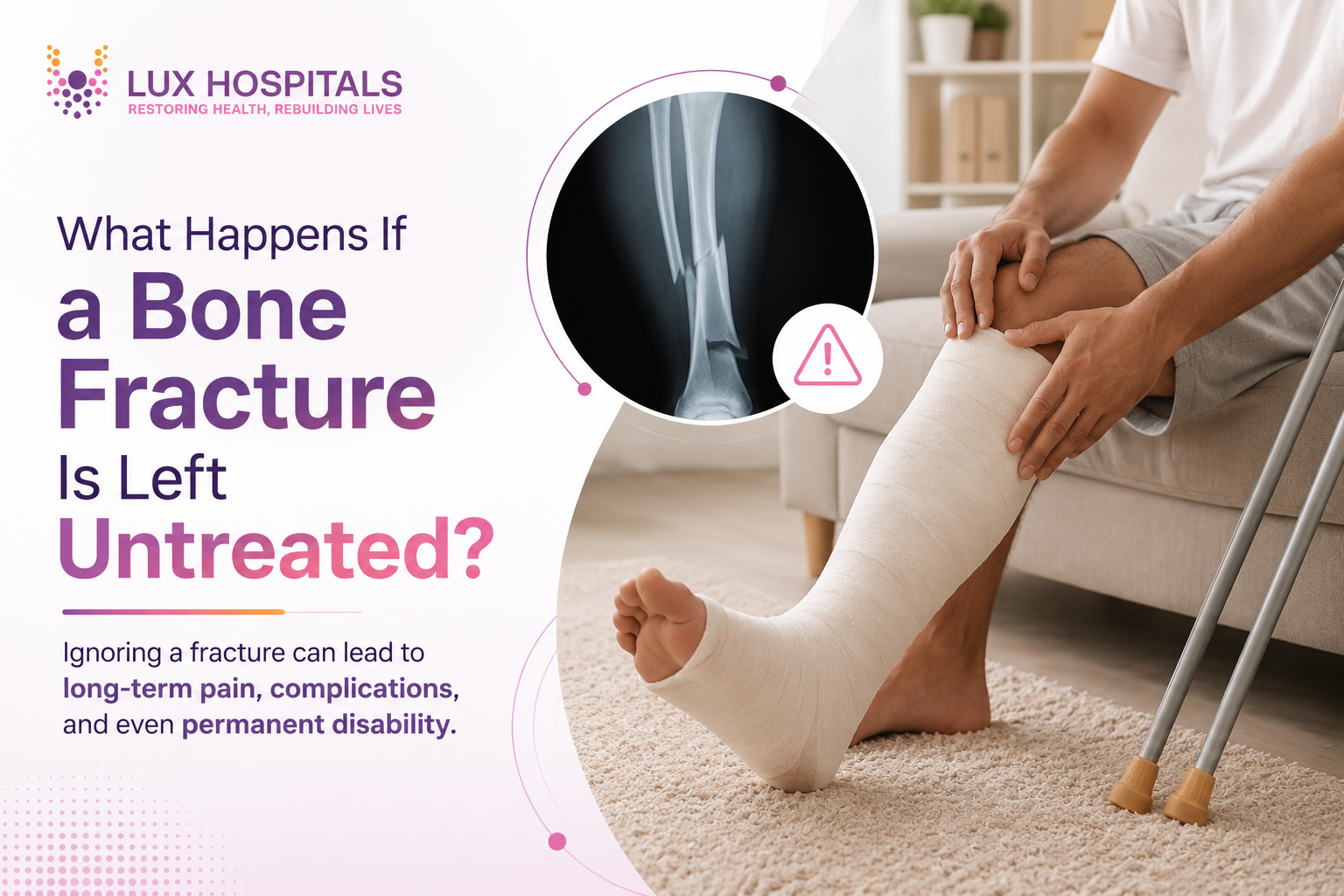
Untreated Bone Fractures can lead to serious health complications, even if the initial pain seems manageable or the swelling reduces after a few days. Ignoring a fracture may result in permanent deformity, nerve damage, infection, chronic pain, and long-term disability that can affect your mobility and quality of life. Our skilled orthopaedic specialists at Lux Hospitals provide advanced fracture diagnosis and personalised treatment to ensure proper bone healing, restore normal function, and help you avoid long-term complications through timely medical care.

Why Every Bone Fracture Needs Medical Attention
Not all fractures result in excruciating agony or visible disfigurement. Even minor, stress, and hairline fractures need to be evaluated by a medical professional. Because a fractured bone keeps moving during daily activities, an untreated fracture can get worse over time.
Common reasons people ignore fractures include:
- Assuming it is only a sprain
- Mild pain that gradually decreases
- Ability to move the injured limb
- Delaying hospital visits
- Self-medicating with painkillers
Even if symptoms improve temporarily, an Untreated Bone Fracture can silently damage surrounding tissues, muscles, nerves, and blood vessels.
What Happens When an Untreated Bone Fracture Does Not Heal Properly?
When a fracture is left untreated, the body attempts to heal the bone naturally. Unfortunately, improper alignment often leads to abnormal healing, resulting in long-term problems. Not every fracture causes severe pain or obvious deformity. Some small fractures, stress fractures, or hairline fractures may appear harmless, but even these injuries require medical evaluation. An Untreated Bone Fracture can worsen over time because the broken bone continues to move during everyday activities.
Malunion
A malunion occurs when the bone heals in the wrong position. This can result in:
- Crooked limbs
- Difficulty walking
- Limited movement
- Visible deformity
- Chronic pain
An Untreated Bone Fracture that heals incorrectly often requires corrective surgery later.
Nonunion
Sometimes the broken bone fails to heal completely, a condition known as nonunion.
Risk factors include:
- Smoking
- Diabetes
- Poor blood supply
- Severe fractures
- Infection
Patients with an Untreated Bone Fracture may continue experiencing pain months after the injury because the bone never fully joins together.
Delayed Union
Healing may occur much more slowly than expected. Without medical intervention, recovery becomes prolonged and more complicated.
Complications of an Untreated Bone Fracture
Ignoring a fracture can affect much more than the bone itself.
Persistent Pain
One of the most common consequences of an Untreated Bone Fracture is chronic pain. Improper bone healing causes continuous stress on surrounding muscles and joints.
Joint Damage
Fractures involving joints may lead to:
- Early arthritis
- Reduced flexibility
- Joint stiffness
- Swelling
- Limited movement
Nerve Injury
Broken bone fragments can press against nearby nerves, resulting in:
- Numbness
- Tingling
- Muscle weakness
- Loss of sensation
Blood Vessel Damage
Certain fractures can injure nearby blood vessels, reducing circulation and increasing the risk of tissue damage.
Infection
Open fractures expose the bone to bacteria. An Untreated Bone Fracture significantly increases the chance of severe bone infection (osteomyelitis).
Permanent Disability
Without treatment, some fractures may permanently affect mobility and independence.
Warning Signs That Your Bone Fracture Needs Immediate Treatment
Seek medical attention immediately if you notice:
- Severe pain that does not improve
- Swelling that continues to increase
- Bone deformity
- Inability to bear weight
- Visible bone through the skin
- Persistent bruising
These symptoms may indicate an Untreated Bone Fracture that requires urgent orthopaedic care.
How Doctors Diagnose an Untreated Bone Fracture
At Lux Hospitals, fracture diagnosis begins with a comprehensive clinical evaluation.
Diagnostic methods include:
Physical Examination
The orthopaedic specialist checks:
- Swelling
- Tenderness
- Bone alignment
- Joint movement
- Nerve function
Digital X-rays
X-rays identify:
- Fracture location
- Bone displacement
- Healing progress
CT Scan
CT scans provide detailed images of complex fractures involving joints.
MRI Scan
MRI helps evaluate:
- Ligament injuries
- Tendon damage
- Stress fractures
- Soft tissue injuries
Early diagnosis of an Untreated Bone Fracture allows doctors to choose the most effective treatment plan.
Treatment Options for an Untreated Bone Fracture
Treatment depends on:
- Type of fracture
- Location
- Patient age
- Healing status
- Presence of complications
Non-Surgical Treatment
Some fractures heal successfully with:
- Casts
- Splints
- Braces
- Pain medications
- Physiotherapy
Surgical Treatment
Complex or delayed fractures may require:
- Plates and screws
- Intramedullary nails
- External fixation
- Bone grafting
Patients with an Untreated Bone Fracture often require more extensive surgery than those treated immediately after injury.
Physiotherapy plays an essential role in restoring strength, flexibility, and normal function after treatment.
How Lux Hospitals Helps Patients Recover Faster
To achieve better results, Lux Hospitals combines individualised therapy with cutting-edge orthopaedic expertise.
Our fracture care includes:
- Expert orthopaedic surgeons
- Advanced digital imaging
- Emergency fracture care
- Minimally invasive surgical options
- Comprehensive rehabilitation
- Personalised recovery plans
- Faster healing support
- Long-term follow-up care
Whether your injury is recent or you have an Untreated Bone Fracture, our specialists provide timely treatment to restore mobility and improve quality of life.
Tips to Prevent Fracture Complications
To reduce the risk of long-term problems:
- Never ignore persistent pain after an injury.
- Visit an orthopaedic specialist immediately.
- Complete the recommended imaging tests.
- Wear your cast or brace as instructed.
- Avoid putting weight on the injured limb too early.
- Attend follow-up appointments regularly.
- Follow physiotherapy recommendations.
- Maintain a calcium- and vitamin D-rich diet.
Prompt treatment significantly reduces complications associated with an Untreated Bone Fracture.
Conclusion
An Untreated Bone Fracture can lead to serious complications, including chronic pain, bone deformity, joint damage, infection, and permanent disability. Even fractures that seem minor should never be ignored because delayed treatment often requires more complex surgery and a longer recovery. Our skilled orthopaedic specialists at Lux Hospitals help patients safely recover and resume active lifestyles through cutting-edge diagnostic equipment and evidence-based treatments. Get medical help right away if you think you may have a fracture to preserve your long-term bone health.
Frequently Asked Questions
Some minor fractures may partially heal naturally, but an Untreated Bone Fracture often heals in the wrong position or fails to heal completely. Proper medical evaluation ensures correct bone alignment, prevents long-term complications, and helps restore normal movement without permanent disability.
A fracture should be evaluated as soon as possible, ideally within the first 24 hours after the injury, because delays increase the risk of poor healing. An Untreated Bone Fracture can quickly lead to complications such as nonunion, malunion, chronic pain, and reduced joint function.
A deteriorating fracture may be indicated by increasing pain, oedema, deformity, numbness, incapacity to move the affected limb, fever, or chronic bruising. To avoid long-term harm and enhance healing outcomes, these warning symptoms need to be treated promptly.
Lux Hospitals offers expert orthopaedic physicians, state-of-the-art imaging technology, minimally invasive fracture surgery, and comprehensive rehabilitation all under one roof. Thanks to our patient-focused care, each fracture patient receives an accurate diagnosis, accelerated healing, customised treatment programs, and continued support.
Yes, Lux Hospitals provides patients with individualised physiotherapy and rehabilitation programs to help them regain strength, flexibility, balance, and confidence after fracture treatment. Our all-encompassing strategy is to reduce recovery times, avoid complications, and help patients safely return to their usual activities.