Dr. Samhitha Reddy
Consultant Proctologist & Laparoscopic Surgeon
MBBS, MS, FMAS, FISCP, DMAS
- 8 Yrs
- ASCRS Member
By Dr Sai kishan Sirasala · MBBS, MS. Orthopedics, FIJR, FIASM ( UK ) 16 July 2026 5 min read
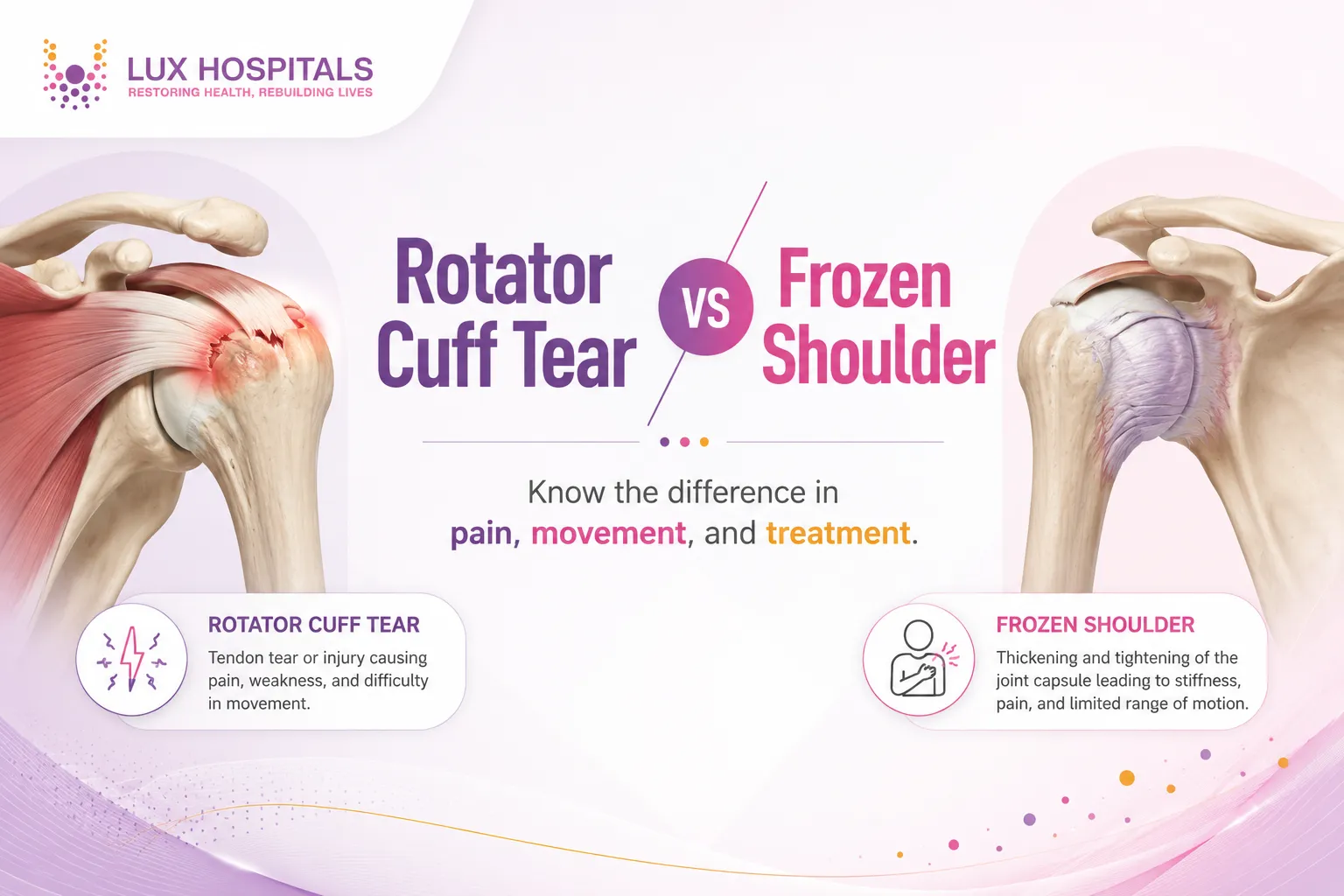
Rotator Cuff Tear vs Frozen Shoulder is a common comparison among people experiencing shoulder pain, stiffness, or difficulty moving their arm. Although both conditions can cause discomfort and limit daily activities such as driving, lifting objects, reaching overhead, or combing your hair, they affect the shoulder differently and require different treatment approaches. Understanding the difference […]
Rotator Cuff Tear vs Frozen Shoulder is a common comparison among people experiencing shoulder pain, stiffness, or difficulty moving their arm. Although both conditions can cause discomfort and limit daily activities such as driving, lifting objects, reaching overhead, or combing your hair, they affect the shoulder differently and require different treatment approaches. Understanding the difference between a rotator cuff tear and a frozen shoulder is essential for receiving an accurate diagnosis and timely treatment. Ignoring persistent shoulder pain may lead to worsening symptoms, prolonged recovery, and reduced shoulder function. At Lux Hospitals, our experienced orthopaedic specialists use advanced diagnostic techniques and personalised treatment plans to restore shoulder strength, mobility, and comfort, helping patients return to their daily routines with confidence.
A rotator cuff is a group of four muscles and tendons that stabilise the shoulder joint and help lift and rotate the arm. A rotator cuff tear occurs when one or more of these tendons become partially or completely torn. The injury may occur suddenly due to trauma or gradually over time due to wear and tear.
Understanding Rotator Cuff Tear vs Frozen Shoulder starts by recognising that a rotator cuff tear primarily causes weakness and pain.
When the shoulder capsule thickens, becomes inflamed, and stiffens, it can lead to frozen shoulder, also known as adhesive capsulitis. This ailment mostly restricts shoulder movement due to joint stiffness, unlike tendon damage. The condition usually develops slowly and progresses through different stages.
When comparing Rotator Cuff Tear vs Frozen Shoulder, frozen shoulder mainly causes stiffness rather than muscle weakness.
Although both conditions affect the shoulder, there are important differences.
| Main Problem | Torn tendon | Tight joint capsule |
| Pain | Sharp pain with movement | Constant aching pain |
| Weakness | Significant weakness | Minimal weakness |
| Stiffness | Mild | Severe |
| Range of Motion | Limited due to pain | Limited in every direction |
| Onset | Injury or gradual wear | Gradual progression |
| Treatment | Physiotherapy or surgery | Physiotherapy, medication, stretching |
Patients can avoid needless risks and treatment delays by understanding the difference between frozen shoulder and rotator cuff tears.
Several factors increase the risk of both conditions.
Recognising these risk factors can help in early diagnosis of Rotator Cuff Tear vs Frozen Shoulder.
Patients often ask how to distinguish between a Rotator Cuff Tear and a Frozen Shoulder.
A specialist can distinguish between a Rotator Cuff Tear and a Frozen Shoulder through a detailed clinical examination.
Proper diagnosis is essential because treatment differs significantly.
Your doctor will ask about:
The orthopaedic specialist evaluates:
Doctors may recommend:
At Lux Hospitals, advanced imaging helps accurately distinguish between Rotator Cuff Tear and Frozen Shoulder, ensuring patients receive the right treatment without delay.
Treatment depends on the severity of the condition.
Large or complete tears may require arthroscopic rotator cuff repair.
Understanding Rotator Cuff Tear vs Frozen Shoulder allows orthopaedic specialists to recommend the most effective treatment based on your condition.
Consult an orthopaedic specialist if you experience:
Early diagnosis of a Rotator Cuff Tear vs. Frozen Shoulder prevents permanent joint damage and speeds recovery.
Yes, some patients have limited shoulder movement due to discomfort, particularly following a rotator cuff injury. Prolonged immobilisation can lead to frozen shoulder. This combination emphasises the value of early medical examination and makes therapy more difficult. Orthopaedic doctors can develop a treatment plan to restore strength and flexibility by correctly diagnosing a Rotator Cuff Tear vs. a Frozen Shoulder.
Recovery depends on selecting the best orthopaedic hospital. Lux Hospitals provides patients with shoulder issues with all-encompassing care using advanced treatment methods and skilled professionals.
Whether you are dealing with a Rotator Cuff Tear vs Frozen Shoulder, our team focuses on relieving pain, restoring movement, and helping you return to your normal routine with confidence.
Although Rotator Cuff Tear vs Frozen Shoulder may seem similar because both cause shoulder pain, they are very different conditions. A rotator cuff tear primarily affects the tendons, causing weakness, while a frozen shoulder primarily causes stiffness and restricted movement. Getting an accurate diagnosis is the first step toward effective treatment and long-term recovery. If shoulder pain is affecting your daily activities, do not ignore it. Visit Lux Hospitals for expert orthopaedic evaluation, advanced imaging, personalised treatment, and compassionate care that helps you move comfortably again.
The tendons that aid in shoulder movement are harmed by a rotator cuff tear, which causes pain and obvious weakening. When the joint capsule stiffens and becomes inflamed, it can lead to frozen shoulder, a condition that severely restricts movement.
Under professional supervision, little or partial rotator cuff injuries may heal with rest, medication, physical therapy, and strengthening exercises. To restore normal shoulder function, arthroscopic surgery is frequently necessary for large or complete tears.
Depending on the severity of the problem, a full recovery from frozen shoulder may take one to three years. The condition often improves gradually over several months. Recovery can be greatly enhanced by early physiotherapy, stretching exercises, medication, and prompt treatment.
Lux Hospitals provides comprehensive orthopaedic care with experienced specialists, advanced MRI and diagnostic facilities, minimally invasive arthroscopic surgery, and personalised rehabilitation programs.
Yes, following both surgical and non-surgical treatment, Lux Hospitals provides specialised physiotherapy and rehabilitation programs aimed at enhancing shoulder strength, flexibility, and general function.
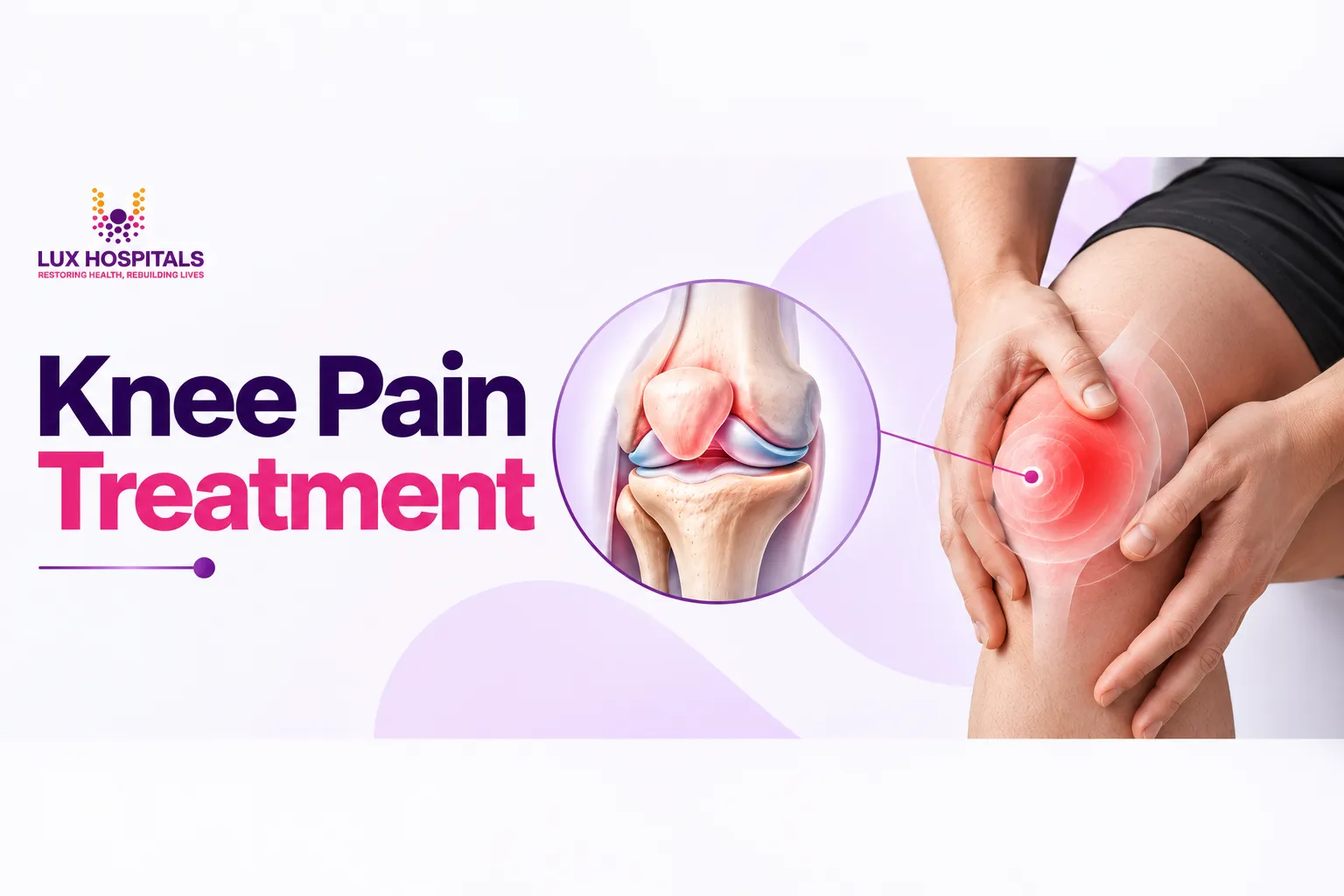
Knee pain treatment in Hyderabad depends on why your pain continues despite medicines and physiotherapy. Persistent pain may indicate arthritis, cartilage or meniscus damage, a ligament injury, inflammation, or another condition that requires reassessment.Knee pain treatment in Hyderabad An orthopaedic specialist can review your symptoms, examine the knee, order appropriate imaging, and recommend non-surgical or […]
8 October 2026
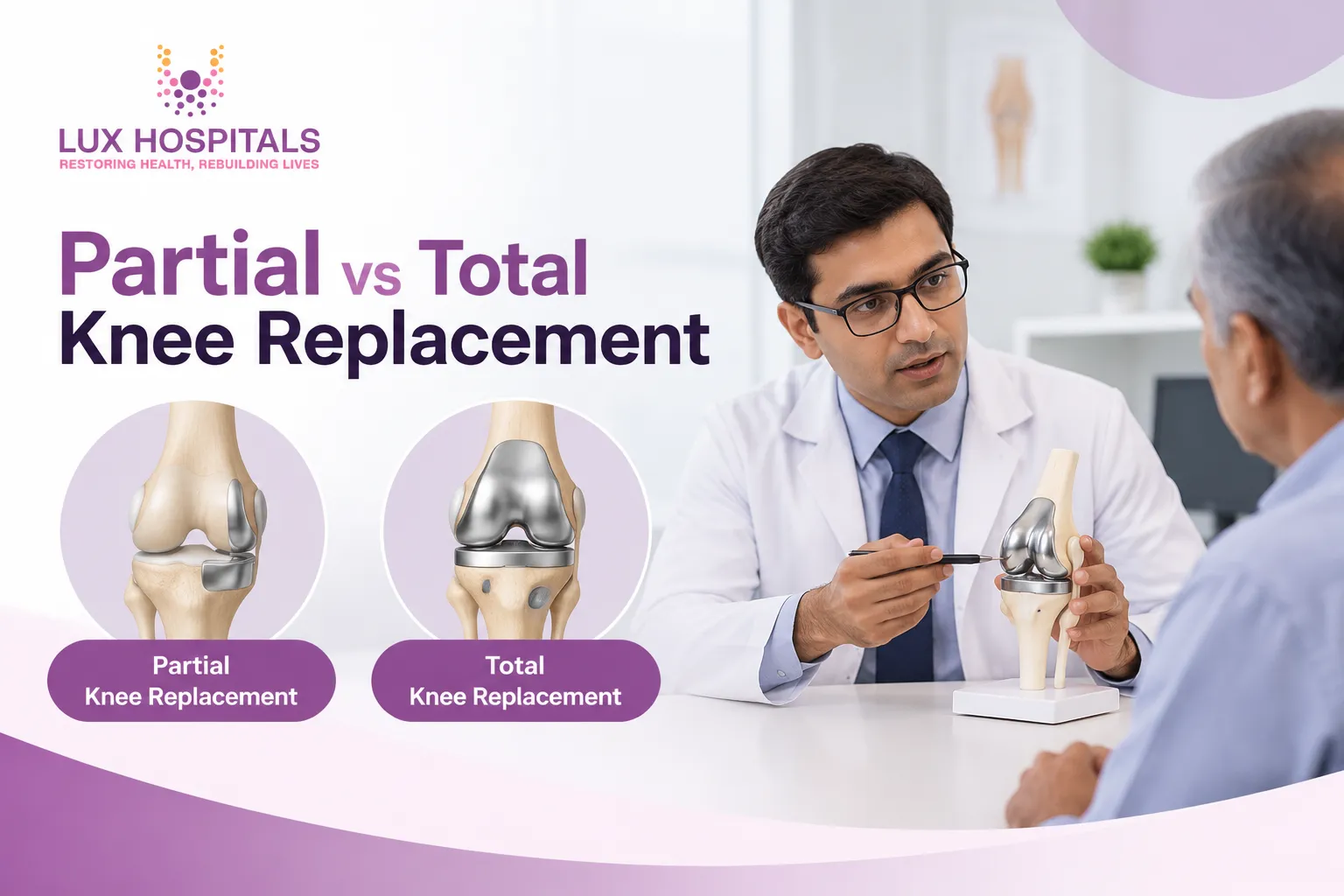
Knee pain can slowly change the way you live. Walking, climbing stairs, standing for long periods, or even getting up from a chair may become difficult. When medicines, physiotherapy, lifestyle changes, and other non-surgical treatments no longer provide enough relief, you may consider knee replacement surgery. But an important question remains Partial vs Total Knee […]
8 September 2026
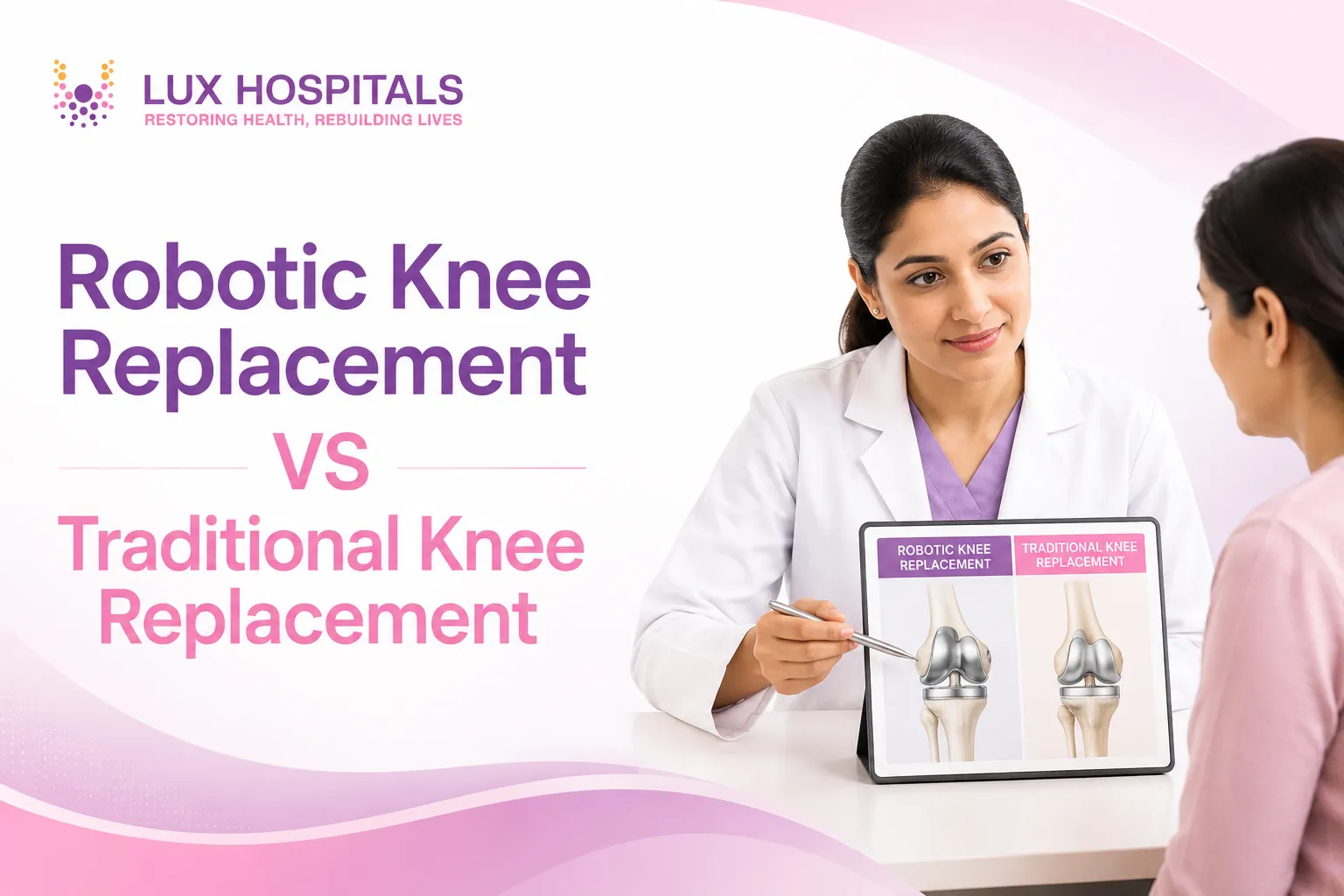
Knee pain can gradually change how you walk, work, exercise, and enjoy everyday life. When medicines, physiotherapy, injections, and lifestyle changes no longer provide enough relief, knee replacement surgery may become an option. With advances in orthopaedic technology, patients now have more choices than before. One common question is: Robotic Knee Replacement vs Traditional Knee […]
31 August 2026
Send your reports across and a senior surgeon will review them, explain the options and tell you honestly whether surgery is the right call.
Plot No.116, Lumbini Avenue, HITEC CITY, Near IKEA, Hyderabad – 500032