















Liver Cyst vs Liver Tumour: What’s the Difference?
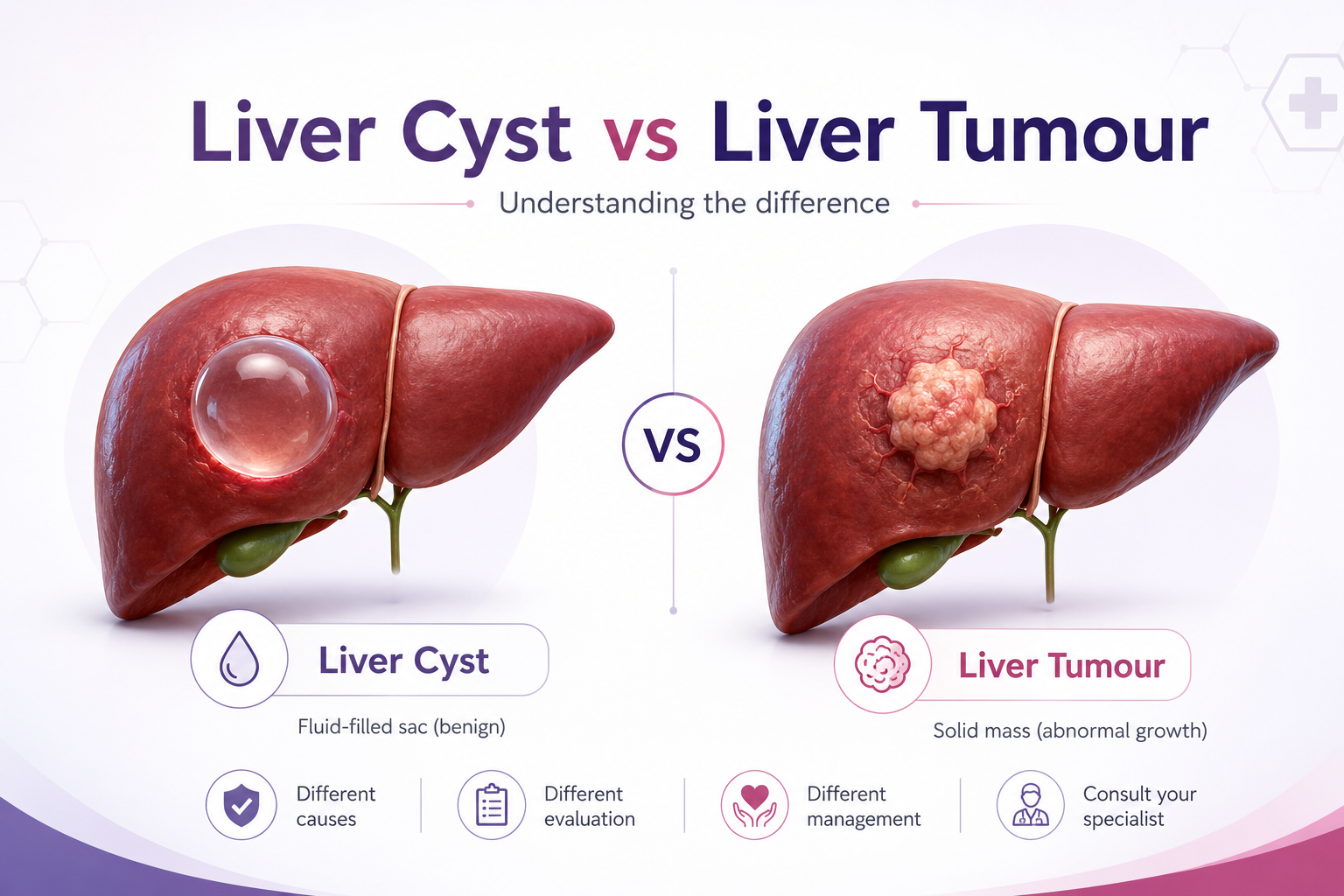
Liver Cyst vs Liver Tumour is an important distinction to understand, as not every liver growth is cancerous. While liver cysts are usually benign, fluid-filled sacs that often require only monitoring, liver tumours can be benign or malignant and may need prompt medical attention. Understanding their differences in causes, symptoms, diagnosis, and treatment helps ensure timely medical care. At Lux Hospitals, our experienced hepatobiliary specialists use advanced imaging and personalised treatment plans to accurately diagnose liver conditions and provide the most appropriate care for every patient.

What is a Liver Cyst?
A liver cyst is a fluid-filled sac that develops within the liver. Most liver cysts are non-cancerous (benign) and are often discovered accidentally during scans performed for other medical conditions. Small cysts usually do not cause symptoms and may not require treatment unless they grow larger or become infected.
Common causes of liver cysts include:
- Congenital (present from birth)
- Polycystic liver disease
- Parasitic infections (such as hydatid cysts)
- Rare liver disorders
Most simple liver cysts remain stable for years and do not affect liver function.
What is a Liver Tumour?
A liver tumour is an abnormal growth of liver cells. Unlike cysts, liver tumours can be either benign or malignant (cancerous). Some benign tumours remain harmless, while malignant tumours require immediate medical attention to prevent spread and improve treatment outcomes.
Types of liver tumours include:
Benign Liver Tumours
- Hemangioma
- Focal Nodular Hyperplasia (FNH)
- Hepatic Adenoma
Malignant Liver Tumours
- Hepatocellular Carcinoma (HCC)
- Cholangiocarcinoma
- Metastatic liver cancer
Recognising the differences between liver cysts and liver tumours helps doctors recommend the most appropriate treatment.
Liver Cyst vs Liver Tumour: Key Differences
Understanding Liver Cyst vs Liver Tumour becomes easier by comparing their main characteristics.
| Nature | Fluid-filled sac | Solid abnormal growth |
| Cancer Risk | Usually non-cancerous | Can be benign or cancerous |
| Symptoms | Often none | May cause pain, weight loss, fatigue |
| Growth | Usually slow | May grow rapidly |
| Treatment | Observation or drainage | Surgery, medication, or cancer treatment |
Although both conditions affect the liver, accurate diagnosis is essential because their treatment plans differ significantly.
Symptoms of Liver Cyst vs Liver Tumour
Symptoms often overlap, making professional evaluation important.
Liver Cyst Symptoms
- Mild abdominal discomfort
- Feeling of fullness
- Bloating
- Upper abdominal pain
- Nausea (rare)
- No symptoms in many patients
Liver Tumour Symptoms
- Persistent upper abdominal pain
- Unexplained weight loss
- Loss of appetite
- Fatigue
- Jaundice
- Swollen abdomen
- Fever
- Enlarged liver
If symptoms persist, comparing Liver Cyst vs Liver Tumour through medical evaluation becomes essential.
Causes and Risk Factors
The causes of Liver Cyst vs Liver Tumour differ considerably.
Liver Cyst Risk Factors
- Family history
- Polycystic liver disease
- Hydatid infection
- Congenital abnormalities
Liver Tumour Risk Factors
- Chronic hepatitis B
- Chronic hepatitis C
- Liver cirrhosis
- Fatty liver disease
- Alcohol abuse
- Diabetes
- Obesity
- Smoking
Managing these risk factors may reduce the chances of developing serious liver disease.
How Are Liver Cysts and Liver Tumours Diagnosed?
Diagnosing liver cysts vs liver tumours requires careful clinical evaluation and advanced imaging.
At Lux Hospitals, specialists may recommend:
Medical History and Physical Examination
Physicians assess risk factors, lifestyle, family history, and symptoms of liver disease.
Imaging Tests
- Ultrasound
- CT Scan
- MRI Scan
These imaging techniques help determine whether the lesion is fluid-filled or solid.
Blood Tests
Blood investigations may include:
- Liver Function Tests (LFTs)
- Alpha-fetoprotein (AFP)
- Viral hepatitis screening
Liver Biopsy
If imaging findings remain unclear, a biopsy may be performed to confirm the diagnosis.
Treatment Options
Treatment depends on whether the condition is a cyst or a tumour.
Liver Cyst Treatment
- Regular monitoring
- Observation
- Needle aspiration (selected cases)
- Laparoscopic cyst removal
- Treatment for parasitic cysts
Liver Tumour Treatment
- Surgical removal
- Liver resection
- Liver transplantation
- Radiofrequency ablation
- Chemotherapy
- Targeted therapy
- Immunotherapy
- Radiation therapy (selected cases)
At Lux Hospitals, multidisciplinary liver specialists develop personalised treatment plans tailored to each patient’s condition and overall health.
When Should You See a Doctor?
Seek medical attention if you experience:
- Persistent abdominal pain
- Unexplained weight loss
- Yellowing of the eyes or skin
- Abdominal swelling
- Loss of appetite
- Persistent fatigue
- Fever with liver pain
Early evaluation improves the chances of successful treatment and better long-term outcomes.
Why Choose Lux Hospitals for Liver Care?
Because Lux Hospitals combines cutting-edge technology with compassionate care, patients trust us.
Among the liver care services we offer are:
- Experienced gastro surgeons
- Advanced imaging facilities
- Comprehensive liver evaluation
- Minimally invasive surgery
- Personalised treatment plans
- Cancer care specialists
Whether you are concerned about a liver cyst vs. a liver tumour, our team provides expert diagnosis and treatment tailored to your needs.
Tips to Keep Your Liver Healthy
Healthy lifestyle choices can reduce the risk of liver disease.
Follow these tips:
- Eat a balanced diet.
- Maintain a healthy weight.
- Avoid excessive alcohol.
- Get vaccinated against hepatitis B.
- Exercise regularly.
- Control diabetes.
- Avoid smoking.
- Schedule routine health check-ups.
These habits support long-term liver health and overall well-being.
Conclusion
Understanding the distinctions between liver tumours and liver cysts is essential, as they differ in terms of causes, symptoms, risks, and available treatments. Depending on whether they are benign or malignant, liver tumours may require immediate medical attention, but many liver cysts are benign and merely need to be monitored. The secret to a successful course of treatment is early diagnosis through sophisticated imaging and professional assessment. To help patients achieve the best possible results, Lux Hospitals’ skilled liver specialists offer thorough diagnosis, individualised treatment programs, and compassionate care.


