










Ovarian Torsion in Women: Everything You Need to Know
Women’s ovarian torsion is a severe gynaecological issue that needs to be treated right away. It happens when an ovary cuts off its blood supply by twisting around the ligaments supporting it. Fertility and general reproductive health may be negatively impacted if the afflicted ovary is not treated right away. Our skilled gynaecologists at Lux Hospitals offer cutting-edge diagnosis and urgent care to maintain ovarian function and guarantee the best possible recovery. This thorough guide will teach you everything you need to know about ovarian torsion in women, including its causes, symptoms, diagnosis, available treatments, complications, and preventive measures.

What is Ovarian Torsion in Women?
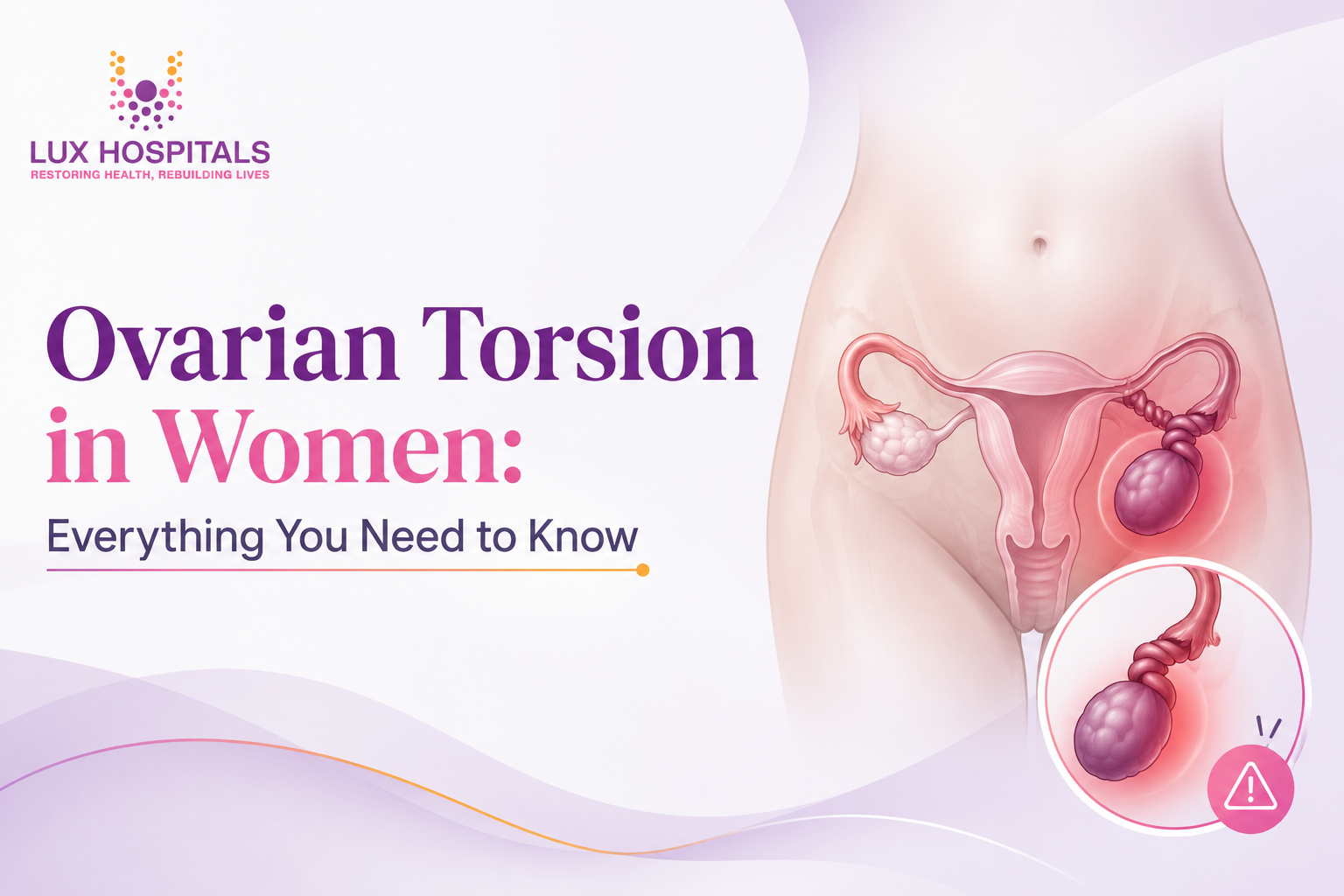
Ovarian torsion occurs in women when the ovary rotates around the tissues that maintain it in place. By blocking the blood vessels that nourish the ovary, this twisting decreases the delivery of nutrients and oxygen. If the blood supply is not quickly restored, the ovarian tissue may die, requiring emergency surgery. Although it can occur at any age, Ovarian Torsion in Women is more common during the reproductive years. Women with ovarian cysts or enlarged ovaries have a higher risk because the added weight makes the ovary more likely to twist.
Why is it a Medical Emergency?
Without prompt treatment:
- Blood supply stops completely.
- Ovarian tissue begins to die.
- Fertility may be affected.
- Infection may develop.
- Emergency surgery becomes unavoidable.
Ignoring Ovarian Torsion in Women can result in irreversible ovarian damage within hours.
What Causes Ovarian Torsion in Women?
Several conditions increase the risk of Ovarian Torsion in Women by making the ovary heavier or more mobile.
Common Causes
- Ovarian cysts
- Benign ovarian tumors
- Enlarged ovaries
- Fertility treatments
- Pregnancy (especially early pregnancy)
- Hormonal stimulation
- Previous pelvic surgery
- Congenital long ovarian ligaments
Large ovarian cysts measuring more than 5 cm are one of the leading causes of Ovarian Torsion in Women because they make the ovary unstable.
Risk Factors
Women are at greater risk if they have:
- Polycystic ovary syndrome (PCOS)
- Recurrent ovarian cysts
- Fertility treatment cycles
- History of ovarian torsion
- Pregnancy
Early evaluation at Lux Hospitals can help detect these risk factors before complications arise.
Symptoms of Ovarian Torsion in Women
The symptoms of Ovarian Torsion in Women usually appear suddenly and become severe within a short period.
Common Symptoms
- Suddenly, severe pelvic pain
- Pain on one side of the abdomen
- Nausea
- Vomiting
- Lower abdominal tenderness
- Pelvic cramps
- Fever (in advanced cases)
- Rapid heartbeat
- Difficulty walking due to pain
The pain may come and go if the ovary twists and untwists temporarily, making diagnosis challenging.
When Should You Visit a Hospital?
Seek emergency medical care if you experience:
- Suddenly, unbearable pelvic pain
- Persistent vomiting
- Severe abdominal tenderness
- Fever with pelvic pain
- Fainting or dizziness
These symptoms may indicate Ovarian Torsion in Women, requiring immediate surgical intervention.
How is Ovarian Torsion in Women Diagnosed?
Prompt diagnosis is essential, as delays can reduce the likelihood of saving the ovary.
Medical History
The gynaecologist evaluates:
- Nature of pain
- Menstrual history
- Pregnancy status
- Previous ovarian cysts
- Fertility treatments
Physical Examination
Doctors assess:
- Pelvic tenderness
- Abdominal swelling
- Pain location
- Signs of infection
Imaging Tests
Ultrasound with Doppler
This is the first-line investigation because it evaluates:
- Blood flow to the ovary
- Ovarian enlargement
- Presence of cysts
- Twisting of the ovarian pedicle
CT Scan or MRI
Advanced imaging may be recommended when the diagnosis remains uncertain. At Lux Hospitals, our advanced imaging facilities help diagnose Ovarian Torsion in Women quickly and accurately.
Treatment for Ovarian Torsion in Women
No medication can untwist the ovary. Surgery is the only effective treatment for Ovarian Torsion in Women.
Laparoscopic Surgery
Most patients undergo minimally invasive laparoscopic surgery where surgeons:
- Untwist the ovary
- Restore blood flow
- Remove ovarian cysts if needed.
- Preserve healthy ovarian tissue.
Oophorectomy
If the ovary has been deprived of its blood supply for too long and becomes non-viable, removal of the affected ovary may be necessary.
The earlier ovarian torsion in Women is treated, the greater the chance of preserving fertility.
Possible Complications of Ovarian Torsion in Women
Delayed treatment can lead to serious complications.
Loss of Ovary
Prolonged interruption of the blood supply may permanently damage ovarian tissue.
Infertility
Loss of ovarian function can affect future fertility, particularly if the other ovary is also compromised.
Infection
Dead ovarian tissue increases the risk of severe pelvic infection.
Peritonitis
An untreated infection may spread into the abdominal cavity, becoming life-threatening.
Timely management of Ovarian Torsion in Women significantly reduces these risks.
Can Ovarian Torsion in Women Be Prevented?
While not all cases can be prevented, women can lower their risk by seeking early treatment for ovarian cysts and attending regular gynaecological check-ups.
Prevention Tips
- Schedule routine pelvic examinations.
- Treat ovarian cysts promptly.
- Follow fertility treatment under specialist supervision.
- Report sudden pelvic pain immediately.
- Attend follow-up visits after ovarian surgery.
Women with recurrent ovarian cysts should undergo regular monitoring at Lux Hospitals to reduce the risk of Ovarian Torsion in Women.
Why Choose Lux Hospitals for Ovarian Torsion Treatment?
At Lux Hospitals, we provide comprehensive emergency gynaecological care, supported by advanced technology and experienced specialists.
Our Advantages
- Experienced gynecologists
- Emergency laparoscopic surgery
- Advanced ultrasound and Doppler imaging
- Personalised fertility-preserving treatment
- Modern operating theatres
- Comprehensive post-operative care
- Dedicated women’s health specialists
Our goal is to diagnose Ovarian Torsion in Women quickly, preserve ovarian function whenever possible, and ensure a smooth recovery.
Conclusion
Women’s ovarian torsion is a serious medical emergency that should never be disregarded. Every hour counts when it comes to maintaining ovarian health and fertility, so sudden pelvic discomfort, nausea, and vomiting need to be evaluated right away. Our skilled gynaecologists, cutting-edge diagnostic tools, and expertise in minimally invasive surgery at Lux Hospitals ensure prompt care and improved outcomes. Seek immediate medical attention if you or a loved one exhibits signs of ovarian torsion in women.