












Cholecystectomy Types: Partial vs Complete Gallbladder Removal
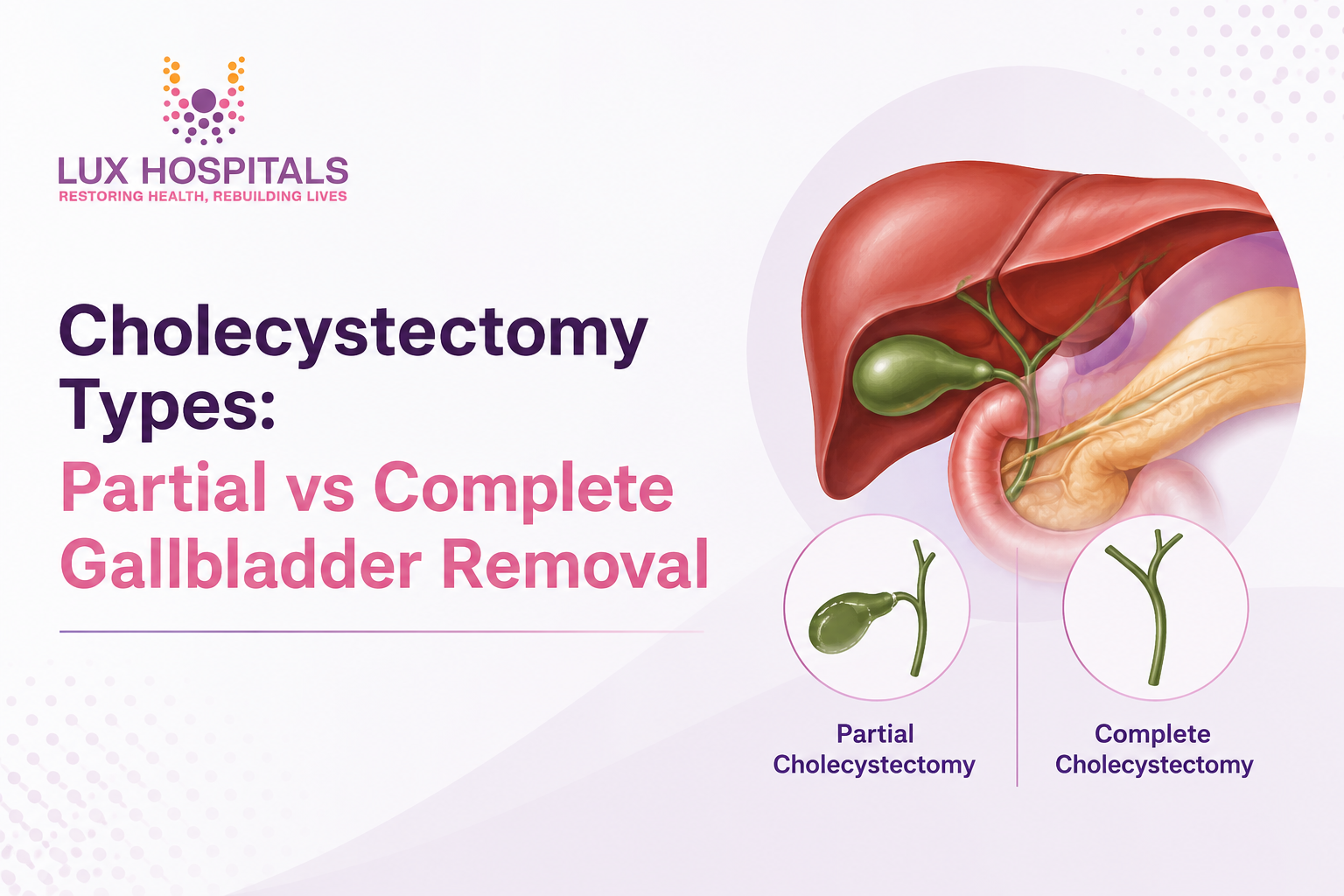
Gallbladder disease is a prevalent digestive problem that affects millions of people worldwide. To prevent serious consequences, surgery is often necessary to treat conditions such as gallstones, gallbladder inflammation, and infections. Partial removal may be advised in certain circumstances where removing the entire gallbladder could be dangerous, even though total removal is the typical technique. At Lux Hospitals, our experienced gastrointestinal surgeons specialise in advanced laparoscopic gallbladder surgery, providing personalised care with the latest minimally invasive techniques. This guide explains Partial vs. Complete Gallbladder Removal, including when each procedure is recommended, its advantages and risks, recovery, and how to choose the right treatment.

What is a Cholecystectomy?
A cholecystectomy is a surgical procedure to remove the gallbladder, a small pear-shaped organ located beneath the liver. The gallbladder stores bile, a digestive fluid produced by the liver that helps break down fats. Although it plays a role in digestion, people can live healthy lives without a gallbladder because the liver continues to produce bile.
Common Reasons for Gallbladder Surgery
- Gallstones are causing severe abdominal pain.
- Acute or chronic cholecystitis
- Gallbladder polyps
- Gallstone pancreatitis
- Blocked bile ducts
- Porcelain gallbladder
- Recurrent gallbladder infections
When discussing partial vs. complete gallbladder removal, surgeons carefully evaluate the patient’s symptoms, imaging reports, and overall health before deciding on the most suitable procedure.
Understanding Partial vs Complete Gallbladder Removal
The condition of the gallbladder and the difficulty of the procedure will determine whether partial or complete gallbladder removal is the best option. Both operations share the goal of reducing symptoms and preventing problems, but their methods and long-term outcomes differ significantly.
What is Complete Gallbladder Removal?
The gallbladder is removed in its entirety during a complete cholecystectomy. Because surgery removes the affected organ and significantly reduces the risk of future gallstones or infections, it is the recommended treatment for the majority of gallbladder problems.
Doctors usually recommend complete removal for:
Gallstones with symptoms
* Prolonged inflammation of the gallbladder
* Cholecystitis acute
* Polyps in the gallbladder
* Possible gallbladder cancer
* Biliary colic that recurs
Benefits of Complete Gallbladder Removal
- Eliminates the source of gallstones
- Prevents recurrent gallbladder attacks
- Lower risk of future complications
- Permanent solution for most gallbladder diseases
- Excellent long-term success rate
What is Partial Gallbladder Removal?
Only a little section of the gallbladder is removed during a partial cholecystectomy, also known as a subtotal cholecystectomy. Only when total removal is dangerous because of significant inflammation or challenging anatomy do surgeons select this course of action.
Situations where partial removal may be necessary include:
- Dense scar tissue
- Severe infection
- Excessive bleeding risk
- Distorted anatomy
- Emergency surgeries with difficult visualisation
Although partial vs. complete gallbladder removal often favours complete surgery, partial removal is an excellent alternative when patient safety is the priority.
Partial vs Complete Gallbladder Removal – Key Differences
Understanding the differences between Partial vs Complete Gallbladder Removal helps patients know what to expect before surgery.
| Feature | Partial Removal | Complete Removal |
| Gallbladder Removed | Partially | Entirely |
| Preferred Procedure | Complex Cases | Most Patients |
| Future Gallstones | Small Possibility | Very Rare |
| Surgical Difficulty | Higher | Standard |
| Long-Term Success | Good | Excellent |
| Need for Repeat Surgery | Slightly Higher | Rare |
Complete gallbladder removal remains the standard treatment whenever it can be performed safely. However, partial removal reduces the risk of injury to nearby organs in technically difficult surgeries.
When Do Doctors Recommend Partial Gallbladder Removal?
Surgeons occasionally come across circumstances where proceeding with a full cholecystectomy could raise difficulties, even though total removal is optimal. Partial removal in these situations safeguards vital organs such as the liver, bile ducts, and blood vessels.
Doctors May Recommend Partial Removal If:
- Severe inflammation hides the anatomy.
- Scar tissue prevents safe dissection.
- Heavy bleeding affects visibility.
- The bile duct cannot be identified safely.
- The patient has an advanced gallbladder infection.
Benefits of Partial vs Complete Gallbladder Removal
Although each treatment has unique benefits, both offer substantial relief from gallbladder-related discomfort.
Benefits of Complete Removal
- Permanent treatment
- Eliminates gallstones completely
- Lower recurrence rate
- Better long-term outcomes
- Reduced need for future surgery
Benefits of Partial Removal
- Safer in difficult surgeries
- Protects nearby organs
- Reduces the risk of bile duct injury
- Effective in emergencies
- Allows surgeons to avoid major complications
When evaluating Partial vs Complete Gallbladder Removal, experienced surgeons prioritise the safest option while ensuring the best possible outcome for the patient.
Risks and Complications of Partial vs Complete Gallbladder Removal
Like any surgical procedure, Partial vs Complete Gallbladder Removal carries certain risks. However, these risks are generally low when the surgery is performed by experienced gastrointestinal surgeons using advanced laparoscopic techniques. At Lux Hospitals, patient safety is the highest priority, and every patient undergoes a thorough medical evaluation before surgery to reduce the chances of complications.
Risks of Partial Gallbladder Removal
A partial (subtotal) cholecystectomy is usually performed only when removing the entire gallbladder is unsafe. Although this procedure protects nearby organs and reduces the risk of bile duct injury, it may have a slightly higher chance of future gallbladder-related problems.
Possible Risks Include:
- Residual gallstones in the remaining gallbladder tissue
- Bile leakage after surgery
- Recurrent gallbladder inflammation
- Formation of gallstones in the remaining portion
- Rare need for repeat surgery
Most patients recover well after partial surgery, especially when they follow regular follow-up appointments and medical advice.
Risks of Complete Gallbladder Removal
Complete gallbladder removal is considered the gold standard for treating gallbladder disease because it removes the entire diseased organ. While it has excellent long-term outcomes, some surgical risks still exist.
Possible Risks Include:
- Bleeding
- Infection
- Injury to the bile duct (rare)
- Blood clots
- Temporary digestive discomfort
- Reactions to anesthesia
Patients can better understand why surgeons prescribe different procedures based on the complexity of the situation when they are aware of the differences between partial and complete gallbladder removal.
Recovery After Partial vs Complete Gallbladder Removal
Recovery after Partial vs Complete Gallbladder Removal depends on the type of surgery performed, the patient’s overall health, and whether laparoscopic or open surgery was required. Most patients who undergo laparoscopic surgery return home within 24 hours and resume normal activities much sooner than those undergoing open surgery.
What to Expect Immediately After Surgery
Immediately after surgery, patients are monitored in the recovery room until the effects of anaesthesia wear off. Mild pain, bloating, and shoulder discomfort caused by the laparoscopic gas are common but temporary.
Patients are encouraged to:
- Start walking within a few hours.
- Drink clear fluids as advised.
- Take prescribed pain medications.
- Follow wound-care instructions carefully.
Early movement improves circulation and helps prevent blood clots.
Recovery During the First Two Weeks
Healing occurs during the first two weeks. Patients should refrain from physically demanding tasks during this period and gradually resume their regular routines.
Tips for Faster Recovery
- Eat light and healthy meals.
- Drink plenty of water.
- Avoid lifting heavy objects.
- Keep the surgical incision clean and dry.
- Take medications exactly as prescribed.
- Attend follow-up visits with your surgeon.
Most patients can return to office work within one to two weeks after laparoscopic surgery.
Long-Term Recovery
People can live a completely healthy life without a gallbladder because the liver continues producing bile. Initially, some patients may notice mild bloating or loose stools after eating fatty foods, but these symptoms usually improve over time. Whether you undergo Partial vs Complete Gallbladder Removal, maintaining a healthy lifestyle, a balanced diet, and regular exercise supports long-term digestive health.
Diet After Partial vs Complete Gallbladder Removal
Following the right diet aids the digestive system’s adjustment and expedites healing after partial or total gallbladder excision. While most patients do not have long-term dietary restrictions, making the right food choices during the healing process improves digestion and lessens discomfort.
Foods to Include
Choose foods that are easy to digest and low in fat.
Recommended Foods
- Fresh fruits
- Cooked vegetables
- Whole grains
- Brown rice
- Oats
- Lean chicken
These foods provide essential nutrients without putting extra strain on the digestive system.
Foods to Avoid Initially
For the first few weeks after surgery, patients should avoid foods that are difficult to digest.
Avoid:
- Fried foods
- Oily curries
- Fast food
- Processed snacks
- High-fat dairy products
- Sugary desserts
- Alcohol
- Carbonated beverages
Eating five to six smaller meals instead of three heavy meals can also improve digestion after partial vs. complete gallbladder removal.
When Should You Consult a Doctor?
After gallbladder surgery, mild discomfort is normal. However, some symptoms require immediate medical attention.
Contact Your Doctor If You Experience:
- Severe abdominal pain
- High fever
- Persistent vomiting
- Yellowing of the skin or eyes (jaundice)
- Continuous bile leakage from the incision
Seeking early medical care helps prevent serious complications and ensures a smoother recovery.
Why Choose Lux Hospitals for Partial vs Complete Gallbladder Removal?
When it comes to gallbladder surgery, choosing an experienced hospital can make a significant difference in your treatment outcome and recovery. At Lux Hospitals, we combine expert gastrointestinal surgeons, state-of-the-art technology, and compassionate patient care to deliver the highest standards of surgical excellence. In addition to treating the illness, we also prioritise patient safety, quicker recovery, and long-term digestive health.
Why Patients Trust Lux Hospitals
- Highly experienced General and Laparoscopic Surgeons
- Advanced minimally invasive laparoscopic surgery
- Modern operating theatres with cutting-edge technology
- Accurate diagnosis using advanced imaging
- Personalised treatment plans for every patient
At Lux Hospitals, we believe every patient deserves world-class treatment with compassion, precision, and clinical excellence.
Conclusion
The degree of inflammation, the patient’s general health, and the surgeon’s intraoperative findings all play a role in the decision between partial and complete gallbladder removal. Our committed gastrointestinal surgeons at Lux Hospitals employ cutting-edge minimally invasive procedures to ensure the highest level of safety, minimal discomfort, and a faster recovery. We are dedicated to providing thorough, patient-centred treatment, from precise diagnosis to post-operative rehabilitation. See our professionals right away if you continue to have gallbladder disease symptoms.