














What Is Roux- en-Y Gastric Bypass Surgery and How Does It Work?
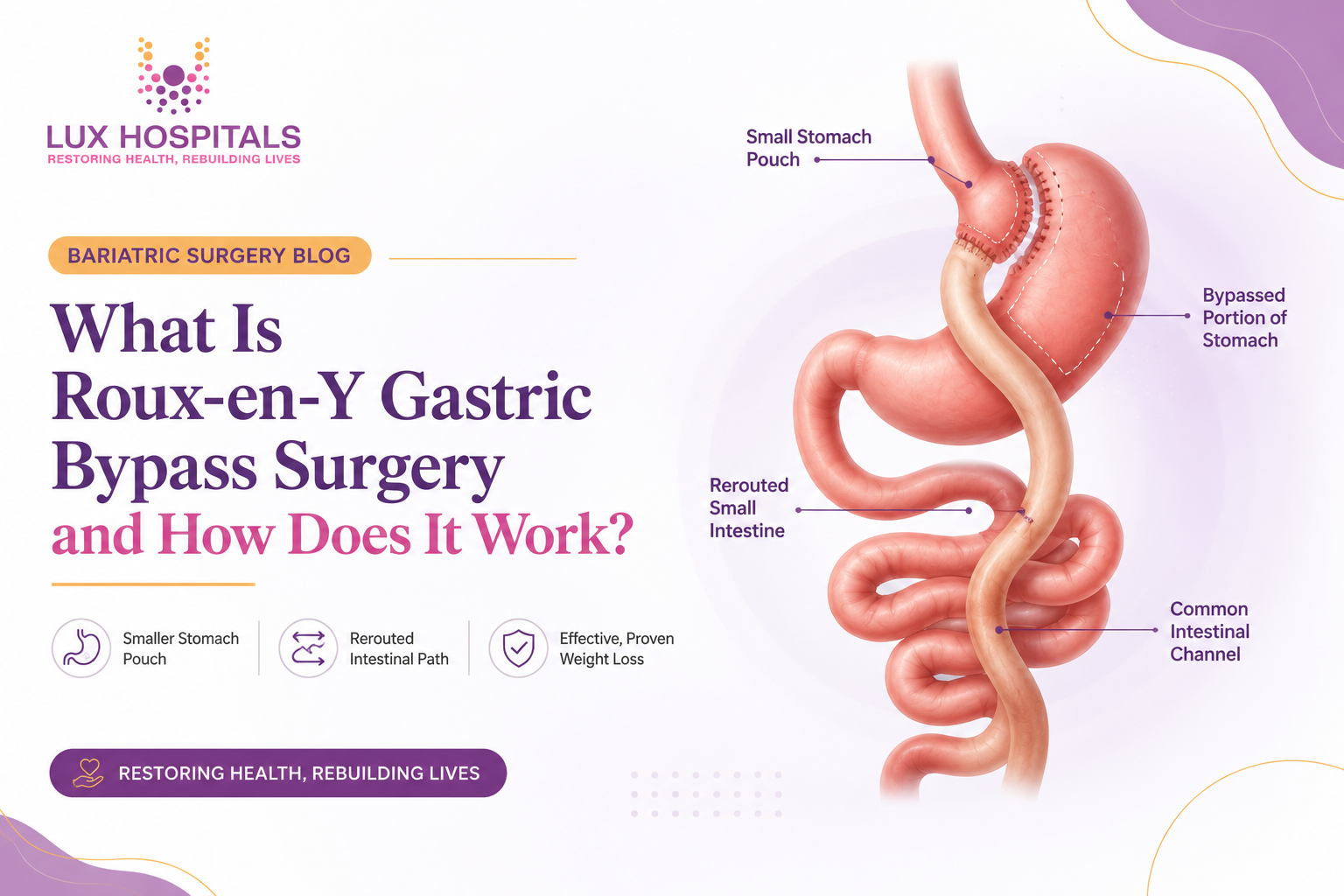
Obesity is more than a cosmetic concern—it is a chronic medical condition that increases the risk of diabetes, high blood pressure, heart disease, sleep apnea, joint pain, infertility, and several other health complications. For many people, diet plans, exercise routines, and medications may not provide long-term weight loss. In such situations, Roux-en-Y Gastric Bypass Surgery is an effective, medically proven solution. Roux-en-Y Gastric Bypass Surgery is one of the most successful bariatric procedures available today. At Lux Hospitals, experienced bariatric surgeons use advanced laparoscopic techniques to ensure safer surgery, faster recovery, and long-term success.

What is Roux-en-Y Gastric Bypass Surgery?
A weight-loss operation called Roux-en-Y Gastric Bypass Surgery modifies how your stomach and small intestine process food. The stomach is split into a small pouch during the procedure. This pouch, serving as the replacement stomach, has limited capacity.
The primary goals of Roux-en-Y Gastric Bypass Surgery include:
- Significant weight reduction
- Better blood sugar control
- Reduced hunger hormones
- Improved metabolic health
- Long-term obesity management
Many patients also experience improvements in conditions such as Type 2 diabetes, hypertension, fatty liver disease, and obstructive sleep apnea after Roux-en-Y Gastric Bypass Surgery.
How Does Roux-en-Y Gastric Bypass Surgery Work?
Understanding how Roux-en-Y Gastric Bypass Surgery works helps patients feel more confident about the procedure.
Step 1 – Creating a Small Stomach Pouch
The surgeon separates a small portion of the stomach to create a pouch roughly the size of an egg. This significantly reduces the amount of food you can eat during each meal.
Step 2 – Bypassing Part of the Small Intestine
The newly created stomach pouch is directly connected to the middle section of the small intestine. Food skips the remaining stomach and the first part of the intestine.
Step 3 – Reduced Calorie Absorption
Fewer calories and nutrients are absorbed because food avoids a portion of the digestive system. This helps people lose weight effectively and sustainably.
Step 4 – Hormonal Changes
Roux-en-Y Gastric Bypass Surgery also changes gut hormones that regulate hunger, fullness, and blood sugar levels. Many patients feel less hungry and become satisfied with smaller meals.
These combined effects make Roux-en-Y Gastric Bypass Surgery one of the most effective treatments for severe obesity.
Who is an Ideal Candidate for Roux-en-Y Gastric Bypass Surgery?
Not everyone with obesity requires surgery. Your doctor will evaluate your BMI, overall health, and previous weight-loss efforts before recommending Roux-en-Y Gastric Bypass Surgery.
You may be a suitable candidate if you:
- Have a BMI of 40 or above
- Have a BMI of 35 or above with obesity-related illnesses.
- Have uncontrolled Type 2 diabetes
- Experience sleep apnea due to obesity
At Lux Hospitals, every patient undergoes a complete medical evaluation before Roux-en-Y Gastric Bypass Surgery to ensure the safest treatment plan.
Benefits of Roux-en-Y Gastric Bypass Surgery
The benefits of Roux-en-Y Gastric Bypass Surgery extend far beyond weight loss.
Major Benefits
- Significant long-term weight reduction
- Better control of Type 2 diabetes
- Lower blood pressure
- Improved cholesterol levels
- Relief from sleep apnea
- Reduced joint pain
- Increased mobility
Studies show that many patients lose approximately 60–80% of their excess body weight after Roux-en-Y Gastric Bypass Surgery, provided they follow healthy lifestyle recommendations.
Risks and Possible Complications
Like any major treatment, Roux-en-Y Gastric Bypass Surgery has several potential risks. Fortunately, new laparoscopic techniques have made the operation safer.
Possible risks include:
- Bleeding
- Infection
- Blood clots
- Leakage from surgical connections
- Vitamin and mineral deficiencies
- Dumping syndrome
At Lux Hospitals, patients receive detailed nutritional guidance, regular follow-up appointments, and lifelong support to minimise complications after Roux-en-Y Gastric Bypass Surgery.
Recovery After Roux-en-Y Gastric Bypass Surgery
Recovery is gradual and requires commitment.
Recovery Timeline
First Week
- Liquid diet
- Walking encouraged
- Pain managed with medication.
Weeks 2–4
- Soft foods introduced
- Gradual increase in physical activity
After One Month
- Normal, healthy meals in smaller portions
- Regular exercise begins
Long-Term Lifestyle Tips
- Eat slowly
- Chew food thoroughly
- Stay hydrated
- Avoid sugary beverages
- Take prescribed vitamin supplements.
Following these recommendations helps patients achieve the best results after Roux-en-Y Gastric Bypass Surgery.
Why Choose Lux Hospitals for Roux-en-Y Gastric Bypass Surgery?
Choosing the right hospital is essential for a successful weight-loss journey.
At Lux Hospitals, patients benefit from:
- Experienced bariatric surgeons
- Advanced laparoscopic technology
- Personalised treatment plans
- Comprehensive nutritional counselling
- Dedicated anesthesia specialists
- Modern operating theatres
- Safe surgical protocols
From your first consultation to lifelong weight management, Lux Hospitals supports every step of your transformation.
Conclusion
For people with severe obesity and obesity-related illnesses, Roux-en-Y Gastric Bypass Surgery is a life-changing, clinically proven treatment. By decreasing stomach size, restricting calorie absorption, and improving metabolic function, this surgery helps patients lose weight sustainably and improve their general health. If you have been unable to lose weight through conventional methods, consult the bariatric experts at Lux Hospitals. With advanced surgical expertise, compassionate care, and personalised treatment plans, Lux Hospitals can help you begin a healthier and happier future through Roux-en-Y Gastric Bypass Surgery.
Frequently Asked Questions
Within 12 to 18 months following Roux-en-Y Gastric Bypass Surgery, the majority of patients lose 60% to 80% of their excess body weight. The precise amount is determined by adhering to your bariatric team's recommended diet, exercising frequently, attending follow-up appointments, and leading a healthy lifestyle.
Because Roux-en-Y Gastric Bypass Surgery permanently alters the structure of the stomach and small intestine, it is indeed regarded as a permanent weight-loss operation. Although reversal is theoretically possible in certain unusual circumstances, it is rare.
Due to hormonal changes, increased insulin sensitivity, and long-term weight loss following Roux-en-Y Gastric Bypass Surgery, many patients enjoy notable improvement or even remission of Type 2 diabetes. Even before significant weight loss happens, some people have improved blood sugar management a few days after surgery.
Lux Hospitals offers cutting-edge laparoscopic bariatric treatments carried out by skilled surgeons who prioritise long-term success, individualised care, and patient safety. To achieve long-term weight loss and improved overall health, patients also receive thorough dietary counselling, lifestyle advice, and routine follow-up care.
Lux Hospitals provides comprehensive post-operative care, including recommendations for exercise, vitamin supplements, food planning, regular health monitoring, and ongoing follow-up appointments. This multidisciplinary approach prevents nutritional deficiencies, promotes safe recovery, and sustains effective long-term weight-loss outcomes.


