










Liposuction vs Tummy Tuck: Which Procedure Is Right for You?
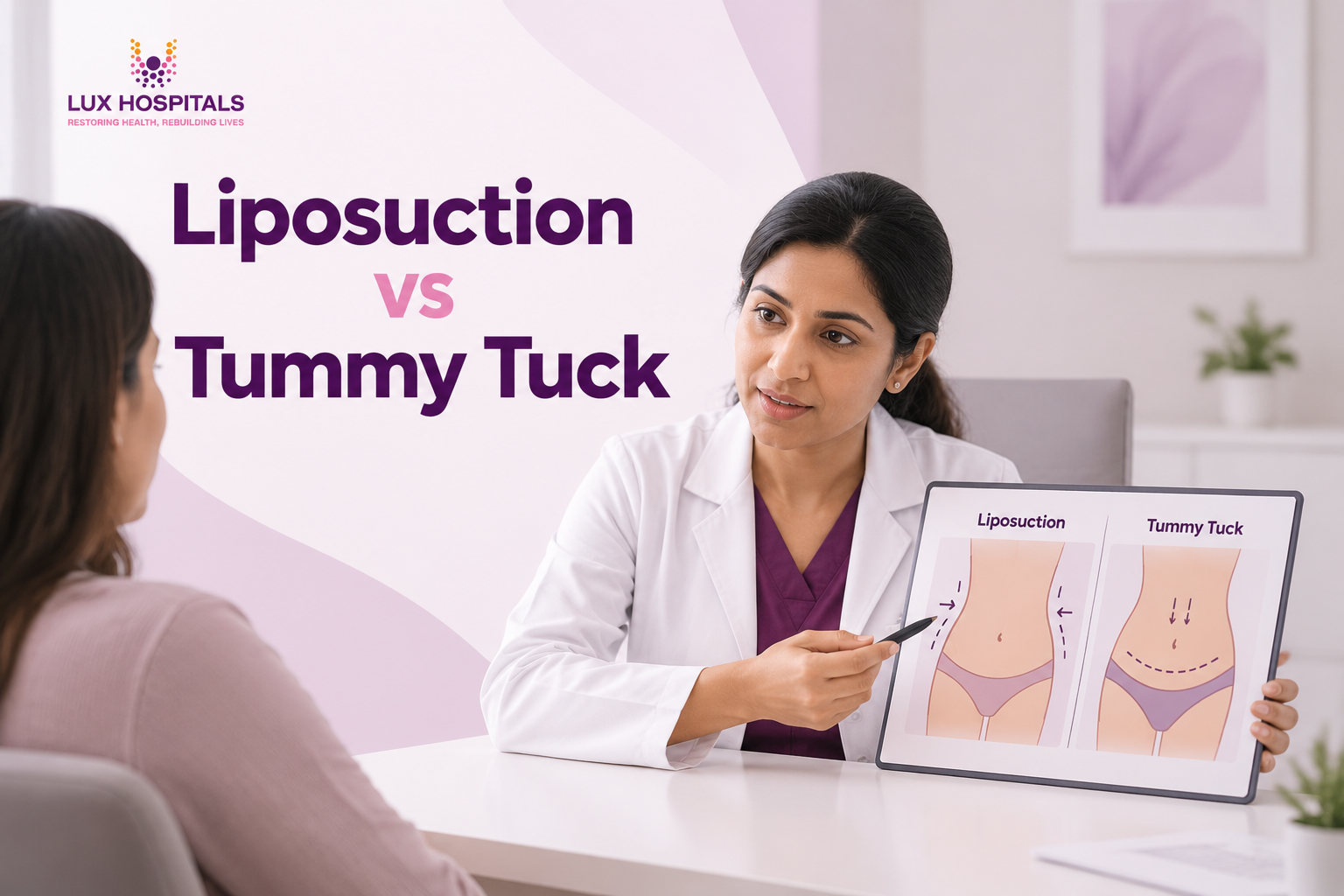
Choosing a body contouring procedure can be confusing, especially when you’re deciding between removing stubborn fat and tightening loose abdominal skin. Liposuction vs. Tummy Tuck is a common comparison for people who want a flatter, more defined abdomen but aren’t sure which procedure fits their needs. Although they function differently, both procedures can enhance body shapes. A stomach tuck, commonly known as an abdominoplasty, removes excess skin and can strengthen weak abdominal muscles, while liposuction mostly removes excess fat. Knowing these distinctions can help you have a -more informed conversation with a licensed plastic surgeon at Lux Hospitals.
What Is Liposuction?
Liposuction is a body contouring procedure designed to remove localised fat deposits that do not respond well to diet and exercise. It can be performed on areas such as the abdomen, waist, thighs, hips, arms and other suitable areas. During the procedure, the surgeon uses specialised instruments to loosen and remove excess fat from selected areas. The goal is not simply weight loss but improved body proportions and contour.
Who May Benefit From Liposuction?
Liposuction may be suitable for adults who:
- Have stubborn pockets of fat despite maintaining a healthy lifestyle
- Are close to their ideal body weight
- Have reasonably firm and elastic skin
- Want better definition in specific areas.
- Have realistic expectations about the results.
Liposuction does not remove large amounts of loose skin. If loose abdominal skin is the main concern, another procedure may be more appropriate.

What Is a Tummy Tuck?
A tummy tuck is a surgical procedure that removes excess abdominal skin and fat and tightens the abdominal wall when needed. People often consider it if they have significant skin laxity after pregnancy, major weight loss, or changes in body shape.
In Liposuction vs Tummy Tuck, the key difference is that a tummy tuck addresses excess skin and abdominal muscle separation or weakness, while liposuction mainly targets localised fat.
A tummy tuck can involve an incision across the lower abdomen. The surgeon removes excess skin, repairs or tightens the abdominal wall when required and reshapes the remaining tissue to create a smoother abdominal contour.
Who May Benefit From a Tummy Tuck?
A tummy tuck may be considered when a person has:
- Significant loose or hanging abdominal skin
- Abdominal muscle weakness or separation
- Skin changes after pregnancy
- Excess skin following substantial weight loss
- A relatively stable body weight
- Realistic expectations about surgery and recovery
A tummy tuck is not a substitute for weight-loss treatment. Patients should discuss their overall health, weight stability and future pregnancy plans with their surgeon before considering surgery.
Liposuction vs Tummy Tuck: What Is the Main Difference?
The simplest way to understand liposuction vs. tummy tuck is to identify the problem each procedure is designed to address.
Liposuction: Primarily removes localised fat deposits.
Tummy tuck: Removes excess skin and may tighten weakened abdominal muscles.
Liposuction may be better suited for:
People with stubborn fat and relatively good skin elasticity.
Tummy tuck may be better suited for:
People with significant loose skin or abdominal muscle laxity.
Combination treatment:
In selected patients, surgeons may recommend combining procedures to address both excess fat and loose skin. The right choice depends on your anatomy, skin quality, abdominal muscles, health, goals and previous weight changes. A physical examination is essential before deciding between procedures.
Liposuction vs Tummy Tuck After Pregnancy
Pregnancy can change the abdomen in several ways. Some women develop stubborn fat deposits, while others experience stretched skin or abdominal muscle separation. This makes Liposuction vs Tummy Tuck particularly relevant after pregnancy. Liposuction may help when the main issue is localised fat, and the skin remains sufficiently firm. A tummy tuck may be considered when loose skin or abdominal muscle separation is a major concern. Patients who are planning another pregnancy should discuss their plans with their surgeon because future pregnancy can affect the results of abdominal contouring surgery.
Liposuction vs Tummy Tuck After Weight Loss
Significant weight loss can improve overall health but may leave loose abdominal skin behind. Exercise can strengthen the underlying muscles, but it cannot always remove excess skin.
Patients with good skin elasticity and residual fat may benefit from liposuction rather than a tummy tuck. To achieve a flatter abdominal contour, people with significant loose skin may need a tummy tuck. Some patients may require a combination approach. Your surgeon can assess skin quality, fat distribution and abdominal tissues before recommending a suitable treatment plan.
Important Factors to Consider
Before choosing a procedure, consider:
- Your primary concern: fat, loose skin or both
- Skin elasticity
- Abdominal muscle condition
- Weight stability
- Previous pregnancy or major weight loss
- Overall health
- Expected recovery time
- Your desired body contour
Recovery: Liposuction vs Tummy Tuck
Individual recovery varies and depends on the extent of surgery. Swelling, bruising, and brief discomfort are possible side effects of liposuction recovery. In general, patients must follow postoperative instructions and activity limitations closely. A tummy tuck is a more extensive operation because it may involve skin removal and abdominal wall tightening. Recovery can therefore take longer, and patients may need to limit strenuous activity for the period their surgeon recommends.
When comparing Liposuction vs Tummy Tuck, choose the procedure based on your treatment needs, not simply the one with the shorter recovery. Following your surgeon’s instructions supports safe healing and helps protect your results.
Liposuction vs Tummy Tuck: Which One Is Right for You?
Liposuction may be a good option when stubborn fat is the main concern, and your skin has enough elasticity. A tummy tuck may be more appropriate when excess skin and abdominal muscle laxity are significant concerns.
For some patients, combining liposuction with a tummy tuck can achieve more thorough contouring. Combination operations, however, need a thorough medical evaluation and are not appropriate for everyone. Pay close attention to postoperative instructions and activity limitations. At Lux Hospitals, a qualified plastic surgeon can evaluate your body contour, discuss your goals and explain the potential benefits, limitations, risks and recovery involved.
Why Professional Assessment Matters
Online comparisons cannot determine which procedure is right for your body. During a consultation, your surgeon can assess:
- Fat distribution
- Skin quality and elasticity
- Abdominal muscle condition
- Previous surgeries
- Medical history
- Weight stability
- Desired outcome
The goal of Liposuction vs Tummy Tuck is not to choose the more popular procedure. It is to choose the procedure that safely and appropriately addresses your specific concern.
Conclusion
Choosing between these procedures requires more than comparing before-and-after photographs. Liposuction vs. tummy tuck is ultimately a decision based on your specific body-contouring concern. If stubborn fat is the main issue, liposuction may be considered. If loose skin or abdominal muscle laxity is the primary concern, a tummy tuck may be more appropriate. In selected cases, surgeons may recommend a combination approach. If you are considering body contouring, speak with a qualified plastic surgeon at Lux Hospitals to understand your options and make an informed decision based on your individual needs.
Frequently Asked Questions
Because they target different issues—liposuction mostly removes localised fat, whereas a tummy tuck treats excess skin and may tighten weak abdominal muscles—neither procedure is always superior. The best option depends on your desired result, health, abdominal tissue, skin elasticity, and body shape.
Liposuction removes excess fat but does not remove significant amounts of loose or hanging skin, so it may not provide the desired result when skin laxity is the primary concern. People with good skin elasticity may experience some natural skin contraction after fat removal, but responses vary. A tummy tuck may be considered when substantial excess skin needs surgical removal.
A tummy tuck can create a flatter abdominal appearance by removing excess skin and, when appropriate, tightening weakened abdominal muscles, while liposuction primarily improves the contour by reducing localised fat. The visible result depends on factors such as your existing anatomy, skin quality, fat distribution, muscle condition and healing. After a physical examination, your surgeon can explain which approach is more likely to achieve your desired contour.
Yes, selected patients may undergo liposuction and a tummy tuck during the same surgical plan when both excess fat and loose abdominal skin need attention. Combining procedures can provide more comprehensive body contouring, but it also requires careful assessment of your health, surgical needs and expected recovery. Your plastic surgeon will determine whether combining procedures is appropriate and safe for you.
Tummy tuck recovery varies depending on the extent of surgery and the individual's healing process, with swelling, tightness and temporary discomfort commonly occurring during the early recovery period. Patients usually need to follow activity restrictions and gradually return to normal activities, following their surgeon's instructions. Your surgeon will provide personalised recovery guidance and tell you when exercise, work and other activities can be resumed safely.
Lux Hospitals provides specialised surgical care, and eligible patients can discuss body contouring options such as liposuction and tummy tuck surgery with the plastic and cosmetic surgery team. A consultation allows the surgeon to assess your concerns, medical history and body contour before recommending an appropriate treatment approach.
You can contact Lux Hospitals to schedule an appointment and discuss your body-contouring concerns with the appropriate specialist. During the consultation, your surgeon can explain suitable treatment options, expected results, possible risks, recovery and postoperative care.