Dr. Samhitha Reddy
Consultant Proctologist & Laparoscopic Surgeon
MBBS, MS, FMAS, FISCP, DMAS
- 8 Yrs
- ASCRS Member
By Dr Harshita Kakarla · MBBS, MS, FMAS 11 September 2026 6 min read
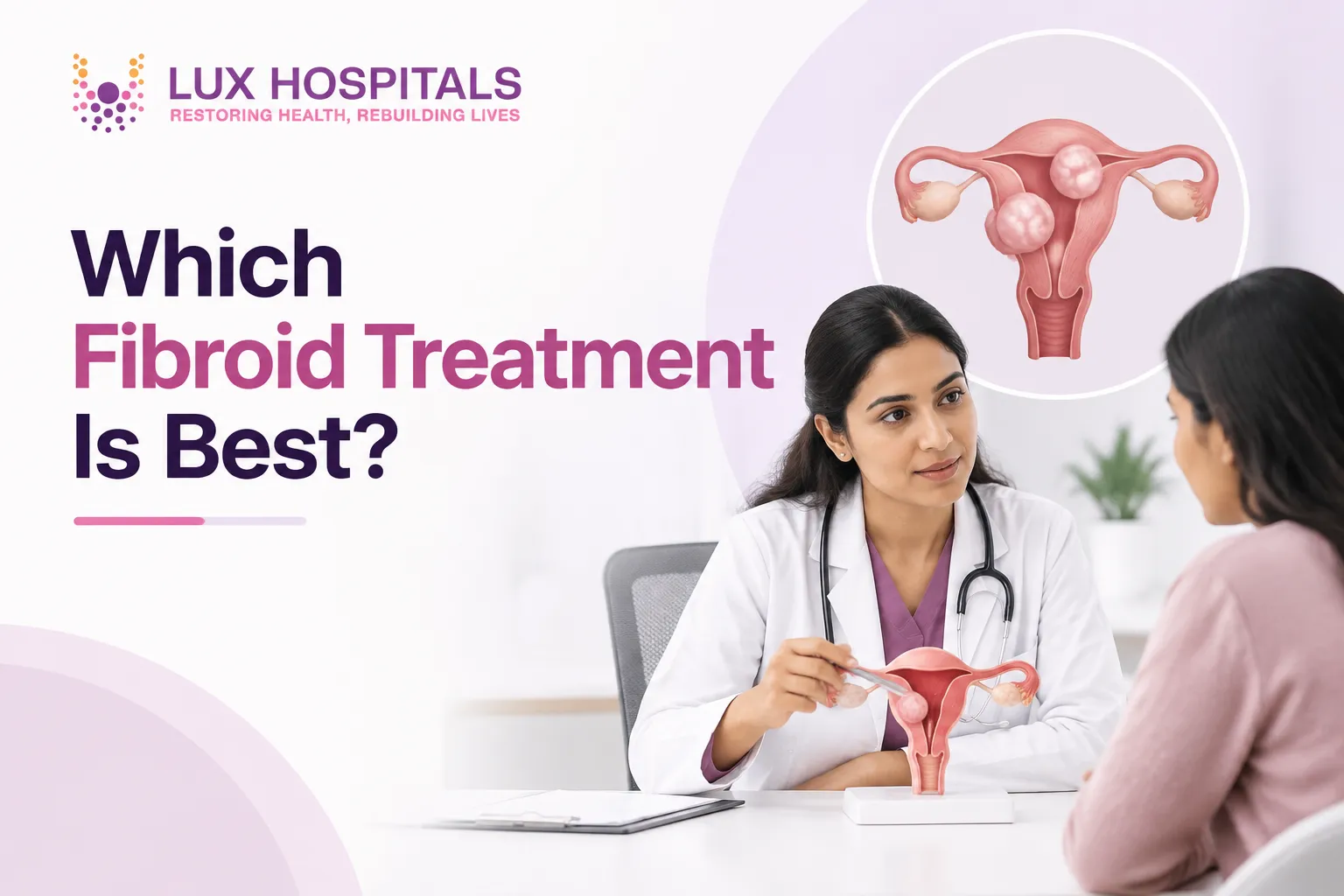
Uterine fibroids are non-cancerous growths that develop in or around the uterus. Some women have no symptoms, while others experience heavy periods, pelvic pressure, abdominal pain, frequent urination, or fertility concerns. Because fibroids vary in size, number, location, and symptoms, no single Treatment for fibroids works best for every woman. The right Treatment for Fibroids […]
Uterine fibroids are non-cancerous growths that develop in or around the uterus. Some women have no symptoms, while others experience heavy periods, pelvic pressure, abdominal pain, frequent urination, or fertility concerns. Because fibroids vary in size, number, location, and symptoms, no single Treatment for fibroids works best for every woman. The right Treatment for Fibroids depends on your symptoms, fibroid characteristics, age, overall health, and whether you want to preserve your fertility. Doctors may recommend monitoring, medication, minimally invasive procedures, or surgery based on your individual condition. At Lux Hospitals, a detailed evaluation helps identify the most suitable approach rather than choosing a treatment based only on fibroid size.
Before recommending a Treatment for Fibroids, your gynaecologist may assess:
An ultrasound is commonly used to identify and assess fibroids. In some cases, we may recommend additional imaging.
The goal is not simply to remove a fibroid. The goal is to control symptoms, protect your health, and choose an approach that fits your plans.
Not all fibroids need treatment right away. Your doctor may recommend routine monitoring if the fibroids are small and don’t cause noticeable symptoms.
This approach can be suitable when:
Regular follow-ups allow your doctor to monitor changes in fibroid size and symptoms.
Medication can be an important part of Treatment for Fibroids, especially when heavy bleeding or period pain is the main concern. Depending on your situation, your doctor can provide drugs to help control bleeding, reduce discomfort, or temporarily reduce fibroids. Certain hormone drugs can minimise bleeding, while others, including GnRH-based therapy, may temporarily reduce fibroid size. However, therapy typically does not eliminate fibroids.
Medication may be considered when:
Your doctor should select medication based on your medical history and reproductive plans.
Myomectomy is a commonly considered Treatment for Fibroids when a woman wants to remove fibroids while keeping the uterus. During a myomectomy, the surgeon removes the fibroids while leaving the uterus in place. Depending on the location and size of the fibroids, the procedure may be performed through hysteroscopy, laparoscopy, or an open surgical approach.
This method is typically applied to fibroids that protrude into the uterus. Without making an abdominal incision, the surgeon can treat the fibroid by passing a hysteroscope through the cervix and vagina.
Small abdominal incisions allow the surgeon to access and remove selected fibroids. This may offer the advantages associated with minimally invasive surgery when the patient is an appropriate candidate.
For very large, numerous, or hard-to-reach fibroids, a surgeon may recommend an open procedure. Myomectomy can be particularly important for women who want to preserve their uterus, but the best approach depends on individual anatomy and fertility goals.
Uterine artery embolisation, or UAE, is another Treatment for Fibroids that does not involve removing the uterus. During UAE, an interventional radiologist guides a catheter into the blood vessels supplying the uterus and places tiny particles that reduce blood flow to the fibroid. With less blood supply, the fibroid gradually shrinks.
Potential benefits include:
However, UAE is not automatically the best choice for every woman. Discuss its suitability carefully, especially if future pregnancy is an important goal, because its effects on future pregnancy are not fully clear.
Advances in Treatment for Fibroids have introduced additional minimally invasive options.
Radiofrequency ablation uses controlled heat energy to destroy fibroid tissue, allowing the fibroid to shrink over time. Depending on the technique, treatment may be performed laparoscopically or through other approaches. MRI-guided focused ultrasound is another non-invasive technique that uses focused ultrasound energy to heat and destroy targeted fibroid tissue. Availability and suitability depend on the individual patient and treatment centre.
These treatments may appeal to women looking for alternatives to traditional surgery, but your doctor must evaluate the number, size, location, and characteristics of your fibroids before recommending them.
Hysterectomy may be considered as a treatment for fibroids in women with severe symptoms, very large fibroids, recurrent issues, or no plans to become pregnant in the future. A hysterectomy removes the uterus and therefore permanently prevents pregnancy. Depending on the patient’s condition, the procedure may be performed through different surgical approaches.
It may be recommended when:
Hysterectomy is effective, but it is not the right option for every woman. The decision should consider symptoms, age, reproductive plans, health, and personal preferences.
The best Treatment for Fibroids depends on your individual situation.
| Situation | Treatment options doctors may consider |
| No or mild symptoms | Monitoring |
| Heavy bleeding | Medication or procedures |
| Fibroid inside the uterine cavity | Hysteroscopic myomectomy |
| Uterus preservation desired | Myomectomy, UAE or selected minimally invasive options |
| Multiple symptomatic fibroids | Myomectomy, UAE or other suitable procedures |
| Large or recurrent fibroids | Surgical options may be considered |
| No future pregnancy plans | Hysterectomy may be an option |
There is no universal “best” procedure. The most suitable Treatment for fibroids balances symptom relief, safety, fertility goals, fibroid characteristics, recovery expectations, and long-term health.
Don’t ignore symptoms just because fibroids are usually non-cancerous. Consult a gynaecologist if you experience:
Early evaluation can help identify the right Treatment for Fibroids before symptoms significantly affect your daily life.
Fibroid care at Lux Hospitals focuses on understanding the whole picture rather than treating each patient the same way. Before recommending a suitable course of treatment, your gynaecologist can assess your symptoms, imaging results, fertility goals, and overall health. Whether you need monitoring, medication, a uterus-preserving procedure, minimally invasive treatment, or surgery, the treatment plan should be personalised to your needs.
Choosing a Treatment for Fibroids should never be based only on the size of the fibroid or someone else’s experience. Every woman has different symptoms, priorities, and reproductive goals. From observation and medication to myomectomy, uterine artery embolisation, minimally invasive ablation, and hysterectomy, several treatment options are available. The right choice comes from a careful medical evaluation and a discussion with your gynaecologist. If fibroids are affecting your comfort, periods, fertility, or daily routine, speak with the gynaecology team at Lux Hospitals to understand your options and take the next step with confidence.
The size, quantity, location, symptoms, age, health, and pregnancy plans of the fibroids determine the optimal course of treatment. Medication, myomectomy, radiofrequency ablation, targeted ultrasound, uterine artery embolisation, and hysterectomy are some of the options.
Particularly during and after menopause, some fibroids may decrease or stay constant, and women who don't have any noticeable symptoms might just need to be watched. However, when symptomatic fibroids result in severe bleeding, pain, pressure, anaemia, or fertility issues, they may need to be actively treated.
Yes, some people may use medication to relieve their symptoms or have less invasive procedures like radiofrequency ablation or uterine artery embolisation. The fibroid's features, along with the patient's therapy and fertility goals, determine the best course of action.
Because they have different goals, neither process is inherently superior for everyone. In contrast to hysterectomy, which removes the uterus and offers a definite therapy but removes the chance of future pregnancy, myomectomy removes fibroids while leaving the uterus intact.
Fibroids can sometimes affect fertility depending on their size and location, particularly when they alter the uterine cavity. A gynaecologist can assess whether the fibroids may be contributing to fertility problems and recommend an appropriate treatment strategy.
Lux Hospitals provides personalised gynaecological evaluation to help determine the most appropriate treatment based on symptoms, fibroid characteristics, health, and reproductive goals. Treatment may range from observation and medication to minimally invasive procedures or surgery when clinically appropriate.
If you experience heavy periods, persistent pelvic discomfort, abdominal pressure, anaemia, urinary symptoms, or fertility issues, you should think about getting evaluated. Determining whether you require active therapy or monitoring might be aided by a specialised assessment.
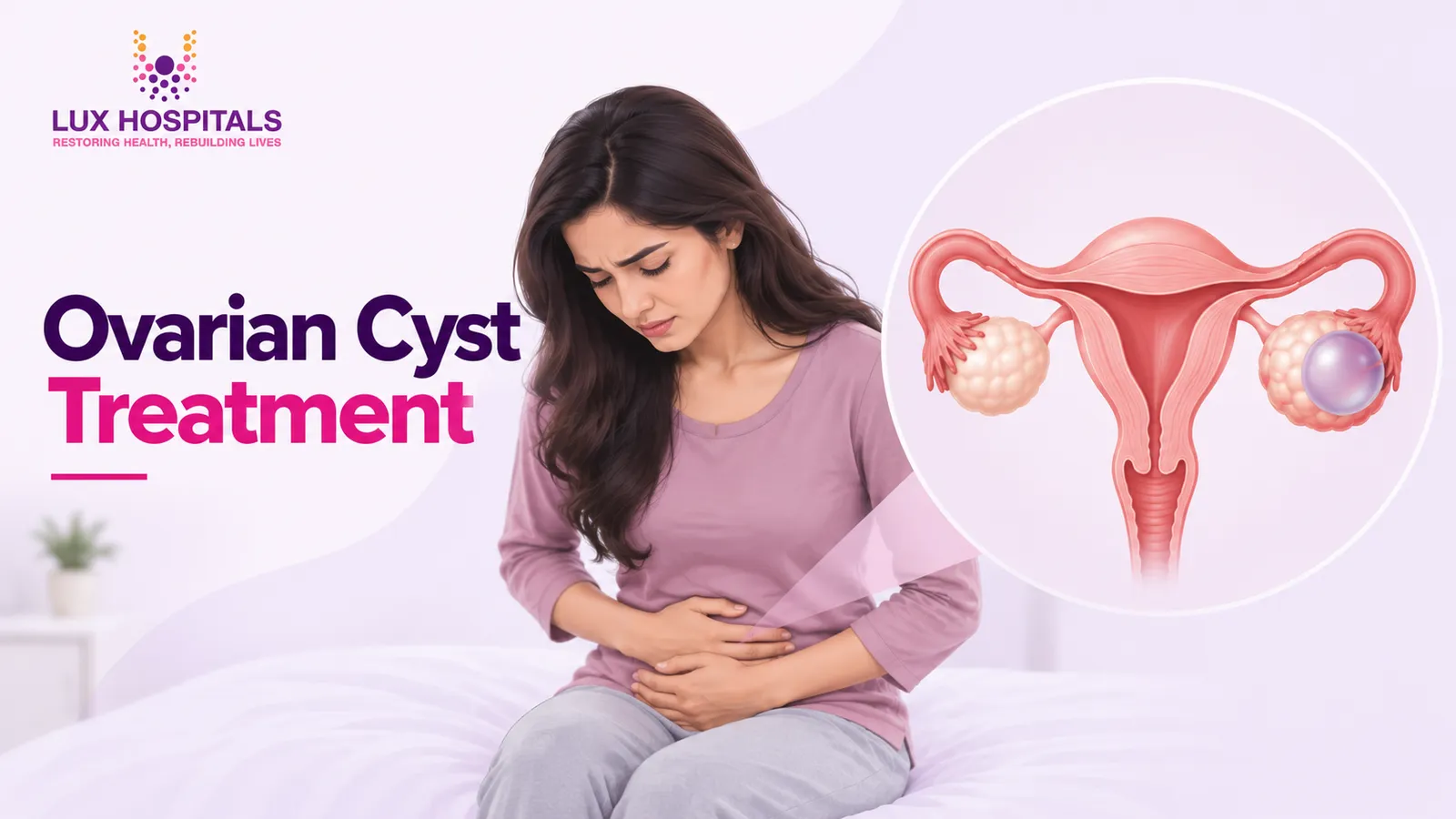
An ovarian cyst that remains on repeat scans does not automatically mean that surgery is needed. Many ovarian cysts are benign and may disappear without treatment. Your gynaecologist will consider the cyst’s size, appearance, symptoms, age, menstrual status, and whether it changes over time when deciding whether to monitor or treat. Being told that an […]
14 October 2026
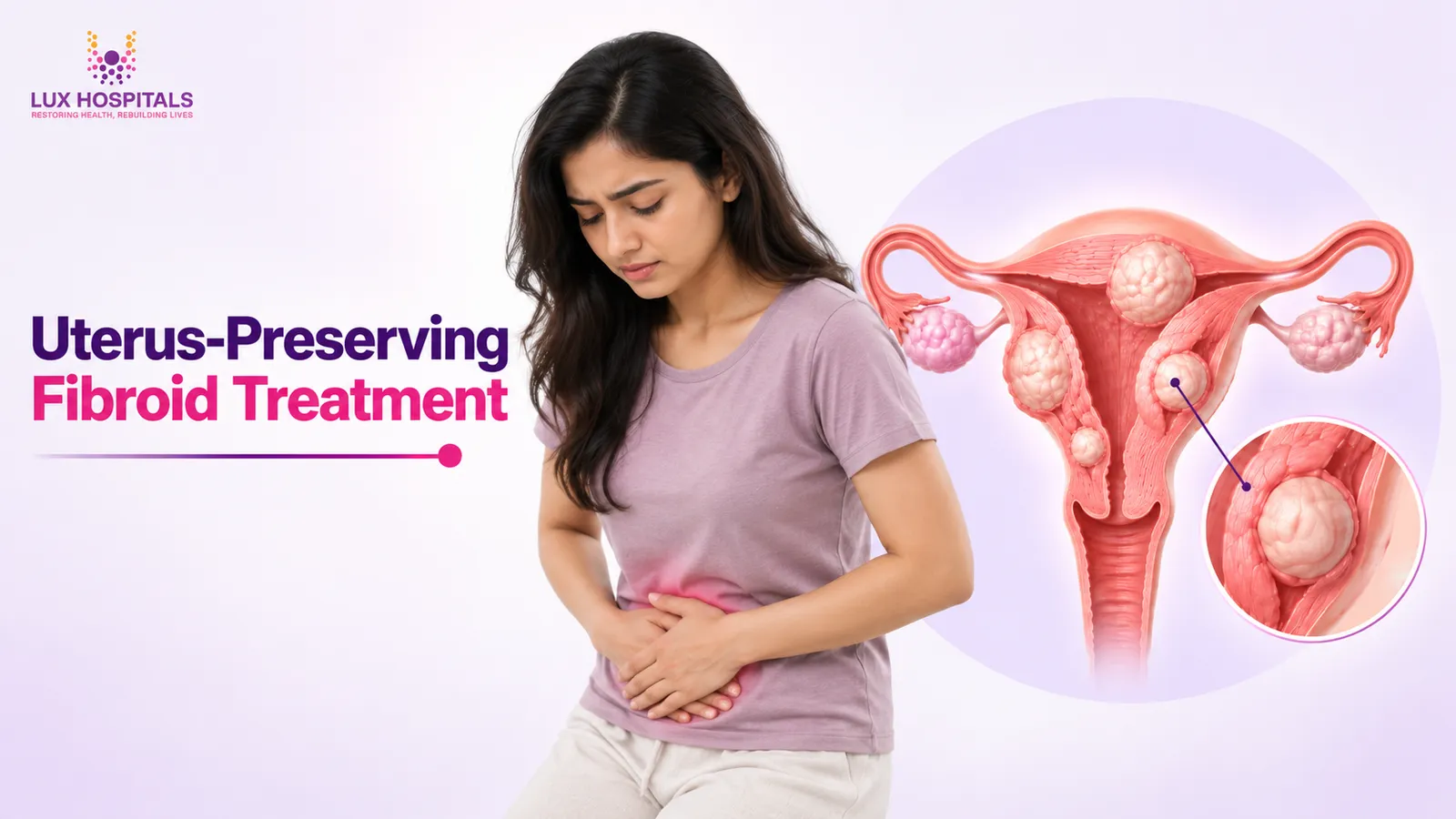
Uterus-preserving fibroid treatment may be considered when a woman wants to manage fibroids while keeping the uterus for future pregnancy. The right option depends on the fibroid’s size, number, location, symptoms, effect on the uterine cavity, age, fertility plans and overall health. Myomectomy is one uterus-preserving option. Fibroid location and whether the uterine cavity is […]
12 October 2026
Heavy periods might influence your energy, work, sleep, emotions, and daily routine. While some women may experience less bleeding after taking medication, symptoms may occasionally persist or recur. Rather than continuing to self-medicate, persistent severe bleeding should be properly evaluated by a gynaecologist. If you are looking for heavy periods treatment in Hyderabad, your next […]
6 October 2026
Send your reports across and a senior surgeon will review them, explain the options and tell you honestly whether surgery is the right call.
Plot No.116, Lumbini Avenue, HITEC CITY, Near IKEA, Hyderabad – 500032