











Ignoring These PMS Symptoms Could Affect Your Health
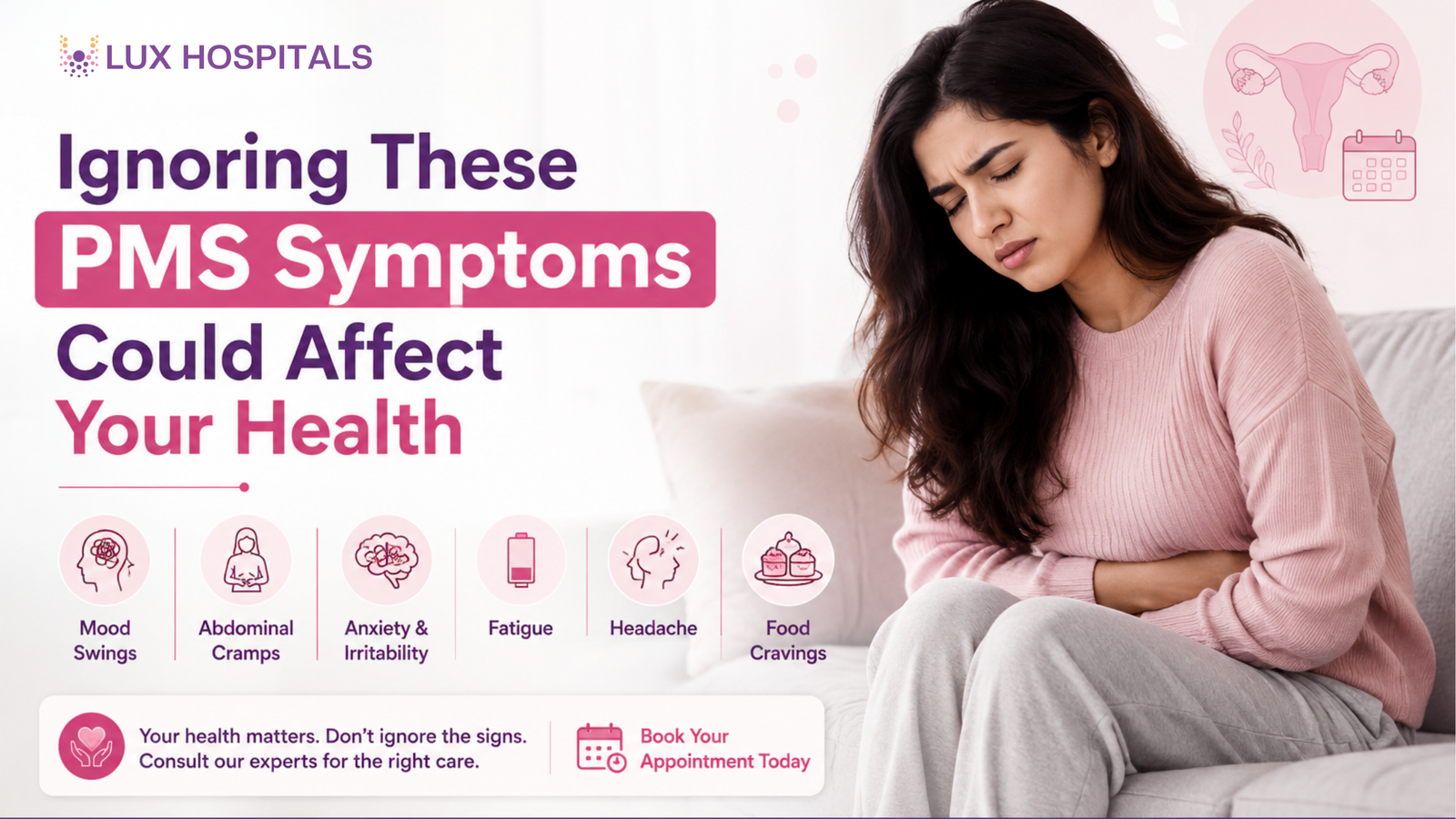
Premenstrual Syndrome (PMS) affects millions worldwide. Many see PMS as normal, but certain symptoms signal underlying health problems needing medical care. Ignoring these can harm physical health, emotions, relationships, and productivity. At Lux Hospitals, our women’s health professionals help patients identify, manage, and treat troublesome PMS symptoms before they affect their long-term health. Understanding which symptoms require attention might help women make more educated healthcare decisions and improve their quality of life.
What Are PMS Symptoms?
PMS Symptoms refer to a group of physical, emotional, and behavioural changes that occur before menstruation. These symptoms typically appear one to two weeks before a period and improve once menstruation begins. While mild symptoms are common, severe or persistent PMS Symptoms may indicate hormonal imbalances, nutritional deficiencies, thyroid disorders, or reproductive conditions and should not be ignored.
Common PMS Symptoms Include:
- Mood swings
- Irritability
- Fatigue
- Breast tenderness
- Bloating
- Headaches
- Food cravings
- Abdominal cramps
Understanding the difference between normal and concerning PMS Symptoms is the first step toward protecting your health.
Why You Should Never Ignore PMS Symptoms?
Many women normalise discomfort despite significant symptoms. However, persistent or severe PMS Symptoms can harm overall health and may signal an underlying issue.
Ignoring symptoms may lead to:
- Reduced quality of life
- Poor mental health
- Relationship difficulties
- Work productivity issues
- Delayed diagnosis of medical conditions
Contact Lux Hospitals for early evaluation. We identify the cause and offer effective treatment.
Severe Mood Changes Could Signal a Bigger Problem
Emotional changes are among the most common PMS Symptoms, but extreme mood disturbances should not be overlooked.
Signs That Need Medical Attention
Women should seek professional evaluation if they experience:
- Severe depression
- Extreme irritability
- Panic attacks
- Persistent anxiety
- Loss of interest in daily activities
In some cases, severe PMS Symptoms may indicate Premenstrual Dysphoric Disorder (PMDD), a condition that significantly affects emotional well-being and daily functioning.
Proper diagnosis can help women receive the support and treatment they need.
Excessive Fatigue and Low Energy May Affect Daily Life
Feeling slightly tired before a period is common. However, overwhelming fatigue is one of the PMS Symptoms that should never be ignored.
When Fatigue Becomes Concerning
Persistent exhaustion may be associated with:
- Hormonal imbalances
- Iron deficiency
- Thyroid disorders
- Poor sleep quality
- Chronic stress
Women unable to perform daily chores due to exhaustion should seek medical help. Addressing these issues can benefit overall well-being.
Severe Abdominal Pain Is Not Always Normal
Many women assume menstrual pain is unavoidable. However, severe cramps are among the PMS Symptoms that may indicate an underlying gynaecological condition.
Conditions Linked to Severe Pain
Persistent pelvic pain may be associated with:
- Endometriosis
- Adenomyosis
- Uterine fibroids
- Pelvic inflammatory disease
- Ovarian cysts
Women who experience pain that disrupts work, sleep, or daily activities should seek evaluation promptly.
Warning Signs to Watch For
- Pain that worsens each month
- Pain unresponsive to medication
- Pain during intercourse
- Heavy menstrual bleeding
- Pain lasting beyond menstruation
Early diagnosis can prevent complications and improve long-term reproductive health.
Heavy Bleeding Could Impact Your Health
Heavy menstrual bleeding is one of the most overlooked PMS Symptoms. Excessive blood loss can lead to anaemia and other health complications.
Signs of Heavy Bleeding
Women should consult a specialist if they:
- Change pads frequently
- Pass large blood clots.
- Experience dizziness
- Feel unusually weak
- Develop shortness of breath.
Heavy bleeding may result from hormonal changes, fibroids, polyps, or other reproductive health concerns.
Risks of Ignoring Heavy Bleeding
Untreated heavy bleeding may cause:
- Iron deficiency anaemia
- Chronic fatigue
- Reduced immunity
- Poor concentration
- Decreased quality of life
Prompt treatment can help prevent these complications and restore overall wellness.
Physical PMS Symptoms That Need Attention
Certain physical PMS Symptoms may indicate underlying health concerns and should not be ignored.
Persistent Headaches
Frequent headaches before menstruation may be linked to hormonal fluctuations and migraines.
Severe Bloating
Excessive bloating can affect comfort, appetite, and daily activities.
Breast Changes
Persistent tenderness, swelling, or unusual breast changes should be evaluated by a healthcare professional.
Sleep Problems
Difficulty sleeping may worsen other PMS Symptoms, including fatigue, irritability, and anxiety.
Recognising these signs early can help women receive timely treatment and avoid unnecessary discomfort.
How Lux Hospitals Helps Women Manage PMS Symptoms?
At Lux Hospitals, we provide comprehensive women’s healthcare focused on identifying and treating the root causes of PMS Symptoms.
Our approach includes:
- Detailed gynaecological evaluation
- Hormonal assessment
- Nutritional guidance
- Lifestyle counseling
- Personalised treatment plans
- Advanced diagnostic testing
Every woman experiences PMS differently, so individualised care is essential for effective management.
Tips to Reduce PMS Symptoms Naturally
Women can often improve mild PMS Symptoms through healthy lifestyle choices.
Healthy Habits That Help
- Exercise regularly
- Stay hydrated
- Eat nutrient-rich foods
- Reduce caffeine intake
- Limit processed foods
- Get adequate sleep
- Practice stress management techniques
These simple lifestyle modifications can significantly improve symptom control and overall well-being.
When Should You See a Doctor?
Seek medical attention if your PMS Symptoms:
- Interfere with daily activities.
- Consult a doctor if symptoms cause severe emotional distress.
- See a professional if bleeding is excessive.
- Get evaluated if you have intense pelvic pain.
- Seek help if symptoms worsen each month.
At Lux Hospitals, our experienced specialists can determine whether symptoms are related to PMS or another underlying health condition.
Conclusion
While mild PMS Symptoms are common, severe or persistent symptoms should never be ignored. Mood changes, excessive fatigue, severe pain, and heavy bleeding can indicate underlying health issues that require professional evaluation. Early diagnosis and treatment can significantly improve the quality of life and prevent future complications. Lux Hospitals is committed to providing expert, compassionate care for women experiencing troublesome PMS Symptoms. If your symptoms are affecting your daily life, our specialists are here to help you find lasting relief and better health.
Frequently Asked Questions
The most common PMS Symptoms include mood swings, bloating, headaches, fatigue, breast tenderness, food cravings, and abdominal cramps. These symptoms usually occur before menstruation and improve once the period begins. However, severe symptoms may require medical evaluation and treatment.
PMS Symptoms become concerning when they interfere with work, relationships, sleep, or daily activities. Severe pain, heavy bleeding, extreme mood changes, or worsening symptoms each month should never be ignored. Consulting a healthcare professional can help identify any underlying conditions.
Yes, hormonal fluctuations can result in anxiety, rage, despair, and emotional instability. Some women can develop Premenstrual Dysphoric Disorder (PMDD), which causes severe emotional symptoms. Proper diagnosis and therapy can improve mental and emotional health.
Lux Hospitals provides personalised treatment plans based on each patient's symptoms and medical history. Our specialists perform detailed evaluations, hormonal assessments, lifestyle counselling, and advanced diagnostics to identify the root cause. Treatment aims to improve comfort, health, and overall quality of life.
Lux Hospitals provides comprehensive women's healthcare, including competent gynaecologists, advanced testing facilities, and patient-centred care. We prioritise early diagnosis, effective symptom management, and long-term well-being. Our staff is dedicated to helping women improve their reproductive and hormonal health.