











Uterine Fibroid Embolization vs Surgery: Which Should You Choose?
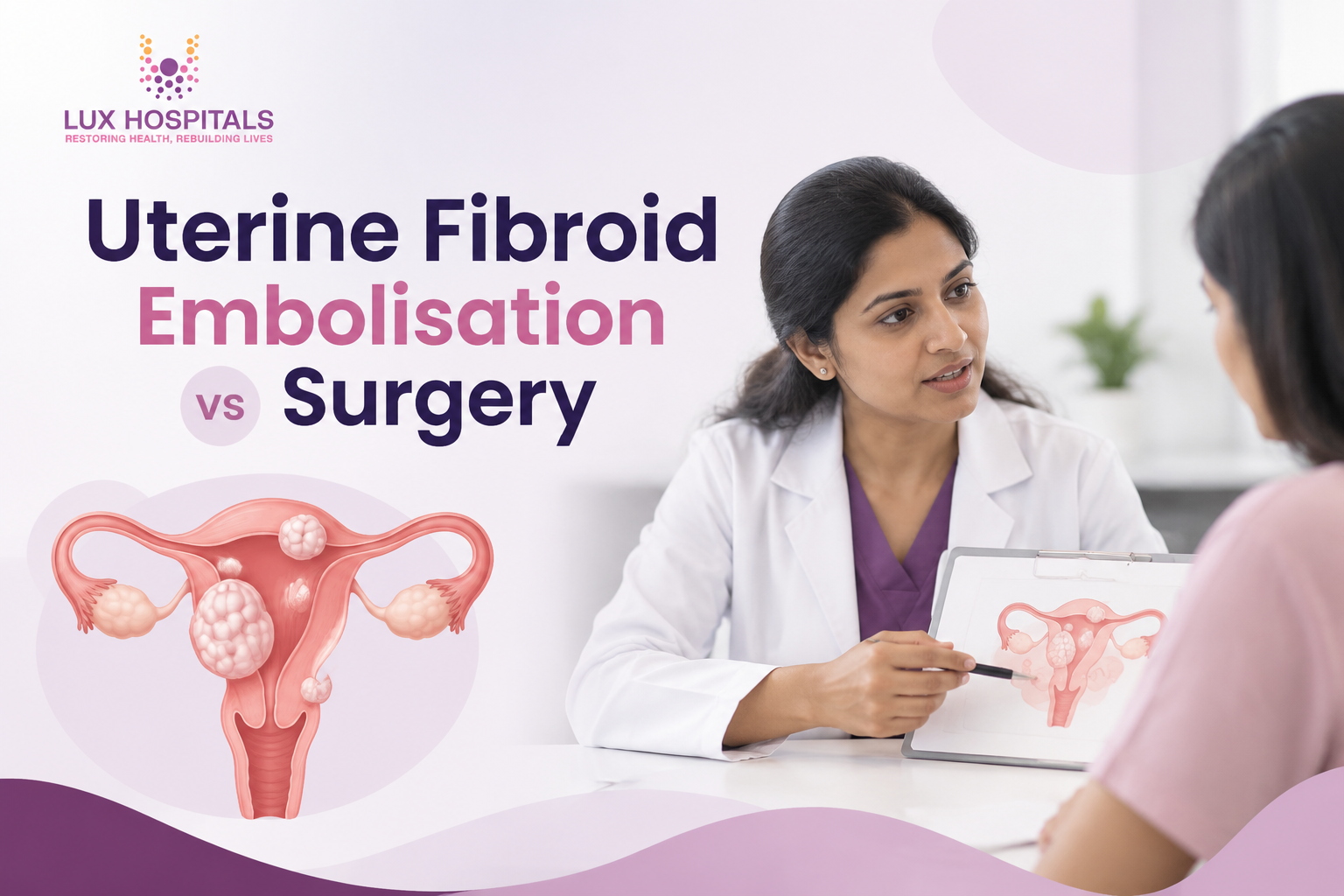
Uterine fibroids are common non-cancerous growths that can cause heavy periods, pelvic pressure, pain, bloating, frequent urination and other symptoms. When fibroids begin affecting daily life, treatment may become necessary. However, choosing between minimally invasive treatment and surgery can feel confusing. Fibroid Embolization vs Surgery is an important comparison for patients who want effective symptom relief while understanding recovery, fertility considerations and treatment goals. Uterine fibroid embolization, also called uterine artery embolization (UAE), blocks the blood supply to fibroids so they shrink. Surgical options include myomectomy, which removes fibroids while keeping the uterus, and hysterectomy, which removes the uterus. The right treatment depends on the number, size and location of fibroids, your symptoms, overall health and whether you want to become pregnant in the future.

What Is Uterine Fibroid Embolization?
Uterine fibroid embolisation is a minimally invasive procedure designed to reduce the size and symptoms of fibroids without removing the uterus. During the procedure, a doctor inserts a tiny catheter into the blood vessels that supply the fibroids. Then, to reduce blood supply to the fibroids, the specialist releases microscopic embolic particles. Less blood flow causes the fibroids to shrink, which may gradually alleviate symptoms.
Potential Benefits of Fibroid Embolization
Patients may consider embolisation because it can offer:
- A minimally invasive approach
- No large abdominal incision
- Reduced blood loss compared with some surgical approaches
- A shorter recovery period than traditional open surgery
- Preservation of the uterus
- Treatment of multiple fibroids during the same procedure
However, preserving the uterus does not automatically mean fertility is preserved. The effect of embolisation on future pregnancy remains an important consideration, so women planning pregnancy should discuss Fibroid Embolization vs Surgery carefully with their gynaecologist and treatment team.
What Does Fibroid Surgery Involve?
Surgery can treat fibroids by removing the fibroids themselves or, in some cases, removing the uterus. A myomectomy removes fibroids while preserving the uterus. Depending on the size, number and location of fibroids, it may be performed through minimally invasive techniques, through the vagina and cervix for suitable submucosal fibroids, or through an abdominal incision. A hysterectomy removes the uterus and is considered a permanent treatment for fibroids because the fibroids cannot return after the uterus is removed. However, pregnancy is no longer possible following hysterectomy.
When Can Surgery Be Considered?
Surgery may be discussed when:
- Fibroids are very large or deeply positioned.
- Symptoms are severe or persistent.
- Fibroids are affecting surrounding organs.
- The fibroid location makes another treatment unsuitable.
- A patient needs or prefers definitive treatment.
- Fertility goals make myomectomy more appropriate.
The decision should follow a detailed evaluation, not the fibroid’s size alone.
Fibroid Embolization vs Surgery: Key Differences
Understanding the differences can make the treatment discussion easier.
1. Treatment Approach
With embolisation, the blood supply to fibroids is reduced so the fibroids shrink. Surgery physically removes the fibroids or, with hysterectomy, removes the uterus.
2. Recovery
Instead of making a major surgical incision, embolisation typically uses a smaller access point. Patients can typically resume regular activities sooner after UFE than after surgery, according to RadiologyInfo. Recovery still varies and depends on the procedure and individual response. Supplies, the fibroids progressively get smaller, and symptoms could improve. Surgical recovery depends on whether the procedure is minimally invasive or open surgery. Open procedures usually require more recovery time than minimally invasive procedures.
3. Uterus Preservation
Embolisation helps keep the uterus in place. A myomectomy preserves the uterus, whereas a hysterectomy removes it. This distinction matters when considering long-term reproductive goals.
4. Fertility Considerations
Fertility should be discussed before choosing a course of treatment if you wish to become pregnant. When fibroid therapy is required for a patient who wants to maintain fertility, myomectomy is frequently taken into consideration. Additionally, medical experts advise that the effects of embolisation on pregnancy and fertility must be carefully considered.
5. Fibroid Characteristics
The location, size, and quantity of fibroids can affect whether surgery or embolisation is the best course of action. Imaging techniques like ultrasound and, when needed, MRI help doctors understand the fibroid pattern and develop treatment plans.
Fibroid Embolisation vs Surgery: Which Factors Matter Most?
Fibroid Embolization vs Surgery No single treatment suits every patient. During a consultation, your doctor may consider:
- Your age and general health
- Fibroid size and location
- Number of fibroids
- Heavy or prolonged menstrual bleeding
- Pelvic pain or pressure
- Bladder or bowel symptoms
- Previous treatments
- Desire for future pregnancy
- Preference regarding uterine preservation
- Expected recovery and lifestyle needs
For example, a patient with multiple symptomatic fibroids who wants to avoid major surgery may discuss embolisation. Another patient with a specific fibroid affecting the uterine cavity or someone actively planning pregnancy may require a different treatment discussion. Therefore, Fibroid Embolisation vs Surgery should be decided after reviewing imaging, symptoms and personal goals rather than choosing a procedure based only on recovery time.
Risks and Recovery: What Should Patients Know?
Fibroid Embolization vs Surgery Every medical procedure has potential risks. Embolization may cause pain, fever, nausea or discomfort after the procedure. Less common complications can include infection, blood-vessel problems or unintended effects on nearby tissue. Surgery also carries risks such as bleeding, infection, anaesthesia-related complications, scar formation and recovery-related discomfort. The risks vary depending on the specific operation. Following treatment, your Gynecologist may recommend follow-up appointments and imaging to monitor how the fibroids respond.
How Can You Prepare for a Fibroid Treatment Consultation?
Before meeting your doctor, prepare information about your symptoms and medical history.
Helpful Questions to Ask
- How many fibroids do I have?
- Where are they located?
- How large are they?
- Do I need treatment now?
- Is embolisation suitable for my condition?
- Would myomectomy be an option?
- How could treatment affect future pregnancy?
- What recovery should I expect?
- Will I need follow-up imaging?
A detailed discussion helps you understand the advantages, limitations and risks of each available option.
Fibroid Embolization vs Surgery: Making an Informed Decision
The goal of Fibroid Embolization vs Surgery is not simply to identify a faster procedure. It is to understand which treatment fits your medical condition and personal priorities. A minimally invasive method of reducing bothersome fibroids while maintaining the uterus is embolization. Fibroids can be surgically removed or treated definitively with a hysterectomy. Neither strategy is inherently appropriate for every individual. At Lux Hospitals, patients can discuss their symptoms, imaging findings, reproductive goals and treatment preferences with the appropriate specialist team. A personalised evaluation can help identify the available treatment pathways and what each may involve.
Conclusion
Fibroid Embolization vs Surgery is a decision based on your individual medical needs, not a one-size-fits-all approach. Embolization may provide a minimally invasive option for suitable patients, while myomectomy or hysterectomy may be appropriate in other situations. Seek a professional evaluation if fibroids are causing severe bleeding, pelvic pain, pressure, or other ongoing symptoms. An early examination can help you better understand your illness and consider appropriate treatment options. If fibroids are causing heavy bleeding, pelvic discomfort, pressure or other persistent symptoms, seek a specialist evaluation. Early assessment can help you understand your condition and explore suitable treatment options.
Frequently Asked Questions
Surgery and fibroid embolisation are not always superior since they operate differently. Surgery removes the uterus or fibroids, while embolization decreases blood flow to diminish fibroids. The appropriate option depends on fibroid size, location, symptoms, health, fertility plans and treatment preferences.
Recovery after embolisation is generally shorter than recovery from traditional open fibroid surgery, although individual recovery varies. Patients may experience cramping, pain, or fatigue after the procedure, and their doctor will advise when they can resume normal activities.
Embolisation treats existing fibroids by reducing their blood supply, but it does not remove the uterus or guarantee that new fibroids will never develop. Patients should attend recommended follow-up appointments so their symptoms and response to treatment can be assessed over time.
Women who want future pregnancy should discuss fertility before choosing embolisation because its effects on fertility and pregnancy require careful consideration. Myomectomy may be considered in some patients who need fibroid treatment while preserving fertility, depending on their individual condition.
Doctors consider the number, size and location of fibroids, symptoms, medical history, fertility plans and the patient's treatment goals before recommending an approach. Ultrasound or MRI may help define the fibroids and guide the treatment discussion.
Yes, Lux Hospitals can provide a clinical evaluation to help patients understand available treatment approaches based on their symptoms and diagnostic findings. Your treating specialist can explain whether embolisation, myomectomy, hysterectomy or another approach may be appropriate for your individual situation.
Choose treatment after a specialist evaluates your fibroids, symptoms, health status, and reproductive goals, rather than choosing a procedure based on a general comparison. Lux Hospitals can help you understand the potential benefits, limitations, risks and recovery considerations associated with the options available to you.