

Who is More at Risk of Developing Varicose Veins?
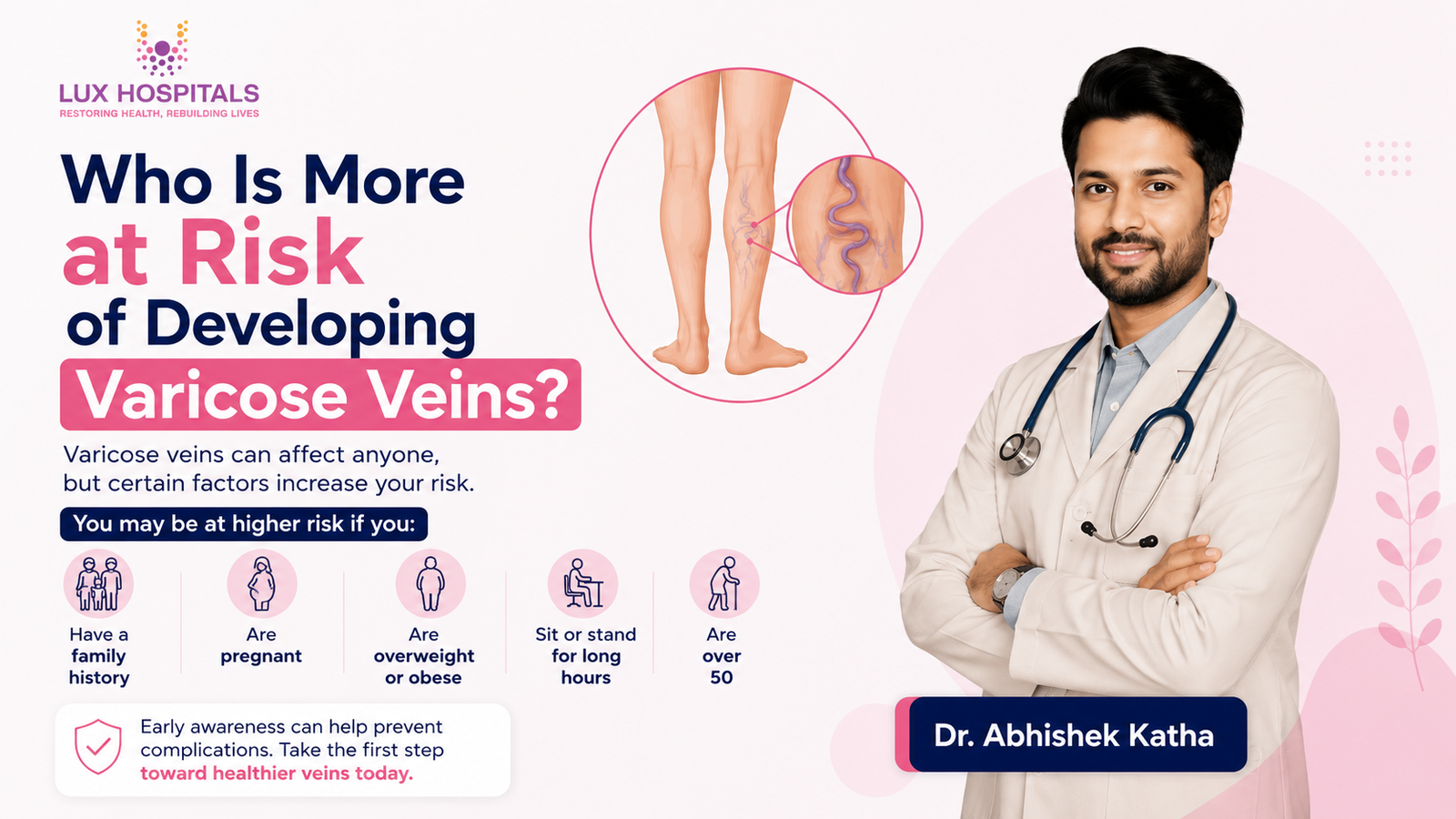
Varicose veins are enlarged, twisted veins that usually appear on the legs due to weakened vein walls or faulty valves that affect normal blood circulation. Although they may begin as a cosmetic concern, untreated varicose veins can sometimes lead to pain, swelling, skin changes, and other complications. People can recognise warning symptoms early and take preventive action by being aware of the risk of developing varicose veins. This illness can be made more likely by number of factors, including age, genetics, lifestyle choices, pregnancy, and career. Experts at Lux Hospitals focus on identifying the root causes of vein issues and providing individualised treatment plans that promote improved circulation and long-term leg health.

What Are Varicose Veins and Why Do They Occur?
Varicose veins develop when the valves inside the veins do not function properly. Healthy veins contain valves that help blood flow back toward the heart. When these valves weaken, blood can collect in the veins, causing them to enlarge and become visible under the skin.
Common signs of varicose veins include:
- Bulging or twisted veins on the legs
- Aching or heaviness in the legs
- Swelling around the ankles
- Burning or throbbing sensations
- Itching around the affected veins
- Leg cramps, especially at night
The Risk of Developing Varicose Veins increases when pressure builds up in the leg veins for long periods. Early diagnosis can help prevent symptoms of varicose veins from worsening.
Who is More at Risk of Developing Varicose Veins?
The Risk of Developing Varicose Veins increases when pressure builds up in the leg veins for long periods. Early diagnosis can help prevent symptoms from worsening. Here are a few Reasons below for developing varicose veins
1. People With a Family History of Varicose Veins
Vein health is significantly influenced by genetics. People who have parents or close relatives with varicose veins may have weaker vein walls or valves by nature. Although it increases vulnerability, a family history does not ensure that a person will develop varicose veins. People with genetic variables affecting vein anatomy and circulation are more likely to develop varicose veins.
2. Older Adults Experiencing Natural Vein Changes
Age is a major contributor to vein problems. As people grow older, veins may lose elasticity, and valves may become less effective at controlling blood flow. Older adults should pay attention to leg discomfort, swelling, or visible changes in veins. The Risk of Developing Varicose Veins increases with age because vein function gradually declines over time.
3. Pregnant Women Due to Increased Vein Pressure
Pregnancy can increase the chances of developing varicose veins because the growing uterus places extra pressure on the veins in the lower body.
Pregnant women can reduce discomfort by:
- Staying physically active with doctor-approved exercises
- Avoiding prolonged standing
- Elevating legs when resting
- Maintaining healthy weight gain
The Risk of Developing Varicose Veins becomes higher during pregnancy because of increased blood volume and pressure on pelvic veins.
4. Individuals With Sedentary Lifestyles
Leg blood circulation can be hampered by prolonged sitting or inactivity. Office workers, drivers, and others with limited mobility may experience increased leg vein pressure. Regular exercise strengthens the calf muscles, which promotes blood circulation.
Simple preventive measures include:
- Walking regularly
- Stretching during long sitting periods
- Avoid sitting with crossed legs for extended periods.
The Risk of Developing Varicose Veins increases when daily habits reduce healthy blood flow through the legs.
How Occupation Can Increase the Risk of Varicose Veins?
Certain professions require prolonged standing, which can increase pressure in the leg veins. Teachers, healthcare workers, retail employees, and factory workers may be at higher risk of developing vein-related issues.
People in these occupations can reduce strain by:
- Taking short walking breaks
- Wearing comfortable footwear
- Practising leg exercises
- Maintaining proper posture
The Risk of Developing Varicose Veins is influenced by repeated pressure on leg veins caused by prolonged standing or sitting.
Lifestyle Factors That Increase Varicose Vein Risk
Obesity and Excess Weight
Extra body weight increases pressure on leg veins, making it harder for blood to circulate effectively. Maintaining a healthy weight can reduce stress on the venous system.
Lack of Physical Activity
Regular exercise strengthens muscles that support circulation. A sedentary lifestyle can contribute to slower blood movement and increased venous pressure.
Hormonal Changes
Hormonal fluctuations caused by pregnancy, menopause, or hormonal medications may affect vein elasticity and circulation. The Risk of Developing Varicose Veins rises when multiple lifestyle and health factors combine to affect normal blood flow.
When Should You Consult a Specialist?
Varicose veins are often disregarded until their symptoms worsen. Early medical advice, however, can help avoid difficulties.
Seek medical attention if you experience:
- Persistent leg pain or swelling
- Skin discolouration near veins
- Open sores near the ankles
- Sudden worsening of symptoms
- Severe heaviness in the legs
At Lux Hospitals, patients can receive expert assessment and suitable treatment plans based on their individual vein condition.
Treatment and Prevention Options for Varicose Veins
Treatment depends on the severity of symptoms and overall health. Doctors may recommend lifestyle changes, compression therapy, minimally invasive procedures, or surgical options when required.
Preventive measures include:
- Maintaining a healthy weight
- Exercising regularly
- Avoiding prolonged sitting or standing
- Keeping legs elevated while resting
- Staying hydrated
The Risk of Developing Varicose Veins can often be reduced through early awareness, healthy habits, and timely medical guidance.
Conclusion
Although anyone can develop varicose veins, some people are more likely to do so. Vein health is influenced by age, genetics, pregnancy, occupation, weight, and lifestyle choices. People can take preventative measures before symptoms worsen by being aware of their risk of developing varicose veins. Comfort and quality of life can be enhanced by early consultation, accurate diagnosis, and successful treatment. Lux Hospitals’ state-of-the-art facilities and patient-centred care enable people to confidently handle vein-related issues.