












When Is Surgery Recommended for Pancreatic Neoplasms?
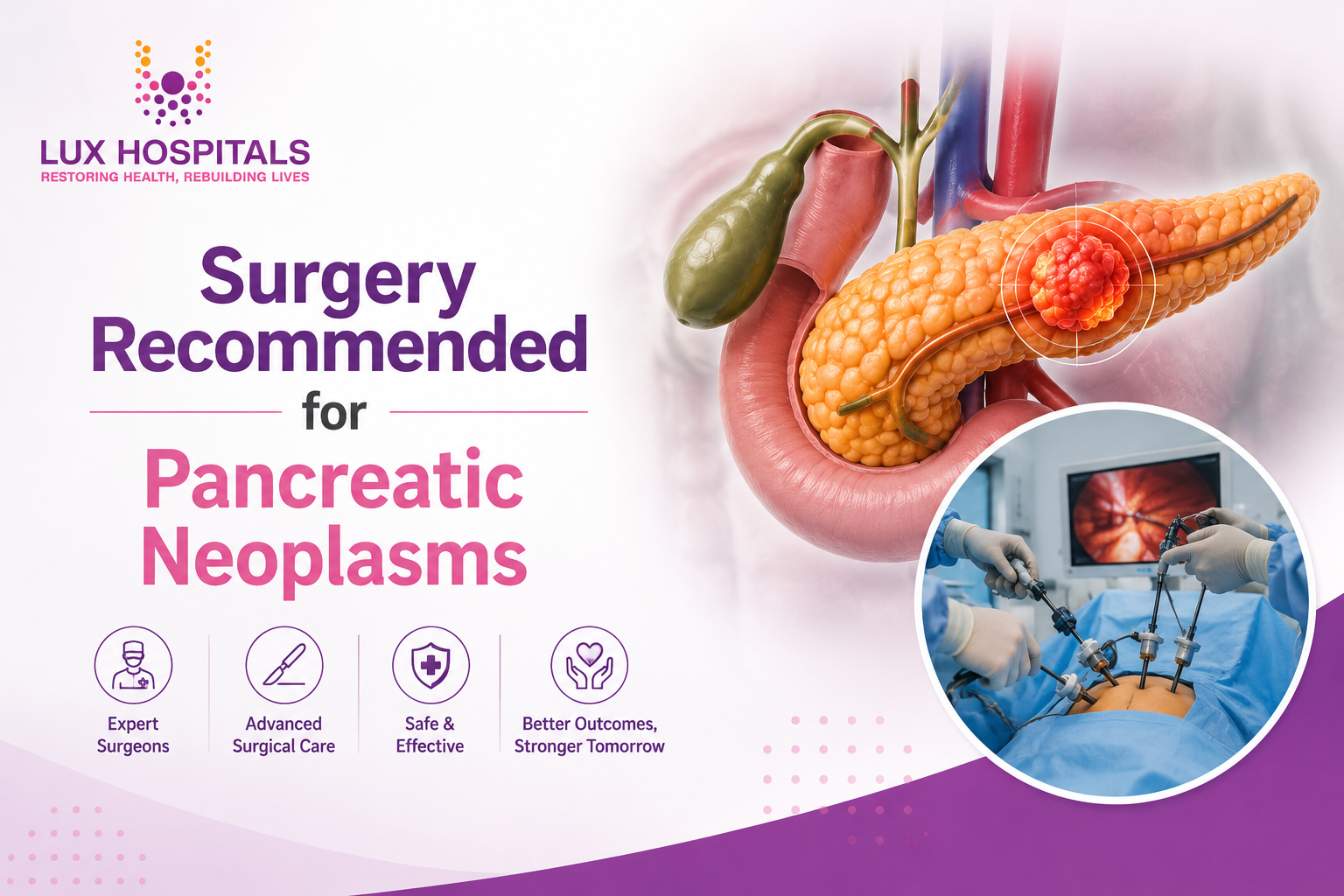
Pancreatic Neoplasms are abnormal growths that develop in the pancreas. Some are benign, while others are cancerous or have the potential to become cancerous over time. Early diagnosis and timely treatment are vital for improving outcomes. For individuals who qualify, surgery is frequently the best course of action, particularly if the tumour is localised and has not progressed to other organs. At Lux Hospitals, skilled gastrointestinal surgeons, oncologists, and interdisciplinary specialists carefully evaluate each patient to determine the best course of action. If detected early, pancreatic neoplasms can often be successfully treated with surgery, improving quality of life and survival.

What Are Pancreatic Neoplasms?
Pancreatic Neoplasms refer to tumours that arise from different cells of the pancreas. These tumours vary in size, type, and behaviour. Some grow slowly and remain non-cancerous, while others are aggressive and require immediate treatment.
The pancreas performs two important functions:
- Produces digestive enzymes
- Regulates blood sugar by producing insulin
When tumours develop, these functions may become affected, leading to various digestive and metabolic symptoms.
Common Types of Pancreatic Neoplasms
- Pancreatic adenocarcinoma
- Pancreatic neuroendocrine tumours (PNETs)
- Intraductal Papillary Mucinous Neoplasms (IPMNs)
- Mucinous cystic neoplasms
- Serous cystadenomas
- Solid pseudopapillary neoplasms
Each type requires a different treatment approach, making an accurate diagnosis extremely important.
Symptoms That May Indicate Pancreatic Neoplasms
Many Pancreatic Neoplasms do not cause symptoms during the early stages. As the tumour grows, patients may experience noticeable signs of panacreatic neoplasams that should never be ignored.
Common symptoms include:
- Persistent abdominal pain
- Pain radiating to the back
- Unexplained weight loss
- Yellowing of the skin (jaundice)
- Loss of appetite
- Nausea and vomiting
Because these symptoms can also occur in other conditions, prompt medical evaluation is essential.
How Are Pancreatic Neoplasms Diagnosed?
Before recommending surgery, doctors perform several tests to understand the type, size, and stage of Pancreatic Neoplasms.
Blood Tests
Doctors may check:
- Liver function
- Tumour markers like CA 19-9
- Blood sugar levels
Imaging Tests
These include:
- CT Scan
- MRI Scan
- PET Scan (in selected cases)
- Ultrasound
Endoscopic Ultrasound (EUS)
An endoscope equipped with ultrasound provides detailed images and enables biopsy collection.
Biopsy
A tissue sample confirms whether the tumour is benign or malignant before treatment planning.
At Lux Hospitals, advanced diagnostic facilities help deliver accurate, timely diagnoses.
When is Surgery Recommended for Pancreatic Neoplasms?
Surgery is considered the best treatment for many patients with Pancreatic Neoplasms, particularly when the disease is confined to the pancreas and complete removal is possible.
Surgery Is Recommended When:
1. The Tumour Is Localised
If imaging shows that the tumour has not spread to major blood vessels or distant organs, surgery offers the best chance for a cure.
2. Cancer Has Not Metastasised
Patients whose cancer remains confined to the pancreas are usually good candidates for surgical treatment.
3. Pre-Cancerous Tumours Show High-Risk Features
IPMNs and mucinous cystic neoplasms are two examples of cystic pancreatic neoplasms that have the potential to develop into malignancy. Surgery is recommended if imaging reveals worrisome findings.
4. The Tumour Causes Symptoms
Persistent pain, jaundice, repeated pancreatitis, digestive blockage, or bleeding may require surgical removal.
5. Neuroendocrine Tumours Continue Growing
Certain pancreatic neuroendocrine tumours should be removed when they grow or begin causing symptoms.
6. The Patient Is Medically Fit
Doctors evaluate heart health, lung function, nutritional status, and overall fitness before recommending surgery. At Lux Hospitals, every surgical decision is discussed by a multidisciplinary tumour board to ensure the safest and most effective treatment.
Types of Surgery for Pancreatic Neoplasms
The surgical procedure depends on the location and type of Pancreatic Neoplasms.
Whipple Procedure (Pancreaticoduodenectomy)
This complex surgery removes:
- Head of the pancreas
- Duodenum
- Gallbladder
- Part of the bile duct
It is commonly performed for tumours located in the pancreatic head.
Distal Pancreatectomy
This procedure removes:
- Tail of the pancreas
- Sometimes the spleen
It is suitable for tumours located in the body or tail of the pancreas.
Total Pancreatectomy
In selected cases, the entire pancreas must be removed.
Patients will require lifelong insulin and enzyme replacement therapy afterwards.
Minimally Invasive Surgery
Whenever appropriate, laparoscopic or robotic surgery offers:
- Smaller incisions
- Less pain
- Faster recovery
- Reduced hospital stay
Lux Hospitals uses modern surgical techniques whenever patients are eligible.
Benefits of Early Surgery
Timely surgical treatment offers several advantages.
Benefits include:
- Higher survival rates
- Better tumor removal
- Lower risk of complications
- Reduced recurrence
- Relief from symptoms
- Improved quality of life
- Better long-term outcomes
Early intervention often prevents the disease from progressing into advanced stages.
When Surgery May Not Be Recommended
Unfortunately, surgery is not suitable for everyone with Pancreatic Neoplasms.
Doctors may recommend other treatments if:
- Cancer has spread extensively
- Major blood vessels are heavily involved.
- Severe medical conditions increase surgical risk.
- The patient is too weak for major surgery.
Alternative treatments include:
- Chemotherapy
- Radiation therapy
- Targeted therapy
- Immunotherapy (selected patients)
- Palliative care
These treatments help control symptoms and improve quality of life.
Recovery After Pancreatic Surgery
Recovery varies depending on the type of surgery and the patient’s overall health.
Patients can expect:
- Hospital stay of 5–10 days
- Gradual return to eating
- Pain management
- Walking soon after surgery
- Regular follow-up visits
- Nutritional counseling
- Enzyme supplements, if required
Most patients gradually return to their normal routine within several weeks while continuing follow-up care.
Why Choose Lux Hospitals for Pancreatic Neoplasms Treatment?
Choosing the right hospital significantly impacts treatment outcomes for Pancreatic Neoplasms.
At Lux Hospitals, patients receive:
- Expert gastrointestinal surgeons
- Advanced diagnostic technology
- Minimally invasive surgical options
- Personalised treatment plans
- Dedicated oncology specialists
- Modern operating theatres
- Comprehensive rehabilitation
- Compassionate patient-centred care
The multidisciplinary approach ensures every patient receives evidence-based treatment with continuous support throughout recovery.
Conclusion
Although receiving a diagnosis of pancreatic neoplasms might be upsetting, prompt assessment and suitable therapy can have a big impact. Surgery remains the most effective choice for many localised cancers and offers the best potential for long-term survival. Early diagnosis, excellent surgical care, and customised treatment planning are crucial to achieving improved outcomes. For a thorough assessment and cutting-edge therapy catered to your needs, speak with the skilled professionals at Lux Hospitals if you or a loved one has symptoms or has been diagnosed with pancreatic neoplasms.