












Bleeding Peptic Ulcer: Symptoms and Emergency Warning Signs
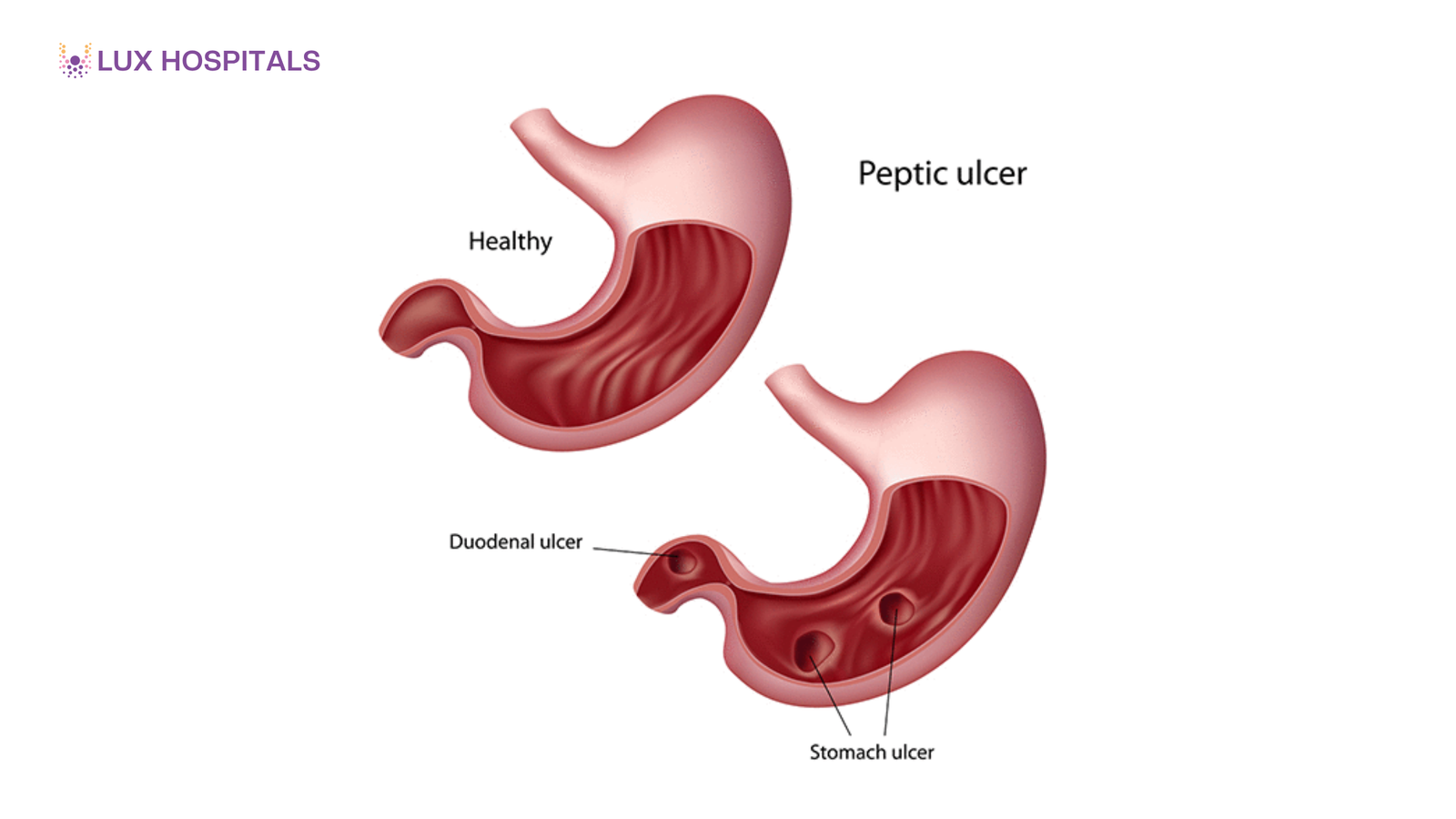
A bleeding peptic ulcer is a dangerous medical issue that needs to be treated right away. A bleeding peptic ulcer can result in major blood loss, serious problems, and can become life-threatening if left untreated, but many stomach ulcers may only cause minor discomfort. Early detection of the warning signs can help patients avoid emergencies and obtain timely care. Our skilled gastrointestinal specialists at Lux Hospitals offer patients with bleeding peptic ulcers and other digestive issues cutting-edge diagnostic and treatment solutions. Recovery can be significantly impacted by being aware of the signs and when to seek emergency medical attention.
What is a Bleeding Peptic Ulcer?
A Bleeding Peptic Ulcer occurs when an ulcer develops in the lining of the stomach, lower oesophagus, or upper part of the small intestine and begins to bleed. These ulcers are often caused by damage to the protective lining of the digestive tract.
Common causes include:
- Infection with Helicobacter pylori (H. pylori)
- Long-term use of painkillers such as NSAIDs
- Excessive alcohol consumption
- Smoking
- Severe stress-related illness
- Previous history of ulcers
When the ulcer erodes into a blood vessel, bleeding can occur, leading to a medical emergency in some cases.
Common Symptoms of a Bleeding Peptic Ulcer
The symptoms of a Bleeding Peptic Ulcer may vary depending on the severity of bleeding. Some patients experience gradual blood loss, while others develop sudden and severe symptoms.
Common signs include:
1. Burning Stomach Pain
A persistent burning or gnawing pain in the upper abdomen is often the earliest symptom. The pain may:
- Occur between meals
- Worsens at night
- It improves temporarily after eating.
- Return repeatedly
2. Black, Tarry Stools
One of the most recognisable signs of a Bleeding Peptic Ulcer is black, sticky, foul-smelling stools. This occurs when blood is digested as it passes through the gastrointestinal tract.
3. Vomiting Blood
Patients may throw up a substance that looks like coffee grounds or bright crimson blood. This symptom needs to be evaluated by a doctor, as it signals active bleeding.
4. Fatigue and Weakness
Slow bleeding from a Bleeding Peptic Ulcer can lead to anaemia, causing:
- Tiredness
- Weakness
- Reduced energy levels
- Difficulty concentrating
Emergency Warning Signs You Should Never Ignore
A Bleeding Peptic Ulcer can quickly become life-threatening if severe bleeding occurs. Knowing the emergency warning signs can help save lives.
Severe Dizziness or Fainting
Significant blood loss reduces oxygen delivery throughout the body. Patients may experience:
- Lightheadedness
- Sudden dizziness
- Fainting episodes
- Difficulty standing
Rapid Heartbeat
The heart may beat faster to compensate for blood loss. A racing heartbeat combined with weakness should be treated as an emergency.
Pale Skin and Cold Sweats
Heavy bleeding can cause:
- Pale appearance
- Clammy skin
- Excessive sweating
- Feeling unusually cold
Severe Abdominal Pain
Abdominal pain that is sudden and severe could be a sign of ulcer complications, including bleeding or perforation.
Risk Factors That Increase the Chance of a Bleeding Peptic Ulcer
Several factors can increase the likelihood of developing a Bleeding Peptic Ulcer.
Long-Term Painkiller Use
Frequent use of medications such as:
- Ibuprofen
- Aspirin
- Naproxen
can weaken the stomach’s protective lining.
H. pylori Infection
This bacterial infection remains one of the leading causes of ulcer formation worldwide.
Smoking
Smoking:
- Delays ulcer healing
- Increases stomach acid production
- Raises the risk of ulcer recurrence
Excessive Alcohol Consumption
Alcohol can irritate the stomach lining and worsen existing ulcers.
Older Age
Adults over 60 are at greater risk because they are more likely to use medications that affect the stomach lining.
How is a Bleeding Peptic Ulcer Diagnosed?
Early diagnosis is essential to prevent complications from a Bleeding Peptic Ulcer.
Doctors may recommend:
Endoscopy
An upper GI endoscopy allows specialists to:
- View the ulcer directly.
- Identify active bleeding
- Provide immediate treatment if necessary.
Blood Tests
Blood tests help detect:
- Anemia
- Infection
- Signs of ongoing blood loss
Stool Tests
These tests detect occult blood in stool and can help confirm gastrointestinal bleeding.
H. pylori Testing
Doctors may perform breath, blood, or stool tests to detect bacterial infection.
Treatment Options for Bleeding Peptic Ulcer
Treatment depends on the severity of the Bleeding Peptic Ulcer and the patient’s overall condition.
Endoscopic Therapy
During endoscopy, specialists can:
- Inject medications
- Apply clips
- Use heat therapy to stop bleeding.
Medications
Common treatments include:
- Proton pump inhibitors (PPIs)
- Antibiotics for H. pylori infection
- Acid-reducing medications
Blood Transfusion
Patients with significant blood loss may require blood transfusions to restore healthy circulation.
Surgery
Although less common today, surgery may be necessary when bleeding cannot be controlled through other methods.
Tips to Prevent a Bleeding Peptic Ulcer
Preventive measures can significantly reduce your risk.
Follow These Healthy Habits
- Avoid unnecessary NSAID use.
- Quit smoking
- Limit alcohol intake
- Complete H. pylori treatment if prescribed
- Eat balanced meals regularly.
- Manage chronic health conditions.
- Attend routine medical checkups.
Seeking treatment for ulcer symptoms early can prevent progression to a Bleeding Peptic Ulcer and reduce the risk of emergencies.
Why Choose Lux Hospitals for Bleeding Peptic Ulcer Treatment?
Lux Hospitals offers comprehensive digestive healthcare with a patient-centred approach.
Our advantages include:
- Experienced gastroenterologists
- Advanced endoscopy facilities
- Emergency digestive care services
- Personalised treatment plans
- Modern diagnostic technology
- Compassionate patient support
Whether you have mild ulcer symptoms or require emergency intervention for a Bleeding Peptic Ulcer, our team is committed to providing timely and effective care.
Conclusion
A Bleeding Peptic Ulcer is more than just a stomach problem—it can become a serious medical emergency. Symptoms such as black stools, vomiting blood, severe dizziness, weakness, and abdominal pain should never be ignored. Early diagnosis and prompt treatment can prevent complications and improve recovery outcomes. Seek professional medical attention right away if you or a loved one exhibits symptoms of a bleeding peptic ulcer. Lux Hospitals helps patients heal securely and confidently by offering innovative diagnosis, emergency care, and long-term digestive health management.
Frequently Asked Questions
Burning stomach pain, nausea, exhaustion, and discomfort following meals are frequently the first symptoms of a bleeding peptic ulcer. Patients may experience coffee-ground-like vomit or black stools as the bleeding progresses. Early medical assessment can ensure prompt treatment and help prevent serious consequences.
Yes, a bleeding peptic ulcer can turn into a medical emergency, particularly if there is significant or quick blood loss. Fainting, blood in the vomit, a fast heartbeat, and extreme weakness are symptoms that need to be treated very carefully. Treatment delays may lead to fatal consequences.
A Bleeding Peptic Ulcer should never be left untreated because ongoing bleeding can lead to anaemia, shock, or other serious complications. Proper treatment usually includes medications, endoscopic procedures, and management of underlying causes.
Yes, patients with bleeding peptic ulcer symptoms can receive thorough emergency evaluation and treatment at Lux Hospitals. To promptly detect and stop bleeding, our experts employ cutting-edge diagnostic equipment and endoscopic procedures.
Lux Hospitals offers skilled gastrointestinal care backed by cutting-edge diagnostic tools and knowledgeable specialists. Individualised treatment programs, cutting-edge endoscopic techniques, and sympathetic support are provided to patients during their recuperation.