











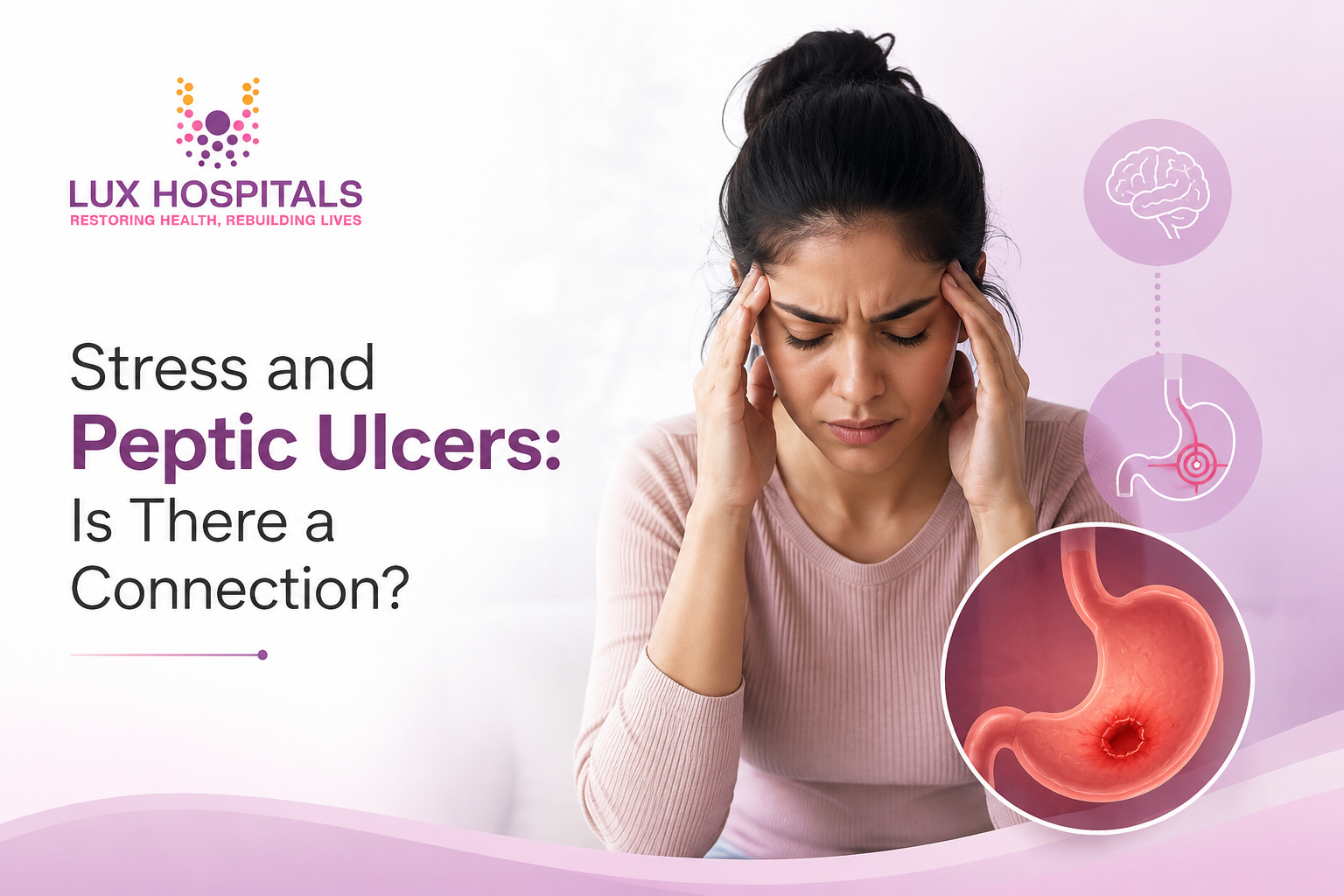
Stress and Peptic Ulcers: Is There a Connection?
Many people believe that stress alone causes peptic ulcers. While stress does impact digestive health, the relationship between stress and peptic ulcers is more complex. Modern research shows that stress may not directly cause peptic ulcers but can increase risk, worsen symptoms, and slow healing. Understanding the link between stress and peptic ulcers can help you recognise symptoms early, seek the right care, and make lifestyle changes to safeguard your digestive system. To further assist you, Lux Hospitals offers knowledgeable gastroenterologists who provide comprehensive diagnosis and state-of-the-art treatment for peptic ulcers and other digestive conditions. Let’s explore what peptic ulcers are to deepen this understanding.

What Are Peptic Ulcers?
Peptic ulcers are open sores that develop on the inner lining of the stomach, the upper part of the small intestine (duodenum), or occasionally the oesophagus. They occur when stomach acid damages the protective lining of the digestive tract.
The two most common types include:
- Gastric ulcers (inside the stomach)
- Duodenal ulcers (upper small intestine)
Many people wonder about Stress and Peptic Ulcers, but the most common causes remain:
- Helicobacter pylori (H. pylori) infection
- Long-term use of painkillers like NSAIDs
- Smoking
- Excessive alcohol consumption
- Certain medications
Although these are the main causes, stress can make symptoms worse and slow recovery when combined with peptic ulcers. Next, let’s discuss how stress affects the digestive system more broadly.
How Does Stress Affect the Digestive System?
Stress triggers several physical changes throughout the body. During stressful situations, the brain releases stress hormones such as cortisol and adrenaline.
These hormones can:
- Increase stomach acid production.
- Reduce blood flow to the stomach lining.
- Slow the healing process.
- Affect digestion
- Reduce appetite or increase unhealthy eating.
- Increase inflammation
Because of these effects, stress can make ulcers more painful and difficult to heal, even if it does not directly cause them.
Can Stress Alone Cause Peptic Ulcers?
Current medical evidence suggests that stress alone rarely causes peptic ulcers.
Instead, stress:
- Makes ulcer symptoms more noticeable
- Increases acid secretion
- Weakens the stomach’s natural defences
- Delays tissue repair
- Encourages unhealthy habits such as smoking or alcohol use
Understanding stress and peptic ulcers involves seeing stress as a contributing factor rather than the sole cause. Now, let’s identify the symptoms that may indicate a peptic ulcer.
Symptoms That May Indicate a Peptic Ulcer
Recognising symptoms early helps prevent complications.
Common symptoms include:
- Burning stomach pain
- Pain between meals
- Night-time stomach discomfort
- Bloating
- Nausea
- Frequent burping
- Feeling full quickly
- Loss of appetite
- Weight loss
- Vomiting
When discussing stress and peptic ulcers, many patients notice that their symptoms become worse during emotionally stressful periods, highlighting how stress can intensify existing ulcer discomfort. It is important to recognise warning signs of peptic ulcer that require immediate medical attention, which we cover next.
Warning Signs That Need Immediate Medical Care
Seek urgent medical attention if you experience:
- Vomiting blood
- Black stools
- Severe abdominal pain
- Sudden weakness
- Fainting
- Difficulty eating
These may indicate bleeding or a perforated ulcer, both of which require emergency treatment. For peace of mind, early diagnosis is key.
How Are Stress and Peptic Ulcers Diagnosed?
Doctors begin with a detailed medical history and physical examination.
Endoscopy
An upper GI endoscopy allows doctors to examine the stomach lining and identify ulcers directly.
H. pylori Testing
This infection can be detected using:
- Breath test
- Blood test
- Stool test
- Biopsy during endoscopy
Blood Tests
Blood tests help identify anaemia caused by ulcer bleeding.
Proper diagnosis helps determine if and how stress and peptic ulcers are linked in each patient, which can guide personalised treatment focused on both physical and emotional health. With diagnosis in mind, let’s look at available treatment options.
Treatment for Stress and Peptic Ulcers
Treatment depends on the underlying cause.
Medications
Doctors may prescribe:
- Proton Pump Inhibitors (PPIs)
- H2 receptor blockers
- Antibiotics for H. pylori infection
- Antacids
- Protective stomach medications
Lifestyle Changes
Lifestyle improvements play an essential role in treating stress and peptic ulcers.
Doctors recommend:
- Managing daily stress
- Eating balanced meals
- Avoiding smoking
- Limiting alcohol
- Avoiding unnecessary painkillers
- Sleeping adequately
- Exercising regularly
At Lux Hospitals, treatment plans combine medication with lifestyle counselling to improve long-term digestive health. Next, we’ll address how stress affects patients with existing ulcers.
Can Stress Make an Existing Ulcer Worse?
Among patients with ulcers, stress and peptic ulcers are connected because stress can:
- Increase pain intensity
- Trigger acid production
- Delay healing
- Increase recurrence
- Affect medication adherence
- Reduce immune function
Managing emotional health becomes an important part of ulcer recovery. Let’s review practical tips to reduce stress and protect your stomach going forward.
Tips to Reduce Stress and Protect Your Stomach
Healthy stress management supports ulcer healing.
Helpful habits include:
- Practice meditation
- Exercise regularly
- Maintain a healthy sleep schedule.
- Eat meals on time
- Avoid excessive caffeine
- Stay hydrated
- Practice deep breathing
- Spend time with family.
- Seek counselling when needed.
- Follow prescribed medications consistently.
These strategies help reduce the extent to which stress aggravates peptic ulcer symptoms and also improve overall health. Knowing when to seek specialist care can also make a critical difference.
When Should You Visit a Gastroenterologist?
Schedule a consultation if you experience:
- Repeated stomach pain
- Persistent acidity
- Frequent bloating
- Black stools
- Vomiting blood
- Unexplained weight loss
- Pain lasting more than a few days
Early treatment prevents complications such as bleeding, perforation, and stomach obstruction.
The specialists at Lux Hospitals provide advanced diagnostic facilities, expert gastroenterologists, personalised treatment plans, and compassionate patient care for digestive disorders. To summarise, let’s revisit the key takeaways on stress and peptic ulcers.
Conclusion
The link between stress and peptic ulcers is important from a medical standpoint. While stress does not usually cause ulcers directly, long-term stress can worsen symptoms, increase stomach acid, impede healing, and foster habits that contribute to ulcer risk. Full recovery is most likely with early diagnosis, medication, stress management, and healthy lifestyle changes.
If your stomach pain persists, consult Lux Hospitals’ gastrointestinal specialists for an accurate diagnosis and effective treatment. If you take action now, you can prevent serious stomach problems tomorrow.
Frequently Asked Questions
Although stress alone typically does not cause peptic ulcers, it can worsen symptoms, increase stomach acid production, slow healing, and make existing ulcers more painful. Most ulcers result from H. pylori infection or long-term use of NSAIDs, with stress acting as an additional risk factor.
Common early symptoms include upper abdominal burning pain, bloating, nausea, frequent burping, and discomfort that worsens at night or in between meals. Some patients also experience unexplained weight loss or appetite loss as the condition advances.
Yes, persistent stress can interfere with the body's healing, increase stomach acid production, and undermine healthy habits, leading to ulcers returning. Managing stress alongside medical treatment reduces the likelihood of recurrent ulcers.
To promote a quicker recovery, Lux Hospitals provides skilled gastroenterologists, cutting-edge endoscopic equipment, precise diagnosis, individualised treatment programs, and thorough follow-up care. Both the medical causes and lifestyle factors that affect ulcer healing are addressed by our patient-centred approach.
You should go to Lux Hospitals very soon if you experience symptoms that last longer than a few days, such as chronic stomach pain, frequent acidity, black stools, vomiting blood, or unexplained weight loss. Early diagnosis enables prompt, efficient treatment and helps avoid major problems