













Rare Types of Lipomas: Understanding Uncommon Lipoma Cases
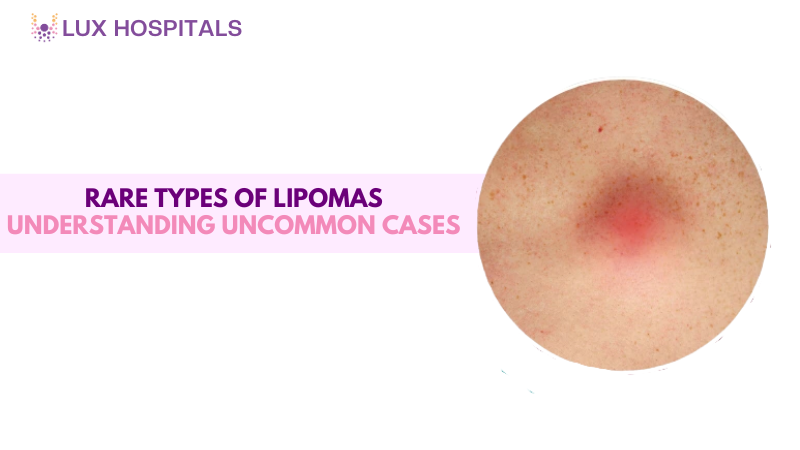
Many people recognise lipomas as harmless fatty lumps beneath the skin. Still, very few know that several lipoma variants behave differently. These unusual cases fall under Rare Types of Lipomas Understanding Uncommon Lipoma Cases, which include deep-seated lipomas, mixed-tissue lipomas, and lipomas with cartilage-like or muscle-like components.
These rare forms often lead to confusion, late diagnosis, and, at times, unnecessary worry. Therefore, gaining correct knowledge about Rare Types of Lipomas and Understanding Uncommon Lipoma Cases helps individuals identify symptoms early and seek appropriate care.
Understanding Lipomas in Simple Terms
Typical lipomas are simple, painless, soft lumps. However, rare lipomas present with different structures, deeper growth, or pain due to involvement of nerves and blood vessels. This makes Rare Types of Lipomas Understanding Uncommon Lipoma Cases an essential topic for patient education. Knowing the differences also helps people avoid panic when they observe unusual lumps. Early evaluation ensures peace of mind and prevents complications.
Uncommon Lipoma Variants You Should Know About
Below are the rarest forms of lipomas explained in detail. Each type plays a significant role in understanding Rare Types of Lipomas and Understanding Uncommon Lipoma Cases more clearly.
1. Angiolipoma
Angiolipomas are rare lipoma variants that contain both fatty tissue and blood vessels. They are often painful, unlike regular lipomas.
- Usually found on arms or trunk
- More common in young adults
- Pain occurs due to vascular structures inside
This subtype is often highlighted in discussions on Rare Types of Lipomas because it is frequently misunderstood.
2. Spindle Cell Lipoma
This rare lipoma usually appears on the upper back, neck, or shoulder region and is more common in middle-aged men. It contains spindle-shaped cells mixed with fat.
- Slow-growing
- Usually painless
- Can resemble soft-tissue sarcomas on scans
Because of this resemblance, it plays an integral part in Rare Types of Lipomas
3. Hibernoma
Hibernomas are extremely rare lipomas formed from brown fat—fat that regulates body temperature. They tend to grow slightly faster and are firmer than usual lipomas.
- Occurs in the thigh, shoulder, and back
- Often warm to the touch
- Requires imaging for diagnosis
It is one of the most-discussed subtypes of lipomas because patients often confuse it with malignant tumours.
4. Pleomorphic Lipoma
Pleomorphic lipomas contain large, irregular cells and usually occur in men over 50 years of age.
- Soft and lobulated
- Common on the neck and back
- Needs detailed pathology to confirm
This variant is essential for studying Lipoma Cases due to its unusual cellular appearance.
5. Myelolipoma
A truly rare subtype, myelolipomas contain fat and blood-forming tissue. They are usually found in the adrenal glands but may appear in other areas.
- Usually discovered incidentally
- Can grow large
- May cause pain due to organ pressure
This type stands out in research involving Rare Lipoma Cases because it forms internally rather than under the skin.
6. Chondroid Lipoma
This extremely rare lipoma resembles cartilage and can be misdiagnosed as a malignant tumour.
- Firm texture
- Often occurs on the legs
- Requires a Biopsy for an accurate diagnosis
It is significant in Rare Lipoma Cases due to its diagnostic complexity.
7. Intramuscular Lipoma
Also known as infiltrating lipoma, this subtype grows deep within muscles and can restrict movement.
- Forms within muscle fibres
- May recur if not entirely removed
- Causes discomfort during movement
This is one of the standard highlights within Lipoma Cases because patients often mistake it for muscle injury.
8. Neural Fibrolipoma
This type develops around nerves, most commonly in the hands and forearms.
- Causes numbness or tingling
- Linked with carpal tunnel-like symptoms
- Might require surgical removal
Symptoms of Rare Lipomas
Symptoms vary depending on the lipoma type and location:
- Pain due to blood vessels or nerve pressure
- Limited movement in the inside muscles
- Firm or unusually dense texture
- Numbness or tingling
- Fast or unpredictable growth
- Recognising these symptoms can help identify Rare Types of lipomas
Causes & Risk Factors
Although causes remain unclear, several factors contribute:
- Genetic predisposition
- Hormonal fluctuations
- Previous injury or trauma
- Metabolic changes
- Family history of lipomas
These risk factors frequently appear in research on rare lipomas
Diagnosis
Doctors rely on multiple methods for accurate diagnosis:
- Physical Examination: Assesses texture, mobility, and tenderness.
- Ultrasound: Identifies tissue composition
- MRI : Details deep or complex lipomas.
- Biopsy: Essential for confirming rare lipomas.
All these steps help differentiate Lipoma Cases from dangerous alternatives.
Treatment Options for Rare Lipoma Cases
Treatment depends on symptoms, size, and location. The most common methods include:
- Surgical Excision – effective for most rare lipomas
- Minimally Invasive Removal – for superficial types
- Monitoring – when asymptomatic
For accurate treatment, doctors follow a careful approach, especially when managing Rare Types of Lipomas
Conclusion
Understanding Rare Types of Lipomas helps individuals spot unusual symptoms early and seek professional guidance. While most lipomas are harmless, rare forms may need advanced imaging or treatment. Hospitals like Lux Hospital offer safe and reliable evaluation for these conditions, ensuring accurate diagnosis and effective management. Although most lipomas are harmless, unusual variants may cause discomfort or confusion. Seeking expert care helps avoid complications, and hospitals like Lux Hospital provide reliable evaluation and treatment for soft-tissue conditions.
Frequently Asked Questions
Rare lipomas include angiolipoma, spindle cell lipoma, hibernoma, chondroid lipoma, intramuscular lipoma, and neural fibrolipoma. These differ in structure and symptoms and fall under Rare Types of Lipomas
Most rare lipomas are benign but may cause discomfort or functional issues due to their unusual structure. Early diagnosis helps rule out cancerous conditions and improves the management of rare lipoma types.
Doctors use imaging tests like MRI and Ultrasound, along with a Biopsy, for confirmation. These steps ensure accurate identification of Rare Types of Lipomas
Surgery is recommended for painful, growing, or function-limiting lipomas. Some rare types also require removal for diagnostic clarity, especially those under Rare Types of Lipomas
Most rare types of lipomas are benign, meaning they are non-cancerous and generally do not pose a serious health risk. However, certain uncommon lipoma variants grow deeper into muscles or tissues, causing discomfort, pressure symptoms, or cosmetic concerns. Early assessment helps determine whether monitoring or surgical removal is needed.
Doctors use a combination of physical examination, imaging tests, and in some cases, biopsy to identify rare lipomas. MRI and ultrasound are the most effective tools because they show the lipoma’s size, depth, and involvement with nearby structures. Accurate diagnosis ensures the correct treatment plan and reduces the risk of complications.