Dr. Samhitha Reddy
Consultant Proctologist & Laparoscopic Surgeon
MBBS, MS, FMAS, FISCP, DMAS
- 8 Yrs
- ASCRS Member
By Dr. M. Ram Prabhu · MBBS, MS, MCH (Plastic Surgery) 13 May 2025 4 min read Updated 21 August 2026
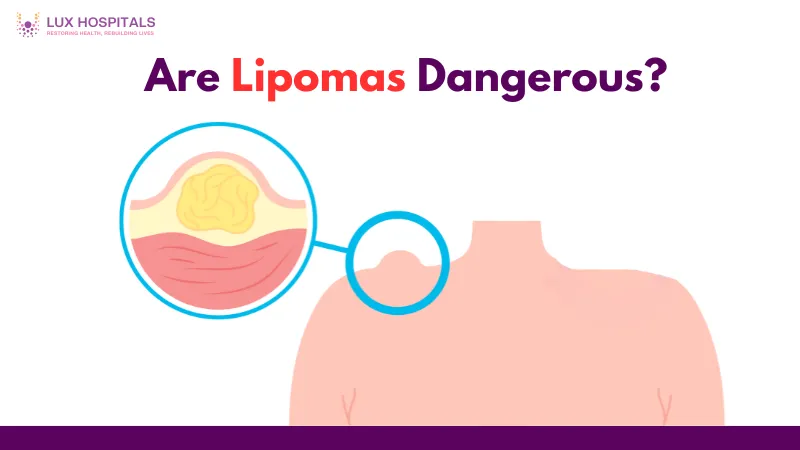
If you’ve discovered a soft, movable lump under your skin, your first reaction might have been panic. “Could it be cancer?” “Should I get it removed?” More often than not, these lumps turn out to be lipomas benign fatty growths. But are lipomas dangerous, or are they simply misunderstood?
Let’s unpack the myths and truths about lipomas and help you make informed decisions about your health.
A lipoma is a slow-growing, soft-tissue tumor composed mainly of fat cells. It is most commonly found just beneath the skin.The most typical places for lipomas to form on the body are the shoulders, arms, thighs, neck, and back. They are usually soft to the touch, doughy, and move slightly when pressed.
These growths are typically harmless, but their appearance and texture often cause concern especially when they grow larger or occur in sensitive areas.
So, are lipomas dangerous? In the vast majority of cases, no. Lipomas are benign, non-cancerous, and don’t spread to other body parts. They grow slowly and rarely cause pain unless pressed against nerves or blood vessels.
However, there are some rare exceptions:
Further investigation is essential in such cases to rule out a liposarcoma, a rare malignant tumor that may resemble a lipoma in its early stages.
Understanding what’s true and what’s not can help ease anxiety and guide your next steps. Here are some of the most common myths about lipomas, and the facts that debunk them:
Fact: Lipomas do not develop into cancer because they are benign. To rule out uncommon diseases such liposarcoma, any change in size, form, or degree of pain should be assessed.
Fact: Lifestyle choices like poor diet, lack of exercise, or hygiene do not cause lipomas. Genetics is important; some individuals may inherit conditions like multiple familial lipomatosis.
Fact: Most lipomas do not require removal. Surgery is only considered if the lipoma is painful, rapidly growing, functionally impairing, or cosmetically concerning.
Fact: Lipomas are not contagious. They are non-infectious, non-transmissible growths that develop internally due to biological or genetic factors.
There are several types of lipoma, each with unique features:
Knowing the type of lipoma can help guide treatment options, especially if removal is considered.
Although lipomas are typically asymptomatic, some lipoma symptoms may raise concern. These include:
If you notice any of these, consult a healthcare provider for evaluation.
Diagnosis usually begins with a physical exam. Doctors can often identify a lipoma by touch. If the lump is unusually large, firm, or deep, imaging tests like an ultrasound, CT scan, or MRI may be used to get a clearer picture.
In rare instances, a biopsy might be done to rule out malignancy.
If a lipoma is causing discomfort or affecting your daily life, you might explore different lipoma treatment options:
The most common and effective treatment. The entire lipoma is excised, reducing the risk of recurrence.
It is less invasive and useful for larger lipomas. However, it might not remove the entire capsule, which can lead to regrowth.
A newer, less invasive approach that uses laser technology to break down fat tissue. This method is still evolving and may not be widely available.
The size determines the treatment option, type, and location of the lipoma and on patient preference.
In most cases, lipomas pose no risk during pregnancy or childhood. However, a growing or painful lump should be evaluated, especially in children, as benign growths are rarer in pediatric patients.
During pregnancy, elective lipoma surgery is often postponed unless medically necessary.
Many people live their entire lives with lipomas without any complications. However, it’s essential to:
Awareness is key. You can feel more in charge of your health if you can distinguish between myths and reality.
So, are lipomas dangerous? Not in most cases. Lipomas are benign, slow-growing, and usually painless. While their appearance might be unsettling, they are generally harmless unless they cause symptoms or interfere with function.
You should worry about a lipoma if it grows rapidly, becomes painful, feels firm, or is located deep within the tissue. If the lipoma causes discomfort or interferes with movement, it’s essential to consult a doctor for further evaluation.
No, a lipoma cannot burst. Since it is a benign fatty growth, it is usually soft and slow-growing. However, if it becomes irritated or injured, it might become tender or inflamed, but it will not rupture like an abscess.
If left untreated, a lipoma typically grows slowly and remains harmless. However,It may cause discomfort or other issues if it becomes too big or rubs up against blood vessels or nerves. In rare cases, a lipoma may need surgical removal if it causes pain or functional issues.
No, lipomas do not go away naturally. They typically grow slowly and remain stable over time. The only way to remove a lipoma is through surgical intervention or other treatment options like liposuction.
Yes, it’s generally okay not to remove a lipoma if it’s not causing pain, discomfort, or functional issues. Many people live with lipomas without any problems. However, removal may be recommended if it grows, becomes painful, or affects movement.

Gynecomastia surgery requires an incision, so some scarring is expected. The scar’s size and location depend on how much tissue is removed and whether excess skin also needs treatment. Scars usually fade over time, but they don’t disappear completely. If you are thinking about gynecomastia surgery, you may already have questions about the result.
14 October 2026
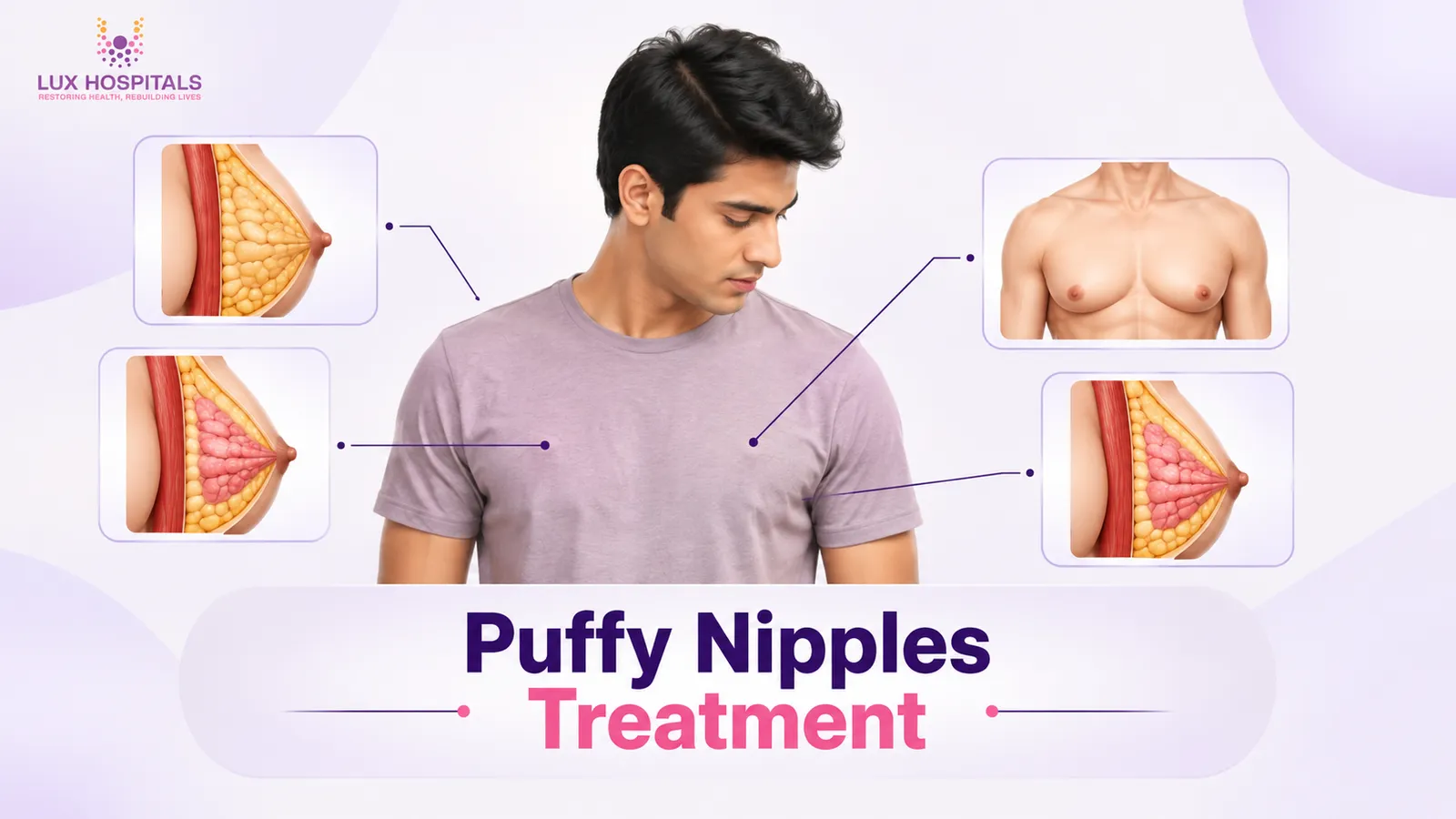
Puffy nipples treatment starts with finding out why the nipple area looks enlarged or projects through clothing. During an assessment, a plastic surgeon examines the chest, nipple-areola area, and surrounding tissue checks for gynecomastia or excess fat; assesses chest asymmetry; and may recommend blood tests or imaging when clinically indicated.
11 October 2026

Losing excess weight can change your body shape significantly, but your chest may not become as flat or defined as you expect. Some men notice that breast fullness, a firm area beneath the nipple, or loose chest skin remains even after achieving a healthier weight.
4 October 2026
Send your reports across and a senior surgeon will review them, explain the options and tell you honestly whether surgery is the right call.
Plot No.116, Lumbini Avenue, HITEC CITY, Near IKEA, Hyderabad – 500032